Loading...
Raymond Poincare vs Yan Xishan
Raymond Poincare leads by 1.3 pts · 2 figures compared
…
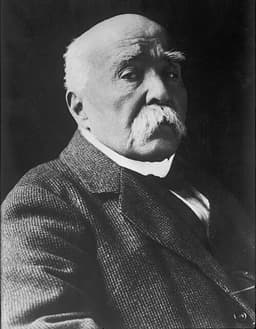
Raymond Poincare
Politician · Modern
57.6Total

Yan Xishan
Politician · Modern
56.3Total
Basic Information
Born
1860
1883
Died
1934
1960
Era
Modern
Modern
Nationality
France
China
Occupation
Politician
Politician
Civilization
Western
Eastern
Score Comparison
Military (10%)
50.0
45.0
Political (20%)
62.7
59.3
Influence (20%)
58.0
54.1
Legacy (20%)
50.0
46.7
Leadership (15%)
79.8
78.0
Strategy (15%)
41.8
60.0
TOTAL
57.6
56.3
Raymond Poincare — Complete Timeline
1912 AD
Became Prime Minister for the First TimePolitical Action◆ Major
Poincaré became Prime Minister of France for the first time, serving from January 1912 to January 1913. His government focused on strengthening the French military and preparing for potential conflict with Germany.
Prime MinisterPre-War
Impact: national
1913 AD
Elected President of FrancePolitical Action◆ Major
Raymond Poincar
PresidencyWorld War I
Impact: national
1922 AD
Became Prime Minister for the Second TimePolitical Action◆ Major
Poincaré returned as Prime Minister from 1922 to 1924. He ordered the occupation of the Ruhr in 1923 to force German reparations payments, a controversial policy that strained Franco-German relations.
Prime MinisterRuhr OccupationReparations
Impact: regionaldestructive
1926 AD
Became Prime Minister for the Third TimePolitical Action◆ Major
Poincaré became Prime Minister for a third term from 1926 to 1929. He implemented austerity measures and stabilized the French franc, restoring confidence in the economy after a period of inflation.
Prime MinisterEconomic Stabilization
Impact: nationalconstructive
Yan Xishan — Complete Timeline
1912 AD
Establishment of Control over Shanxi ProvincePolitical Action◆ Major
Yan Xishan became the military governor of Shanxi Province after the Xinhai Revolution. He consolidated control over the province and implemented a series of reforms. His rule lasted for decades, making him one of the longest-serving warlords in China.
Warlord EraShanxiGovernance
Impact: regionalconstructive
1917 AD
Implementation of the 'Model Province' ReformsReform◆ Major
Yan Xishan implemented a series of reforms in Shanxi, including land redistribution, education, and infrastructure development. He promoted modern agriculture and industry, earning the nickname 'The Model Governor'. These reforms improved living standards but were authoritarian in nature.
ReformShanxiModernization
Impact: regionalconstructive
1926 AD
Participation in the Northern ExpeditionWar
Yan Xishan initially remained neutral during the Northern Expedition but later allied with the Nationalist government. He allowed Nationalist forces to pass through Shanxi and provided support. This decision helped him maintain his power after the Nationalists unified China.
WarAllianceNationalist
Impact: national
1930 AD
Defeat in the Central Plains WarWar◆ Major
Yan Xishan joined the anti-Chiang Kai-shek coalition in the Central Plains War. His forces were defeated by Chiang's National Revolutionary Army. The defeat forced Yan to flee to Dalian, but he later returned to Shanxi after negotiations with the Nationalist government.
WarDefeatWarlord
Impact: nationaldestructive
1949 AD
Surrender to the Communist PartyPolitical Action◆ Major
As the Chinese Civil War ended, Yan Xishan surrendered Shanxi to the Communist Party. He fled to Taiwan with the Nationalist government. His surrender marked the end of his long rule over Shanxi and the final defeat of the warlord era.
SurrenderCivil WarEnd of Rule
Impact: nationaltragic
Expert Analysis
Origins
Raymond Poincaré was born on August 20, 1860, in Bar-le-Duc, France, into a middle-class family. His father was a civil engineer and meteorologist. Poincaré studied law at the University of Paris, earning a doctorate in 1880. He entered politics as a deputy in 1887, serving in various ministerial roles before becoming Prime Minister in 1912.
Yan Xishan was born on October 8, 1883, in Wutai County, Shanxi, China, into a landowning family. He received a classical education and later attended the Shanxi Military Academy. In 1904, he studied at the Imperial Japanese Army Academy, where he was influenced by Japanese militarism and modern governance. He returned to China in 1909 and became involved in revolutionary activities.
Rise to Power
Poincaré rose through the French Third Republic's political system. His first major role was as Minister of Public Instruction in 1893. He became Prime Minister in January 1912, focusing on strengthening the French military and forming alliances with Russia and Britain. His presidency began in February 1913, just before World War I erupted. He was a key figure in rallying French resistance during the war.
Yan Xishan seized control of Shanxi in 1911 after the Wuchang Uprising. Declaring loyalty to the Republic, he became military governor in 1912. During the Warlord Era, he maintained neutrality and consolidated power through strategic alliances. He participated in the Northern Expedition in 1926 by allying with the Nationalists, which allowed him to retain control of Shanxi.
Leadership & Governance
Poincaré's leadership during WWI was characterized by strong executive action. He centralized decision-making, maintained civilian control over the military, and worked closely with Prime Ministers Clemenceau and others. His governance style was legalistic and conservative. As Prime Minister in the 1920s, he ordered the occupation of the Ruhr in 1923 to enforce German reparations, a decisive but controversial move. His third term (1926-1929) focused on fiscal austerity, stabilizing the French franc through tax increases and spending cuts, which restored economic confidence.
Yan Xishan was known as the "Model Governor" for his comprehensive reforms in Shanxi. He implemented land redistribution, reducing rents and taxes, and promoted education by building schools. He also developed infrastructure, including roads and railways, and established industries like coal mining and textiles. His governance was authoritarian but pragmatic, blending Confucian values with modernization. He maintained a well-disciplined army and used it to enforce order. However, his reforms were limited to Shanxi and did not scale nationally.
Triumph & Tragedy
Poincaré's greatest triumph was his role in leading France through World War I, preserving the Third Republic and securing victory. His economic stabilization of the franc in the late 1920s was also a major success. However, his occupation of the Ruhr damaged Franco-German relations and contributed to hyperinflation in Germany, breeding resentment that later fueled extremism. His failure to secure a lasting peace was a tragedy.
Yan Xishan's triumph was his long tenure as governor of Shanxi (1912-1949), during which he transformed the province into a model of stability and development. His reforms improved living standards and education. However, his refusal to fully commit to the Nationalist cause led to his defeat in the Central Plains War (1930) against Chiang Kai-shek, forcing him to flee briefly. Ultimately, his surrender to the Communists in 1949 ended his rule, and he fled to Taiwan, where he died in obscurity.
Character & Destiny
Poincaré was known for his diligence, legal expertise, and unwavering patriotism. He was cautious but decisive in crisis. His character shaped his destiny: his insistence on legal procedures and fiscal conservatism stabilized France but also limited his ability to adapt to changing circumstances. He scored 79.8 in leadership, reflecting his strong executive presence, but only 41.8 in strategy, indicating a lack of long-term vision.
Yan Xishan was pragmatic, shrewd, and adaptable. He skillfully balanced between warlords, Nationalists, and Communists to preserve his power. His character allowed him to survive in a chaotic era but also led to accusations of opportunism. His leadership score of 78.0 is comparable to Poincaré, but his political score of 59.3 reflects his limited national influence. He ultimately could not prevent the Communist takeover.
Legacy
Poincaré's legacy is mixed. He is remembered as a wartime leader who upheld French sovereignty, but his Ruhr occupation is criticized. His fiscal policies stabilized the franc, earning him respect from conservatives. In historical assessments, his overall score is 57.6, slightly above Yan's 56.3. His influence on French institutions and the Third Republic's survival is significant.
Yan Xishan's legacy as the "Model Governor" persists in Shanxi, where his reforms are still studied. He is seen as a capable administrator who brought stability to a turbulent region. However, his failure to extend his model nationally limits his impact. He scored 54.1 in influence and 46.7 in legacy.
Conclusion
Raymond Poincaré had greater overall impact than Yan Xishan. His leadership during World War I and stabilization of the French economy affected not only France but the entire European order. While Yan Xishan's local reforms were effective, they did not alter the course of Chinese history. Poincaré's total score of 57.6 versus Yan's 56.3 reflects this, but the gap in political influence (62.7 vs. 59.3) and legacy (50.0 vs. 46.7) underscores his broader significance. In a global context, Poincaré's actions had consequences that shaped the 20th century.
Rankings
🥇
Raymond PoincareLeader
Mil: 50.0Pol: 62.7Inf: 58.0
57.6
🥈
Yan Xishan
Mil: 45.0Pol: 59.3Inf: 54.1
56.3
+1.3 behind
How This Comparison Works
Algorithm
Each figure is scored on 6 dimensions (0—100 scale) based on structured historical data: Military (10%), Political (20%), Influence (20%), Legacy (20%), Leadership (15%), Strategy (15%). The weighted total produces the final ranking.
Data Sources
Scores are computed from structured sub-indicators in the database. Scale factors adjust for era (Ancient ×0.85, Modern ×1.0) and civilization size (Eastern ×1.05, Other ×0.80) to account for differences in population and military scale.
Maximum 3 Figures
Comparisons are limited to 2—3 figures to ensure readability and statistical meaningfulness.
Error Margins
±5 points per dimension — Sub-scores are derived from historical records with inherent uncertainty. Two figures within 5 points on a dimension should be considered roughly equivalent in that area.
Total Score Accuracy
±3 points overall — The weighted combination of 6 dimensions produces a total score with approximately ±3 points of uncertainty. Differences of less than 3 points are not statistically significant— the figures are effectively tied.
Known Limitations
- Historical records are incomplete and uneven across civilizations
- Figures from oral-tradition societies may be underrepresented
- Occupation labels can misclassify multi-role figures
- Scores measure capability and impact, not moral character
- Quantitative scoring is a comparison tool, not absolute truth
Capability Radar
Military (10%) — Battles & Warfare
Battles
27
45
Win Rate
31
40
Expansion
33
30
Political (20%) — Governance & Reform
Reform
55
75
Diplomacy
65
65
Economy
50
70
Influence (20%) — Cultural & Global Reach
Cultural
30
40
Global
50
25
Legacy (20%) — Historical Impact
Historical
55
45
Longevity
40
35
Leadership (15%) — Power & Stability
Tenure
70
85
Stability
60
60
Strategy (15%) — Tactics & Innovation
Strategy
37
55
Tactics
40
50
Reform
43
60
Similar Comparisons
Comments & Discussion
No comments yet. Be the first to share your thoughts!