Loading...
George W. Bush vs Mehmed Talat
Mehmed Talat leads by 0.1 pts · 2 figures compared
…
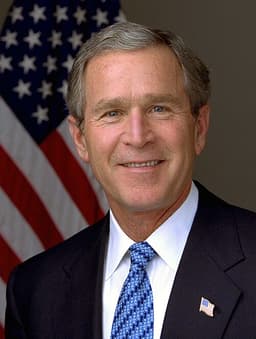
George W. Bush
Politician · Modern
55.4Total
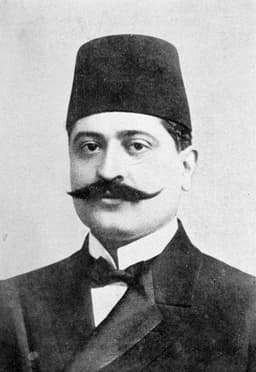
Mehmed Talat
Politician · Modern
55.5Total
Basic Information
Born
1946
1874
Died
—
1921
Era
Modern
Modern
Nationality
United States
Ottoman Empire
Occupation
Politician
Politician
Civilization
Western
Middle Eastern
Score Comparison
Military (10%)
50.0
50.0
Political (20%)
48.0
68.0
Influence (20%)
61.0
56.4
Legacy (20%)
50.0
49.2
Leadership (15%)
74.0
65.0
Strategy (15%)
43.7
41.4
TOTAL
55.4
55.5
George W. Bush — Complete Timeline
2000 AD
Elected PresidentPolitical Action
Bush won the 2000 presidential election after a contested recount in Florida, ultimately decided by the Supreme Court in Bush v. Gore. He became the 43rd president.
PresidencyElection
Impact: national
2001 AD
Responded to 9/11 AttacksPolitical Action
After the September 11 attacks, Bush declared a War on Terror, signing the USA PATRIOT Act and creating the Department of Homeland Security. He also launched military operations in Afghanistan.
9/11War on Terror
Impact: global
2003 AD
Invaded IraqWar
Bush ordered the invasion of Iraq, citing Saddam Hussein's alleged weapons of mass destruction. The invasion toppled Hussein's regime but led to a prolonged insurgency and no WMDs were found.
Iraq WarWMD
Impact: globaldestructive
2005 AD
Hurricane Katrina ResponsePolitical Action◆ Major
The federal response to Hurricane Katrina was widely criticized as slow and inadequate. Bush's approval ratings fell sharply, and the disaster highlighted failures in emergency management.
Natural DisasterGovernment Response
Impact: nationaldestructive
2008 AD
Financial Crisis of 2008Political Action◆ Major
Bush's administration responded to the global financial crisis with the Troubled Asset Relief Program (TARP), bailing out major banks and automakers. The crisis deepened the recession.
Financial CrisisBailout
Impact: globaldestructive
Mehmed Talat — Complete Timeline
1913 AD
Appointed Minister of InteriorPolitical Action◆ Major
Mehmed Talat was appointed Minister of Interior in the CUP government. He became the de facto strongman of the empire, controlling internal security and implementing policies of Turkification and population transfers.
CUPInterior MinisterTurkification
Impact: national
1915 AD
Ordered the Armenian DeportationsPolitical Action
As Interior Minister, Mehmed Talat issued the orders for the mass deportation of Armenians from eastern Anatolia. He personally directed the implementation, which resulted in the Armenian Genocide. His role made him the primary architect of the genocide.
Armenian GenocideDeportationWar Crimes
Impact: globaldestructive
1917 AD
Appointed Grand VizierPolitical Action◆ Major
Mehmed Talat was appointed Grand Vizier, succeeding Said Halim Pasha. He led the Ottoman government during the final years of World War I, overseeing the empire's war effort and the continuation of genocidal policies.
Grand VizierWorld War ICUP
Impact: national
1918 AD
Fled to GermanyPolitical Action◆ Major
After the Ottoman defeat in World War I, Mehmed Talat fled to Germany along with other CUP leaders. He was tried in absentia by an Ottoman military court and sentenced to death for his role in the Armenian Genocide.
ExileWar Crimes TrialArmenian Genocide
Impact: nationaltragic
1921 AD
Assassinated in BerlinPolitical Action◆ Major
Mehmed Talat was assassinated in Berlin by Armenian student Soghomon Tehlirian as an act of vengeance for the Armenian Genocide. His assassination was part of Operation Nemesis, a covert Armenian retribution campaign.
AssassinationOperation NemesisArmenian Genocide
Impact: globaltragic
Expert Analysis
Origins
George W. Bush was born on July 6, 1946, in New Haven, Connecticut, into a prominent political family. His father, George H. W. Bush, later became the 41st President. Bush attended Yale University and Harvard Business School, but his early career in the oil industry was marked by mixed success. He served as Governor of Texas from 1995 to 2000, gaining experience in state governance.
Mehmed Talat was born in 1874 in Edirne, Ottoman Empire, into a modest family. He joined the Committee of Union and Progress (CUP) and became a key figure in the Young Turk movement. Talat worked as a postal clerk before rising through the ranks of the CUP, known for his organizational skills and nationalist fervor.
Rise to Power
Bush's rise was meteoric. He won the 2000 presidential election after a contested recount in Florida, decided by the Supreme Court in Bush v. Gore. His presidency began with a focus on education reform and tax cuts. However, the September 11, 2001 attacks transformed his agenda. He declared a War on Terror, launching invasions of Afghanistan (2001) and Iraq (2003).
Talat rose within the CUP, becoming Minister of Interior in 1913. He was a central figure in the 1908 Young Turk Revolution and later consolidated power during World War I. In 1917, he became Grand Vizier, effectively leading the Ottoman government. His control over internal security made him the de facto strongman.
Leadership & Governance
Bush's leadership style was decisive and ideological. He championed democracy promotion, signing the USA PATRIOT Act and creating the Department of Homeland Security. His governance saw tax cuts and education reform (No Child Left Behind). However, his response to Hurricane Katrina in 2005 was widely criticized as slow and inadequate, scoring low in crisis management.
Talat led with authoritarian efficiency. He centralized power, suppressed dissent, and implemented policies of Turkification. His governance was marked by the forced deportation of Armenians, which resulted in over 1 million deaths. He scored 65.0 in leadership but his legacy is heavily tainted by these actions.
Triumph & Tragedy
Bush's triumphs include the initial success in toppling the Taliban in Afghanistan and the survival of Iraq's fledgling democracy. However, the Iraq War's failure to find WMDs and the prolonged insurgency led to over 4,000 US casualties. The 2008 financial crisis further damaged his legacy, though TARP prevented a total collapse.
Talat's triumph was in preserving the Ottoman Empire's territorial integrity during WWI, but his tragic legacy is the Armenian Genocide. He was assassinated in 1921 in Berlin by an Armenian avenger. His actions led to his trial in absentia and a lasting condemnation.
Character & Destiny
Bush was known for his folksy demeanor and strong religious convictions. He made decisions based on moral clarity, but critics argue he was inflexible. His character shaped his fate: his approval ratings plummeted from 90% after 9/11 to 25% by 2009.
Talat was pragmatic and ruthless. He believed in the necessity of ethnic homogeneity for the empire's survival. His character led him to order mass deportations, sealing his destiny as a genocidal figure. He fled to Germany and was assassinated, a fate he seemed to accept.
Legacy
Bush's legacy includes the War on Terror, the PATRIOT Act, and the creation of the Department of Homeland Security. His influence score is 61.0, but his legacy is mixed: he expanded presidential power but left a deeply polarized nation. The Iraq War destabilized the Middle East.
Talat's legacy is overwhelmingly negative. He is remembered as the architect of the Armenian Genocide, which is denied by Turkey but recognized by many nations. His political score is 68.0, but his legacy score is 49.2, reflecting the moral condemnation.
Conclusion
While both leaders had significant impacts, Talat's actions directly caused the deaths of over a million people, a crime against humanity. Bush's actions, though controversial, were not genocidal. Talat's total score is 55.5, slightly above Bush's 55.4, but the nature of their impact differs. Bush's influence on global politics is more enduring, but Talat's legacy is a stark warning. Ultimately, Bush had a greater impact on the world stage, but Talat's actions represent a deeper moral failure.
Rankings
🥇
Mehmed TalatLeader
Mil: 50.0Pol: 68.0Inf: 56.4
55.5
🥈
George W. Bush
Mil: 50.0Pol: 48.0Inf: 61.0
55.4
+0.1 behind
How This Comparison Works
Algorithm
Each figure is scored on 6 dimensions (0—100 scale) based on structured historical data: Military (10%), Political (20%), Influence (20%), Legacy (20%), Leadership (15%), Strategy (15%). The weighted total produces the final ranking.
Data Sources
Scores are computed from structured sub-indicators in the database. Scale factors adjust for era (Ancient ×0.85, Modern ×1.0) and civilization size (Eastern ×1.05, Other ×0.80) to account for differences in population and military scale.
Maximum 3 Figures
Comparisons are limited to 2—3 figures to ensure readability and statistical meaningfulness.
Error Margins
±5 points per dimension — Sub-scores are derived from historical records with inherent uncertainty. Two figures within 5 points on a dimension should be considered roughly equivalent in that area.
Total Score Accuracy
±3 points overall — The weighted combination of 6 dimensions produces a total score with approximately ±3 points of uncertainty. Differences of less than 3 points are not statistically significant— the figures are effectively tied.
Known Limitations
- Historical records are incomplete and uneven across civilizations
- Figures from oral-tradition societies may be underrepresented
- Occupation labels can misclassify multi-role figures
- Scores measure capability and impact, not moral character
- Quantitative scoring is a comparison tool, not absolute truth
Capability Radar
Military (10%) — Battles & Warfare
Battles
30
22
Win Rate
35
23
Expansion
30
30
Political (20%) — Governance & Reform
Reform
40
65
Diplomacy
45
55
Economy
35
40
Influence (20%) — Cultural & Global Reach
Cultural
40
30
Global
55
50
Legacy (20%) — Historical Impact
Historical
55
55
Longevity
45
40
Leadership (15%) — Power & Stability
Tenure
60
60
Stability
30
20
Strategy (15%) — Tactics & Innovation
Strategy
40
28
Tactics
20
36
Reform
25
39
Similar Comparisons
Comments & Discussion
No comments yet. Be the first to share your thoughts!