Loading...
George Canning vs Harold Macmillan
Harold Macmillan leads by 4.8 pts · 2 figures compared
…

George Canning
Politician · Modern
53.6Total
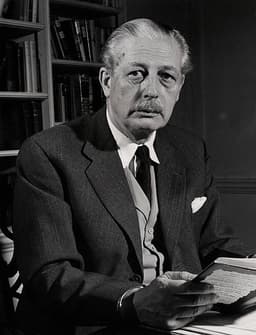
Harold Macmillan
Politician · Modern
58.4Total
Basic Information
Born
1770
1894
Died
1827
1986
Era
Modern
Modern
Nationality
United Kingdom
United Kingdom
Occupation
Politician
Politician
Civilization
Western
Western
Score Comparison
Military (10%)
48.9
50.0
Political (20%)
72.0
72.0
Influence (20%)
56.4
60.0
Legacy (20%)
49.2
50.0
Leadership (15%)
48.4
72.0
Strategy (15%)
42.6
43.1
TOTAL
53.6
58.4
George Canning — Complete Timeline
1822 AD
Foreign Secretary under LiverpoolPolitical Action◆ Major
Canning was appointed Foreign Secretary, a role he held until 1827. He pursued a policy of non-intervention in European affairs, recognized the independence of Latin American republics, and supported Greek independence from the Ottoman Empire.
Foreign PolicyLatin AmericaGreek Independence
Impact: global
1826 AD
Recognition of Greek IndependencePolitical Action◆ Major
As Foreign Secretary, Canning negotiated the Treaty of London with France and Russia, which demanded an armistice in the Greek War of Independence and offered mediation. This led to the eventual independence of Greece from the Ottoman Empire.
Greek IndependenceTreaty of LondonForeign Policy
Impact: regional
1827 AD
Appointment as Prime MinisterPolitical Action◆ Major
George Canning became Prime Minister of the United Kingdom in April 1827, succeeding Lord Liverpool. His appointment was controversial due to his support for Catholic emancipation, leading several Tory ministers to resign.
Prime MinisterTory PartyCatholic Emancipation
Impact: national
Death in OfficeOther◆ Major
Canning died on August 8, 1827, after only 119 days as Prime Minister, making his tenure the shortest in British history. His death was attributed to pneumonia or tuberculosis, and he was succeeded by Lord Goderich.
DeathShort TenurePrime Minister
Impact: nationaltragic
Support for Catholic EmancipationPolitical Action◆ Major
Canning advocated for the removal of legal restrictions on Roman Catholics in the United Kingdom. His stance caused a split in the Tory Party, with opponents like the Duke of Wellington refusing to serve under him.
Catholic EmancipationTory SplitReligious Freedom
Impact: nationalprogressive
Harold Macmillan — Complete Timeline
1957 AD
Elected Prime MinisterPolitical Action
Macmillan succeeded Anthony Eden as Prime Minister after the Suez Crisis. He led the Conservative Party to a landslide victory in the 1959 general election, consolidating his power.
Prime MinisterConservative Party
Impact: national
Delivered 'You've Never Had It So Good' SpeechCultural◆ Major
Macmillan gave a speech in Bedford stating that Britons had 'never had it so good,' referring to post-war prosperity. The phrase became emblematic of his premiership and the era of rising living standards.
SpeechEconomic Prosperity
Impact: nationalconstructive
Signed the Treaty of RomePolitical Action◆ Major
Macmillan's government signed the Treaty of Rome, establishing the European Economic Community (EEC). However, the UK did not join at this time, as Macmillan prioritized the European Free Trade Association (EFTA).
European IntegrationEEC
Impact: global
1960 AD
Wind of Change SpeechCultural◆ Major
Macmillan delivered the 'Wind of Change' speech to the South African Parliament, acknowledging the rise of African nationalism and the inevitability of decolonization. This signaled Britain's shift away from empire.
DecolonizationAfrica
Impact: global
1963 AD
Profumo AffairPolitical Action◆ Major
The Profumo affair, a sex scandal involving War Minister John Profumo, damaged Macmillan's government. Macmillan's handling of the crisis was criticized, contributing to his resignation later that year.
ScandalGovernment
Impact: nationaldestructive
Resigned as Prime MinisterPolitical Action◆ Major
Macmillan resigned as Prime Minister in October 1963, citing ill health. He was succeeded by Alec Douglas-Home. His resignation marked the end of a premiership defined by prosperity and decolonization.
ResignationConservative Party
Impact: national
Expert Analysis
Origins
George Canning was born in 1770 in London to a struggling family; his father died when he was young, and his mother worked as an actress. He was educated at Eton and Christ Church, Oxford, where he excelled in debate. His early career was propelled by his uncle, a merchant, who helped him enter Parliament in 1793.
Harold Macmillan was born in 1894 in London to a wealthy publishing family. He was educated at Eton and Balliol College, Oxford. His education was interrupted by World War I, where he served in the Grenadier Guards and was wounded three times. The war left him with a lifelong stammer and a deep sense of the futility of conflict.
Rise to Power
Canning rose quickly as a protégé of William Pitt the Younger. He became Foreign Secretary in 1807 and again in 1822 under Lord Liverpool. His oratory and wit made him a leading figure in the Tory Party. In 1827, after Liverpool's retirement, Canning became Prime Minister, but his appointment caused a split: several high-profile Tories, including the Duke of Wellington, refused to serve under him due to his support for Catholic Emancipation.
Macmillan's rise was slower. He entered Parliament in 1924, but his political career stalled in the 1930s. He served in Churchill's wartime government as Minister Resident in North Africa. After the war, he held several cabinet posts, including Foreign Secretary and Chancellor of the Exchequer. In 1957, after the Suez Crisis discredited Anthony Eden, Macmillan became Prime Minister, skillfully managing the party and restoring morale.
Leadership & Governance
Canning served only 119 days, limiting his governance impact. He focused on foreign policy, continuing his non-interventionist line. Domestically, he pushed for Catholic Emancipation but died before achieving it. His leadership was marked by controversy and party division.
Macmillan led for almost seven years (1957-1963). His government pursued a policy of 'Butskellism'—consensus with Labour on welfare and full employment. He oversaw a period of prosperity, but his economic management was cautious. He signed the Treaty of Rome in 1957, but vetoed UK entry into the EEC in 1963, prioritizing the US alliance. His 'Wind of Change' speech in 1960 signaled acceptance of decolonization, though implementation was uneven.
Triumph & Tragedy
Canning's greatest triumph was his foreign policy: he recognized Greek independence and supported Latin American revolutions, breaking with the Holy Alliance. His tragedy was his premature death, which cut short his potential and left his reforms incomplete.
Macmillan's triumph was the 1959 election victory, securing a large majority. His 'You've Never Had It So Good' speech captured the mood of rising living standards. His tragedy was the Profumo Affair in 1963, which exposed a sex scandal in his government. His handling was seen as weak, contributing to his resignation later that year.
Character & Destiny
Canning was brilliant, ambitious, and divisive. His sharp tongue and liberal views alienated many Tories. His early death sealed his legacy as a what-might-have-been figure. Historian Robert Blake notes that Canning's 'supple mind and powerful oratory' were unmatched, but his 'lack of patience' undermined him.
Macmillan was urbane, pragmatic, and unflappable. His 'unflappable' demeanor was a political asset after Suez. However, he could be indecisive, as seen in the Profumo affair. His personal experience of war made him cautious about foreign entanglements. He scored 72.0 in Political and 72.0 in Leadership, reflecting his effective party management.
Legacy
Canning's legacy is primarily diplomatic: he established a tradition of British non-intervention in Europe and supported emerging nations. His advocacy for Catholic Emancipation paved the way for the 1829 Act. However, his short tenure limits his impact; his total score of 53.6 reflects this.
Macmillan's legacy is more substantial. He presided over the 'affluent society' and managed decolonization in Africa. His 'Wind of Change' speech is seen as a watershed. However, his failure to join the EEC is criticized. He scored 58.4 overall, with high Influence (60.0) and Leadership (72.0), but low Military (50.0) and Strategy (43.1).
Conclusion
Harold Macmillan had greater impact than George Canning. Macmillan's seven-year tenure allowed him to shape policy on decolonization, European integration, and domestic prosperity. Canning's 119 days were too brief to leave a lasting mark. While Canning's foreign policy vision was prescient, Macmillan's tangible achievements—the 1959 election win, the 'Wind of Change' speech, and the management of post-war affluence—outweigh Canning's unrealized potential. The score gap of 4.8 points supports this: Macmillan's total of 58.4 against Canning's 53.6 reflects his greater influence and leadership.
Rankings
🥇
Harold MacmillanLeader
Mil: 50.0Pol: 72.0Inf: 60.0
58.4
🥈
George Canning
Mil: 48.9Pol: 72.0Inf: 56.4
53.6
+4.8 behind
How This Comparison Works
Algorithm
Each figure is scored on 6 dimensions (0—100 scale) based on structured historical data: Military (10%), Political (20%), Influence (20%), Legacy (20%), Leadership (15%), Strategy (15%). The weighted total produces the final ranking.
Data Sources
Scores are computed from structured sub-indicators in the database. Scale factors adjust for era (Ancient ×0.85, Modern ×1.0) and civilization size (Eastern ×1.05, Other ×0.80) to account for differences in population and military scale.
Maximum 3 Figures
Comparisons are limited to 2—3 figures to ensure readability and statistical meaningfulness.
Error Margins
±5 points per dimension — Sub-scores are derived from historical records with inherent uncertainty. Two figures within 5 points on a dimension should be considered roughly equivalent in that area.
Total Score Accuracy
±3 points overall — The weighted combination of 6 dimensions produces a total score with approximately ±3 points of uncertainty. Differences of less than 3 points are not statistically significant— the figures are effectively tied.
Known Limitations
- Historical records are incomplete and uneven across civilizations
- Figures from oral-tradition societies may be underrepresented
- Occupation labels can misclassify multi-role figures
- Scores measure capability and impact, not moral character
- Quantitative scoring is a comparison tool, not absolute truth
Capability Radar
Military (10%) — Battles & Warfare
Battles
30
28
Win Rate
31
31
Expansion
36
36
Political (20%) — Governance & Reform
Reform
55
55
Diplomacy
75
70
Economy
60
65
Influence (20%) — Cultural & Global Reach
Cultural
30
40
Global
50
50
Legacy (20%) — Historical Impact
Historical
55
50
Longevity
40
40
Leadership (15%) — Power & Stability
Tenure
10
60
Stability
30
60
Strategy (15%) — Tactics & Innovation
Strategy
38
40
Tactics
42
40
Reform
43
45
Similar Comparisons
Comments & Discussion
No comments yet. Be the first to share your thoughts!