Loading...
Geng Yan vs Wei Qing
Wei Qing leads by 14.4 pts · 2 figures compared
…
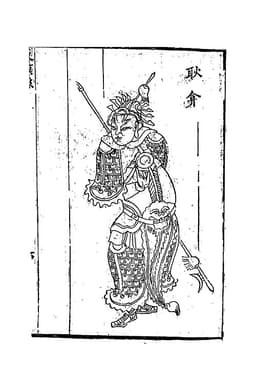
Geng Yan
General · Ancient
46.2Total

Wei Qing
General · Ancient
60.6Total
Basic Information
Born
-5
-140
Died
58
-106
Era
Ancient
Ancient
Nationality
China
China
Occupation
General
General
Civilization
Eastern
Eastern
Score Comparison
Military (10%)
80.0
88.0
Political (20%)
30.7
45.1
Influence (20%)
48.6
56.7
Legacy (20%)
41.7
52.0
Leadership (15%)
36.9
71.0
Strategy (15%)
55.0
72.0
TOTAL
46.2
60.6
Geng Yan — Complete Timeline
26 AD
Appointed General of the VanguardPolitical Action
Geng Yan was appointed General of the Vanguard, a key military post under Emperor Guangwu. He led elite forces in numerous campaigns, earning a reputation as one of the most effective commanders of the Eastern Han restoration.
AppointmentMilitary CommandEastern Han
Impact: nationalconstructive
29 AD
Conquest of QiWar◆ Major
Geng Yan led the Eastern Han campaign to conquer the kingdom of Qi (modern Shandong). He defeated the local ruler Zhang Bu, bringing the wealthy and strategic Qi region under Eastern Han control. This conquest was crucial for the dynasty's consolidation.
ConquestQiEastern Han
Impact: regional
Battle of LinziWar◆ Major
Geng Yan captured the city of Linzi, the capital of Qi, after a decisive battle. He used strategic maneuvers to outflank Zhang Bu's forces. The victory broke Qi's resistance and led to the submission of the entire region.
BattleSiegeQi
Impact: regional
Wei Qing — Complete Timeline
124 BC
Appointment as Grand GeneralPolitical Action◆ Major
Emperor Wu of Han appointed Wei Qing as Grand General, the highest military rank, after his victories against the Xiongnu. This made him the most powerful military commander in the Han empire.
AppointmentHan DynastyMilitary
Impact: nationalconstructive
121 BC
Battle of HexiWar◆ Major
Wei Qing and his nephew Huo Qubing led campaigns in the Hexi Corridor, defeating the Xiongnu and securing the region for the Han dynasty. This opened the Silk Road trade routes.
CampaignHan DynastyXiongnuSilk Road
Impact: regionalconstructive
119 BC
Battle of MobeiWar◆ Major
Wei Qing led a Han army deep into the Gobi Desert to engage the Xiongnu. He defeated the Xiongnu forces under Yizhixie Chanyu, killing or capturing over 19,000 enemy troops. This victory weakened the Xiongnu.
BattleHan DynastyXiongnu
Impact: regionalconstructive
106 BC
Death and LegacyOther
Wei Qing died in 106 BC. His seven victories against the Xiongnu had significantly expanded Han territory and secured the northern frontier. He was buried in a grand tomb near Emperor Wu's mausoleum.
DeathHan DynastyLegacy
Impact: national
Expert Analysis
Origins
Geng Yan (3–58 AD) was born into a prominent military family in the late Western Han. His father, Geng Kuang, served as a general, and Geng Yan grew up amidst the chaos of the Xin dynasty collapse. He joined the forces of Liu Xiu (later Emperor Guangwu) early, bringing with him a small army of followers. His formative experiences included defending his hometown from bandits, which honed his tactical skills.
Wei Qing (died 106 BC) was born a slave in the household of Princess Pingyang. His half-sister, Wei Zifu, became a concubine of Emperor Wu, elevating the family's status. Wei Qing received training as a cavalry officer and quickly distinguished himself. His humble origins contrasted sharply with Geng Yan's noble birth, yet both rose through merit.
Rise to Power
Geng Yan's rise began when he joined Liu Xiu's campaign to reunify China. In 27 AD, he was appointed General of the Vanguard after proving his loyalty. His key turning point came in 29 AD during the conquest of Qi: he defeated Zhang Bu at Linzi, capturing the capital. This victory secured the eastern territories for the Han and earned him a reputation as a master of siege warfare.
Wei Qing's rise was meteoric after Emperor Wu recognized his talent. In 129 BC, he led a surprise attack on the Xiongnu at Longcheng, capturing hundreds. This victory led to his appointment as General of Chariots and Cavalry. By 124 BC, after the Battle of Mobei, he was named Grand General, the highest military rank. His seven campaigns against the Xiongnu made him the most powerful general of his era, with Emperor Wu's full trust.
Leadership & Governance
Geng Yan's leadership style was cautious and methodical. He focused on logistics and intelligence, often avoiding direct confrontation until he had a clear advantage. For example, at the siege of Linzi, he feigned retreat to lure Zhang Bu out, then counterattacked. His governance approach was to pacify conquered territories by treating local populations leniently, which reduced rebellion. However, his political score of 30.7 reflects limited involvement in court affairs.
Wei Qing was a bold strategist who preferred rapid, deep strikes into enemy territory. He commanded large armies of up to 100,000 men and coordinated with other generals like Huo Qubing. His governance was more imperial: as Grand General, he influenced military policy and appointments. He maintained strong ties with the court through his sister, Empress Wei Zifu, giving him political leverage (score 45.1). Yet his reliance on imperial favor made him vulnerable after the empress's fall.
Triumph & Tragedy
Geng Yan's greatest triumph was the conquest of Qi in 29 AD, which added the wealthy Shandong region to the Eastern Han. He succeeded with minimal casualties by using deception and terrain. His failure came later when he was unable to prevent the rise of warlords in the northwest; his forces were defeated at the Battle of Xiaoxian in 35 AD, a rare setback. He died at age 56, having served three emperors.
Wei Qing's triumphs include seven victories over the Xiongnu, most notably the Battle of Mobei (119 BC), where he killed over 19,000 enemies and captured the Chanyu's supplies. This campaign secured the Hexi Corridor and opened the Silk Road. His tragedy was his death in 106 BC, after which his family fell from power due to political intrigue. His nephew Huo Qubing overshadowed him posthumously, and Wei Qing's tomb was modest compared to his achievements.
Character & Destiny
Geng Yan was known for his loyalty and humility. He declined promotions to avoid jealousy, saying, "I am content with my rank." This caution preserved his life through the turbulent reigns of Guangwu and his successors. His character shaped a destiny of steady but unspectacular service; he scored 36.9 in leadership, reflecting his reluctance to take risks.
Wei Qing was ambitious and confident, traits that propelled him from slavery to power. He was generous to his soldiers but ruthless in battle. His character led him to accept ever-greater commands, but also made enemies at court. After Empress Wei's suicide, his descendants were executed, a tragic reversal. Historians note that his reliance on the emperor's favor was his fatal flaw.
Legacy
Geng Yan's legacy is primarily as a capable general who helped consolidate the Eastern Han. His conquest of Qi is remembered as a model of strategic patience. However, his influence score of 48.6 and legacy of 41.7 suggest limited long-term impact; later Chinese military treatises rarely cite him. The territories he conquered remained part of China, but his methods did not become mainstream.
Wei Qing's legacy is immense: he transformed China's relationship with the steppes by breaking Xiongnu power. His campaigns opened trade routes and secured borders for generations. His military score of 88.0 and strategy of 72.0 reflect his innovative use of cavalry and deep strikes. He is celebrated in Chinese history as one of the greatest generals, alongside Huo Qubing. The Han dynasty's expansion is directly tied to his victories.
Conclusion
While Geng Yan was a competent general who achieved specific objectives, Wei Qing's impact was far greater. Wei Qing scored 60.6 total versus Geng Yan's 46.2, a gap of 14.4 points. Wei Qing's seven victories reshaped the geopolitical landscape of East Asia, while Geng Yan's conquest of Qi was a regional operation. Wei Qing's legacy endured in Chinese military thought and border policy for centuries. Therefore, Wei Qing had a more significant impact on history.
Rankings
🥇
Wei QingLeader
Mil: 88.0Pol: 45.1Inf: 56.7
60.6
🥈
Geng Yan
Mil: 80.0Pol: 30.7Inf: 48.6
46.2
+14.4 behind
How This Comparison Works
Algorithm
Each figure is scored on 6 dimensions (0—100 scale) based on structured historical data: Military (10%), Political (20%), Influence (20%), Legacy (20%), Leadership (15%), Strategy (15%). The weighted total produces the final ranking.
Data Sources
Scores are computed from structured sub-indicators in the database. Scale factors adjust for era (Ancient ×0.85, Modern ×1.0) and civilization size (Eastern ×1.05, Other ×0.80) to account for differences in population and military scale.
Maximum 3 Figures
Comparisons are limited to 2—3 figures to ensure readability and statistical meaningfulness.
Error Margins
±5 points per dimension — Sub-scores are derived from historical records with inherent uncertainty. Two figures within 5 points on a dimension should be considered roughly equivalent in that area.
Total Score Accuracy
±3 points overall — The weighted combination of 6 dimensions produces a total score with approximately ±3 points of uncertainty. Differences of less than 3 points are not statistically significant— the figures are effectively tied.
Known Limitations
- Historical records are incomplete and uneven across civilizations
- Figures from oral-tradition societies may be underrepresented
- Occupation labels can misclassify multi-role figures
- Scores measure capability and impact, not moral character
- Quantitative scoring is a comparison tool, not absolute truth
Capability Radar
Military (10%) — Battles & Warfare
Battles
65
85
Win Rate
70
90
Expansion
55
80
Political (20%) — Governance & Reform
Reform
20
50
Diplomacy
35
65
Economy
25
55
Influence (20%) — Cultural & Global Reach
Cultural
30
65
Global
20
60
Legacy (20%) — Historical Impact
Historical
35
75
Longevity
25
70
Leadership (15%) — Power & Stability
Tenure
40
70
Stability
30
60
Strategy (15%) — Tactics & Innovation
Strategy
65
85
Tactics
60
80
Reform
30
60
Similar Comparisons
Comments & Discussion
No comments yet. Be the first to share your thoughts!