Loading...
Ganapati Deva of Kakatiya vs Oleg of Novgorod
Ganapati Deva of Kakatiya leads by 4.5 pts · 2 figures compared
…

Ganapati Deva of Kakatiya
Emperor · Medieval
59.3Total
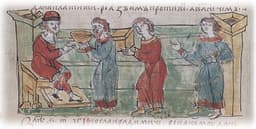
Oleg of Novgorod
Emperor · Medieval
54.8Total
Basic Information
Born
1199
845
Died
1262
912
Era
Medieval
Medieval
Nationality
India
Kievan Rus
Occupation
Emperor
Emperor
Civilization
Indian
Western
Score Comparison
Military (10%)
65.0
70.0
Political (20%)
68.0
40.8
Influence (20%)
57.2
54.9
Legacy (20%)
49.2
47.5
Leadership (15%)
66.0
67.0
Strategy (15%)
60.7
60.0
TOTAL
59.3
54.8
Ganapati Deva of Kakatiya — Complete Timeline
1210 AD
Built the Warangal FortCultural◆ Major
Ganapati Deva constructed the massive Warangal Fort, featuring a circular layout with four massive stone gateways (kirti toranas). The fort became the capital of the Kakatiya dynasty and a symbol of their power in the Deccan.
ArchitectureFortification
Impact: regionalconstructive
1213 AD
Commissioned the Ramappa TempleCultural◆ Major
Ganapati Deva ordered the construction of the Ramappa Temple (also known as Rudreshwara Temple) in Palampet. The temple is renowned for its intricate carvings and star-shaped platform, representing a peak of Kakatiya architecture.
ArchitectureHindu Temple
Impact: regionalconstructive
1220 AD
Expanded Kakatiya territory into coastal AndhraWar◆ Major
Ganapati Deva led military campaigns that brought the coastal Andhra region under Kakatiya control, including the important port of Motupalli. This expansion gave the Kakatiyas access to maritime trade routes.
Territorial ExpansionAndhra
Impact: regional
1230 AD
Defeated the Yadavas of DevagiriWar
Ganapati Deva's forces repelled an invasion by the Yadava king Simhana, securing the Kakatiya northern frontier. This victory established the Kakatiyas as the dominant power in the Telangana region.
Yadava-Kakatiya Conflict
Impact: regional
1260 AD
Appointed his daughter Rudrama Devi as co-regentPolitical Action◆ Major
Ganapati Deva designated his daughter Rudrama Devi as his successor and co-regent, a rare move for a medieval Indian ruler. She later became one of the few female monarchs in Indian history, ruling the Kakatiya kingdom after his death.
SuccessionFemale Ruler
Impact: nationalprogressive
Oleg of Novgorod — Complete Timeline
882 AD
Conquest of KievWar
Oleg, a Varangian prince, captured Kiev from Askold and Dir, two Varangian leaders. He made Kiev the capital of his realm, uniting Novgorod and Kiev under his rule and founding the Kievan Rus state.
Founding of Kievan RusCapitalUnification
Impact: regional
907 AD
Rus' Siege of ConstantinopleWar◆ Major
Oleg led a fleet of 2,000 ships against the Byzantine capital, Constantinople. He blockaded the city and forced Emperor Leo VI to negotiate a favorable trade treaty, securing tribute and commercial rights for Rus merchants.
Byzantine-Rus WarTrade TreatyNaval Campaign
Impact: regional
911 AD
Rus'-Byzantine Treaty of 911Political Action◆ Major
Oleg's envoys finalized a comprehensive treaty with the Byzantine Empire in Constantinople. The treaty regulated trade, legal disputes, and military service, establishing formal diplomatic relations between Kievan Rus and Byzantium.
DiplomacyTradeByzantine Empire
Impact: regionalconstructive
Expert Analysis
Origins
Ganapati Deva (c. 1199–1262) was born into the Kakatiya dynasty, a Telugu royal family that ruled from Warangal in present-day Telangana, India. His father, Mahadeva, was a Kakatiya king who died in battle. Ganapati Deva's early life was shaped by the need to stabilize the kingdom after his father's death. He received training in statecraft and military tactics, preparing him to lead.
Oleg of Novgorod (c. 845–912) was a Varangian prince, likely of Scandinavian origin. He was a member of the Rus' people, who were Norse traders and warriors operating along the rivers of Eastern Europe. Oleg became prince of Novgorod after the death of Rurik, the founder of the Rurik dynasty. His background as a Viking adventurer gave him experience in raiding and navigation.
Rise to Power
Ganapati Deva ascended the Kakatiya throne in 1199 after his father's death. He faced immediate challenges from rebellious nobles and neighboring kingdoms. Over the next decade, he consolidated control, defeating the Velama chieftains and subduing the coastal Andhra region. By 1210, he had expanded Kakatiya territory to include the important port of Motupalli, boosting trade. His appointment of his daughter Rudrama Devi as co-regent in 1260 was a strategic move to ensure succession.
Oleg's rise began when he succeeded Rurik as prince of Novgorod around 879. In 882, he led a campaign south along the Dnieper River, capturing Kiev from Askold and Dir. This conquest unified Novgorod and Kiev, creating a powerful state. Oleg then turned his attention to Byzantium, launching a naval expedition against Constantinople in 907. The siege forced Emperor Leo VI to negotiate, resulting in the Rus'-Byzantine Treaty of 911, which granted favorable trade terms.
Leadership & Governance
Ganapati Deva's leadership focused on administrative consolidation and cultural patronage. He built Warangal Fort, a massive circular fort with four stone gateways (kirti toranas), which served as both a military stronghold and a symbol of Kakatiya power. He also commissioned the Ramappa Temple in Palampet, a masterpiece of Kakatiya architecture featuring intricate carvings and a star-shaped plan. His governance emphasized revenue collection through land grants and trade, with Motupalli becoming a hub for maritime commerce.
Oleg's leadership was more militaristic and expansionist. He ruled through a combination of Viking-style raiding and diplomatic treaties. After conquering Kiev, he established it as the capital and organized the Rus' state around tribute collection from Slavic tribes. His treaty with Byzantium regulated trade, set legal standards for disputes, and provided military alliances. Oleg's governance laid the foundation for the Kievan Rus' state, but his rule was less focused on long-term administration than Ganapati Deva's.
Triumph & Tragedy
Ganapati Deva's greatest success was the expansion of Kakatiya power into coastal Andhra and the construction of enduring monuments. The Warangal Fort and Ramappa Temple are UNESCO World Heritage sites today, reflecting his cultural impact. However, his decision to appoint Rudrama Devi as successor was controversial; she faced opposition from nobles after his death. Additionally, his military campaigns strained resources, and the Kakatiya dynasty declined within a century after his reign.
Oleg's triumph was the conquest of Kiev and the successful siege of Constantinople, which secured trade rights for the Rus'. The Treaty of 911 was a diplomatic milestone. His tragedy lies in the lack of a stable succession; after his death, the Rus' state faced internal conflicts. Oleg's legendary death from a snakebite (as recounted in the Primary Chronicle) symbolizes the precarious nature of his rule. His military score of 70.0 reflects his effective campaigns, but his political score of 40.8 indicates weaker governance.
Character & Destiny
Ganapati Deva was a builder and administrator, prioritizing infrastructure and cultural patronage. His decision to appoint a female heir shows pragmatism but also risk-taking. His character was shaped by the need to unify a diverse kingdom, leading to a balanced approach between war and peace. Historians note his ability to delegate, as seen in Rudrama Devi's co-regency.
Oleg was a classic Viking conqueror—cunning, ambitious, and ruthless. He used deception to seize Kiev (claiming to be a merchant to ambush Askold and Dir) and displayed strategic acumen in the Constantinople campaign. His character was more aggressive, with a focus on immediate gains rather than long-term stability. The Primary Chronicle portrays him as a wise but fearsome leader.
Legacy
Ganapati Deva's legacy is tangible: the Warangal Fort and Ramappa Temple stand as testaments to Kakatiya engineering and art. His administrative reforms influenced later Telugu kingdoms. The Kakatiya dynasty is remembered as a golden age of Telugu culture, with Ganapati Deva's reign as its peak. His legacy score of 49.2 reflects his regional but enduring impact.
Oleg's legacy is foundational for Kievan Rus' and later Russian statehood. The unification of Novgorod and Kiev under his rule created a political entity that lasted centuries. The Treaty of 911 set precedents for international law and trade. However, his legacy is more diffuse, as the Rus' state evolved after him. His legacy score of 47.5 is slightly lower due to the lack of permanent architectural monuments.
Conclusion
Ganapati Deva of Kakatiya had a greater overall impact than Oleg of Novgorod. While Oleg's military achievements (score 70.0) were impressive, Ganapati Deva's total score of 59.3 surpasses Oleg's 54.8. More importantly, Ganapati Deva's contributions to architecture, administration, and cultural patronage have endured for centuries, whereas Oleg's political structure was supplanted by later states. Ganapati Deva's decision to appoint a female ruler also marks a progressive step rarely seen in medieval history. Therefore, although Oleg was a formidable conqueror, Ganapati Deva's multifaceted legacy makes him the more significant historical figure.
Rankings
🥇
Ganapati Deva of KakatiyaLeader
Mil: 65.0Pol: 68.0Inf: 57.2
59.3
🥈
Oleg of Novgorod
Mil: 70.0Pol: 40.8Inf: 54.9
54.8
+4.5 behind
How This Comparison Works
Algorithm
Each figure is scored on 6 dimensions (0—100 scale) based on structured historical data: Military (10%), Political (20%), Influence (20%), Legacy (20%), Leadership (15%), Strategy (15%). The weighted total produces the final ranking.
Data Sources
Scores are computed from structured sub-indicators in the database. Scale factors adjust for era (Ancient ×0.85, Modern ×1.0) and civilization size (Eastern ×1.05, Other ×0.80) to account for differences in population and military scale.
Maximum 3 Figures
Comparisons are limited to 2—3 figures to ensure readability and statistical meaningfulness.
Error Margins
±5 points per dimension — Sub-scores are derived from historical records with inherent uncertainty. Two figures within 5 points on a dimension should be considered roughly equivalent in that area.
Total Score Accuracy
±3 points overall — The weighted combination of 6 dimensions produces a total score with approximately ±3 points of uncertainty. Differences of less than 3 points are not statistically significant— the figures are effectively tied.
Known Limitations
- Historical records are incomplete and uneven across civilizations
- Figures from oral-tradition societies may be underrepresented
- Occupation labels can misclassify multi-role figures
- Scores measure capability and impact, not moral character
- Quantitative scoring is a comparison tool, not absolute truth
Capability Radar
Military (10%) — Battles & Warfare
Battles
65
55
Win Rate
70
60
Expansion
60
60
Political (20%) — Governance & Reform
Reform
60
30
Diplomacy
55
45
Economy
65
35
Influence (20%) — Cultural & Global Reach
Cultural
55
40
Global
30
30
Legacy (20%) — Historical Impact
Historical
50
45
Longevity
45
40
Leadership (15%) — Power & Stability
Tenure
75
50
Stability
60
40
Strategy (15%) — Tactics & Innovation
Strategy
65
55
Tactics
60
50
Reform
55
20
Similar Comparisons
Comments & Discussion
No comments yet. Be the first to share your thoughts!