Loading...
Albert I vs Oleg of Novgorod
Oleg of Novgorod leads by 10.4 pts · 2 figures compared
…

Albert I
Emperor · Medieval
44.4Total
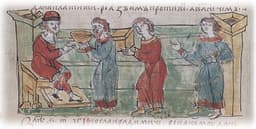
Oleg of Novgorod
Emperor · Medieval
54.8Total
Basic Information
Born
1255
845
Died
1308
912
Era
Medieval
Medieval
Nationality
Holy Roman Empire
Kievan Rus
Occupation
Emperor
Emperor
Civilization
Western
Western
Score Comparison
Military (10%)
47.5
70.0
Political (20%)
36.5
40.8
Influence (20%)
49.4
54.9
Legacy (20%)
40.8
47.5
Leadership (15%)
48.4
67.0
Strategy (15%)
43.7
60.0
TOTAL
44.4
54.8
Albert I — Complete Timeline
1298 AD
Defeated Adolf of Nassau at the Battle of GöllheimWar◆ Major
Albert I of Habsburg defeated and killed Adolf of Nassau at the Battle of G
BattleHabsburgVictory
Impact: regional
Elected King of GermanyPolitical Action◆ Major
Albert I of Habsburg was elected King of Germany after deposing Adolf of Nassau. His election was supported by the prince-electors and marked the return of Habsburg rule to the German throne.
ElectionHabsburgGerman Kingdom
Impact: regional
Crowned Holy Roman EmperorPolitical Action◆ Major
Albert I of Habsburg was crowned Holy Roman Emperor in Aachen. His coronation reaffirmed Habsburg authority in the empire, though his reign was marked by conflicts with the Papacy and the prince-electors.
CoronationHoly Roman EmpireHabsburg
Impact: regional
1308 AD
Assassinated by His Nephew John ParricidaOther◆ Major
Albert I of Habsburg was assassinated by his nephew John Parricida near Windisch, Switzerland. His death ended his reign and led to a period of instability, with the throne passing to Henry VII of Luxembourg.
AssassinationHabsburgDeath
Impact: regionaltragic
Oleg of Novgorod — Complete Timeline
882 AD
Conquest of KievWar
Oleg, a Varangian prince, captured Kiev from Askold and Dir, two Varangian leaders. He made Kiev the capital of his realm, uniting Novgorod and Kiev under his rule and founding the Kievan Rus state.
Founding of Kievan RusCapitalUnification
Impact: regional
907 AD
Rus' Siege of ConstantinopleWar◆ Major
Oleg led a fleet of 2,000 ships against the Byzantine capital, Constantinople. He blockaded the city and forced Emperor Leo VI to negotiate a favorable trade treaty, securing tribute and commercial rights for Rus merchants.
Byzantine-Rus WarTrade TreatyNaval Campaign
Impact: regional
911 AD
Rus'-Byzantine Treaty of 911Political Action◆ Major
Oleg's envoys finalized a comprehensive treaty with the Byzantine Empire in Constantinople. The treaty regulated trade, legal disputes, and military service, establishing formal diplomatic relations between Kievan Rus and Byzantium.
DiplomacyTradeByzantine Empire
Impact: regionalconstructive
Expert Analysis
Origins
Albert I of Habsburg (born 1255) was the son of King Rudolf I of Germany, founder of the Habsburg dynasty. He grew up in the Holy Roman Empire's noble court, inheriting the Duchy of Austria and Styria. His early life was shaped by the struggle to consolidate Habsburg power in the fragmented empire.
Oleg of Novgorod (born c. 845) was a Varangian prince of Scandinavian origin. He emerged as a leader among the Rus' warrior-merchants operating along the Volkhov and Dnieper rivers. His early career involved consolidating control over Novgorod, a key trading hub linking Scandinavia to Byzantium.
Rise to Power
Albert I rose to power by deposing King Adolf of Nassau in 1298. Supported by prince-electors, he was elected King of Germany after the Battle of Göllheim, where he defeated and killed Adolf. He was crowned Holy Roman Emperor in 1298, but his reign was contested by rival factions.
Oleg's rise came through the conquest of Kiev in 882. He tricked and killed the local rulers Askold and Dir, then declared Kiev the capital of his realm, uniting Novgorod and Kiev under his rule. This strategic move established the foundation of the Kievan Rus' state. His most famous achievement was the siege of Constantinople in 907, where he led 2,000 ships, forcing Emperor Leo VI to negotiate a favorable treaty in 911.
Leadership & Governance
Albert I's leadership scored 48.4 in leadership and 43.7 in strategy. He attempted to strengthen central authority in the Holy Roman Empire, but faced constant opposition from the electors and the Swiss Confederacy. His governance was marked by conflict with the Pope and internal rebellion. He failed to secure the imperial crown for his son, leading to instability after his death.
Oleg's leadership scored 67.0, reflecting his effective military command and strategic diplomacy. He governed by integrating Slavic and Varangian elites, establishing a dual capital system with Novgorod and Kiev. The 911 treaty with Byzantium secured trade privileges and legal protections for Rus' merchants, demonstrating his diplomatic acumen.
Triumph & Tragedy
Albert I's greatest success was defeating Adolf of Nassau and becoming king. However, his reign was marred by continuous conflict with the Swiss and the electors. His assassination in 1308 by his nephew John Parricida was a tragic end, leading to a period of imperial weakness.
Oleg's triumph was the conquest of Kiev and the successful campaign against Constantinople, which brought immense wealth and prestige. His tragedy is less defined; he died in 912, possibly from a snakebite as legend holds. His legacy was overshadowed by later rulers like Vladimir the Great, but his military and political achievements were foundational.
Character & Destiny
Albert I was ambitious but politically inflexible. His determination to centralize power alienated key allies, and his reliance on force rather than negotiation led to his downfall. Historical assessments criticize his lack of diplomatic skill.
Oleg was cunning and pragmatic. His use of guile to capture Kiev and his bold naval expedition show a leader who combined military might with strategy. He scored 60.0 in strategy, indicating a calculated approach. His character enabled the creation of a unified Rus' state.
Legacy
Albert I's legacy is mixed: he strengthened the Habsburg dynasty's claim to the throne but failed to secure lasting imperial authority. His influence score of 49.4 and legacy of 40.8 reflect his limited long-term impact. The Habsburgs would later rise under different leaders.
Oleg's legacy is profound: he united the northern and southern Rus' territories, establishing Kiev as a major power. The 911 treaty set a precedent for Rus'-Byzantine relations. His military score of 70.0 and total of 54.8 highlight his effectiveness. He is remembered as a founder of Kievan Rus'.
Conclusion
Oleg of Novgorod had greater impact than Albert I. Oleg's military score of 70.0 and total score of 54.8 far exceed Albert's 47.5 military and 44.4 total. Oleg's conquests and diplomatic treaty shaped the course of Eastern Europe, while Albert's reign ended in assassination and instability. Oleg's strategic vision and leadership created a lasting state, whereas Albert's efforts were largely undone by his death. The data supports Oleg as the more significant ruler.
Rankings
🥇
Oleg of NovgorodLeader
Mil: 70.0Pol: 40.8Inf: 54.9
54.8
🥈
Albert I
Mil: 47.5Pol: 36.5Inf: 49.4
44.4
+10.4 behind
How This Comparison Works
Algorithm
Each figure is scored on 6 dimensions (0—100 scale) based on structured historical data: Military (10%), Political (20%), Influence (20%), Legacy (20%), Leadership (15%), Strategy (15%). The weighted total produces the final ranking.
Data Sources
Scores are computed from structured sub-indicators in the database. Scale factors adjust for era (Ancient ×0.85, Modern ×1.0) and civilization size (Eastern ×1.05, Other ×0.80) to account for differences in population and military scale.
Maximum 3 Figures
Comparisons are limited to 2—3 figures to ensure readability and statistical meaningfulness.
Error Margins
±5 points per dimension — Sub-scores are derived from historical records with inherent uncertainty. Two figures within 5 points on a dimension should be considered roughly equivalent in that area.
Total Score Accuracy
±3 points overall — The weighted combination of 6 dimensions produces a total score with approximately ±3 points of uncertainty. Differences of less than 3 points are not statistically significant— the figures are effectively tied.
Known Limitations
- Historical records are incomplete and uneven across civilizations
- Figures from oral-tradition societies may be underrepresented
- Occupation labels can misclassify multi-role figures
- Scores measure capability and impact, not moral character
- Quantitative scoring is a comparison tool, not absolute truth
Capability Radar
Military (10%) — Battles & Warfare
Battles
20
55
Win Rate
25
60
Expansion
25
60
Political (20%) — Governance & Reform
Reform
30
30
Diplomacy
35
45
Economy
30
35
Influence (20%) — Cultural & Global Reach
Cultural
20
40
Global
15
30
Legacy (20%) — Historical Impact
Historical
25
45
Longevity
20
40
Leadership (15%) — Power & Stability
Tenure
40
50
Stability
20
40
Strategy (15%) — Tactics & Innovation
Strategy
20
55
Tactics
20
50
Reform
15
20
Similar Comparisons
Comments & Discussion
No comments yet. Be the first to share your thoughts!