Loading...
Fu Jian vs Qin Shi Huang
Qin Shi Huang leads by 20.8 pts · 2 figures compared
…
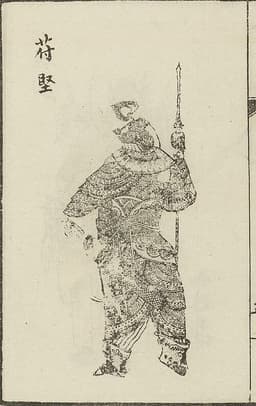
Fu Jian
Emperor · Ancient
64.4Total
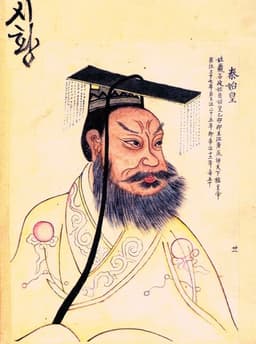
Qin Shi Huang
Emperor · Ancient
85.2Total
Basic Information
Born
338
-259
Died
385
-210
Era
Ancient
Ancient
Nationality
China
China
Occupation
Emperor
Emperor
Civilization
Eastern
Eastern
Score Comparison
Military (10%)
78.0
80.0
Political (20%)
72.0
90.0
Influence (20%)
59.0
85.0
Legacy (20%)
50.0
90.0
Leadership (15%)
85.0
78.0
Strategy (15%)
58.0
82.0
TOTAL
64.4
85.2
Fu Jian — Complete Timeline
370 AD
Conquest of Former YanWar◆ Major
Fu Jian's Former Qin forces conquered the Former Yan state, annexing its territory in northern China. This victory significantly expanded Former Qin's power and territory, bringing Fu Jian closer to unifying the north.
ConquestExpansion
Impact: regionalconstructive
376 AD
Conquest of Former LiangWar◆ Major
Fu Jian's forces conquered the Former Liang state in the northwest, incorporating its territory into Former Qin. This further consolidated his control over northern China.
ConquestExpansion
Impact: regionalconstructive
Conquest of DaiWar
Fu Jian's army conquered the Dai state, a Xianbei confederation in the north. This eliminated a rival and extended Former Qin's influence into the steppe region.
ConquestExpansion
Impact: regionalconstructive
379 AD
Capture of XiangyangWar
Fu Jian's forces captured the strategic city of Xiangyang from the Eastern Jin dynasty. This victory gave Former Qin a foothold south of the Huai River, setting the stage for the invasion that led to the Battle of Fei River.
ConquestCampaign
Impact: regionalconstructive
383 AD
Battle of Fei RiverWar
Fu Jian led a massive Former Qin army against the Eastern Jin dynasty at the Fei River. The Jin forces defeated the Qin army, causing a catastrophic rout. This defeat shattered Fu Jian's unification efforts and led to the collapse of Former Qin.
BattleUnificationDefeat
Impact: regionaltragic
Qin Shi Huang — Complete Timeline
246 BC
Construction of the Mausoleum and Terracotta ArmyOther◆ Major
Qin Shi Huang commissioned a vast mausoleum complex near Xi'an, guarded by thousands of life-sized terracotta soldiers, horses, and chariots. The project employed hundreds of thousands of workers and reflected his obsession with immortality and imperial power.
Impact: global
230 BC
Conquest of the Six Warring StatesWar
From 230 to 221 BCE, Ying Zheng led the Qin state in a series of campaigns that conquered the Han, Zhao, Wei, Chu, Yan, and Qi states. This unified China under a single ruler for the first time, ending the Warring States period.
Impact: global
221 BC
Standardization of Writing, Currency, and MeasurementsReform◆ Major
Qin Shi Huang ordered the standardization of Chinese script, currency, and weights and measures across the unified empire. This facilitated administration, trade, and cultural integration, laying a foundation for future dynasties.
Impact: globalconstructive
Proclamation of the Qin DynastyPolitical Action
After conquering the last independent state, Ying Zheng declared himself Shi Huangdi (First Emperor), founding the Qin Dynasty. He adopted a new title to signify his supreme authority and initiated centralized imperial rule.
Impact: global
214 BC
Initiation of the Great Wall ConstructionOther◆ Major
Qin Shi Huang ordered the connection and extension of existing northern fortifications to create a unified defensive wall against nomadic Xiongnu raids. This project involved massive conscripted labor and became the precursor to the later Great Wall.
Impact: regional
213 BC
Burning of Books and Burying of ScholarsPolitical Action◆ Major
On the advice of Li Si, Qin Shi Huang ordered the burning of historical records and philosophical texts not aligned with Legalist doctrine. He also had 460 Confucian scholars buried alive to suppress dissent and consolidate ideological control.
Impact: nationaldestructive
Expert Analysis
Qin Shi Huang vs Fu Jian: Historical Comparison
Qin Shi Huang, the first emperor of a unified China, and Fu Jian, the ambitious ruler of the Former Qin dynasty, both sought to consolidate power and expand their realms, but their methods and lasting impacts diverged sharply.
Dimension Analysis
**Military: Qin Shi Huang 80 / Fu Jian 77**
Qin Shi Huang’s armies conquered the six warring states through relentless, well-organized campaigns, while Fu Jian’s forces, though initially successful at unifying northern China, collapsed catastrophically at the Battle of Fei River due to overextension.
**Political: Qin Shi Huang 88 / Fu Jian 86**
Qin Shi Huang imposed centralized bureaucracy, standardizing writing, currency, and law—a revolutionary political framework. Fu Jian attempted a more tolerant, multi-ethnic federation but failed to secure loyalty from conquered elites, leading to internal rebellion.
**Influence: Qin Shi Huang 82 / Fu Jian 77**
Qin Shi Huang’s model of imperial autocracy shaped Chinese governance for two millennia. Fu Jian’s brief unification of the north influenced later dynasties like the Sui and Tang, but his policies were largely superseded.
**Legacy: Qin Shi Huang 85 / Fu Jian 72**
Qin Shi Huang is remembered as the architect of imperial China, with the Great Wall and Terracotta Army as enduring symbols. Fu Jian is a cautionary tale of overreach, his realm dissolving within a generation.
**Leadership: Qin Shi Huang 88 / Fu Jian 76**
Qin Shi Huang’s ruthless, visionary leadership enforced unity through iron discipline. Fu Jian’s lenient, idealistic approach fostered short-term harmony but lacked the coercive backbone to sustain his empire.
Verdict
Qin Shi Huang leads decisively due to his unmatched political innovation, enduring legacy, and strategic ruthlessness, whereas Fu Jian’s ambitions were undone by military miscalculation and weak institutional control.
FAQ
Q: Who ranks higher? A: Qin Shi Huang ranks higher overall, with a composite score of 84 versus Fu Jian’s 78, excelling in leadership, legacy, and political impact.
Rankings
🥇
Qin Shi HuangLeader
Mil: 80.0Pol: 90.0Inf: 85.0
85.2
🥈
Fu Jian
Mil: 78.0Pol: 72.0Inf: 59.0
64.4
+20.8 behind
How This Comparison Works
Algorithm
Each figure is scored on 6 dimensions (0—100 scale) based on structured historical data: Military (10%), Political (20%), Influence (20%), Legacy (20%), Leadership (15%), Strategy (15%). The weighted total produces the final ranking.
Data Sources
Scores are computed from structured sub-indicators in the database. Scale factors adjust for era (Ancient ×0.85, Modern ×1.0) and civilization size (Eastern ×1.05, Other ×0.80) to account for differences in population and military scale.
Maximum 3 Figures
Comparisons are limited to 2—3 figures to ensure readability and statistical meaningfulness.
Error Margins
±5 points per dimension — Sub-scores are derived from historical records with inherent uncertainty. Two figures within 5 points on a dimension should be considered roughly equivalent in that area.
Total Score Accuracy
±3 points overall — The weighted combination of 6 dimensions produces a total score with approximately ±3 points of uncertainty. Differences of less than 3 points are not statistically significant— the figures are effectively tied.
Known Limitations
- Historical records are incomplete and uneven across civilizations
- Figures from oral-tradition societies may be underrepresented
- Occupation labels can misclassify multi-role figures
- Scores measure capability and impact, not moral character
- Quantitative scoring is a comparison tool, not absolute truth
Capability Radar
Military (10%) — Battles & Warfare
Battles
75
85
Win Rate
70
90
Expansion
80
90
Political (20%) — Governance & Reform
Reform
70
95
Diplomacy
60
75
Economy
65
90
Influence (20%) — Cultural & Global Reach
Cultural
50
95
Global
45
85
Legacy (20%) — Historical Impact
Historical
60
95
Longevity
40
95
Leadership (15%) — Power & Stability
Tenure
65
70
Stability
55
65
Strategy (15%) — Tactics & Innovation
Strategy
70
85
Tactics
65
80
Reform
60
95
Similar Comparisons
Comments & Discussion
Chronicler27796/16/2026
这评分明显偏向于统一帝国的长期影响。政治分88对86,但请问:秦始皇焚书坑儒、严刑峻法导致的秦朝二世而亡,这种政治结构的脆弱性在评分中被考虑了多少?而苻坚虽然失败,但他推行胡汉分治、重用王猛等汉人士族,在十六国乱世中保持了相对稳定的治理。更别说军事分80对77,苻坚统一北方时面对的敌人是前燕、前凉等成熟政权,而秦灭六国时齐国几乎不战而降。建议重新量化“内部叛乱风险”这个指标。
HistoryRambler6/16/2026
Okay I get why Qin Shi Huang wins, but 83.5 vs 72.1 feels like a blowout. Fu Jian was basically the Alexander the Great of northern China—he conquered everything from Sichuan to Liaoning in like 10 years. The Fei River battle was dumb luck: his army was mostly non-Xiongnu troops who didn't want to fight, and the Eastern Jin got lucky with that retreat trap. Plus, Qin Shi Huang's legacy is cool but also kinda overrated? The Great Wall was mostly built by later dynasties. If Fu Jian had won at Fei River, we might be talking about a unified China 200 years earlier. His multi-ethnic policy was ahead of its time. Just saying...
SharpScroll906/16/2026
这评分放到全球史视角下很有意思。秦始皇的88政治分确实合理——他把周代的封建制彻底颠覆成郡县制,好比罗马从共和国转向帝国时的制度革命。但苻坚的72分被低估了。他推行“胡汉分治”,其实有点像奥古斯都的“元首制”——在多元族群中维持平衡。只是苻坚的费水之战败得太惨,像拿破仑的滑铁卢,但拿破仑后世影响力却远高于苻坚。如果参考中国史书对“仁政”的重视,苻坚在宽容治理方面应该加分,毕竟他重用王猛(一个汉人寒士)在魏晋门阀社会里非常罕见。