Loading...
Fu Jian vs Peter the Great
Peter the Great leads by 8.8 pts · 2 figures compared
…
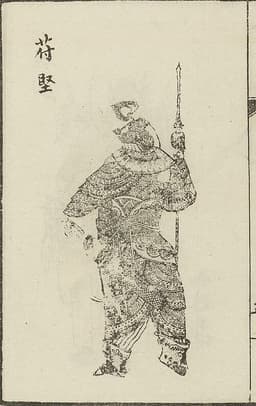
Fu Jian
Emperor · Ancient
64.4Total
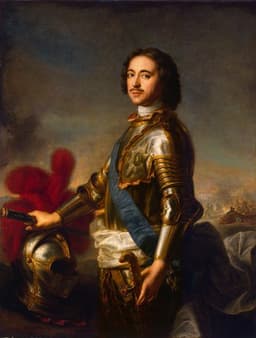
Peter the Great
Emperor · Modern
73.2Total
Basic Information
Born
338
1672
Died
385
1725
Era
Ancient
Modern
Nationality
China
Russia
Occupation
Emperor
Emperor
Civilization
Eastern
Western
Score Comparison
Military (10%)
78.0
75.0
Political (20%)
72.0
90.0
Influence (20%)
59.0
68.0
Legacy (20%)
50.0
65.0
Leadership (15%)
85.0
78.0
Strategy (15%)
58.0
72.0
TOTAL
64.4
73.2
Fu Jian — Complete Timeline
370 AD
Conquest of Former YanWar◆ Major
Fu Jian's Former Qin forces conquered the Former Yan state, annexing its territory in northern China. This victory significantly expanded Former Qin's power and territory, bringing Fu Jian closer to unifying the north.
ConquestExpansion
Impact: regionalconstructive
376 AD
Conquest of Former LiangWar◆ Major
Fu Jian's forces conquered the Former Liang state in the northwest, incorporating its territory into Former Qin. This further consolidated his control over northern China.
ConquestExpansion
Impact: regionalconstructive
Conquest of DaiWar
Fu Jian's army conquered the Dai state, a Xianbei confederation in the north. This eliminated a rival and extended Former Qin's influence into the steppe region.
ConquestExpansion
Impact: regionalconstructive
379 AD
Capture of XiangyangWar
Fu Jian's forces captured the strategic city of Xiangyang from the Eastern Jin dynasty. This victory gave Former Qin a foothold south of the Huai River, setting the stage for the invasion that led to the Battle of Fei River.
ConquestCampaign
Impact: regionalconstructive
383 AD
Battle of Fei RiverWar
Fu Jian led a massive Former Qin army against the Eastern Jin dynasty at the Fei River. The Jin forces defeated the Qin army, causing a catastrophic rout. This defeat shattered Fu Jian's unification efforts and led to the collapse of Former Qin.
BattleUnificationDefeat
Impact: regionaltragic
Peter the Great — Complete Timeline
1697 AD
Grand EmbassyPolitical Action◆ Major
Peter the Great traveled incognito to Western Europe as part of a diplomatic mission. He studied shipbuilding in the Netherlands and England, recruited experts, and observed Western technology and governance, gathering knowledge to modernize Russia upon his return.
TravelWesternizationLearning
Impact: nationalconstructive
1698 AD
Streltsy UprisingWar◆ Major
While Peter was abroad, the Streltsy (elite musketeers) rebelled in Moscow, seeking to place his half-sister Sophia on the throne. Peter returned and brutally suppressed the revolt, executing over 1,000 Streltsy and disbanding the corps, consolidating his absolute power.
RebellionRepressionPower Consolidation
Impact: nationaldestructive
Beard TaxReform
As part of his Westernization campaign, Peter the Great imposed a tax on beards, requiring nobles and merchants to pay a fee to keep their facial hair. Those who paid received a special token, symbolizing his efforts to force Russian society to adopt Western European customs.
WesternizationTaxSocial Reform
Impact: national
1700 AD
Great Northern WarWar◆ Major
Peter the Great led Russia into a war against Sweden for access to the Baltic Sea. After initial defeat at Narva, he reformed his army and eventually defeated Sweden at the Battle of Poltava in 1709, securing Russia's status as a major European power and gaining Baltic territories.
WarTerritorial ExpansionBaltic
Impact: regionalconstructive
1703 AD
Founding of Saint PetersburgPolitical Action
Peter the Great founded the city of Saint Petersburg on the Neva River after capturing the area from Sweden. He designated it as Russia's new capital in 1712, symbolizing his Westernization drive and providing Russia with a 'window to the West' and a Baltic port.
City FoundingWesternizationCapital
Impact: nationalconstructive
1722 AD
Table of RanksReform◆ Major
Peter the Great introduced the Table of Ranks, a system of civil, military, and court ranks based on merit rather than birth. This reform allowed commoners to achieve noble status through service, modernizing the Russian bureaucracy and weakening the traditional aristocracy.
BureaucracyMeritocracySocial Reform
Impact: nationalprogressive
Expert Analysis
Peter the Great vs Fu Jian
# The Emperor and the Tsar: Two Paths to Power, Two Destinies
On a spring morning in 1697, a tall young man in plain clothes slipped through the streets of Amsterdam, his calloused hands eager to grip a shipbuilder’s adze. He was the Tsar of all Russia, traveling incognito to learn the secrets of the West. A century earlier and half a world away, another ruler—Fu Jian of the Former Qin—stood atop a hill in northern China, watching his armies swallow kingdom after kingdom, dreaming of a unified realm under his banner. Both men sought to transform their worlds. One would succeed beyond measure; the other would see his life’s work shatter in a single afternoon. What made the difference?
Origins
Peter Alekseyevich Romanov was born into a Russia still medieval in spirit—isolated, suspicious of foreigners, ruled by boyar clans who fought over the throne like wolves over a carcass. His childhood was a crucible of violence: at age ten, he watched relatives butchered by mutinous musketeers. The trauma forged a cold, pragmatic mind. He learned to sail on a pond in the Kremlin, and that small boat became his obsession—a window to the sea, and beyond it, Europe.
Fu Jian was born in 338, during the chaos of the Sixteen Kingdoms, when northern China was a patchwork of warring states. His father was a chieftain of the Di people, a non-Han ethnic group. Unlike Peter, who inherited a throne through blood, Fu Jian seized power at nineteen by overthrowing a tyrant. He was raised on Confucian texts and military strategy, a rare blend of scholarly refinement and steppe warrior ferocity. Where Peter saw the West as a model, Fu Jian looked to the Han dynasty—a golden age he believed he could restore.
Rise to Power
Peter’s ascent was a slow, grinding climb. He shared the throne with his half-brother Ivan until Ivan’s death, then spent years dismantling the power of the regent Sophia, who had ruled during his youth. His real rise began not in Moscow, but in the shipyards of the Netherlands and England. The Grand Embassy of 1697 was a diplomatic mission, but for Peter it was a university. He returned with blueprints, craftsmen, and a burning conviction: Russia must be remade.
Fu Jian’s rise was swifter and more spectacular. In just over a decade, he conquered the Former Yan, the Former Liang, and the Dai confederation, uniting nearly all of northern China under the Former Qin. His army was a multi-ethnic force of Chinese, Xianbei, and Qiang warriors. By 379, he had captured Xiangyang, a key city of the Eastern Jin dynasty. The south lay before him like ripe fruit. His courtiers urged caution; Fu Jian replied with the confidence of a man who had never known defeat.
Leadership & Governance
Peter the Great governed like a master mechanic disassembling a broken machine. He imposed a beard tax to break the symbolic hold of old Russian custom. He introduced the Table of Ranks in 1722, replacing birth with merit as the basis for advancement—a revolutionary idea in a society built on bloodlines. He forced nobles into state service, built a navy from nothing, and moved his capital to a swamp—St. Petersburg—to plant Russia’s face toward Europe. His methods were brutal: peasants were conscripted by the thousands, and those who resisted were hanged. But the machine worked.
Fu Jian governed as a Confucian idealist. He promoted education, built schools, and patronized Buddhist monasteries. He appointed Han Chinese officials alongside his own Di tribesmen, believing that culture, not ethnicity, could bind his empire together. He was generous to defeated enemies, often incorporating their leaders into his court. This magnanimity was strategic—but it was also a vulnerability. He trusted too easily.
Triumph & Tragedy
Peter’s greatest triumph was the Great Northern War against Sweden. After a humiliating defeat at Narva in 1700, he rebuilt his army from scratch. By 1709, at Poltava, he crushed the Swedish king Charles XII—one of the great military upsets in history. Russia gained its Baltic coastline, and Peter proclaimed himself Emperor. His tragedy was personal: he tortured his own son Alexei to death for opposing his reforms. The price of transformation was measured in blood, and Peter paid it without flinching.
Fu Jian’s tragedy was the Battle of Fei River in 383. He assembled an army so vast that legend says it stretched for a hundred miles. But when his troops attempted to cross the river, the Eastern Jin forces attacked, and the Qin army collapsed—not from enemy valor, but from panic and miscommunication. The retreat became a rout. Within two years, his empire disintegrated into rebellion. The man who had nearly unified China died in 385, killed by his own former general.
Character & Destiny
Peter was a man of relentless will and cold calculation. He could drink for days, work for nights, and forgive no weakness—not even in his own son. His curiosity was voracious, his cruelty casual. He believed that history was a machine that could be forced into motion, and he was the engineer.
Fu Jian was a dreamer. He believed in a unified China, but he did not understand that unity requires more than conquest—it requires loyalty. His mercy to enemies was seen as weakness; his multi-ethnic army had no common cause beyond his person. When he faltered at Fei River, the empire he had built vanished like smoke.
Legacy
Peter the Great left a Russia that was European, bureaucratic, and militarized—for better and worse. His legacy is St. Petersburg, the navy, and the Table of Ranks. He is remembered as the man who dragged Russia into modernity, kicking and screaming.
Fu Jian is remembered as a cautionary tale. The Fei River became a byword for overconfidence. His empire was a flash in the pan, but his dream of unity lived on—and was realized two centuries later by the Sui dynasty. He was a bridge, not a destination.
Conclusion
Two rulers, two dreams. One forced his nation to change through iron and will; the other tried to bind a fractured land through generosity and vision. Peter succeeded because he was ruthless enough to destroy the old world. Fu Jian failed because he was too gentle to hold the new one together. In the end, history rewards not just ambition, but the cold willingness to pay its price. What remains is the question every leader must answer: how much are you willing to break—including yourself—to build what you imagine?
Rankings
🥇
Peter the GreatLeader
Mil: 75.0Pol: 90.0Inf: 68.0
73.2
🥈
Fu Jian
Mil: 78.0Pol: 72.0Inf: 59.0
64.4
+8.8 behind
How This Comparison Works
Algorithm
Each figure is scored on 6 dimensions (0—100 scale) based on structured historical data: Military (10%), Political (20%), Influence (20%), Legacy (20%), Leadership (15%), Strategy (15%). The weighted total produces the final ranking.
Data Sources
Scores are computed from structured sub-indicators in the database. Scale factors adjust for era (Ancient ×0.85, Modern ×1.0) and civilization size (Eastern ×1.05, Other ×0.80) to account for differences in population and military scale.
Maximum 3 Figures
Comparisons are limited to 2—3 figures to ensure readability and statistical meaningfulness.
Error Margins
±5 points per dimension — Sub-scores are derived from historical records with inherent uncertainty. Two figures within 5 points on a dimension should be considered roughly equivalent in that area.
Total Score Accuracy
±3 points overall — The weighted combination of 6 dimensions produces a total score with approximately ±3 points of uncertainty. Differences of less than 3 points are not statistically significant— the figures are effectively tied.
Known Limitations
- Historical records are incomplete and uneven across civilizations
- Figures from oral-tradition societies may be underrepresented
- Occupation labels can misclassify multi-role figures
- Scores measure capability and impact, not moral character
- Quantitative scoring is a comparison tool, not absolute truth
Capability Radar
Military (10%) — Battles & Warfare
Battles
75
85
Win Rate
70
80
Expansion
80
90
Political (20%) — Governance & Reform
Reform
70
95
Diplomacy
60
80
Economy
65
85
Influence (20%) — Cultural & Global Reach
Cultural
50
85
Global
45
85
Legacy (20%) — Historical Impact
Historical
60
90
Longevity
40
85
Leadership (15%) — Power & Stability
Tenure
65
90
Stability
55
70
Strategy (15%) — Tactics & Innovation
Strategy
70
85
Tactics
65
75
Reform
60
95
Similar Comparisons
Comments & Discussion
Tsar's Apprentice6/16/2026
Peter the Great was practically a medieval influencer before the term existed—dressing down as a commoner to learn shipbuilding in Amsterdam, building St. Petersburg from a swamp. He didn't just reform Russia; he dragged it kicking and screaming into modernity. Fu Jian? He conquered like a whirlwind but governed like a scholar's daydream, trusting loyalty over structure. Peter's navy, his Table of Ranks, even the beard tax—that's institutional grit. Fu Jian's sin was being too soft for the hard
流水账破壁人6/16/2026
彼得大帝的改革是数据上的成功,但傅坚的教训同样震撼。前者建了海军、开了工厂,俄国人口在他死后翻倍;后者仅淝水一战就损失数十万精锐,前秦直接崩盘。别拿人口基数说事——北魏统一北方时也打硬仗。傅坚的问题不是野心太大,是整合太差,多元帝国没稳根基就玩闪电战。彼得可不敢这样:他连瑞典一个省都要啃十年。
Barbarian Realpolitik6/16/2026
Fu Jian believed in Confucian virtue even when facing enemies; he spared surrendered kings, promoted them to his court. That's noble, sure, but it's terrible strategy. Peter executed rebels, crushed the Streltsy, and forced loyalty through fear. The difference? Fei River broke Fu Jian's coalition of half-loyal tribes. Poltava made Peter a legend. One trusted the "Mandate of Heaven," the other built a modern state apparatus. Guess which empire lasted another two centuries.
龙蛇演义6/16/2026
说傅坚是“仁君”是种误读。他推进汉化没错,但真正致命的是军事系统的落伍。前秦军队本质是部落联军,靠御驾亲征和赏赐维持忠诚。彼得大帝搞的是常备军制度——近卫军、征兵令、军事学院,把打仗变成国家机器的一部分。淝水之战前秦号称百万,但指挥链一断就崩;波尔塔瓦俄军只有四万,打的是建制。这不是性格差异,是制度鸿沟。
Scholarship of Smoke6/16/2026
Let's check the casualty numbers again. Fei River chronicles claim Fu Jian lost 70-80% of his army? That smells like Tang dynasty propaganda to me, inflating the victors' glory. Meanwhile, Peter's Great Northern War saw 40,000 Russian dead out of 130,000 mobilized over two decades—a 30% loss rate, but he won. The real difference isn't leadership style; it's that Peter had a longer timeline and more resource depth. Fu Jian burned bright then crashed; Peter burned slow and built infrastructure. Sp