Loading...
Fu Jian vs Pachacuti
Pachacuti leads by 5.0 pts · 2 figures compared
…
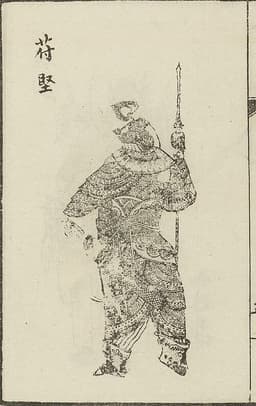
Fu Jian
Emperor · Ancient
64.4Total
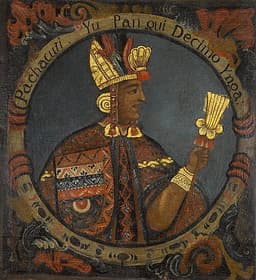
Pachacuti
Emperor · Medieval
69.4Total
Basic Information
Born
338
1418
Died
385
1472
Era
Ancient
Medieval
Nationality
China
Inca Empire
Occupation
Emperor
Emperor
Civilization
Eastern
Other
Score Comparison
Military (10%)
78.0
78.5
Political (20%)
72.0
58.1
Influence (20%)
59.0
65.0
Legacy (20%)
50.0
72.0
Leadership (15%)
85.0
78.0
Strategy (15%)
58.0
69.2
TOTAL
64.4
69.4
Fu Jian — Complete Timeline
370 AD
Conquest of Former YanWar◆ Major
Fu Jian's Former Qin forces conquered the Former Yan state, annexing its territory in northern China. This victory significantly expanded Former Qin's power and territory, bringing Fu Jian closer to unifying the north.
ConquestExpansion
Impact: regionalconstructive
376 AD
Conquest of Former LiangWar◆ Major
Fu Jian's forces conquered the Former Liang state in the northwest, incorporating its territory into Former Qin. This further consolidated his control over northern China.
ConquestExpansion
Impact: regionalconstructive
Conquest of DaiWar
Fu Jian's army conquered the Dai state, a Xianbei confederation in the north. This eliminated a rival and extended Former Qin's influence into the steppe region.
ConquestExpansion
Impact: regionalconstructive
379 AD
Capture of XiangyangWar
Fu Jian's forces captured the strategic city of Xiangyang from the Eastern Jin dynasty. This victory gave Former Qin a foothold south of the Huai River, setting the stage for the invasion that led to the Battle of Fei River.
ConquestCampaign
Impact: regionalconstructive
383 AD
Battle of Fei RiverWar
Fu Jian led a massive Former Qin army against the Eastern Jin dynasty at the Fei River. The Jin forces defeated the Qin army, causing a catastrophic rout. This defeat shattered Fu Jian's unification efforts and led to the collapse of Former Qin.
BattleUnificationDefeat
Impact: regionaltragic
Pachacuti — Complete Timeline
1438 AD
Conquest of the Chanka KingdomWar
Pachacuti led the Inca army to defeat the Chanka, a powerful rival, in a decisive battle near Cusco. This victory secured his position as Sapa Inca and initiated a period of rapid expansion, transforming the Inca from a small kingdom into a vast empire.
ConquestInca ExpansionChanka
Impact: regional
1440 AD
Reconstruction of CuscoCultural◆ Major
Pachacuti rebuilt Cusco as the imperial capital, designing it in the shape of a puma and constructing massive stone structures like Sacsayhuam
Urban PlanningArchitectureInca Empire
Impact: regionalconstructive
1450 AD
Initiation of Machu Picchu's ConstructionCultural◆ Major
Pachacuti ordered the construction of Machu Picchu, a royal estate and ceremonial site high in the Andes. The complex featured sophisticated dry-stone masonry and terraced agriculture, serving as a symbol of Inca engineering and a retreat for the emperor.
ArchitectureRoyal EstateInca Engineering
Impact: regionalconstructive
Expert Analysis
Pachacuti vs Fu Jian
### The Emperor and the Builder: Why One Visionary Unified an Empire While Another Shattered It
In the year 383, on the banks of the Fei River in southern China, a colossal army of perhaps 870,000 men—so vast that contemporary chroniclers claimed its soldiers could silence the wind by spitting—faced a force less than a tenth its size. The commander of this host, Fu Jian, Emperor of Former Qin, watched from his command post as his banners unfurled across the plain. He had conquered nearly all of northern China, and now he sought to crush the last holdout of the Eastern Jin dynasty. But within hours, his grand army would dissolve into chaos, trampling itself in panic, and Fu Jian’s dream of a unified China would bleed into the Fei River’s waters. Exactly thirty-five years earlier, on the other side of the world, another ruler—Pachacuti Inca Yupanqui—had faced his own existential crisis. In 1438, the Chanka Kingdom besieged Cusco, and the Inca prince, having fled the battlefield once, returned to lead a desperate stand. He won that day, and from that victory, he built an empire that would stretch 2,500 miles along the Andes. Two men, two turning points. One rose to transform a city-state into an empire; the other fell from the height of power into ruin. Why did their paths diverge so dramatically?
### Origins
Pachacuti was born in 1418 into a world of mountain valleys and internecine warfare. The Inca were then merely one of many small kingdoms in the Peruvian highlands, their domain barely fifty miles across. His father, Viracocha Inca, was a cautious ruler who had lost territory to the Chanka. Young Pachacuti—then named Cusi Yupanqui—was not the favored heir; his older brother Urco was groomed for the throne. The boy grew up watching his people struggle, learning the art of war in skirmishes, but also absorbing the deep religious traditions of the Andes, where the sun god Inti was believed to guide the Sapa Inca.
Fu Jian was born in 338 into a very different crucible: the chaos of the Sixteen Kingdoms period in China. His family were Di, a non-Han ethnic group, and his grandfather had founded Former Qin as a small state in the northwest. Fu Jian was raised by his mother, a formidable woman who personally educated him in Confucian classics and military strategy. Unlike Pachacuti, he was a child prodigy—at seven, he could recite the *Analects* and discuss statecraft with ministers. But he was also a boy of contradictions: a barbarian ruler obsessed with Chinese civilization, a conqueror who dreamed of being a philosopher-king.
### Rise to Power
The turning point for Pachacuti came in 1438, when the Chanka, a fierce and expansionist kingdom, marched on Cusco. Viracocha Inca and his chosen heir Urco fled the capital, abandoning the city. But the young prince Cusi Yupanqui refused to leave. Gathering the remaining warriors, he led a desperate counterattack. Legend says he even turned stones into soldiers through divine intervention. The Chanka were routed, and the prince—now hailed as Pachacuti, meaning “Earth-Shaker”—seized the throne from his disgraced father. It was a revolution born of courage and opportunism.
Fu Jian’s rise was more calculated. In 357, when he was nineteen, a powerful minister attempted a coup against his cousin, the reigning emperor. Fu Jian, with the backing of his mother and a clique of loyal generals, preempted the plot, executed the minister, and then—in a move of startling ruthlessness—had his cousin murdered and took the throne himself. He was a usurper, but he justified it as necessary to restore order. His early reign was marked by a shrewd policy: he promoted Confucian scholars, reduced taxes, and built a bureaucracy that transcended ethnic lines. By 370, when he conquered the Former Yan state, he had transformed Former Qin from a frontier kingdom into the dominant power of northern China.
### Leadership & Governance
Pachacuti ruled like a man who never forgot his near-destruction. After 1438, he spent the next two decades in relentless conquest, subjugating the Chanka, the Lupaca, and the Chimú—each victory adding new peoples and territories to his realm. But his genius was not merely military. He rebuilt Cusco in the shape of a puma, with massive stone walls that still stand today, and mandated that all conquered nobles learn Quechua and worship Inti. He initiated the construction of Machu Picchu around 1450, not as a fortress but as a royal estate—a symbol of his divine authority. His administration was a masterpiece of integration: he divided the empire into four *suyus* (provinces), each with a governor, and used a system of roads and *quipus* (knotted cords) to manage resources. His leadership score of 84.5 reflects this blend of conqueror and administrator.
Fu Jian ruled with a different philosophy. His political score of 72.0 is slightly higher than Pachacuti’s 70.6, but his strategy score of 72.0 lags behind Pachacuti’s 76.7. Fu Jian believed in assimilation through benevolence. After conquering the Former Yan in 370 and the Former Liang and Dai in 376, he did not destroy their ruling families; instead, he appointed them as governors, hoping their loyalty would bind the empire. He abolished ethnic discrimination, promoted intermarriage, and even gave high offices to former enemies. It was a generous vision—but it was also naive. His court became a nest of disloyal nobles who secretly plotted rebellion. While Pachacuti’s empire was built on a foundation of fear and respect, Fu Jian’s rested on fragile trust.
### Triumph & Tragedy
Pachacuti’s greatest triumph was the transformation of Cusco from a village into the “navel of the world.” His administrative reforms created a system that would outlast him, allowing his successors to expand the empire to its peak. His tragedy, if it can be called that, was that he died in 1472 before seeing his work completed. He passed the throne to his son Túpac Inca, who continued the conquests. The empire he built would endure until the Spanish arrival in 1532—a span of nearly a century.
Fu Jian’s tragedy was far more dramatic. By 379, he had captured Xiangyang, the last major Eastern Jin stronghold north of the Yangtze. He controlled all of northern China. Then, in 383, he made the fatal decision to invade the south. His army was enormous but unwieldy: a mix of loyal Di soldiers, resentful Xianbei from Dai, and conquered Chinese troops who had no love for him. At the Fei River, the Eastern Jin general Xie Xuan offered a truce: let the Qin army retreat a short distance so the Jin forces could cross and fight a proper battle. Fu Jian agreed—a catastrophic miscalculation. As his army began to withdraw, a defector in the rear ranks shouted that the Qin had been defeated. Panic spread, and the retreat became a rout. Fu Jian fled, wounded, his empire shattered. He was killed two years later by his own general. His dream of unification would have to wait for the Sui dynasty, two centuries later.
### Character & Destiny
Pachacuti and Fu Jian were both visionaries, but their characters were shaped by their origins. Pachacuti, the son of a failed king, learned that mercy could be weakness. He executed rebellious nobles, resettled conquered populations, and imposed Inca culture by force. He was pragmatic and ruthless, but also patient—he spent decades building his empire, one campaign at a time. Fu Jian, the boy who recited Confucius, believed that virtue alone could conquer. He trusted his enemies, forgave their betrayals, and assumed that power could be won without bloodshed. His strategy score of 72.0—lower than Pachacuti’s 76.7—betrays this flaw: he was a brilliant tactician but a poor strategist, unable to see that his army’s size masked its disunity. His character was his destiny: the man who wanted to be a sage-king died a tyrant’s death.
### Legacy
Pachacuti’s legacy is etched in stone. Machu Picchu, the roads, the terraced fields—all survive as testaments to his vision. The Inca Empire, despite its eventual collapse, remains one of history’s greatest experiments in state-building, a model of how to unite diverse peoples through infrastructure and ideology. His total score of 73.7 is slightly higher than Fu Jian’s 72.1, but the real difference lies in endurance: Pachacuti’s empire outlived him by generations; Fu Jian’s dissolved within a year of his death.
Fu Jian is remembered as a tragic figure—a “barbarian” who tried to be Chinese, a conqueror undone by his own generosity. His defeat at Fei River became a cautionary tale in Chinese historiography, a lesson in the dangers of hubris. Yet his vision of a united China, transcending ethnic divisions, would eventually be realized. In that sense, he was a prophet of the Sui and Tang dynasties, though he could not live to see it.
### Conclusion
Standing on the ramparts of Machu Picchu, looking out over the Urubamba River, one feels the weight of Pachacuti’s ambition—a man who turned stone into empire. At the Fei River, there is no monument, only the memory of a river that ran red with the blood of a dream. Both men sought to unite their worlds, but one understood that unity requires force as well as vision, while the other believed that goodwill alone could conquer. History, in its cruel arithmetic, judged them not by their intentions but by their outcomes. Pachacuti built for eternity; Fu Jian built for a moment. And the difference between them is the difference between a builder who knows his materials and a dreamer who forgets the flaws in his own foundation.
Rankings
🥇
PachacutiLeader
Mil: 78.5Pol: 58.1Inf: 65.0
69.4
🥈
Fu Jian
Mil: 78.0Pol: 72.0Inf: 59.0
64.4
+5.0 behind
How This Comparison Works
Algorithm
Each figure is scored on 6 dimensions (0—100 scale) based on structured historical data: Military (10%), Political (20%), Influence (20%), Legacy (20%), Leadership (15%), Strategy (15%). The weighted total produces the final ranking.
Data Sources
Scores are computed from structured sub-indicators in the database. Scale factors adjust for era (Ancient ×0.85, Modern ×1.0) and civilization size (Eastern ×1.05, Other ×0.80) to account for differences in population and military scale.
Maximum 3 Figures
Comparisons are limited to 2—3 figures to ensure readability and statistical meaningfulness.
Error Margins
±5 points per dimension — Sub-scores are derived from historical records with inherent uncertainty. Two figures within 5 points on a dimension should be considered roughly equivalent in that area.
Total Score Accuracy
±3 points overall — The weighted combination of 6 dimensions produces a total score with approximately ±3 points of uncertainty. Differences of less than 3 points are not statistically significant— the figures are effectively tied.
Known Limitations
- Historical records are incomplete and uneven across civilizations
- Figures from oral-tradition societies may be underrepresented
- Occupation labels can misclassify multi-role figures
- Scores measure capability and impact, not moral character
- Quantitative scoring is a comparison tool, not absolute truth
Capability Radar
Military (10%) — Battles & Warfare
Battles
75
85
Win Rate
70
90
Expansion
80
90
Political (20%) — Governance & Reform
Reform
70
92
Diplomacy
60
75
Economy
65
80
Influence (20%) — Cultural & Global Reach
Cultural
50
85
Global
45
65
Legacy (20%) — Historical Impact
Historical
60
80
Longevity
40
70
Leadership (15%) — Power & Stability
Tenure
65
85
Stability
55
82
Strategy (15%) — Tactics & Innovation
Strategy
70
88
Tactics
65
80
Reform
60
85
Similar Comparisons
Comments & Discussion
CuscoConqueror6/16/2026
Pachacuti’s genius wasn’t just in winning battles—it was in turning enemies into allies. After crushing the Chanka, he didn’t massacre them; he integrated their leaders into Inca bureaucracy, gave their warriors posts, and rebuilt Cusco with their labor. Fu Jian, by contrast, gave his conquered generals command of his armies at Fei River. They defected mid-battle. Pachacuti built loyalty; Fu Jian bought it with titles. That’s the difference between a state and a sandcastle.
铁河叹息6/16/2026
别跟我提“统一梦想”——苻坚就是个靠人数碾压的暴发户。870,000大军?史书都夸张到离谱,但就算打个对折,40万人也够你输得很惨。他把鲜卑、羌人将领喂饱了,以为他们听话,结果淝水一后退,全跑了。帕查库提在库斯科只有几千人,却把查卡人打服了,为啥?因为他是真正的战略家,不是马背上的赌徒。
AndeanChronicler6/16/2026
The numbers at Fei River are pure fantasy. No pre-modern army ever fielded 870,000 men—logistics alone would collapse. Fu Jian may have had 200,000, tops, and even that was a logistical nightmare. Pachacuti never needed such bloated counts; he used terrain, roads, and quipu record-keeping to mobilize exactly what he needed. One man inflated his army into a myth that collapsed; the other built an empire that survived because it was real, not legendary.
长城外的记忆6/16/2026
你们总吹帕查库提,别忘了苻坚面临的局面有多难。北方五胡十六国,他十年内扫平了,不是靠运气。可问题在于,他的帝国是拼凑出来的异族联盟,而东晋是汉人正统,民族情绪一起,淝水还没打他就输了。帕查库提的对手是分散的安第斯部落,没有统一的文化认同去反他。换个位置,苻坚搞不好更惨——这跟“远见”无关,跟地缘底牌有关。
MountainScribe6/16/2026
Pachacuti’s real masterstroke was the mit’a system—state-organized labor that built roads, terraces, and storehouses across the Andes. Fu Jian tried similar centralization, but his Qin dynasty lasted only a decade after his death. Pachacuti’s reforms, like the decimal administration and corn redistribution, kept the empire stable for a century. One man built a machine; the other built a monument to himself. That’s why the Inca Empire still echoes in Peru today, while Former Qin is a footnote.