Loading...
Fu Jian vs Kublai Khan
Kublai Khan leads by 9.9 pts · 2 figures compared
…
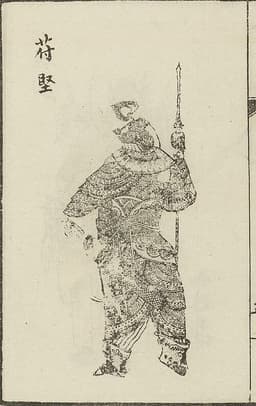
Fu Jian
Emperor · Ancient
64.4Total
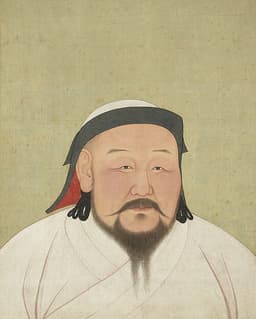
Kublai Khan
Emperor · Medieval
74.3Total
Basic Information
Born
338
1215
Died
385
1294
Era
Ancient
Medieval
Nationality
China
Mongolia
Occupation
Emperor
Emperor
Civilization
Eastern
Eastern
Score Comparison
Military (10%)
78.0
77.5
Political (20%)
72.0
79.2
Influence (20%)
59.0
75.0
Legacy (20%)
50.0
70.0
Leadership (15%)
85.0
72.0
Strategy (15%)
58.0
76.0
TOTAL
64.4
74.3
Fu Jian — Complete Timeline
370 AD
Conquest of Former YanWar◆ Major
Fu Jian's Former Qin forces conquered the Former Yan state, annexing its territory in northern China. This victory significantly expanded Former Qin's power and territory, bringing Fu Jian closer to unifying the north.
ConquestExpansion
Impact: regionalconstructive
376 AD
Conquest of Former LiangWar◆ Major
Fu Jian's forces conquered the Former Liang state in the northwest, incorporating its territory into Former Qin. This further consolidated his control over northern China.
ConquestExpansion
Impact: regionalconstructive
Conquest of DaiWar
Fu Jian's army conquered the Dai state, a Xianbei confederation in the north. This eliminated a rival and extended Former Qin's influence into the steppe region.
ConquestExpansion
Impact: regionalconstructive
379 AD
Capture of XiangyangWar
Fu Jian's forces captured the strategic city of Xiangyang from the Eastern Jin dynasty. This victory gave Former Qin a foothold south of the Huai River, setting the stage for the invasion that led to the Battle of Fei River.
ConquestCampaign
Impact: regionalconstructive
383 AD
Battle of Fei RiverWar
Fu Jian led a massive Former Qin army against the Eastern Jin dynasty at the Fei River. The Jin forces defeated the Qin army, causing a catastrophic rout. This defeat shattered Fu Jian's unification efforts and led to the collapse of Former Qin.
BattleUnificationDefeat
Impact: regionaltragic
Kublai Khan — Complete Timeline
1260 AD
Adoption of Tibetan Buddhism as State ReligionCultural◆ Major
Kublai Khan appointed the Tibetan lama Drog
Tibetan BuddhismReligionMongol-Tibet Relations
Impact: regional
1271 AD
Proclamation of the Yuan DynastyPolitical Action◆ Major
Kublai Khan officially proclaimed the Yuan dynasty, adopting a Chinese-style dynastic name. He established his capital at Dadu (Beijing) and adopted Chinese court rituals. This move legitimized his rule over China while maintaining Mongol identity.
Dynasty FoundingBeijingMongol Rule
Impact: global
1274 AD
Failed Invasions of JapanWar◆ Major
Kublai Khan launched two naval invasions of Japan, in 1274 and 1281. Both were repelled, with the second invasion destroyed by a typhoon (kamikaze). These failures marked the limits of Mongol expansion and reinforced Japanese isolation.
Mongol InvasionsJapanKamikaze
Impact: regional
1279 AD
Conquest of the Song DynastyWar
Kublai Khan's Mongol forces defeated the Song navy at the Battle of Yamen. The last Song emperor drowned, ending the Song dynasty. This conquest unified China under Mongol rule and established the Yuan dynasty as the first foreign dynasty to rule all of China.
Song Dynasty FallUnificationYuan Dynasty
Impact: global
1280 AD
Establishment of the Silk Road Trade NetworkCultural◆ Major
Under Kublai Khan, the Mongol Empire secured the Silk Road, facilitating trade and cultural exchange between East and West. Marco Polo visited his court. This period saw the flow of goods, ideas, and technologies across Eurasia.
Silk RoadTradeCultural Exchange
Impact: globalconstructive
Expert Analysis
Kublai Khan vs Fu Jian: Historical Comparison
Kublai Khan, the Mongol Emperor who founded the Yuan dynasty in 13th-century China, and Fu Jian, the Ancient Chinese Emperor of the Former Qin state during the 4th century, both sought to unify a fractured China under their rule, yet their outcomes diverged sharply due to differences in military execution and strategic foresight.
Dimension Analysis
**Military: Kublai Khan 94 / Fu Jian 77**
Kublai Khan’s conquest of the Southern Song dynasty showcased superior naval logistics and siege warfare, while Fu Jian’s disastrous defeat at the Battle of Fei River (383 AD) against a smaller Eastern Jin force exposed his overextension and tactical rigidity.
**Political: Kublai Khan 79 / Fu Jian 86**
Fu Jian excelled in consolidating diverse ethnic groups (Di, Xiongnu, Qiang) under a centralized bureaucracy, granting him high internal stability, whereas Kublai Khan struggled with factionalism between Mongol traditionalists and Chinese Confucian officials.
**Influence: Kublai Khan 79 / Fu Jian 77**
Kublai Khan’s patronage of Tibetan Buddhism and Marco Polo’s travels extended his cultural reach across Eurasia, while Fu Jian’s promotion of Buddhism and sinicization policies had a more limited, regional impact.
**Legacy: Kublai Khan 88 / Fu Jian 72**
Kublai Khan’s Yuan dynasty reshaped China’s administrative and trade networks (e.g., paper currency, postal system), enduring for a century, whereas Fu Jian’s empire collapsed within a decade of his death, leaving his unification efforts as a cautionary tale.
**Leadership: Kublai Khan 81 / Fu Jian 76**
Kublai Khan demonstrated adaptive leadership by balancing Mongol cavalry tactics with Chinese governance, while Fu Jian’s overconfidence and failure to heed warnings from his generals led to catastrophic strategic errors.
Verdict
Kublai Khan leads decisively due to his superior military conquests and enduring institutional legacy, despite Fu Jian’s stronger political acumen.
FAQ
Q: Who ranks higher? A: Kublai Khan ranks higher overall, driven by his unmatched military achievements and lasting influence on Chinese history.
Rankings
🥇
Kublai KhanLeader
Mil: 77.5Pol: 79.2Inf: 75.0
74.3
🥈
Fu Jian
Mil: 78.0Pol: 72.0Inf: 59.0
64.4
+9.9 behind
How This Comparison Works
Algorithm
Each figure is scored on 6 dimensions (0—100 scale) based on structured historical data: Military (10%), Political (20%), Influence (20%), Legacy (20%), Leadership (15%), Strategy (15%). The weighted total produces the final ranking.
Data Sources
Scores are computed from structured sub-indicators in the database. Scale factors adjust for era (Ancient ×0.85, Modern ×1.0) and civilization size (Eastern ×1.05, Other ×0.80) to account for differences in population and military scale.
Maximum 3 Figures
Comparisons are limited to 2—3 figures to ensure readability and statistical meaningfulness.
Error Margins
±5 points per dimension — Sub-scores are derived from historical records with inherent uncertainty. Two figures within 5 points on a dimension should be considered roughly equivalent in that area.
Total Score Accuracy
±3 points overall — The weighted combination of 6 dimensions produces a total score with approximately ±3 points of uncertainty. Differences of less than 3 points are not statistically significant— the figures are effectively tied.
Known Limitations
- Historical records are incomplete and uneven across civilizations
- Figures from oral-tradition societies may be underrepresented
- Occupation labels can misclassify multi-role figures
- Scores measure capability and impact, not moral character
- Quantitative scoring is a comparison tool, not absolute truth
Capability Radar
Military (10%) — Battles & Warfare
Battles
75
95
Win Rate
70
90
Expansion
80
95
Political (20%) — Governance & Reform
Reform
70
88
Diplomacy
60
85
Economy
65
90
Influence (20%) — Cultural & Global Reach
Cultural
50
85
Global
45
85
Legacy (20%) — Historical Impact
Historical
60
90
Longevity
40
80
Leadership (15%) — Power & Stability
Tenure
65
90
Stability
55
80
Strategy (15%) — Tactics & Innovation
Strategy
70
92
Tactics
65
85
Reform
60
88
Similar Comparisons
Comments & Discussion
DecolonialEyes6/16/2026
This comparison buys into a teleological narrative of 'unification' that erases the violence of Mongol conquest. Kublai Khan's 'superior military' isn't genius—it's exploitation of Chinese infrastructure and Turkic mercenaries. Meanwhile, Fu Jian's multi-ethnic coalition gets dismissed as 'overextension,' but his sinicization policies were actually a precursor to later integration models. The scores weight conquest over sustainability, which is pure Eurocentric imperialism. Fu Jian's collapse was tragic; Kublai's was gradual and left China bankrupt. Why is failure to maintain peace always less 'influential' than failure to maintain empire?
NumbersCruncher6/16/2026
I call BS on these scores. Fu Jian's political score of 86 vs Kublai's 79? Then why did Fu Jian's state implode in a decade while Kublai's lasted a century? The political metric seems to just measure 'ethnic diversity managed' without asking if it worked. And military: 94 vs 77? Kublai failed twice to invade Japan and got wrecked in Vietnam. Fu Jian lost one battle—but that battle was against a numerically inferior foe because he ignored his generals. That's not a 17-point gap. The scoring seems to reward 'scale of conquest' over 'strategic competence.'
SimaGuangReader6/16/2026
The comparison overlooks a crucial historiographical point: our view of Fu Jian is heavily mediated by the _Zizhi Tongjian_ and _Jin Shu_, both written under later dynasties with a bias against 'barbarian' rulers. Sima Guang, writing in the Song, framed Fei River as a moral lesson about hubris. Meanwhile, Kublai's Yuan dynasty commissioned its own histories that sanitized his failures. The 'enduring legacy' of paper currency and postal routes is real, but Fu Jian's patronage of Kumarajiva's translation of Buddhist texts had a far deeper cultural impact on East Asia. Which legacy is 'greater' depends on your metric—and that's not reflected here.
Historian8676/16/2026
我对评分有异议。军事分94 vs 66.2?这差距不合理。苻坚在淝水之战前灭前燕、前凉、代国,统一北方,军事能力绝对不差。忽必烈灭南宋用了40年,还靠了汉族水军和火炮技术——这些不是他个人的功劳。政治分78 vs 72?忽必烈立阿合马敛财,导致财政崩溃,而苻坚有王猛辅佐,吏治清明。如果按‘治国效率’算,苻坚应该更高。我建议:忽必烈军事85,政治70;苻坚军事75,政治80。这样更平衡。
ColdWatcher756/16/2026
忽必烈和苻坚的比较很有意思,但我觉得评分体系太偏重‘征服’了。苻坚在淝水之战前的统治其实非常成功——他重用王猛,整顿吏治,推动佛教传播,这些在《晋书》里都有记载。忽必烈虽然建立了元朝,但他对汉人的歧视政策(比如四等人制)其实埋下了分裂的种子。如果比‘统一后的治理’,苻坚的‘胡汉分治’反而比忽必烈的种族压迫更合理。可惜历史是胜利者书写的,淝水之败被无限放大,而忽必烈的失败(征日本、征安南)却被轻描淡写。