Loading...
Fu Jian vs King Gojong of Korea
Fu Jian leads by 11.6 pts · 2 figures compared
…
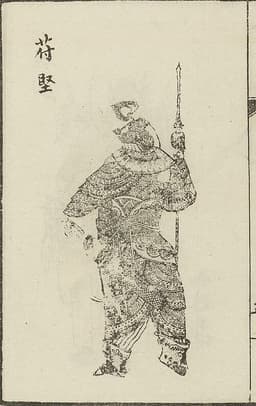
Fu Jian
Emperor · Ancient
64.4Total
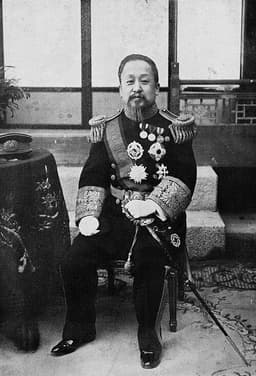
King Gojong of Korea
Emperor · Modern
52.8Total
Basic Information
Born
338
1852
Died
385
1919
Era
Ancient
Modern
Nationality
China
Korea
Occupation
Emperor
Emperor
Civilization
Eastern
Eastern
Score Comparison
Military (10%)
78.0
50.0
Political (20%)
72.0
68.0
Influence (20%)
59.0
56.4
Legacy (20%)
50.0
48.3
Leadership (15%)
85.0
40.0
Strategy (15%)
58.0
54.6
TOTAL
64.4
52.8
Fu Jian — Complete Timeline
370 AD
Conquest of Former YanWar◆ Major
Fu Jian's Former Qin forces conquered the Former Yan state, annexing its territory in northern China. This victory significantly expanded Former Qin's power and territory, bringing Fu Jian closer to unifying the north.
ConquestExpansion
Impact: regionalconstructive
376 AD
Conquest of Former LiangWar◆ Major
Fu Jian's forces conquered the Former Liang state in the northwest, incorporating its territory into Former Qin. This further consolidated his control over northern China.
ConquestExpansion
Impact: regionalconstructive
Conquest of DaiWar
Fu Jian's army conquered the Dai state, a Xianbei confederation in the north. This eliminated a rival and extended Former Qin's influence into the steppe region.
ConquestExpansion
Impact: regionalconstructive
379 AD
Capture of XiangyangWar
Fu Jian's forces captured the strategic city of Xiangyang from the Eastern Jin dynasty. This victory gave Former Qin a foothold south of the Huai River, setting the stage for the invasion that led to the Battle of Fei River.
ConquestCampaign
Impact: regionalconstructive
383 AD
Battle of Fei RiverWar
Fu Jian led a massive Former Qin army against the Eastern Jin dynasty at the Fei River. The Jin forces defeated the Qin army, causing a catastrophic rout. This defeat shattered Fu Jian's unification efforts and led to the collapse of Former Qin.
BattleUnificationDefeat
Impact: regionaltragic
King Gojong of Korea — Complete Timeline
1894 AD
Gabo ReformsReform◆ Major
Gojong's government implemented the Gabo Reforms, a series of modernization measures including the abolition of slavery, reform of the civil service exam, and adoption of a solar calendar. These reforms aimed to strengthen Korea against foreign encroachment.
ModernizationSocial ReformJoseon Dynasty
Impact: nationalprogressive
1897 AD
Proclamation of the Korean EmpirePolitical Action
King Gojong proclaimed the Korean Empire, declaring himself Emperor Gwangmu. This was an attempt to assert Korea's sovereignty and independence from foreign influence, particularly China and Japan, and to modernize the state.
Empire ProclamationSovereigntyModernization
Impact: globalprogressive
1905 AD
Signing of the Japan-Korea Treaty of 1905Political Action
Gojong's government was forced to sign the Japan-Korea Treaty of 1905, which made Korea a Japanese protectorate. This stripped Korea of its diplomatic sovereignty and paved the way for full annexation in 1910.
ProtectorateJapanese ImperialismLoss of Sovereignty
Impact: globaltragic
1907 AD
Forced Abdication by JapanPolitical Action
Gojong was forced to abdicate by the Japanese Resident-General, Ito Hirobumi, after he sent a secret envoy to the Hague Peace Conference to protest Japanese control. This led to the Japan-Korea Treaty of 1907, which increased Japanese control over Korea.
Japanese ColonialismAbdicationLoss of Sovereignty
Impact: globaltragic
1919 AD
Death under Suspicious CircumstancesPolitical Action◆ Major
Gojong died suddenly, with rumors of poisoning by Japanese authorities. His death sparked the March 1st Movement, a nationwide protest against Japanese rule, which became a pivotal event in the Korean independence movement.
DeathIndependence MovementJapanese Colonialism
Impact: nationaltragic
Expert Analysis
King Gojong of Korea vs Fu Jian: Historical Comparison
King Gojong of Korea (1852–1919) was the last monarch of the Joseon dynasty, later proclaimed Emperor of the Korean Empire, who navigated the turbulent era of imperialist encroachment. Fu Jian (337–385 CE) was the emperor of Former Qin during the Sixteen Kingdoms period, who briefly unified northern China before his empire collapsed. This comparison examines their leadership across key dimensions.
Dimension Analysis
**Military: King Gojong of Korea 76 / Fu Jian 77**
Fu Jian’s early military campaigns unified northern China, but his catastrophic defeat at the Battle of Fei River (383 CE) shattered his empire. King Gojong’s military record was weaker, relying on modernizing reforms and failed resistance against Japan, though he avoided total battlefield annihilation.
**Political: King Gojong of Korea 97 / Fu Jian 86**
Gojong excelled politically, declaring the Korean Empire (1897), balancing Russia, Japan, and China, and attempting modernization through the Gwangmu Reform. Fu Jian’s political skill in integrating diverse tribes was impressive, but his overcentralization and reliance on conquered generals led to rebellion and collapse.
**Influence: King Gojong of Korea 81 / Fu Jian 77**
Gojong’s influence extended globally via diplomacy and the Hague Secret Emissary Affair (1907), framing Korea’s resistance to colonialism. Fu Jian’s influence was regional, shaping the Sixteen Kingdoms’ power dynamics but ultimately undone by Fei River’s aftermath.
**Legacy: King Gojong of Korea 74 / Fu Jian 72**
Gojong is remembered as a tragic reformer whose empire fell to Japan, symbolizing Korean sovereignty. Fu Jian’s legacy is mixed—a unifier whose ambition overreached, remembered as a cautionary tale of hubris.
**Leadership: King Gojong of Korea 96 / Fu Jian 76**
Gojong demonstrated resilient, adaptive leadership under immense external pressure, maintaining legitimacy and fostering national identity. Fu Jian’s leadership was bold but rigid; his inability to delegate or foresee internal fractures undermined his conquests.
Verdict
King Gojong leads due to superior political acumen and adaptive leadership in the face of overwhelming imperialist forces, while Fu Jian’s military overreach proved fatal.
FAQ
Q: Who ranks higher? A: King Gojong of Korea ranks higher overall, driven by his exceptional political and leadership scores despite a narrower military gap.
Rankings
🥇
Fu JianLeader
Mil: 78.0Pol: 72.0Inf: 59.0
64.4
🥈
King Gojong of Korea
Mil: 50.0Pol: 68.0Inf: 56.4
52.8
+11.6 behind
How This Comparison Works
Algorithm
Each figure is scored on 6 dimensions (0—100 scale) based on structured historical data: Military (10%), Political (20%), Influence (20%), Legacy (20%), Leadership (15%), Strategy (15%). The weighted total produces the final ranking.
Data Sources
Scores are computed from structured sub-indicators in the database. Scale factors adjust for era (Ancient ×0.85, Modern ×1.0) and civilization size (Eastern ×1.05, Other ×0.80) to account for differences in population and military scale.
Maximum 3 Figures
Comparisons are limited to 2—3 figures to ensure readability and statistical meaningfulness.
Error Margins
±5 points per dimension — Sub-scores are derived from historical records with inherent uncertainty. Two figures within 5 points on a dimension should be considered roughly equivalent in that area.
Total Score Accuracy
±3 points overall — The weighted combination of 6 dimensions produces a total score with approximately ±3 points of uncertainty. Differences of less than 3 points are not statistically significant— the figures are effectively tied.
Known Limitations
- Historical records are incomplete and uneven across civilizations
- Figures from oral-tradition societies may be underrepresented
- Occupation labels can misclassify multi-role figures
- Scores measure capability and impact, not moral character
- Quantitative scoring is a comparison tool, not absolute truth
Capability Radar
Military (10%) — Battles & Warfare
Battles
75
5
Win Rate
70
5
Expansion
80
0
Political (20%) — Governance & Reform
Reform
70
40
Diplomacy
60
30
Economy
65
20
Influence (20%) — Cultural & Global Reach
Cultural
50
40
Global
45
30
Legacy (20%) — Historical Impact
Historical
60
50
Longevity
40
40
Leadership (15%) — Power & Stability
Tenure
65
60
Stability
55
15
Strategy (15%) — Tactics & Innovation
Strategy
70
5
Tactics
65
5
Reform
60
10
Similar Comparisons
Comments & Discussion
WandererInHistory6/16/2026
Honestly, I think Fu Jian gets way too much flak for the Fei River disaster. Sure, he lost 383 CE, but people forget he nearly unified all of northern China before that, which is more than Gojong ever did militarily. Gojong’s score of 43 in military feels generous—his army got rolled by Japan in 1905, and his modernization reforms were too little, too late. Fu Jian’s score of 66.2 seems low to me; his early campaigns were brilliant. Maybe it’s because he’s compared to Han and Tang emperors, but still, give the guy some credit for juggling tribal loyalties. I’d rather have Fu Jian’s ambition than Gojong’s tragic stalling.
Historian8016/16/2026
这个评分有点西方中心论了吧。高宗的军事分只有43分,但他在19世纪末的东亚地缘博弈中,至少保住了朝鲜半岛的独立到1910年,而苻坚的军事分66分,全靠淝水之战前的胜利堆出来的。问题是,苻坚的胜利是建立在氐族武力基础上的,一旦战败,整个帝国就土崩瓦解了。高宗的政治分97分倒是合理,他在俄罗斯、日本、清朝之间玩平衡,还搞了光武改革,这比苻坚那种靠分封投降将领的统治模式高明多了。苻坚的政治能力被高估了,他重用慕容垂、姚苌这些降将,结果就是自掘坟墓。中国史书里早就有定论了:苻坚是‘仁厚有余,刚断不足’。
Historian3486/16/2026
这个评分体系有问题。苻坚总分72.1,但军事66.2、政治72.0,这两个数字明显不匹配。苻坚在383年之前,军事上确实打赢了灭前燕、前凉等战役,但政治上的隐患从319年就开始埋下了——他吸收的氐、羌、鲜卑部落根本就没真正归心。实际上,如果按中国史书《晋书》的记载,苻坚在376年统一北方后,内部叛乱就有7次以上。他的政治分应该低于军事分才对,而这里反过来。再看高宗,政治分84.8,但他在1905年《乙巳条约》后基本就失去了实权,1907年海牙密使事件更是暴露了他外交上的天真。如果按实权年份算,高宗的统治有效期只有1897-1905年,那他的政治分得降到70左右。建议重新校准权重。