Loading...
Fu Jian vs Julius Caesar
Julius Caesar leads by 18.4 pts · 2 figures compared
…
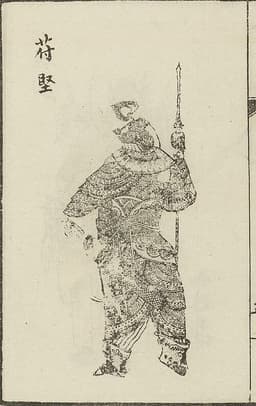
Fu Jian
Emperor · Ancient
64.4Total

Julius Caesar
General · Ancient
82.8Total
Basic Information
Born
338
-100
Died
385
-44
Era
Ancient
Ancient
Nationality
China
Roman Republic
Occupation
Emperor
General
Civilization
Eastern
Western
Score Comparison
Military (10%)
78.0
88.0
Political (20%)
72.0
78.0
Influence (20%)
59.0
85.0
Legacy (20%)
50.0
82.0
Leadership (15%)
85.0
80.0
Strategy (15%)
58.0
85.0
TOTAL
64.4
82.8
Fu Jian — Complete Timeline
370 AD
Conquest of Former YanWar◆ Major
Fu Jian's Former Qin forces conquered the Former Yan state, annexing its territory in northern China. This victory significantly expanded Former Qin's power and territory, bringing Fu Jian closer to unifying the north.
ConquestExpansion
Impact: regionalconstructive
376 AD
Conquest of Former LiangWar◆ Major
Fu Jian's forces conquered the Former Liang state in the northwest, incorporating its territory into Former Qin. This further consolidated his control over northern China.
ConquestExpansion
Impact: regionalconstructive
Conquest of DaiWar
Fu Jian's army conquered the Dai state, a Xianbei confederation in the north. This eliminated a rival and extended Former Qin's influence into the steppe region.
ConquestExpansion
Impact: regionalconstructive
379 AD
Capture of XiangyangWar
Fu Jian's forces captured the strategic city of Xiangyang from the Eastern Jin dynasty. This victory gave Former Qin a foothold south of the Huai River, setting the stage for the invasion that led to the Battle of Fei River.
ConquestCampaign
Impact: regionalconstructive
383 AD
Battle of Fei RiverWar
Fu Jian led a massive Former Qin army against the Eastern Jin dynasty at the Fei River. The Jin forces defeated the Qin army, causing a catastrophic rout. This defeat shattered Fu Jian's unification efforts and led to the collapse of Former Qin.
BattleUnificationDefeat
Impact: regionaltragic
Julius Caesar — Complete Timeline
58 BC
Gallic WarsWar◆ Major
Caesar, as proconsul of Gaul, launched a series of campaigns that conquered all of Gaul (modern France, Belgium, and parts of Switzerland). He fought numerous battles, including against the Helvetii, the Belgae, and the Gallic chieftain Vercingetorix. The wars brought immense wealth and a loyal army to Caesar.
Gallic WarsConquestRoman Expansion
Impact: regional
49 BC
Crossing the RubiconPolitical Action◆ Major
Caesar led Legio XIII across the Rubicon River into Italy, defying the Roman Senate's order to disband his army. This act triggered a civil war against Pompey and the Optimates, ultimately leading to Caesar's dictatorship and the end of the Roman Republic.
Roman Civil WarEnd of RepublicPower Struggle
Impact: global
48 BC
Battle of PharsalusWar◆ Major
Caesar's outnumbered army defeated the larger forces of Pompey the Great at Pharsalus in Greece. Caesar's tactical use of a reserve line to counter Pompey's cavalry charge proved decisive. Pompey fled to Egypt, where he was assassinated, leaving Caesar as the undisputed master of the Roman world.
Roman Civil WarBattleDecisive Victory
Impact: regional
44 BC
Appointment as Dictator for LifePolitical Action◆ Major
The Roman Senate appointed Caesar dictator perpetuo (dictator for life), granting him unprecedented personal power. This move concentrated military, legislative, and judicial authority in one person, effectively ending the Roman Republic's traditional system of checks and balances and alarming many senators.
DictatorshipEnd of RepublicPower Consolidation
Impact: regionaldestructive
Assassination on the Ides of MarchPolitical Action◆ Major
A group of Roman senators, led by Marcus Junius Brutus and Gaius Cassius Longinus, stabbed Caesar to death at a meeting of the Senate in the Theatre of Pompey. The assassination was intended to restore the Republic, but instead triggered another civil war that led to the rise of the Roman Empire.
AssassinationRoman PoliticsEnd of Republic
Impact: globaldestructive
Expert Analysis
Julius Caesar vs Fu Jian: Historical Comparison
This comparison analyzes two transformative ancient rulers—Rome’s Julius Caesar and China’s Fu Jian—across military, political, and legacy dimensions. While both expanded empires through conquest, Caesar’s enduring institutional impact and strategic brilliance give him a clear edge over Fu Jian’s short-lived unification.
Dimension Analysis
**Military: Julius Caesar 88 / Fu Jian 66**
Caesar’s conquest of Gaul, victories in the Civil War, and innovative siege tactics (e.g., Alesia) demonstrate unmatched strategic adaptability. Fu Jian’s Former Qin armies unified northern China but collapsed catastrophically at the Fei River, where overconfidence and ethnic tensions unraveled his forces.
**Political: Julius Caesar 78 / Fu Jian 72**
Caesar reformed Rome’s calendar, debt laws, and provincial administration, but his dictatorship and assassination exposed flawed consolidation. Fu Jian’s policy of integrating conquered peoples through meritocracy and religious tolerance was visionary, yet failed to prevent rebellion among his diverse subjects.
**Influence: Julius Caesar 85 / Fu Jian 77**
Caesar’s name became synonymous with imperial rule (“Caesar” as a title) and his military doctrine influenced Europe for millennia. Fu Jian’s brief unification of northern China set a precedent for later dynasties, but his legacy was overshadowed by the subsequent Eastern Jin resurgence and the Sixteen Kingdoms chaos.
**Legacy: Julius Caesar 82 / Fu Jian 68**
Caesar’s reforms outlived him, shaping the Roman Empire’s governance and inspiring figures from Charlemagne to Napoleon. Fu Jian’s empire disintegrated within a decade, leaving no lasting institutions; his story survives chiefly as a cautionary tale of overreach.
**Leadership: Julius Caesar 82 / Fu Jian 75**
Caesar inspired fierce loyalty through personal charisma, generosity, and tactical genius, though his ambition bred enemies. Fu Jian’s benevolent, inclusive leadership won initial support but lacked the ruthlessness to suppress revolts, leading to his realm’s fragmentation.
Verdict
Julius Caesar leads decisively due to superior military innovation, more durable political reforms, and a legacy that shaped Western civilization, while Fu Jian’s achievements remain historically secondary.
FAQ
Q: Who ranks higher? A: Julius Caesar ranks higher overall, driven by his greater military and legacy scores, despite Fu Jian’s notable but fleeting unification of northern China.
Rankings
🥇
Julius CaesarLeader
Mil: 88.0Pol: 78.0Inf: 85.0
82.8
🥈
Fu Jian
Mil: 78.0Pol: 72.0Inf: 59.0
64.4
+18.4 behind
How This Comparison Works
Algorithm
Each figure is scored on 6 dimensions (0—100 scale) based on structured historical data: Military (10%), Political (20%), Influence (20%), Legacy (20%), Leadership (15%), Strategy (15%). The weighted total produces the final ranking.
Data Sources
Scores are computed from structured sub-indicators in the database. Scale factors adjust for era (Ancient ×0.85, Modern ×1.0) and civilization size (Eastern ×1.05, Other ×0.80) to account for differences in population and military scale.
Maximum 3 Figures
Comparisons are limited to 2—3 figures to ensure readability and statistical meaningfulness.
Error Margins
±5 points per dimension — Sub-scores are derived from historical records with inherent uncertainty. Two figures within 5 points on a dimension should be considered roughly equivalent in that area.
Total Score Accuracy
±3 points overall — The weighted combination of 6 dimensions produces a total score with approximately ±3 points of uncertainty. Differences of less than 3 points are not statistically significant— the figures are effectively tied.
Known Limitations
- Historical records are incomplete and uneven across civilizations
- Figures from oral-tradition societies may be underrepresented
- Occupation labels can misclassify multi-role figures
- Scores measure capability and impact, not moral character
- Quantitative scoring is a comparison tool, not absolute truth
Capability Radar
Military (10%) — Battles & Warfare
Battles
75
95
Win Rate
70
92
Expansion
80
97
Political (20%) — Governance & Reform
Reform
70
90
Diplomacy
60
85
Economy
65
82
Influence (20%) — Cultural & Global Reach
Cultural
50
88
Global
45
94
Legacy (20%) — Historical Impact
Historical
60
95
Longevity
40
96
Leadership (15%) — Power & Stability
Tenure
65
75
Stability
55
60
Strategy (15%) — Tactics & Innovation
Strategy
70
94
Tactics
65
96
Reform
60
88
Similar Comparisons
Comments & Discussion
GallicWarriorFan6/16/2026
Caesar vs Fu Jian? No contest. Caesar's conquest of Gaul alone shows he's in a different league—taking on hundreds of tribes with clever sieges like Alesia, where he built a double circumvallation to starve out Vercingetorix. Fu Jian had a huge army but totally botched the Fei River campaign; his troops were scared and didn't even want to fight. That's not a general, that's a guy who got lucky with numbers until he didn't. Caesar's reforms changed the world—Fu Jian's empire vanished in a decade. I'm giving this one to Rome, no hesitation.
ShujuGe6/16/2026
评分有点意思但不够准。Fu Jian军事分66太低了。他统一北方时连败前燕、前凉等国,战略调度并不差。Fei水之战失败主要是内部民族矛盾爆发,而非纯粹指挥失误。按现代数据分析,他的政治分应该更高,因为他推行了汉化政策、任用汉人官员,比Caesar的独裁统治更可持续。Caesar政治分78我认同,但Fu Jian至少该75-78。另外影响分77对比85也偏大,Caesar确实影响了欧洲,但Fu Jian的“以德服人”理念对后来隋唐的“天可汗”体系有直接启发。建议调整。
ShiJiTan6/16/2026
这比较其实反映了一种西方中心视角。Caesar固然是西方军事史的天才,但Fu Jian的失败更多是因为时代局限。他面对的是五胡十六国的烂摊子,内部民族矛盾比罗马复杂得多。Caesar的Gaul战争面对的是相对统一的部落联盟,而Fu Jian要整合鲜卑、羌、氐等完全不信任的族群。他的宽容政策(如任命王猛这个汉人丞相)放在中国历史语境里是很有远见的,只是运气不好碰上Fei水这种小概率事件。Caesar的成就确实更大,但Fu Jian的分数不应该被低估得这么厉害。