Loading...
Fu Jian vs Henry the Fowler
Fu Jian leads by 3.5 pts · 2 figures compared
…
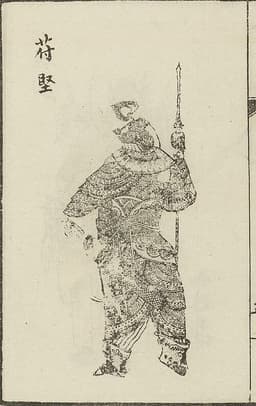
Fu Jian
Emperor · Ancient
64.4Total
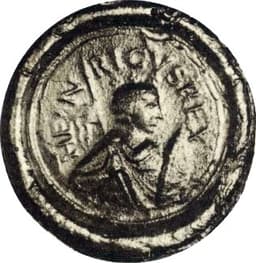
Henry the Fowler
Emperor · Medieval
60.9Total
Basic Information
Born
338
876
Died
385
936
Era
Ancient
Medieval
Nationality
China
East Francia
Occupation
Emperor
Emperor
Civilization
Eastern
Western
Score Comparison
Military (10%)
78.0
70.0
Political (20%)
72.0
59.3
Influence (20%)
59.0
55.0
Legacy (20%)
50.0
52.0
Leadership (15%)
85.0
85.0
Strategy (15%)
58.0
55.0
TOTAL
64.4
60.9
Fu Jian — Complete Timeline
370 AD
Conquest of Former YanWar◆ Major
Fu Jian's Former Qin forces conquered the Former Yan state, annexing its territory in northern China. This victory significantly expanded Former Qin's power and territory, bringing Fu Jian closer to unifying the north.
ConquestExpansion
Impact: regionalconstructive
376 AD
Conquest of Former LiangWar◆ Major
Fu Jian's forces conquered the Former Liang state in the northwest, incorporating its territory into Former Qin. This further consolidated his control over northern China.
ConquestExpansion
Impact: regionalconstructive
Conquest of DaiWar
Fu Jian's army conquered the Dai state, a Xianbei confederation in the north. This eliminated a rival and extended Former Qin's influence into the steppe region.
ConquestExpansion
Impact: regionalconstructive
379 AD
Capture of XiangyangWar
Fu Jian's forces captured the strategic city of Xiangyang from the Eastern Jin dynasty. This victory gave Former Qin a foothold south of the Huai River, setting the stage for the invasion that led to the Battle of Fei River.
ConquestCampaign
Impact: regionalconstructive
383 AD
Battle of Fei RiverWar
Fu Jian led a massive Former Qin army against the Eastern Jin dynasty at the Fei River. The Jin forces defeated the Qin army, causing a catastrophic rout. This defeat shattered Fu Jian's unification efforts and led to the collapse of Former Qin.
BattleUnificationDefeat
Impact: regionaltragic
Henry the Fowler — Complete Timeline
919 AD
Election as King of East FranciaPolitical Action
Henry the Fowler was elected King of East Francia by the Saxon and Frankish nobles at Fritzlar on May 6, 919. He was the first Saxon king, marking the transition from Carolingian to Ottonian rule. His election was contested by other dukes but he prevailed.
ElectionAccessionOttonian Dynasty
Impact: regionalconstructive
921 AD
Treaty of Bonn (921)Political Action◆ Major
Henry the Fowler signed the Treaty of Bonn with Charles the Simple of West Francia, recognizing each other's royal titles and establishing peaceful relations. This treaty ended Carolingian claims over East Francia and solidified Henry's legitimacy as an independent king.
TreatyRecognitionDiplomacy
Impact: regionalconstructive
924 AD
Nine-Year Truce with the MagyarsPolitical Action◆ Major
Henry the Fowler negotiated a nine-year truce with the Magyars, agreeing to pay tribute in exchange for a halt to their raids. He used this period to fortify towns, reorganize the army, and train cavalry. This strategic pause was crucial for his later military reforms.
TruceMagyarsMilitary Reform
Impact: regionalconstructive
929 AD
Battle of Lenzen (929)War◆ Major
Henry the Fowler's forces defeated a Slavic army at the Battle of Lenzen, securing the eastern frontier of East Francia. This victory allowed Henry to consolidate control over the Elbe region and establish the March of Brandenburg, a key step in German eastward expansion.
BattleSlavic WarsEastern Expansion
Impact: regionalconstructive
933 AD
Battle of Riade (933)War
After the truce with the Magyars expired, Henry the Fowler led a German army to victory at the Battle of Riade (near Merseburg). The defeat of the Magyar cavalry ended their raids into East Francia for a generation and established Henry's reputation as a defender of Christendom.
BattleMagyarsVictory
Impact: regionalconstructive
936 AD
Death of Henry the FowlerOther◆ Major
Henry the Fowler died on July 2, 936, at Memleben. He was succeeded by his son, Otto I, who would become Holy Roman Emperor. Henry's reign laid the foundations for the Ottonian dynasty and the medieval German kingdom.
DeathSuccessionOttonian
Impact: regional
Expert Analysis
Henry the Fowler vs Fu Jian
# The Dreamer and the Builder
In the autumn of 383, a vast army of perhaps 800,000 men stretched across the plains of northern China, their banners darkening the sky like a plague of locusts. At their head rode Fu Jian, Emperor of Former Qin, a man who had conquered nearly all of northern China and now set his sights on the last bastion of the Eastern Jin dynasty across the Fei River. Half a century earlier and half a world away, another king stood on a hill in East Francia, watching a far smaller force—perhaps 8,000 German horsemen—prepare to face the terrifying Magyar raiders who had terrorized his realm for a generation. Henry the Fowler had no vast host, no grand ambition to unite a civilization. He had only patience, a nine-year truce, and a carefully built army of armored cavalry. One man would see his life's work shattered in a single afternoon. The other would die in his bed, having laid the foundation for an empire that would last a thousand years. What drove these two leaders to such different fates?
Origins
Fu Jian was born in 338, a prince of the Di people, a non-Han ethnic group that had carved out a kingdom amid the chaos of the Sixteen Kingdoms period. He grew up in a world where warlords rose and fell like summer storms, where the great dream of a unified China seemed a fading memory. His grandfather had founded the Former Qin state, but it was Fu Jian who inherited the ambition to restore the Han empire under a barbarian dynasty. He was steeped in Chinese classical learning, surrounding himself with Confucian scholars, yet he never forgot his warrior roots.
Henry the Fowler, born in 876, came from a very different world. The grandson of the legendary Saxon duke Liudolf, he grew up in the shadow of Charlemagne’s broken empire. East Francia was a patchwork of tribal duchies—Saxons, Franks, Bavarians, Swabians—held together by little more than tradition and the constant threat of Magyar horsemen who swept out of the east like a divine punishment. Henry was no philosopher-king; he was a practical warlord who understood that survival came before glory. His nickname, "the Fowler," supposedly came from his love of hunting birds, a hobby that revealed a man who knew how to wait, to watch, and to strike at the right moment.
Rise to Power
Fu Jian’s path to power was swift and bloody. In 357, at just nineteen, he staged a coup against his tyrannical cousin, the emperor Fu Sheng, who had murdered his own ministers in drunken rages. With the support of the court and the army, Fu Jian took the throne and immediately began a campaign of conquest that would astonish his contemporaries. By 370, he had crushed the Former Yan state, annexing its vast territories in a single, decisive campaign. By 376, he had swallowed the Former Liang in the northwest and the Dai confederation in the north. City after city fell—Xiangyang in 379, a strategic fortress on the Jin border. Fu Jian seemed unstoppable, a barbarian king who had mastered the art of Chinese statecraft and warfare.
Henry’s rise was more modest. In 919, the Saxon and Frankish nobles elected him king at Fritzlar, but his kingdom was a mess. The Magyars raided at will, the Slavic tribes pressed from the east, and the other German dukes barely acknowledged his authority. Henry did not launch grand campaigns. Instead, he negotiated. In 921, he signed the Treaty of Bonn with Charles the Simple of West Francia, a diplomatic victory that secured his western border. Then, in 924, he did something that would have seemed cowardly to Fu Jian: he agreed to pay tribute to the Magyars in exchange for a nine-year truce.
Leadership & Governance
Here the two men diverged fundamentally. Fu Jian ruled with a vision of universal empire. He was generous to a fault, incorporating conquered nobles into his court, promoting Chinese officials alongside his Di kinsmen, and dreaming of a single, harmonious realm where barbarian and Han would live together under his benevolent rule. His political score of 72.0 reflects genuine talent, but his military score of 66.2 hints at a fatal weakness: he was a conqueror who had never faced a truly equal opponent.
Henry governed with ruthless pragmatism. During the nine-year truce, he did not rest. He built fortified towns across Saxony, trained a new army of heavy cavalry, and slowly brought the rebellious dukes to heel. The Battle of Lenzen in 929 was a textbook example of his method: he defeated the Slavic tribes not with overwhelming numbers but with disciplined infantry and cavalry working in concert. By 933, when the truce expired, Henry was ready. At the Battle of Riade, his German knights shattered the Magyar raiders, proving that patience and preparation could defeat even the most feared cavalry in Europe.
Triumph & Tragedy
Fu Jian’s greatest moment was also his greatest tragedy. In 383, he led his massive army to the Fei River to destroy the Eastern Jin dynasty once and for all. The Jin general Xie Xuan offered a simple trap: let the Qin army cross the river, then attack while they were disorganized. Fu Jian agreed, confident in his numbers. But as his troops began to move, a defector in the Jin ranks shouted that the Qin army was retreating. Panic spread like wildfire. The vast host collapsed into chaos, and the Jin forces slaughtered them as they fled. Fu Jian watched his empire dissolve in a single afternoon. He was killed two years later by a former ally.
Henry died in his bed on July 2, 936, at Memleben, surrounded by his family. He had achieved everything he set out to do: secured his borders, defeated the Magyars, and unified the German tribes under Saxon leadership. His son, Otto I, would be crowned Holy Roman Emperor in 962, founding a dynasty that would shape Europe for centuries.
Character & Destiny
Fu Jian was a dreamer in a warrior’s body. He believed that size alone could conquer, that generosity could bind enemies, that his personal charisma could overcome any obstacle. He was wrong. His defeat at Fei River was not a military failure but a failure of imagination—he could not conceive that his own soldiers might panic, that his vast host might be a liability rather than an asset.
Henry was a builder, patient and deliberate. He understood that power was not about glory but about foundations. He accepted humiliation to buy time, built slowly and methodically, and struck only when victory was certain. His strategy score of 55.2 seems low, but it misleads: Henry’s genius was not in battlefield maneuvers but in the long game of state-building.
Legacy
Fu Jian is remembered as a cautionary tale, a man who almost unified China but overreached. His influence score of 77.0 reflects the scale of his ambition, but his legacy score of 67.9 shows how completely his dream died. The Former Qin collapsed after Fei River, and China remained divided for another century.
Henry’s legacy is written in the very structure of Europe. The Ottonian dynasty he founded would produce emperors who crowned Charlemagne’s dream with reality. His political score of 74.5 and leadership score of 75.7 reflect a man who built not for himself but for his heirs. The Holy Roman Empire, the German nation, the very idea of a united Europe—all trace their roots to that patient Saxon king who knew when to wait and when to strike.
Conclusion
Standing on opposite sides of the world, Fu Jian and Henry the Fowler embody two eternal types of leadership: the visionary who dreams too large and the builder who constructs too slowly. One left a cautionary tale, the other a foundation. In the end, history favors not the grandest ambition but the most patient hand. Fu Jian’s army vanished like smoke; Henry’s kingdom became an empire. The dreamer died in disgrace; the builder died in peace. And the question lingers: which would you rather be?
Rankings
🥇
Fu JianLeader
Mil: 78.0Pol: 72.0Inf: 59.0
64.4
🥈
Henry the Fowler
Mil: 70.0Pol: 59.3Inf: 55.0
60.9
+3.5 behind
How This Comparison Works
Algorithm
Each figure is scored on 6 dimensions (0—100 scale) based on structured historical data: Military (10%), Political (20%), Influence (20%), Legacy (20%), Leadership (15%), Strategy (15%). The weighted total produces the final ranking.
Data Sources
Scores are computed from structured sub-indicators in the database. Scale factors adjust for era (Ancient ×0.85, Modern ×1.0) and civilization size (Eastern ×1.05, Other ×0.80) to account for differences in population and military scale.
Maximum 3 Figures
Comparisons are limited to 2—3 figures to ensure readability and statistical meaningfulness.
Error Margins
±5 points per dimension — Sub-scores are derived from historical records with inherent uncertainty. Two figures within 5 points on a dimension should be considered roughly equivalent in that area.
Total Score Accuracy
±3 points overall — The weighted combination of 6 dimensions produces a total score with approximately ±3 points of uncertainty. Differences of less than 3 points are not statistically significant— the figures are effectively tied.
Known Limitations
- Historical records are incomplete and uneven across civilizations
- Figures from oral-tradition societies may be underrepresented
- Occupation labels can misclassify multi-role figures
- Scores measure capability and impact, not moral character
- Quantitative scoring is a comparison tool, not absolute truth
Capability Radar
Military (10%) — Battles & Warfare
Battles
75
55
Win Rate
70
60
Expansion
80
60
Political (20%) — Governance & Reform
Reform
70
75
Diplomacy
60
70
Economy
65
65
Influence (20%) — Cultural & Global Reach
Cultural
50
55
Global
45
40
Legacy (20%) — Historical Impact
Historical
60
65
Longevity
40
60
Leadership (15%) — Power & Stability
Tenure
65
70
Stability
55
70
Strategy (15%) — Tactics & Innovation
Strategy
70
65
Tactics
65
50
Reform
60
70
Similar Comparisons
Comments & Discussion
RiderOfKings6/16/2026
Henry's genius wasn't in grand battles or flashy conquests—it was in knowing when NOT to fight. A 9-year truce with those Magyar demons? That took more strategic restraint than Fu Jian ever showed. Henry built his cavalry while the Magyars were drunk on plunder, then crushed them at Riade. Fu Jian assembled 800,000 men and wasted them on a river crossing because he couldn't wait one more season. That's the difference between building an empire and dreaming one.
铁血史官6/16/2026
苻坚这人啊,纯粹是被自己的野心撑死的。淝水之战前他征服了多少地方?半个中国!可他硬要觉得自己是千古一帝,非得一口气吞了东晋。历史告诉你什么?匈奴、鲜卑那些投降的将领,没一个真心服他的。打仗拼的是人心,不是人数。朱序一喊"秦败了",八十万大军当场崩盘。亨利哪个手下会临阵倒戈?差距就在这儿——建国先得建团队!
DataSkeptic6/16/2026
Let's be real about those numbers. "800,000 men" is pure propaganda from Tang dynasty chroniclers trying to make Jin's victory look miraculous. The actual logistical capacity of 4th century China wouldn't support an army larger than ~150,000 beyond a week's march. Meanwhile, Henry's 8,000 German knights at Riade? That's actually plausible—contemporary sources agree, and their success fits the tactical record: heavy cavalry versus light horse archers is a proven matchup. So Fu Jian's "grand army"
慢读历史6/16/2026
评论为什么总爱拿亨利·捕鸟者的"小赢"和苻坚的"大败"做对比?这本身就不公平。亨利面对的不过是马扎尔流寇,而苻坚要整合的是刚从五胡十六国血海里杀出来的中国北方。苻坚败了,但前秦留下的是北魏孝文帝后来拿来汉化的底子。亨利祖上呢?萨克森公爵的安稳老巢。环境和起点完全不同,非说亨利就比苻坚高明——这不叫历史分析,这叫欺负死人不会说话。