Loading...
Frederick VI of Denmark vs Jean-Jacques Dessalines
Jean-Jacques Dessalines leads by 26.4 pts · 2 figures compared
…

Frederick VI of Denmark
Emperor · Modern
45.2Total
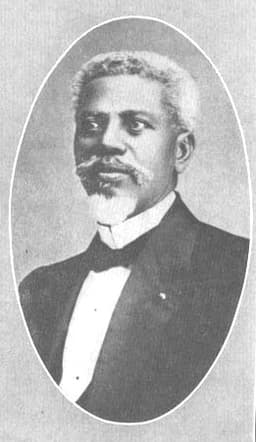
Jean-Jacques Dessalines
Emperor · Modern
71.6Total
Basic Information
Born
1768
1758
Died
1839
1806
Era
Modern
Modern
Nationality
Denmark
Haiti
Occupation
Emperor
Emperor
Civilization
Western
Western
Score Comparison
Military (10%)
10.2
78.0
Political (20%)
68.0
68.0
Influence (20%)
51.8
82.0
Legacy (20%)
43.3
72.0
Leadership (15%)
40.0
55.3
Strategy (15%)
42.3
68.1
TOTAL
45.2
71.6
Frederick VI of Denmark — Complete Timeline
1801 AD
Battle of Copenhagen (1801)War◆ Major
As Crown Prince Regent, Frederick VI led the Danish defense against a British fleet under Nelson that attacked Copenhagen to break up the League of Armed Neutrality. The Danish fleet was destroyed, but Frederick's resistance earned him popularity. Denmark was forced to withdraw from the League.
Naval BattleNapoleonic WarsNational Defense
Impact: regional
1807 AD
Bombardment of Copenhagen (1807)War◆ Major
Britain, fearing the Danish fleet would fall into Napoleon's hands, bombarded Copenhagen and captured the Danish navy. Frederick VI, who had refused to surrender the fleet, was forced into an alliance with France. This event devastated the city and led to Denmark's involvement in the Napoleonic Wars.
BombardmentNapoleonic WarsBritish Attack
Impact: regionaldestructive
1814 AD
Loss of Norway to Sweden (Treaty of Kiel)Political Action
After Napoleon's defeat, Denmark-Norway, as a French ally, was forced to cede Norway to Sweden under the Treaty of Kiel. Frederick VI accepted the loss, ending the 400-year union between Denmark and Norway. This was a major territorial and national humiliation for Denmark.
Territorial LossTreatyEnd of Union
Impact: regionaltragic
1834 AD
Introduction of consultative assembliesReform◆ Major
In response to growing liberal demands, Frederick VI established four consultative provincial assemblies (St
Political ReformRepresentative GovernmentLiberalism
Impact: nationalconstructive
Jean-Jacques Dessalines — Complete Timeline
1803 AD
Battle of VertièresWar
Dessalines led Haitian forces to a decisive victory over the French army at Verti
BattleIndependenceFrench Defeat
Impact: globalconstructive
1804 AD
Haitian Independence DeclarationPolitical Action
Dessalines declared Haiti's independence, renaming the country from Saint-Domingue. He issued the Haitian Declaration of Independence, establishing the first black republic and the second independent nation in the Americas.
IndependenceRepublicAbolition
Impact: globalprogressive
Coronation as Emperor Jacques IPolitical Action◆ Major
Dessalines crowned himself Emperor Jacques I of Haiti, establishing an authoritarian regime. He centralized power, imposed forced labor to rebuild the economy, and executed former white colonists.
CoronationAuthoritarianismEmpire
Impact: nationaldestructive
1806 AD
Assassination of DessalinesPolitical Action◆ Major
Dessalines was ambushed and killed by rebels at Pont-Rouge near Port-au-Prince. His authoritarian rule and economic policies had alienated elites, leading to his overthrow and Haiti's division into two states.
AssassinationRebellionPolitical Division
Impact: nationaltragic
Expert Analysis
Origins
Frederick VI of Denmark (1768–1839) was born into the Oldenburg dynasty, ruling Denmark-Norway from 1808 to 1814 (as king) and Denmark until his death. His father, Christian VII, suffered mental illness, leading Frederick to serve as regent from 1784 onward. He was educated in Enlightenment ideals but remained an absolute monarch. In contrast, Jean-Jacques Dessalines (1758–1806) was born into slavery in Saint-Domingue (later Haiti). He rose through the ranks of the Haitian Revolution, becoming a key lieutenant to Toussaint Louverture. Dessalines had no formal education but possessed fierce military instincts and a determination to end colonial rule.
Rise to Power
Frederick VI became de facto ruler at age 16 after a coup against his father's advisors. He implemented agricultural reforms and abolished the Danish slave trade in 1792 (effective 1803). However, his reign was dominated by the Napoleonic Wars. He allied with France, leading to two British attacks on Copenhagen (1801 and 1807). The 1807 bombardment destroyed the Danish fleet and forced Denmark into a costly war. Dessalines rose to prominence during the Haitian Revolution. After Toussaint was captured in 1802, Dessalines took command. He defeated French forces at the Battle of Vertières on November 18, 1803, forcing France to abandon the colony. On January 1, 1804, he declared Haiti's independence, becoming its first ruler.
Leadership & Governance
Frederick VI ruled as an enlightened absolute monarch. He introduced consultative assemblies in 1834 but resisted constitutional reforms. His governance was paternalistic, focusing on economic stability and avoiding war. He scored 68.0 in political leadership, reflecting his ability to maintain power despite losing Norway. Dessalines, with a political score of 68.0, established an authoritarian regime. He crowned himself Emperor Jacques I in 1804, imposed forced labor to rebuild the economy, and executed thousands of remaining French colonists. His leadership was brutal but effective in consolidating independence. Dessalines scored 78.0 in military leadership, far exceeding Frederick's 10.2.
Triumph & Tragedy
Frederick's greatest triumph was preserving Danish sovereignty after the Napoleonic Wars. He successfully navigated the Congress of Vienna, retaining Denmark proper and the duchies of Schleswig and Holstein. His tragedy was the loss of Norway to Sweden via the Treaty of Kiel (1814), ending the 400-year union. He also failed to prevent the bombardment of Copenhagen. Dessalines' triumph was securing Haitian independence, the first successful slave revolt in history. His tragedy was his assassination in 1806 after his authoritarian policies alienated the mulatto elite and former generals. He scored 82.0 in influence and 72.0 in legacy, reflecting his role as a founding father.
Character & Destiny
Frederick VI was cautious, pragmatic, and conservative. He accepted the loss of Norway rather than continue a losing war. His character favored stability over risk, which preserved his throne but limited Denmark's power. Dessalines was ruthless, decisive, and uncompromising. He ordered massacres of whites and enforced labor to prevent economic collapse. His violent methods secured independence but created enemies, leading to his assassination. Historians assess Dessalines as a revolutionary hero with a dark legacy. Frederick is remembered as a transitional figure who failed to adapt to liberal democracy.
Legacy
Frederick VI's legacy is mixed. He modernized Denmark's administration and abolished the slave trade, but his absolute rule delayed democratization. Denmark remained a constitutional monarchy only after his death. His score of 43.3 in legacy reflects limited long-term impact. Dessalines' legacy is foundational for Haiti. He is revered as a father of the nation, but his authoritarian model influenced Haiti's turbulent political history. His legacy score of 72.0 indicates a more profound impact on world history as a symbol of anti-colonial resistance.
Conclusion
Jean-Jacques Dessalines had a greater impact than Frederick VI. His military score of 78.0 dwarfs Frederick's 10.2, and his influence (82.0 vs 51.8) and legacy (72.0 vs 43.3) are significantly higher. While Frederick preserved Denmark's existence, Dessalines created a new nation and shattered the institution of slavery in the Americas. Frederick's cautious rule was overshadowed by the loss of Norway; Dessalines' violent but successful revolution changed global history. The total score gap of 26.4 points supports this assessment. Dessalines, despite his flaws, was a transformative figure; Frederick was a caretaker king.
Rankings
🥇
Jean-Jacques DessalinesLeader
Mil: 78.0Pol: 68.0Inf: 82.0
71.6
🥈
Frederick VI of Denmark
Mil: 10.2Pol: 68.0Inf: 51.8
45.2
+26.4 behind
How This Comparison Works
Algorithm
Each figure is scored on 6 dimensions (0—100 scale) based on structured historical data: Military (10%), Political (20%), Influence (20%), Legacy (20%), Leadership (15%), Strategy (15%). The weighted total produces the final ranking.
Data Sources
Scores are computed from structured sub-indicators in the database. Scale factors adjust for era (Ancient ×0.85, Modern ×1.0) and civilization size (Eastern ×1.05, Other ×0.80) to account for differences in population and military scale.
Maximum 3 Figures
Comparisons are limited to 2—3 figures to ensure readability and statistical meaningfulness.
Error Margins
±5 points per dimension — Sub-scores are derived from historical records with inherent uncertainty. Two figures within 5 points on a dimension should be considered roughly equivalent in that area.
Total Score Accuracy
±3 points overall — The weighted combination of 6 dimensions produces a total score with approximately ±3 points of uncertainty. Differences of less than 3 points are not statistically significant— the figures are effectively tied.
Known Limitations
- Historical records are incomplete and uneven across civilizations
- Figures from oral-tradition societies may be underrepresented
- Occupation labels can misclassify multi-role figures
- Scores measure capability and impact, not moral character
- Quantitative scoring is a comparison tool, not absolute truth
Capability Radar
Military (10%) — Battles & Warfare
Battles
10
85
Win Rate
10
90
Expansion
5
70
Political (20%) — Governance & Reform
Reform
50
60
Diplomacy
30
40
Economy
40
35
Influence (20%) — Cultural & Global Reach
Cultural
30
70
Global
20
70
Legacy (20%) — Historical Impact
Historical
40
85
Longevity
30
75
Leadership (15%) — Power & Stability
Tenure
60
30
Stability
35
20
Strategy (15%) — Tactics & Innovation
Strategy
10
85
Tactics
10
80
Reform
15
75
Similar Comparisons
Comments & Discussion
No comments yet. Be the first to share your thoughts!