Loading...
Frederick V of Austria vs William II Rufus
Frederick V of Austria leads by 0.8 pts · 2 figures compared
…
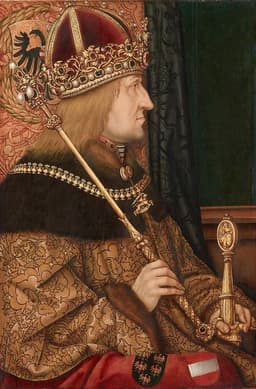
Frederick V of Austria
Emperor · Medieval
50.6Total
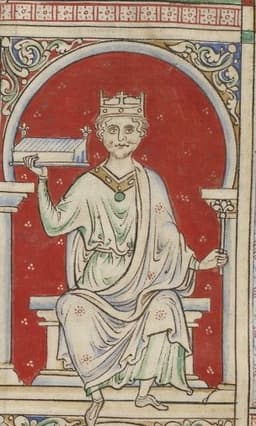
William II Rufus
Emperor · Medieval
49.8Total
Basic Information
Born
1415
1056
Died
1493
1100
Era
Medieval
Medieval
Nationality
Austria
England
Occupation
Emperor
Emperor
Civilization
Western
Western
Score Comparison
Military (10%)
50.0
55.0
Political (20%)
45.1
48.0
Influence (20%)
51.8
50.2
Legacy (20%)
49.2
41.7
Leadership (15%)
74.0
64.0
Strategy (15%)
25.0
45.0
TOTAL
50.6
49.8
Frederick V of Austria — Complete Timeline
1440 AD
Election as King of the RomansPolitical Action◆ Major
Frederick was elected King of the Romans in Frankfurt, succeeding his cousin Albert II. This election placed him at the head of the Holy Roman Empire, beginning his long reign as Frederick III.
ElectionHoly Roman EmpireKingship
Impact: regional
Adoption of the AEIOU MottoCultural
Frederick III adopted the cryptic motto AEIOU, which he used on his personal belongings and buildings. The meaning remains debated, but it symbolized his claim to universal rule and Habsburg destiny.
MottoSymbolismHabsburg
1452 AD
Coronation as Holy Roman EmperorPolitical Action◆ Major
Frederick III was crowned Holy Roman Emperor by Pope Nicholas V in Rome. This was the last imperial coronation to take place in Rome, and it solidified his authority over the empire.
CoronationHoly Roman EmpirePapacy
Impact: regional
1477 AD
Marriage of Maximilian I and Mary of BurgundyPolitical Action◆ Major
Frederick III arranged the marriage of his son Maximilian to Mary of Burgundy, heiress of the Burgundian state. This union brought the Burgundian Netherlands into the Habsburg domain, greatly expanding Habsburg power.
Marriage AllianceHabsburg ExpansionBurgundy
Impact: regionalconstructive
1485 AD
Siege of Vienna (Austrian-Hungarian War)War◆ Major
Frederick III lost Vienna to the Hungarian king Matthias Corvinus after a prolonged siege. The city remained under Hungarian control until 1490, marking a significant territorial loss for Frederick.
SiegeTerritorial LossHungary
Impact: regionaldestructive
William II Rufus — Complete Timeline
1087 AD
Coronation of William IIPolitical Action◆ Major
William was crowned king of England on September 26, 1087, after the death of his father William the Conqueror. He inherited the English throne while his brother Robert Curthose received Normandy.
CoronationSuccessionNorman Dynasty
Impact: national
1088 AD
Rebellion of 1088War◆ Major
William faced a rebellion led by Norman barons supporting his brother Robert Curthose. William suppressed the revolt by promising reforms and confiscating rebel lands.
RebellionCivil WarBarons
Impact: nationaldestructive
1097 AD
Conflict with Anselm of CanterburyPolitical Action◆ Major
William quarreled with Archbishop Anselm over church revenues and authority. Anselm went into exile in 1097, and William seized the revenues of the archbishopric.
Church-State ConflictExilePower Struggle
Impact: nationaldestructive
1100 AD
Death of William IIPolitical Action◆ Major
William was killed by an arrow while hunting in the New Forest on August 2, 1100. The circumstances were suspicious, and his brother Henry I quickly seized the throne.
DeathHunting AccidentSuccession
Impact: nationaltragic
Expert Analysis
Origins
Frederick V of Austria, better known as Frederick III, was born in 1415 in Innsbruck, the son of Duke Ernest the Iron of Inner Austria. He was the eldest of three sons and received a traditional education, with a focus on governance and piety. His family, the Habsburgs, were a rising dynastic power in Central Europe. Frederick's early life was marked by his father's death in 1424, after which he became the regent for his younger brother Albert VI, a role that prepared him for future leadership.
William II Rufus was born around 1056 in Normandy, the second son of William the Conqueror and Matilda of Flanders. He was raised in the Norman court, known for his red hair and stocky build, earning the nickname 'Rufus.' His education was typical for a Norman noble: martial training and basic literacy. Upon his father's death in 1087, William inherited the English throne, while his older brother Robert Curthose received Normandy.
Rise to Power
Frederick III's rise began with his election as King of the Romans on February 2, 1440, in Frankfurt, succeeding his cousin Albert II. This election placed him at the head of the Holy Roman Empire, albeit with limited resources. He was crowned Holy Roman Emperor by Pope Nicholas V on March 19, 1452, in Rome, the last imperial coronation to take place there. His reign was characterized by a slow, cautious consolidation of power, often avoiding major conflicts. His political score of 45.1 reflects his modest maneuvering.
William II Rufus ascended to the English throne immediately after his father's death, crowned on September 26, 1087. He faced an immediate challenge: the Rebellion of 1088, led by Norman barons supporting his brother Robert. William suppressed the revolt by promising reforms and confiscating rebel lands, scoring 48.0 in political ability. His leadership score of 64.0 indicates a more assertive rise compared to Frederick's 74.0 in leadership, but Frederick's rise was more about endurance than action.
Leadership & Governance
Frederick III's leadership style was passive and diplomatic. He adopted the cryptic motto AEIOU, symbolizing his ambitions, but his governance was marked by a tendency to delay decisions. He lost Vienna to Hungarian king Matthias Corvinus in 1485 after a prolonged siege, a significant failure that scored 25.0 in strategy. However, he arranged the marriage of his son Maximilian to Mary of Burgundy in 1477, gaining the Burgundian Netherlands, a masterstroke that boosted his legacy. His leadership score of 74.0 reflects his ability to secure dynastic continuity despite military setbacks.
William II Rufus ruled with a firm hand, often clashing with the Church. His conflict with Archbishop Anselm of Canterbury over church revenues and authority led to Anselm's exile in 1097. William seized the archbishop's revenues, demonstrating his assertive governance. His military score of 55.0 was higher than Frederick's 50.0, reflecting his role in suppressing rebellions and defending Normandy. However, his political score of 48.0 was slightly below Frederick's, as his confrontational style created enemies.
Triumph & Tragedy
Frederick III's greatest triumph was the marriage of Maximilian to Mary of Burgundy, which brought the wealthy Burgundian lands into Habsburg control, laying the foundation for the Habsburg Empire. His greatest tragedy was the loss of Vienna to Matthias Corvinus in 1485, a humiliating defeat that lasted until 1490. This failure scored 25.0 in strategy, the lowest in his profile. His legacy score of 49.2 reflects a mixed record: he kept the empire intact but lost key territories.
William II Rufus's triumphs included successfully quelling the Rebellion of 1088 and maintaining control over England and Normandy. His military campaigns in Wales and Scotland were largely successful. His tragedy was his sudden death by an arrow while hunting in the New Forest on August 2, 1100, under suspicious circumstances. This event, likely an assassination, ended his reign abruptly. His legacy score of 41.7 is lower than Frederick's, as his death prevented him from consolidating his gains.
Character & Destiny
Frederick III was cautious, patient, and deeply religious. His motto AEIOU reflected his belief in a divine destiny for the Habsburgs. He was known for his love of learning and astrology, but his indecisiveness often cost him. His character shaped his fate: he avoided battles but secured his dynasty through marriage. Historical assessments view him as a 'sleeping emperor' who preserved the empire without expanding it.
William II Rufus was energetic, ruthless, and contemptuous of the Church. He was known as 'Rufus' for his red hair, and his character was marked by a love of hunting and a violent temper. His death in a hunting accident was seen as divine punishment by his enemies. His destiny was cut short, leaving his achievements incomplete. His influence score of 50.2 is close to Frederick's 51.8, but his impact was more immediate.
Legacy
Frederick III's legacy is the Habsburg dynasty's rise to dominance in Europe. The marriage of Maximilian and Mary of Burgundy created the Burgundian inheritance, which later gave Charles V a global empire. His AEIOU motto became a symbol of Habsburg ambition. He is remembered as the last emperor crowned in Rome and the one who preserved the imperial title. His legacy score of 49.2 reflects this long-term impact.
William II Rufus's legacy is overshadowed by his death and the subsequent reign of Henry I. He is often remembered as a tyrant who oppressed the Church and died a suspicious death. His administrative reforms, such as improving royal finances, were undone by Henry. His legacy score of 41.7 is lower, as his impact was limited by his short reign and lack of dynastic continuity.
Conclusion
Frederick III of Austria had a greater impact than William II Rufus, with a total score of 50.6 vs. 49.8. Frederick's strategic marriage alliances set the stage for the Habsburg Empire, while William's death prevented lasting change. Frederick's leadership score of 74.0 and legacy score of 49.2 outweigh William's military score of 55.0. Frederick's patient governance secured dynastic power, whereas William's aggressive rule ended abruptly. Thus, Frederick III emerges as the more influential ruler.
Rankings
🥇
Frederick V of AustriaLeader
Mil: 50.0Pol: 45.1Inf: 51.8
50.6
🥈
William II Rufus
Mil: 55.0Pol: 48.0Inf: 50.2
49.8
+0.8 behind
How This Comparison Works
Algorithm
Each figure is scored on 6 dimensions (0—100 scale) based on structured historical data: Military (10%), Political (20%), Influence (20%), Legacy (20%), Leadership (15%), Strategy (15%). The weighted total produces the final ranking.
Data Sources
Scores are computed from structured sub-indicators in the database. Scale factors adjust for era (Ancient ×0.85, Modern ×1.0) and civilization size (Eastern ×1.05, Other ×0.80) to account for differences in population and military scale.
Maximum 3 Figures
Comparisons are limited to 2—3 figures to ensure readability and statistical meaningfulness.
Error Margins
±5 points per dimension — Sub-scores are derived from historical records with inherent uncertainty. Two figures within 5 points on a dimension should be considered roughly equivalent in that area.
Total Score Accuracy
±3 points overall — The weighted combination of 6 dimensions produces a total score with approximately ±3 points of uncertainty. Differences of less than 3 points are not statistically significant— the figures are effectively tied.
Known Limitations
- Historical records are incomplete and uneven across civilizations
- Figures from oral-tradition societies may be underrepresented
- Occupation labels can misclassify multi-role figures
- Scores measure capability and impact, not moral character
- Quantitative scoring is a comparison tool, not absolute truth
Capability Radar
Military (10%) — Battles & Warfare
Battles
15
35
Win Rate
20
40
Expansion
10
30
Political (20%) — Governance & Reform
Reform
40
40
Diplomacy
55
45
Economy
30
50
Influence (20%) — Cultural & Global Reach
Cultural
30
25
Global
20
15
Legacy (20%) — Historical Impact
Historical
50
30
Longevity
45
20
Leadership (15%) — Power & Stability
Tenure
70
55
Stability
35
40
Strategy (15%) — Tactics & Innovation
Strategy
15
35
Tactics
10
30
Reform
10
20
Similar Comparisons
Comments & Discussion
No comments yet. Be the first to share your thoughts!