Loading...
John VIII Palaiologos vs William II Rufus
William II Rufus leads by 8.5 pts · 2 figures compared
…
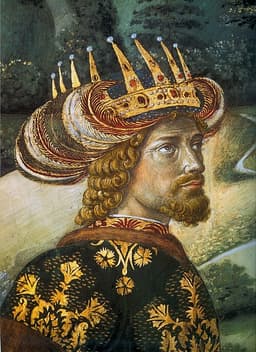
John VIII Palaiologos
Emperor · Medieval
41.3Total
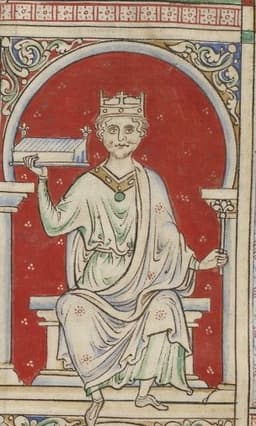
William II Rufus
Emperor · Medieval
49.8Total
Basic Information
Born
1392
1056
Died
1448
1100
Era
Medieval
Medieval
Nationality
Byzantine Empire
England
Occupation
Emperor
Emperor
Civilization
Western
Western
Score Comparison
Military (10%)
10.2
55.0
Political (20%)
36.5
48.0
Influence (20%)
53.3
50.2
Legacy (20%)
45.0
41.7
Leadership (15%)
41.5
64.0
Strategy (15%)
39.6
45.0
TOTAL
41.3
49.8
John VIII Palaiologos — Complete Timeline
1438 AD
Travel to Italy for the Council of FlorencePolitical Action◆ Major
John VIII traveled to Italy with a large delegation of Orthodox clergy to participate in the Council of Florence, which aimed to negotiate church union. His presence underscored the Byzantine Empire's desperation for Western aid.
CouncilDiplomacyByzantine Empire
Impact: regional
1439 AD
Acceptance of the Union of FlorencePolitical Action◆ Major
John VIII Palaiologos, as Byzantine emperor, agreed to the Union of Florence, which temporarily reunited the Eastern Orthodox Church with the Roman Catholic Church under papal authority. This was done to secure Western military aid against the Ottoman Empire, but the union was widely rejected by the Byzantine populace and clergy.
Church UnionDiplomacyOttoman Wars
Impact: regionaldestructive
1448 AD
Death embittered after failed union and Ottoman advancesOther
John VIII died embittered, having failed to secure effective Western military support despite the Union of Florence. The Ottoman Empire continued its conquests, and the union deepened internal divisions within Byzantium.
DeathByzantine EmpireOttoman Wars
Impact: nationaltragic
William II Rufus — Complete Timeline
1087 AD
Coronation of William IIPolitical Action◆ Major
William was crowned king of England on September 26, 1087, after the death of his father William the Conqueror. He inherited the English throne while his brother Robert Curthose received Normandy.
CoronationSuccessionNorman Dynasty
Impact: national
1088 AD
Rebellion of 1088War◆ Major
William faced a rebellion led by Norman barons supporting his brother Robert Curthose. William suppressed the revolt by promising reforms and confiscating rebel lands.
RebellionCivil WarBarons
Impact: nationaldestructive
1097 AD
Conflict with Anselm of CanterburyPolitical Action◆ Major
William quarreled with Archbishop Anselm over church revenues and authority. Anselm went into exile in 1097, and William seized the revenues of the archbishopric.
Church-State ConflictExilePower Struggle
Impact: nationaldestructive
1100 AD
Death of William IIPolitical Action◆ Major
William was killed by an arrow while hunting in the New Forest on August 2, 1100. The circumstances were suspicious, and his brother Henry I quickly seized the throne.
DeathHunting AccidentSuccession
Impact: nationaltragic
Expert Analysis
Origins
John VIII Palaiologos was born in 1392 to Emperor Manuel II Palaiologos and Helena Dragaš. He grew up in a declining Byzantine Empire, surrounded by Ottoman threats and internal divisions. His education emphasized theology and diplomacy, preparing him for a role that required navigating between East and West. William II Rufus, born around 1056, was the third son of William the Conqueror and Matilda of Flanders. He was raised in the Norman court, trained in martial skills, and inherited a strong kingdom after his father's death. His early life was marked by rivalry with his brothers Robert Curthose and Henry.
Rise to Power
John VIII became co-emperor in 1421 and sole emperor in 1425 upon his father's death. He immediately sought Western military aid against the Ottoman Empire, which led him to embrace the Union of Florence in 1439. This union temporarily reconciled the Eastern Orthodox Church with Rome but was deeply unpopular among his subjects. William II Rufus was crowned king of England on September 26, 1087, after his father's death. He faced a rebellion in 1088 led by Norman barons supporting his brother Robert Curthose, which he suppressed through a combination of military force and promises of reform. His rise was marked by ruthless consolidation of power.
Leadership & Governance
John VIII's leadership was focused on diplomacy and church union. He scored 36.5 in political and 41.5 in leadership. He traveled to Italy for the Council of Florence, negotiating personally with the Pope. However, his governance was weak at home, as the union caused civil strife and he failed to mobilize effective military support. William II Rufus scored 48.0 in political and 64.0 in leadership. He was a strong, authoritarian ruler who quelled baronial revolts and asserted royal authority over the church. He quarreled with Archbishop Anselm, exiling him in 1097 and seizing church revenues. His military score of 55.0 reflects his success in suppressing rebellions and expanding Norman control.
Triumph & Tragedy
John VIII's greatest triumph was the Union of Florence, a diplomatic achievement that temporarily reunited the churches. His tragedy was that the union failed to bring Western military aid, and he died embittered in 1448 as the Ottoman Empire continued its advance. His total score of 41.3 reflects limited success. William II Rufus's triumphs include suppressing the 1088 rebellion and maintaining Norman rule. His tragedy was his sudden death in a hunting accident on August 2, 1100, under suspicious circumstances, likely orchestrated by his brother Henry. His total score of 49.8 indicates a more effective but controversial reign.
Character & Destiny
John VIII was a devout, diplomatic figure who believed church union could save his empire. His character was marked by persistence but also naivety, as he overestimated Western willingness to help. His destiny was to preside over the final decline of Byzantium. William II Rufus was ruthless, pragmatic, and combative. His character drove him to centralize power, often at the expense of the church and nobles. His destiny was a short reign ending in assassination, reflecting the violent politics of Norman England.
Legacy
John VIII's legacy is mixed: the Union of Florence is remembered as a failed attempt at reconciliation, but it influenced later Orthodox-Catholic relations. His travel to Italy also brought Greek scholars to the West, contributing to the Renaissance. William II Rufus's legacy is overshadowed by his brother Henry I, but he strengthened the English monarchy and secured Norman control. His conflict with Anselm set precedents for church-state relations. In terms of historical impact, William II Rufus scored 41.7 in legacy, while John VIII scored 45.0.
Conclusion
While both rulers faced challenges from powerful forces, William II Rufus had a greater impact on English governance and military structure, with a total score of 49.8 vs. John VIII's 41.3. John VIII's efforts at church union were significant but ultimately futile, as the Byzantine Empire fell shortly after. William II Rufus, despite his controversial methods, left a more durable legacy in the consolidation of Norman rule. Therefore, William II Rufus had the greater impact.
Rankings
🥇
William II RufusLeader
Mil: 55.0Pol: 48.0Inf: 50.2
49.8
🥈
John VIII Palaiologos
Mil: 10.2Pol: 36.5Inf: 53.3
41.3
+8.5 behind
How This Comparison Works
Algorithm
Each figure is scored on 6 dimensions (0—100 scale) based on structured historical data: Military (10%), Political (20%), Influence (20%), Legacy (20%), Leadership (15%), Strategy (15%). The weighted total produces the final ranking.
Data Sources
Scores are computed from structured sub-indicators in the database. Scale factors adjust for era (Ancient ×0.85, Modern ×1.0) and civilization size (Eastern ×1.05, Other ×0.80) to account for differences in population and military scale.
Maximum 3 Figures
Comparisons are limited to 2—3 figures to ensure readability and statistical meaningfulness.
Error Margins
±5 points per dimension — Sub-scores are derived from historical records with inherent uncertainty. Two figures within 5 points on a dimension should be considered roughly equivalent in that area.
Total Score Accuracy
±3 points overall — The weighted combination of 6 dimensions produces a total score with approximately ±3 points of uncertainty. Differences of less than 3 points are not statistically significant— the figures are effectively tied.
Known Limitations
- Historical records are incomplete and uneven across civilizations
- Figures from oral-tradition societies may be underrepresented
- Occupation labels can misclassify multi-role figures
- Scores measure capability and impact, not moral character
- Quantitative scoring is a comparison tool, not absolute truth
Capability Radar
Military (10%) — Battles & Warfare
Battles
10
35
Win Rate
10
40
Expansion
5
30
Political (20%) — Governance & Reform
Reform
20
40
Diplomacy
60
45
Economy
15
50
Influence (20%) — Cultural & Global Reach
Cultural
30
25
Global
30
15
Legacy (20%) — Historical Impact
Historical
40
30
Longevity
30
20
Leadership (15%) — Power & Stability
Tenure
40
55
Stability
10
40
Strategy (15%) — Tactics & Innovation
Strategy
10
35
Tactics
10
30
Reform
5
20
Similar Comparisons
Comments & Discussion
No comments yet. Be the first to share your thoughts!