Loading...
Frederick the Fair vs Zhu Qizhen
Zhu Qizhen leads by 6.0 pts · 2 figures compared
…
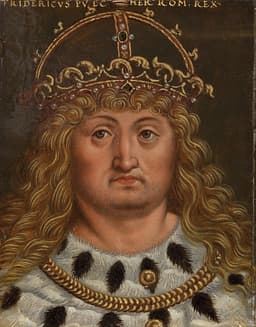
Frederick the Fair
Emperor · Medieval
36.3Total
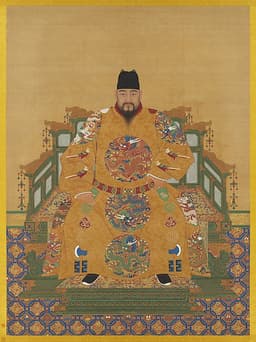
Zhu Qizhen
Emperor · Medieval
42.3Total
Basic Information
Born
1289
1427
Died
1330
1464
Era
Medieval
Medieval
Nationality
Holy Roman Empire
China
Occupation
Emperor
Emperor
Civilization
Western
Eastern
Score Comparison
Military (10%)
21.2
14.9
Political (20%)
32.1
32.2
Influence (20%)
45.5
51.8
Legacy (20%)
35.8
45.0
Leadership (15%)
33.6
48.4
Strategy (15%)
39.6
45.0
TOTAL
36.3
42.3
Frederick the Fair — Complete Timeline
1314 AD
Elected Anti-King of GermanyPolitical Action◆ Major
Frederick the Fair was elected anti-king of Germany by a faction of prince-electors, opposing Louis IV of Bavaria. This election was part of a double election that led to a civil war between the Habsburg and Wittelsbach dynasties.
ElectionHabsburgDouble Election
Impact: regional
1322 AD
Defeated and Captured at the Battle of MühldorfWar◆ Major
Frederick the Fair was defeated and captured by Louis IV of Bavaria at the Battle of M
BattleDefeatHabsburg
Impact: regionaltragic
1325 AD
Released from CaptivityPolitical Action
Frederick the Fair was released from captivity after agreeing to recognize Louis IV as king. However, he later renounced this agreement, leading to continued tensions between the Habsburgs and Wittelsbachs.
ReleaseHabsburgAgreement
Impact: regional
1330 AD
Died in GutensteinOther◆ Major
Frederick the Fair died in Gutenstein, Austria, without ever fully securing the German throne. His death ended his claim and allowed Louis IV to rule unchallenged, though the Habsburg dynasty continued to hold power in Austria.
DeathHabsburgEnd of Claim
Impact: regional
Zhu Qizhen — Complete Timeline
1435 AD
Accession as Zhengtong EmperorPolitical Action◆ Major
Zhu Qizhen ascended the Ming throne as the Zhengtong Emperor at age eight, following the death of his father, the Xuande Emperor. A regency council led by the Grand Empress Dowager and senior officials governed until he came of age.
Ming DynastySuccessionRegency
Impact: national
1449 AD
Tumu Crisis: Capture by OiratsWar
The Zhengtong Emperor personally led a poorly planned campaign against the Oirat Mongols under Esen Taishi. At the Battle of Tumu Fortress, the Ming army was annihilated, and the emperor was captured, becoming a prisoner of the Oirats for nearly a year.
Tumu CrisisMing DynastyMilitary Disaster
Impact: nationaltragic
1457 AD
Abolition of the Eunuch DirectorateReform
The Tianshun Emperor abolished the Directorate of Ceremonial, the powerful eunuch agency that had dominated court politics under his earlier reign. This move aimed to reduce eunuch influence, though it was partially reversed later.
Eunuch ReformGovernmentMing Dynasty
Impact: nationalconstructive
Restoration as Tianshun EmperorPolitical Action◆ Major
After being released in 1450 and placed under house arrest by his brother, the Jingtai Emperor, Zhu Qizhen staged a coup in 1457 with the help of loyalist officials. He reclaimed the throne as the Tianshun Emperor, executing his brother's supporters.
CoupRestorationMing Dynasty
Impact: nationaldestructive
Execution of Yu QianPolitical Action◆ Major
After his restoration, the Tianshun Emperor ordered the execution of Yu Qian, the minister who had defended Beijing during the Tumu Crisis and supported the Jingtai Emperor. This act removed a key statesman and deepened political divisions.
ExecutionPolitical PurgeMing Court
Impact: nationaldestructive
1464 AD
Death and Legacy of InstabilityOther◆ Major
The Tianshun Emperor died after a second reign of seven years. His capture and restoration had weakened the Ming monarchy, leading to increased factionalism and setting a precedent for eunuch influence that plagued later reigns.
DeathLegacyMing Decline
Impact: national
Expert Analysis
Origins
Frederick the Fair was born in 1289 in Vienna, the second son of Albert I of Germany, a Habsburg. His family's base was in Austria and Styria. He was groomed for power but lacked the political acumen of his rival. Zhu Qizhen, born in 1427 in Beijing, was the eldest son of the Xuande Emperor. He ascended the throne at age eight as the Zhengtong Emperor, with a regency led by Grand Empress Dowager Zhang and the 'Three Yang' ministers. His early reign was stable due to capable advisors.
Rise to Power
Frederick's rise came in 1314 when a faction of prince-electors, opposed to the Wittelsbach Louis IV, elected him as anti-king of Germany. This double election led to civil war. Frederick's support came from the Habsburg domains and some allies, but he lacked the broader backing that Louis commanded. Zhu Qizhen's rise was straightforward: he inherited the throne. However, his personal rule began in 1442 after the regency ended. He increasingly relied on eunuchs, particularly Wang Zhen, who urged aggressive military action.
Leadership & Governance
Frederick's leadership style was passive; he failed to secure decisive victories. His political score is 32.1, reflecting his inability to consolidate power. He was captured at the Battle of Mühldorf in 1322, a decisive defeat. Zhu Qizhen's leadership score is 48.4, but his governance was marred by poor judgment. He appointed Wang Zhen as a key advisor, leading to corruption. His greatest failure was personally leading a campaign against the Oirats, resulting in the Tumu Crisis in 1449, where he was captured. Frederick's military score is 21.2, while Zhu's is 14.9, both low, but Zhu's capture had larger repercussions.
Triumph & Tragedy
Frederick's triumph was his initial election as anti-king, but his tragedy was his capture and imprisonment. He was released in 1325 after agreeing to recognize Louis, but he later renounced the agreement, leading to co-rule that never materialized. Zhu's triumphs include his restoration as Tianshun Emperor in 1457 after a coup against his brother. His tragedy was the Tumu Crisis, where his poor planning led to a catastrophic defeat—the Ming army was destroyed, and he was captured. After his restoration, he executed the loyal minister Yu Qian, a stain on his legacy.
Character & Destiny
Frederick was determined but lacked strategic depth; his strategy score is 39.6. He was a pawn in the larger struggle between Habsburgs and Wittelsbachs. Zhu Qizhen was impulsive and overconfident, as seen in his decision to lead the campaign. His character score is not directly given, but his total is 42.3. Both were captured, but Zhu's capture destabilized the Ming dynasty, leading to a succession crisis and weakening of central authority.
Legacy
Frederick's legacy is minimal; he is a footnote in Holy Roman Empire history. His influence score is 45.5, but it is mostly due to his Habsburg lineage. Zhu Qizhen's legacy is more significant. The Tumu Crisis marked a turning point for the Ming dynasty, leading to a shift from offensive to defensive policies. His restoration also set a precedent for eunuch influence. Zhu's legacy score is 45.0, reflecting his lasting impact. Frederick's total score is 36.3, while Zhu's is 42.3.
Conclusion
Zhu Qizhen had a greater impact on history. Despite his failures, his capture and restoration altered the course of the Ming dynasty, reducing its power and stability. Frederick the Fair's reign was a brief episode in the Holy Roman Empire's internal conflicts. Zhu's political and legacy scores are higher, and his actions had consequences that lasted centuries. Therefore, Zhu Qizhen is the more significant figure.
Rankings
🥇
Zhu QizhenLeader
Mil: 14.9Pol: 32.2Inf: 51.8
42.3
🥈
Frederick the Fair
Mil: 21.2Pol: 32.1Inf: 45.5
36.3
+6.0 behind
How This Comparison Works
Algorithm
Each figure is scored on 6 dimensions (0—100 scale) based on structured historical data: Military (10%), Political (20%), Influence (20%), Legacy (20%), Leadership (15%), Strategy (15%). The weighted total produces the final ranking.
Data Sources
Scores are computed from structured sub-indicators in the database. Scale factors adjust for era (Ancient ×0.85, Modern ×1.0) and civilization size (Eastern ×1.05, Other ×0.80) to account for differences in population and military scale.
Maximum 3 Figures
Comparisons are limited to 2—3 figures to ensure readability and statistical meaningfulness.
Error Margins
±5 points per dimension — Sub-scores are derived from historical records with inherent uncertainty. Two figures within 5 points on a dimension should be considered roughly equivalent in that area.
Total Score Accuracy
±3 points overall — The weighted combination of 6 dimensions produces a total score with approximately ±3 points of uncertainty. Differences of less than 3 points are not statistically significant— the figures are effectively tied.
Known Limitations
- Historical records are incomplete and uneven across civilizations
- Figures from oral-tradition societies may be underrepresented
- Occupation labels can misclassify multi-role figures
- Scores measure capability and impact, not moral character
- Quantitative scoring is a comparison tool, not absolute truth
Capability Radar
Military (10%) — Battles & Warfare
Battles
15
10
Win Rate
10
5
Expansion
5
5
Political (20%) — Governance & Reform
Reform
5
30
Diplomacy
15
20
Economy
10
30
Influence (20%) — Cultural & Global Reach
Cultural
5
30
Global
5
20
Legacy (20%) — Historical Impact
Historical
10
40
Longevity
5
30
Leadership (15%) — Power & Stability
Tenure
20
40
Stability
10
20
Strategy (15%) — Tactics & Innovation
Strategy
10
5
Tactics
10
5
Reform
5
5
Similar Comparisons
Comments & Discussion
No comments yet. Be the first to share your thoughts!