Loading...
This comparison has not been analyzed yet.
One-time AI generation (~1 minute). Scores and timeline are already available below.
Frederick III vs Kedus Harbe
Frederick III leads by 3.8 pts · 2 figures compared
…
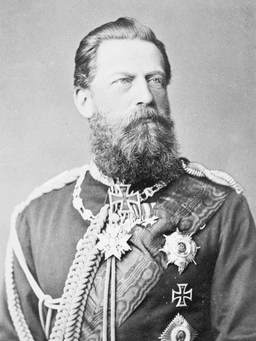
Frederick III
Emperor · Medieval
43.3Total
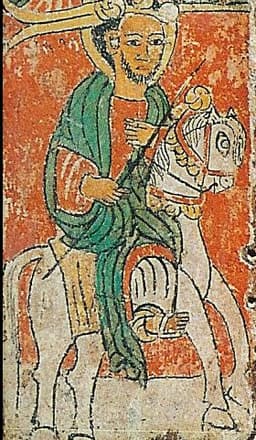
Kedus Harbe
Emperor · Medieval
39.5Total
Basic Information
Born
1415
1100
Died
1493
1150
Era
Medieval
Medieval
Nationality
Holy Roman Empire
Ethiopia
Occupation
Emperor
Emperor
Civilization
Western
Other
Score Comparison
Military (10%)
21.2
21.2
Political (20%)
37.9
26.4
Influence (20%)
50.2
50.2
Legacy (20%)
45.0
40.8
Leadership (15%)
53.2
45.0
Strategy (15%)
36.8
39.6
TOTAL
43.3
39.5
Frederick III — Complete Timeline
1450 AD
AEIOU MottoCultural
Frederick III adopted the motto AEIOU, which he used extensively on buildings and documents. The meaning of the acronym is uncertain, but it is often interpreted as 'Austriae est imperare orbi universo' (It is Austria's destiny to rule the world). This motto reflected Frederick's long-term vision for Habsburg dominance.
MottoHabsburg PropagandaSymbolism
Impact: regional
1452 AD
Coronation as Holy Roman EmperorPolitical Action◆ Major
Frederick III was crowned Holy Roman Emperor by Pope Nicholas V in Rome, the last emperor to be crowned in the city. His coronation reaffirmed the traditional alliance between the Empire and the Papacy. Frederick's long reign (53 years) was the longest of any Holy Roman Emperor.
CoronationImperial AuthorityPapacy
Impact: globalconstructive
1463 AD
Treaty of Wiener NeustadtPolitical Action
Frederick III signed the Treaty of Wiener Neustadt with his brother Albert VI, ending a conflict over the Habsburg inheritance. The treaty divided the Habsburg lands, with Frederick retaining control of Austria and Albert receiving parts of Further Austria. This agreement temporarily stabilized the internal Habsburg situation.
Habsburg DynastyTreatyTerritorial Division
constructive
1477 AD
Marriage of Maximilian IPolitical Action
Frederick III arranged the marriage of his son Maximilian I to Mary of Burgundy, heiress of the Burgundian state. This marriage brought the wealthy Burgundian territories, including the Netherlands, into the Habsburg orbit. It was a cornerstone of Habsburg power and led to centuries of conflict with France.
Marriage AllianceBurgundian InheritanceHabsburg Power
Impact: globalconstructive
1485 AD
Siege of Vienna (1485)War◆ Major
Frederick III was besieged in Vienna by the forces of Matthias Corvinus, King of Hungary. After a prolonged siege, Frederick was forced to flee the city, which fell to Corvinus. Frederick spent the next years in exile in Graz, unable to reclaim his capital until Corvinus's death in 1490.
SiegeHungarian InvasionExile
Impact: regionaltragic
Kedus Harbe — Complete Timeline
1120 AD
Commissioned church constructionCultural
Kedus Harbe oversaw the building of multiple churches in the Zagwe domain, continuing the dynasty's tradition of rock-hewn architecture. His patronage of the Ethiopian Orthodox Church strengthened religious institutions and promoted Christian worship.
Church buildingReligious patronageZagwe period
Impact: regionalconstructive
This comparison has not been analyzed yet.
One-time AI generation (~1 minute). Scores and timeline are already available below.
Rankings
🥇
Frederick IIILeader
Mil: 21.2Pol: 37.9Inf: 50.2
43.3
🥈
Kedus Harbe
Mil: 21.2Pol: 26.4Inf: 50.2
39.5
+3.8 behind
How This Comparison Works
Algorithm
Each figure is scored on 6 dimensions (0—100 scale) based on structured historical data: Military (10%), Political (20%), Influence (20%), Legacy (20%), Leadership (15%), Strategy (15%). The weighted total produces the final ranking.
Data Sources
Scores are computed from structured sub-indicators in the database. Scale factors adjust for era (Ancient ×0.85, Modern ×1.0) and civilization size (Eastern ×1.05, Other ×0.80) to account for differences in population and military scale.
Maximum 3 Figures
Comparisons are limited to 2—3 figures to ensure readability and statistical meaningfulness.
Error Margins
±5 points per dimension — Sub-scores are derived from historical records with inherent uncertainty. Two figures within 5 points on a dimension should be considered roughly equivalent in that area.
Total Score Accuracy
±3 points overall — The weighted combination of 6 dimensions produces a total score with approximately ±3 points of uncertainty. Differences of less than 3 points are not statistically significant— the figures are effectively tied.
Known Limitations
- Historical records are incomplete and uneven across civilizations
- Figures from oral-tradition societies may be underrepresented
- Occupation labels can misclassify multi-role figures
- Scores measure capability and impact, not moral character
- Quantitative scoring is a comparison tool, not absolute truth
Capability Radar
Military (10%) — Battles & Warfare
Battles
10
10
Win Rate
10
10
Expansion
10
10
Political (20%) — Governance & Reform
Reform
30
20
Diplomacy
40
20
Economy
30
20
Influence (20%) — Cultural & Global Reach
Cultural
20
30
Global
20
10
Legacy (20%) — Historical Impact
Historical
40
25
Longevity
30
20
Leadership (15%) — Power & Stability
Tenure
80
30
Stability
40
25
Strategy (15%) — Tactics & Innovation
Strategy
10
10
Tactics
10
10
Reform
10
5
Similar Comparisons
Comments & Discussion
No comments yet. Be the first to share your thoughts!