Loading...
Frederick I of Sweden vs Sigismund III Vasa
Sigismund III Vasa leads by 6.8 pts · 2 figures compared
…

Frederick I of Sweden
Emperor · Modern
50.1Total
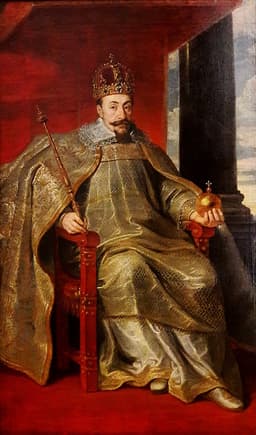
Sigismund III Vasa
Emperor · Modern
56.9Total
Basic Information
Born
1676
1566
Died
1751
1632
Era
Modern
Modern
Nationality
Sweden
Poland
Occupation
Emperor
Emperor
Civilization
Western
Western
Score Comparison
Military (10%)
21.2
40.0
Political (20%)
68.0
68.0
Influence (20%)
48.6
59.0
Legacy (20%)
40.0
49.2
Leadership (15%)
74.0
74.0
Strategy (15%)
45.0
45.0
TOTAL
50.1
56.9
Frederick I of Sweden — Complete Timeline
1720 AD
Coronation of Frederick IPolitical Action◆ Major
Frederick I was crowned King of Sweden after his wife Ulrika Eleonora abdicated in his favor. His coronation was conditional on accepting the 1720 constitution, which limited royal power and strengthened the Riksdag.
CoronationConstitutionAge of Liberty
Impact: national
Presidency of the Age of LibertyPolitical Action◆ Major
Frederick I presided over the early Age of Liberty, a period of parliamentary rule in Sweden. He had little political influence, as power shifted to the Riksdag and the Hat and Cap parties.
Age of LibertyParliamentarism
Impact: national
1741 AD
War of the Hats (Hats' Russian War)War◆ Major
Frederick I, influenced by the Hat party, declared war on Russia in an attempt to regain lost territories. The war ended in 1743 with the Treaty of
WarRussiaHats
Impact: regionaldestructive
1751 AD
Death of Frederick IOther
Frederick I died in Stockholm at age 75. His death ended a reign of 31 years during which royal power declined and the Age of Liberty flourished.
Death
Impact: national
Sigismund III Vasa — Complete Timeline
1587 AD
Elected King of PolandPolitical Action◆ Major
Sigismund III Vasa was elected King of Poland and Grand Duke of Lithuania, establishing the Polish
ElectionPolish–Swedish UnionMonarchy
Impact: regional
1596 AD
Union of BrestPolitical Action◆ Major
Sigismund III supported the Union of Brest, which created the Ukrainian Greek Catholic Church. This union brought Orthodox Christians in the Polish
ReligionUnionEastern Europe
Impact: regional
Transfer of the capital from Kraków to WarsawPolitical Action◆ Major
Sigismund III moved the royal court from Krak
CapitalGovernmentPoland
Impact: nationalconstructive
1609 AD
Polish–Muscovite War (1609–1618)War◆ Major
Sigismund III launched a war against Russia, aiming to place his son W
WarRussiaTime of Troubles
Impact: regional
Expert Analysis
Origins
Frederick I of Sweden was born on April 17, 1676, in Kassel, as the son of Landgrave Charles I of Hesse-Kassel and Princess Maria Amalia of Courland. He was raised in a German princely court and received a typical education for a nobleman, focusing on military and administrative skills. His early career included service in the Dutch Republic's army and later as a general in the War of the Spanish Succession. In 1715, he married Ulrika Eleonora of Sweden, sister of Charles XII, which positioned him for the Swedish throne.
Sigismund III Vasa was born on June 20, 1566, at Gripsholm Castle in Sweden, the son of King John III of Sweden and Catherine Jagiellon of Poland. He was raised as a Catholic, a key factor in his later conflicts. His education emphasized Catholic theology and political science, preparing him for rule. Through his mother, he inherited claims to the Polish throne, leading to his election as King of Poland in 1587.
Rise to Power
Frederick I rose to power after the death of Charles XII in 1718. His wife Ulrika Eleonora abdicated in his favor in 1720, but the Swedish Riksdag imposed strict conditions limiting royal authority. He was crowned on May 3, 1720, and accepted the Instrument of Government that transferred power to the parliament, ushering in the Age of Liberty. His reign marked a shift from absolute monarchy to parliamentary rule.
Sigismund III was elected King of Poland in 1587 after a contested election against Maximilian III of Austria. He secured the throne with the support of the Polish nobility and his uncle, King Stephen Báthory. His election created a personal union between Poland and Sweden, as he was also heir to the Swedish throne. However, his Catholic faith and efforts to enforce Catholicism in Lutheran Sweden led to his deposition from the Swedish throne in 1599, ending the union.
Leadership & Governance
Frederick I's leadership was characterized by passivity. He scored 74.0 in leadership but 21.2 in military, reflecting his lack of involvement in governance. During his reign, the Riksdag and its committees, particularly the Secret Committee, held real power. He presided over the early Age of Liberty, a period of parliamentary rule that lasted until 1772. His main contribution was accepting the constitutional reforms that limited royal power, allowing the nobility to dominate. He had little influence over policy, as seen in the War of the Hats (1741-1743), where the Hat party pushed for war against Russia despite his reluctance. The war ended disastrously with the Treaty of Åbo, ceding territory to Russia.
Sigismund III scored 40.0 in military and 68.0 in political, showing stronger political engagement. He actively pursued centralization and Catholicization. He moved the capital from Kraków to Warsaw in 1596, centralizing administration and fostering economic growth. He supported the Union of Brest in 1596, creating the Ukrainian Greek Catholic Church to bring Orthodox Christians under Roman Catholic authority, which caused religious tensions. His governance style was absolutist, clashing with the Polish nobility's Golden Liberty. He also patronized the arts, commissioning the Sigismund's Column in Warsaw.
Triumph & Tragedy
Frederick I's greatest success was overseeing the transfer of power to parliament, which stabilized Sweden after the absolutism of Charles XII. However, his passivity allowed factionalism to flourish, leading to the disastrous War of the Hats. His failure to assert royal authority contributed to Sweden's decline as a great power. He also failed to produce a legitimate heir, leading to a succession crisis after his death.
Sigismund III's triumph was the capture of Moscow in 1610 during the Polish-Muscovite War, briefly placing his son Władysław on the Russian throne. However, the war ultimately failed, and the Treaty of Deulino in 1618 only gained minor territories. His greatest tragedy was the loss of the Swedish throne due to his religious intransigence, which sparked a series of wars between Poland and Sweden that drained resources. His support for the Habsburgs and the Catholic League also entangled Poland in the Thirty Years' War.
Character & Destiny
Frederick I was described as amiable but indolent, preferring hunting and entertainment over politics. His character shaped his destiny: his lack of ambition allowed the nobility to seize power, but also kept Sweden stable during a transition. He died on April 5, 1751, at age 75, with little lasting personal impact.
Sigismund III was devoutly Catholic and stubborn, which alienated his Swedish subjects and Polish Protestants. His insistence on religious uniformity led to conflicts, including the Zebrzydowski Rebellion (1606-1609) of Polish nobles. His character drove him to pursue grand ambitions, but his inflexibility caused failures. He died on April 30, 1632, at age 65, leaving a mixed legacy.
Legacy
Frederick I's legacy is the Age of Liberty, a period of parliamentary rule that lasted until 1772. However, his personal influence was minimal; he scored 40.0 in legacy. The constitutional changes he accepted shaped Swedish politics but also led to stagnation and factionalism. His reign is often seen as a transition between absolutism and the Enlightenment reforms of Gustav III.
Sigismund III scored 49.2 in legacy. He is remembered for moving the capital to Warsaw, which became the political and cultural center of Poland. The Union of Brest created a lasting religious division in Ukraine. His failed attempt to regain Sweden and his wars weakened the Commonwealth, contributing to its eventual decline. His patronage of the arts left architectural landmarks like Warsaw's Royal Castle.
Conclusion
Sigismund III Vasa had a greater impact than Frederick I, evidenced by his higher total score of 56.9 vs 50.1. While Frederick passively presided over a constitutional shift, Sigismund actively shaped Poland's political and religious landscape. His decision to move the capital to Warsaw had enduring consequences, and his military campaigns, though unsuccessful, demonstrated ambition. Frederick's reign was a footnote in Sweden's decline, whereas Sigismund's actions influenced Eastern Europe for centuries. Therefore, Sigismund III Vasa emerges as the more significant historical figure.
Rankings
🥇
Sigismund III VasaLeader
Mil: 40.0Pol: 68.0Inf: 59.0
56.9
🥈
Frederick I of Sweden
Mil: 21.2Pol: 68.0Inf: 48.6
50.1
+6.8 behind
How This Comparison Works
Algorithm
Each figure is scored on 6 dimensions (0—100 scale) based on structured historical data: Military (10%), Political (20%), Influence (20%), Legacy (20%), Leadership (15%), Strategy (15%). The weighted total produces the final ranking.
Data Sources
Scores are computed from structured sub-indicators in the database. Scale factors adjust for era (Ancient ×0.85, Modern ×1.0) and civilization size (Eastern ×1.05, Other ×0.80) to account for differences in population and military scale.
Maximum 3 Figures
Comparisons are limited to 2—3 figures to ensure readability and statistical meaningfulness.
Error Margins
±5 points per dimension — Sub-scores are derived from historical records with inherent uncertainty. Two figures within 5 points on a dimension should be considered roughly equivalent in that area.
Total Score Accuracy
±3 points overall — The weighted combination of 6 dimensions produces a total score with approximately ±3 points of uncertainty. Differences of less than 3 points are not statistically significant— the figures are effectively tied.
Known Limitations
- Historical records are incomplete and uneven across civilizations
- Figures from oral-tradition societies may be underrepresented
- Occupation labels can misclassify multi-role figures
- Scores measure capability and impact, not moral character
- Quantitative scoring is a comparison tool, not absolute truth
Capability Radar
Military (10%) — Battles & Warfare
Battles
10
45
Win Rate
10
40
Expansion
10
35
Political (20%) — Governance & Reform
Reform
40
50
Diplomacy
50
45
Economy
40
40
Influence (20%) — Cultural & Global Reach
Cultural
20
55
Global
10
40
Legacy (20%) — Historical Impact
Historical
30
50
Longevity
20
45
Leadership (15%) — Power & Stability
Tenure
60
60
Stability
30
30
Strategy (15%) — Tactics & Innovation
Strategy
5
40
Tactics
5
35
Reform
5
30
Similar Comparisons
Comments & Discussion
No comments yet. Be the first to share your thoughts!