Loading...
Emir of Hadejia vs Sigismund III Vasa
Sigismund III Vasa leads by 11.6 pts · 2 figures compared
…

Emir of Hadejia
Emperor · Modern
45.3Total
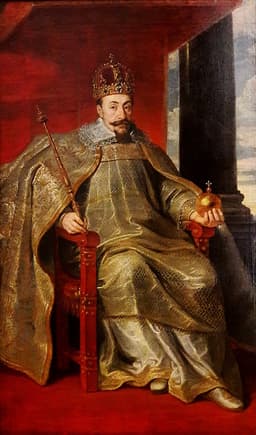
Sigismund III Vasa
Emperor · Modern
56.9Total
Basic Information
Born
1850
1566
Died
1906
1632
Era
Modern
Modern
Nationality
Nigeria
Poland
Occupation
Emperor
Emperor
Civilization
Other
Western
Score Comparison
Military (10%)
50.0
40.0
Political (20%)
37.9
68.0
Influence (20%)
48.6
59.0
Legacy (20%)
37.5
49.2
Leadership (15%)
67.0
74.0
Strategy (15%)
30.3
45.0
TOTAL
45.3
56.9
Emir of Hadejia — Complete Timeline
1850 AD
Accession as Emir of HadejiaPolitical Action◆ Major
Emir of Hadejia ascended to the throne of the Hadejia Emirate, a Fulani state within the Sokoto Caliphate. He inherited a position of authority over a region known for its agricultural wealth and strategic location. His rule aimed to maintain autonomy within the caliphate.
SuccessionHadejiaFulani Emirate
1870 AD
Conflict with Kano EmirateWar
Emir of Hadejia engaged in a border conflict with the Kano Emirate over territorial disputes. The conflict resulted in a stalemate, with neither side gaining significant advantage. The war strained relations between the two emirates and required mediation by the Sokoto Caliph.
ConflictKanoBorder Dispute
destructive
1903 AD
Resistance to British Colonial ConquestWar◆ Major
Emir of Hadejia led resistance against the British colonial forces under Frederick Lugard. The Hadejia army was defeated at the Battle of Hadejia, and the emir was captured. This defeat led to the incorporation of Hadejia into the British Northern Nigeria Protectorate.
ResistanceBritish ColonialismDefeat
Impact: regionaltragic
Sigismund III Vasa — Complete Timeline
1587 AD
Elected King of PolandPolitical Action◆ Major
Sigismund III Vasa was elected King of Poland and Grand Duke of Lithuania, establishing the Polish
ElectionPolish–Swedish UnionMonarchy
Impact: regional
1596 AD
Union of BrestPolitical Action◆ Major
Sigismund III supported the Union of Brest, which created the Ukrainian Greek Catholic Church. This union brought Orthodox Christians in the Polish
ReligionUnionEastern Europe
Impact: regional
Transfer of the capital from Kraków to WarsawPolitical Action◆ Major
Sigismund III moved the royal court from Krak
CapitalGovernmentPoland
Impact: nationalconstructive
1609 AD
Polish–Muscovite War (1609–1618)War◆ Major
Sigismund III launched a war against Russia, aiming to place his son W
WarRussiaTime of Troubles
Impact: regional
Expert Analysis
Origins
The Emir of Hadejia emerged from the Fulani emirate system within the Sokoto Caliphate in what is now northern Nigeria. Born into the ruling dynasty, his early life was shaped by the Islamic reform movements of Usman dan Fodio and the hierarchical structure of the caliphate. He inherited a position of authority over the Hadejia Emirate, a state that controlled trade routes and agricultural lands in the region. His education likely focused on Islamic law, military tactics, and administration, typical for Fulani nobility.
Sigismund III Vasa was born on June 20, 1566, at Gripsholm Castle in Sweden, the son of King John III of Sweden and Catherine Jagiellon, a Polish princess. He was raised as a Catholic in a predominantly Protestant Sweden, which shaped his religious fervor. His Jagiellonian lineage through his mother gave him a claim to the Polish throne. He was educated in Jesuit institutions, emphasizing Catholic orthodoxy and absolutist governance.
Rise to Power
The Emir of Hadejia ascended to the throne through hereditary succession, inheriting a stable but threatened emirate. His rise was marked by the need to assert authority over subordinate chiefs and manage relations with the larger Sokoto Caliphate. The turning point came with the British colonial advance under Frederick Lugard. The Emir became a focal point of resistance, rallying his forces to defend Hadejia's independence.
Sigismund III was elected King of Poland in 1587, after the death of Stephen Báthory. His election was contested by Maximilian III of Austria, leading to a brief war. Sigismund's victory solidified his rule, and he also inherited the Swedish throne in 1592 upon his father's death, creating a personal union between Poland-Lithuania and Sweden. However, his Catholicism alienated Protestant Sweden, leading to his deposition in Sweden in 1599.
Leadership & Governance
The Emir of Hadejia ruled as a traditional Fulani emir, combining Islamic law with customary governance. He administered justice through Sharia courts, collected taxes, and maintained a cavalry-based military. His leadership was tested by the British invasion; he chose military resistance rather than diplomacy or submission. His governance scored 67.0 in leadership, reflecting his ability to command loyalty, but his political score of 37.9 indicates limited institutional innovation.
Sigismund III was an absolutist ruler who sought to centralize power and promote Catholicism. He supported the Union of Brest in 1596, creating the Ukrainian Greek Catholic Church to bring Orthodox subjects under Rome. He moved the capital from Kraków to Warsaw in 1596, centralizing administration. His political score of 68.0 reflects his strategic maneuvering, but his rigid religious policies sparked rebellions, such as the Zebrzydowski Rebellion (1606–1608). His leadership score of 74.0 indicates strong control, but his strategy score of 45.0 shows overreach.
Triumph & Tragedy
The Emir of Hadejia's greatest success was his resistance to British conquest, which delayed colonial control and demonstrated the emirate's military capability. His forces fought bravely at the Battle of Hadejia, but ultimately were defeated by superior British firepower. His tragedy was the loss of independence; the emirate was incorporated into the British Northern Nigeria Protectorate, and the Emir was likely deposed or reduced to a colonial chief. His military score of 50.0 reflects modest achievement.
Sigismund III's triumphs include the capture of Moscow in 1610 during the Polish–Muscovite War, which briefly placed his son Władysław on the Russian throne. He also successfully moved the capital to Warsaw, which became a major European city. His tragedies include the loss of the Swedish throne and the failure to secure a permanent union with Sweden. The war with Russia ultimately ended in the Treaty of Deulino (1618), which gave Poland territorial gains but not the throne. His military score of 40.0 reflects mixed results.
Character & Destiny
The Emir of Hadejia was characterized by his determination to defend his realm against foreign encroachment. His decision to fight rather than negotiate was shaped by the honor culture of the Fulani aristocracy and the Islamic duty of jihad against infidels. His destiny was sealed by British technological and organizational superiority; his bravery could not overcome the industrial gap. His total score of 45.3 reflects a localized but significant role.
Sigismund III was a devout Catholic and a believer in divine right monarchy. His stubborn adherence to Catholicism and absolutism led to conflicts with Protestant nobles and the Sejm (parliament). His character was marked by patience and long-term vision, but also inflexibility. His destiny was to be remembered as a king who expanded Polish influence but also sowed internal discord. His total score of 56.9 indicates a broader but contested impact.
Legacy
The Emir of Hadejia is remembered in northern Nigeria as a symbol of resistance against colonialism. His emirate continued as a traditional state within Nigeria, but his defiance is celebrated in local history. However, his legacy score of 37.5 reflects limited global recognition. His influence score of 48.6 is modest.
Sigismund III's legacy is more complex. He is credited with strengthening Catholicism in Eastern Europe and centralizing the Polish state. The move to Warsaw shaped Poland's development. However, his policies are also blamed for weakening the Commonwealth through religious strife and failed wars. His legacy score of 49.2 and influence score of 59.0 reflect significant but mixed impact.
Conclusion
Sigismund III Vasa had greater historical impact than the Emir of Hadejia, with a total score of 56.9 versus 45.3. Sigismund's actions reshaped the political and religious map of Eastern Europe: the Union of Brest created a lasting church, the capital move centralized Poland, and the war with Russia altered the balance of power. The Emir of Hadejia, while a brave defender of his people, operated on a smaller stage and his resistance did not change the trajectory of colonialism. Sigismund's higher political (68.0 vs 37.9) and influence (59.0 vs 48.6) scores reflect his broader reach. Thus, Sigismund III Vasa is the more significant historical figure.
Rankings
🥇
Sigismund III VasaLeader
Mil: 40.0Pol: 68.0Inf: 59.0
56.9
🥈
Emir of Hadejia
Mil: 50.0Pol: 37.9Inf: 48.6
45.3
+11.6 behind
How This Comparison Works
Algorithm
Each figure is scored on 6 dimensions (0—100 scale) based on structured historical data: Military (10%), Political (20%), Influence (20%), Legacy (20%), Leadership (15%), Strategy (15%). The weighted total produces the final ranking.
Data Sources
Scores are computed from structured sub-indicators in the database. Scale factors adjust for era (Ancient ×0.85, Modern ×1.0) and civilization size (Eastern ×1.05, Other ×0.80) to account for differences in population and military scale.
Maximum 3 Figures
Comparisons are limited to 2—3 figures to ensure readability and statistical meaningfulness.
Error Margins
±5 points per dimension — Sub-scores are derived from historical records with inherent uncertainty. Two figures within 5 points on a dimension should be considered roughly equivalent in that area.
Total Score Accuracy
±3 points overall — The weighted combination of 6 dimensions produces a total score with approximately ±3 points of uncertainty. Differences of less than 3 points are not statistically significant— the figures are effectively tied.
Known Limitations
- Historical records are incomplete and uneven across civilizations
- Figures from oral-tradition societies may be underrepresented
- Occupation labels can misclassify multi-role figures
- Scores measure capability and impact, not moral character
- Quantitative scoring is a comparison tool, not absolute truth
Capability Radar
Military (10%) — Battles & Warfare
Battles
20
45
Win Rate
25
40
Expansion
20
35
Political (20%) — Governance & Reform
Reform
30
50
Diplomacy
30
45
Economy
25
40
Influence (20%) — Cultural & Global Reach
Cultural
20
55
Global
10
40
Legacy (20%) — Historical Impact
Historical
20
50
Longevity
15
45
Leadership (15%) — Power & Stability
Tenure
40
60
Stability
30
30
Strategy (15%) — Tactics & Innovation
Strategy
20
40
Tactics
20
35
Reform
15
30
Similar Comparisons
Comments & Discussion
No comments yet. Be the first to share your thoughts!