Loading...
Louis XIII vs Sigismund III Vasa
Louis XIII leads by 3.4 pts · 2 figures compared
…
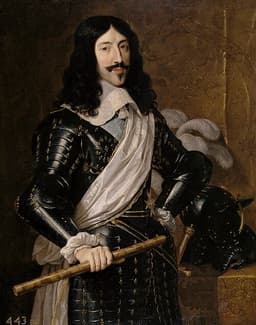
Louis XIII
Emperor · Modern
60.3Total
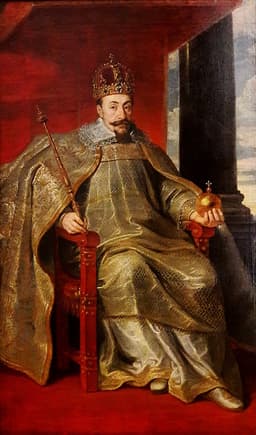
Sigismund III Vasa
Emperor · Modern
56.9Total
Basic Information
Born
1601
1566
Died
1643
1632
Era
Modern
Modern
Nationality
France
Poland
Occupation
Emperor
Emperor
Civilization
Western
Western
Score Comparison
Military (10%)
55.0
40.0
Political (20%)
55.0
68.0
Influence (20%)
61.0
59.0
Legacy (20%)
58.0
49.2
Leadership (15%)
72.0
74.0
Strategy (15%)
60.0
45.0
TOTAL
60.3
56.9
Louis XIII — Complete Timeline
1624 AD
Appointed Cardinal Richelieu as Chief MinisterPolitical Action
Louis XIII appointed Cardinal Richelieu as his chief minister, beginning a partnership that centralized royal power. Richelieu's policies strengthened the monarchy, suppressed noble rebellions, and expanded French influence in Europe.
AppointmentRichelieuCentralization
Impact: national
1627 AD
Siege of La RochelleWar◆ Major
Louis XIII and Richelieu besieged the Huguenot stronghold of La Rochelle for 14 months, forcing its surrender. This victory ended Huguenot political and military power in France, enforcing Catholic unity.
SiegeHuguenotsReligious Conflict
Impact: nationaldestructive
1630 AD
Day of the DupesPolitical Action◆ Major
Louis XIII faced a crisis when his mother Marie de' Medici and other nobles demanded Richelieu's dismissal. Louis chose to support Richelieu, exiling his mother and solidifying the cardinal's power, marking a turning point in French absolutism.
Political CrisisRichelieuRoyal Favor
Impact: national
1635 AD
Entry into the Thirty Years' WarWar◆ Major
Louis XIII declared war on Spain, entering the Thirty Years' War on the Protestant side. This intervention aimed to weaken Habsburg power and expand French influence, leading to significant military campaigns in Germany and the Low Countries.
Thirty Years' WarHabsburgFrench Intervention
Impact: regional
1638 AD
Birth of Louis XIVPolitical Action
The birth of Louis XIV, after 23 years of marriage, secured the Bourbon succession. This event was celebrated as a divine gift and ensured the continuity of the dynasty, later leading to the Sun King's long reign.
SuccessionBourbon DynastyHeir
Impact: nationalconstructive
Sigismund III Vasa — Complete Timeline
1587 AD
Elected King of PolandPolitical Action◆ Major
Sigismund III Vasa was elected King of Poland and Grand Duke of Lithuania, establishing the Polish
ElectionPolish–Swedish UnionMonarchy
Impact: regional
1596 AD
Union of BrestPolitical Action◆ Major
Sigismund III supported the Union of Brest, which created the Ukrainian Greek Catholic Church. This union brought Orthodox Christians in the Polish
ReligionUnionEastern Europe
Impact: regional
Transfer of the capital from Kraków to WarsawPolitical Action◆ Major
Sigismund III moved the royal court from Krak
CapitalGovernmentPoland
Impact: nationalconstructive
1609 AD
Polish–Muscovite War (1609–1618)War◆ Major
Sigismund III launched a war against Russia, aiming to place his son W
WarRussiaTime of Troubles
Impact: regional
Expert Analysis
Origins
Louis XIII was born in 1601 at Fontainebleau, France, to King Henry IV and Marie de' Medici. His father was assassinated in 1610, leaving the young king under his mother's regency. Louis received a strict Catholic education but was overshadowed by his mother's favorites. Sigismund III Vasa was born in 1566 at Gripsholm Castle, Sweden, to King John III of Sweden and Catherine Jagiellon of Poland. He was raised as a devout Catholic, inheriting claims to both the Swedish and Polish thrones. His mother's Polish connections proved crucial for his future.
Rise to Power
Louis XIII assumed personal rule in 1617 at age 16, but his mother continued to exert influence. In 1624, he appointed Cardinal Richelieu as his chief minister, a turning point that centralized royal power. Richelieu's policies strengthened the monarchy but faced opposition from nobles and the queen mother. The Day of the Dupes in 1630 saw Louis choose Richelieu over his mother, exiling Marie de' Medici. Sigismund III was elected King of Poland in 1587, defeating rival Maximilian III of Austria. He also inherited the Swedish throne in 1592, creating a personal union. However, his Catholic fervor and absentee rule led to his deposition in Sweden in 1599 in favor of his uncle Charles IX. Sigismund retained the Polish crown but lost Sweden.
Leadership & Governance
Louis XIII ruled through Richelieu, focusing on centralization and reducing Huguenot power. The Siege of La Rochelle (1627-1628) crushed Huguenot political and military strongholds, while the Edict of Alès (1629) removed their fortresses but preserved religious toleration. Louis entered the Thirty Years' War in 1635 against Spain, aiming to weaken Habsburg dominance. His governance score of 72.0 reflects effective delegation. Sigismund III pursued a more ambitious but less successful agenda. He moved the capital from Kraków to Warsaw in 1596, centralizing administration. He supported the Union of Brest (1596), creating the Ukrainian Greek Catholic Church to win Orthodox loyalty, but it deepened religious divisions. His political score of 68.0 is slightly higher than Louis's 55.0, but his military score of 40.0 lags behind Louis's 55.0.
Triumph & Tragedy
Louis XIII's greatest triumph was the successful siege of La Rochelle, ending Huguenot political power. His entry into the Thirty Years' War expanded French influence, though he died before the war's end. His tragedy was his early death in 1643 at age 41, leaving a five-year-old heir, Louis XIV, and a regency that undid some centralization. Sigismund III's triumph was the Polish-Muscovite War (1609-1618), where Polish forces captured Moscow in 1610, but failed to secure the throne for his son. His tragedy was the loss of the Swedish throne and the draining conflict with Sweden that weakened the Commonwealth. His legacy is mixed, with a total score of 56.9 versus Louis's 60.3.
Character & Destiny
Louis XIII was melancholic, reserved, and deeply religious, but decisive when needed. His partnership with Richelieu showed strategic delegation, though he could be indecisive. His character shaped a strong monarchy that his son would perfect. Sigismund III was stubborn, devoutly Catholic, and idealistic, pursuing union with Sweden and Catholic expansion. His inflexibility cost him Sweden and alienated many in Poland. Historians note his aesthetic patronage but criticize his political judgment.
Legacy
Louis XIII's legacy is the consolidation of French absolutism, paving the way for Louis XIV. His centralization, reduction of noble power, and anti-Habsburg policy defined French dominance in Europe. Sigismund III's legacy includes the transfer of the capital to Warsaw, the Union of Brest, and the Polish-Muscovite war. However, his reign marked the beginning of the Commonwealth's decline due to religious strife and conflicts. He is remembered as a patron of the arts but a politically divisive figure.
Conclusion
Louis XIII had a greater impact, scoring 60.3 overall versus Sigismund's 56.9. His partnership with Richelieu created the model for absolute monarchy that dominated Europe for centuries. Sigismund's failures in Sweden and religious policies weakened the Commonwealth. While both were significant, Louis's centralization and military expansion shaped modern France, whereas Sigismund's legacy is more fragmented.
Rankings
🥇
Louis XIIILeader
Mil: 55.0Pol: 55.0Inf: 61.0
60.3
🥈
Sigismund III Vasa
Mil: 40.0Pol: 68.0Inf: 59.0
56.9
+3.4 behind
How This Comparison Works
Algorithm
Each figure is scored on 6 dimensions (0—100 scale) based on structured historical data: Military (10%), Political (20%), Influence (20%), Legacy (20%), Leadership (15%), Strategy (15%). The weighted total produces the final ranking.
Data Sources
Scores are computed from structured sub-indicators in the database. Scale factors adjust for era (Ancient ×0.85, Modern ×1.0) and civilization size (Eastern ×1.05, Other ×0.80) to account for differences in population and military scale.
Maximum 3 Figures
Comparisons are limited to 2—3 figures to ensure readability and statistical meaningfulness.
Error Margins
±5 points per dimension — Sub-scores are derived from historical records with inherent uncertainty. Two figures within 5 points on a dimension should be considered roughly equivalent in that area.
Total Score Accuracy
±3 points overall — The weighted combination of 6 dimensions produces a total score with approximately ±3 points of uncertainty. Differences of less than 3 points are not statistically significant— the figures are effectively tied.
Known Limitations
- Historical records are incomplete and uneven across civilizations
- Figures from oral-tradition societies may be underrepresented
- Occupation labels can misclassify multi-role figures
- Scores measure capability and impact, not moral character
- Quantitative scoring is a comparison tool, not absolute truth
Capability Radar
Military (10%) — Battles & Warfare
Battles
45
45
Win Rate
55
40
Expansion
55
35
Political (20%) — Governance & Reform
Reform
65
50
Diplomacy
75
45
Economy
60
40
Influence (20%) — Cultural & Global Reach
Cultural
50
55
Global
55
40
Legacy (20%) — Historical Impact
Historical
65
50
Longevity
60
45
Leadership (15%) — Power & Stability
Tenure
70
60
Stability
55
30
Strategy (15%) — Tactics & Innovation
Strategy
50
40
Tactics
40
35
Reform
60
30
Similar Comparisons
Comments & Discussion
No comments yet. Be the first to share your thoughts!