Loading...
Fred Timakata vs Napoleon Bonaparte
Napoleon Bonaparte leads by 27.2 pts · 2 figures compared
…
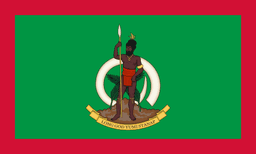
Fred Timakata
Politician · Modern
43.7Total

Napoleon Bonaparte
General · Modern
70.9Total
Basic Information
Born
1936
1769
Died
—
1821
Era
Modern
Modern
Nationality
Vanuatu
France
Occupation
Politician
General
Civilization
Other
Western
Score Comparison
Military (10%)
43.3
94.0
Political (20%)
32.2
72.0
Influence (20%)
47.9
40.0
Legacy (20%)
37.5
80.0
Leadership (15%)
58.8
78.0
Strategy (15%)
44.1
90.0
TOTAL
43.7
70.9
Fred Timakata — Complete Timeline
1989 AD
Election as President of VanuatuPolitical Action◆ Major
Fred Timakata was elected as the President of Vanuatu, serving from 1989 to 1994. He was a Presbyterian pastor before entering politics, and his presidency focused on national unity and development.
PresidencyVanuatuPolitical Leadership
Impact: national
1994 AD
End of PresidencyPolitical Action
Timakata's term ended in 1994 after serving one term. He was succeeded by Jean-Marie Leye Lenelgau. His presidency was noted for its stability and pastoral approach.
PresidencyTransitionVanuatu
Impact: national
Napoleon Bonaparte — Complete Timeline
1799 AD
Coup of 18 BrumaireOther◆ Major
Napoleon Bonaparte, with support from his brother Lucien and key political figures, overthrew the Directory in a bloodless coup. He established the Consulate with himself as First Consul, effectively becoming the ruler of France. This event ended the French Revolution's most unstable period.
French RevolutionCoupRise to Power
Impact: regional
1804 AD
Promulgation of the Napoleonic CodeOther◆ Major
Napoleon enacted the Civil Code of the French, known as the Napoleonic Code, a comprehensive set of laws that replaced the fragmented feudal legal systems. The code established legal equality, protected property rights, and secularized law. It became the basis for legal systems in many European and world countries.
Legal ReformNapoleonic CodeCivil Law
Impact: globalconstructive
1805 AD
Battle of AusterlitzWar◆ Major
Napoleon's Grande Arm
Napoleonic WarsBattleDecisive Victory
Impact: global
1812 AD
Invasion of RussiaWar◆ Major
Napoleon led the Grande Arm
Napoleonic WarsInvasionDisaster
Impact: globaldestructive
1815 AD
Battle of WaterlooWar◆ Major
Napoleon's French army was defeated by the combined forces of the Duke of Wellington's Anglo-Allied army and Gebhard Leberecht von Bl
Napoleonic WarsBattleFinal Defeat
Impact: globaldestructive
Expert Analysis
fred-timakata-vs-napoleon-bonaparte
### The Conqueror and the Pastor
In the winter of 1812, Napoleon Bonaparte watched his Grand Army dissolve into the snows of Russia, a catastrophic end to a campaign that had once seemed invincible. Half a world away and a century and a half later, Fred Timakata, a Presbyterian pastor from the Pacific island of Vanuatu, stepped into a presidency defined not by conquest but by quiet service. What could possibly connect these two men? One remade the map of Europe; the other helped a young nation find its footing. The answer lies not in their achievements, but in the starkly different worlds they inhabited—and the radically different ambitions those worlds demanded.
### Origins
Napoleon was born on the island of Corsica in 1769, a year after the island was annexed by France. His family was minor nobility, but they were not wealthy. The French Revolution, which erupted when he was twenty, shattered the old order and opened a path for a talented artillery officer of modest birth. The era was one of chaos and war, where a quick mind and a ruthless instinct could propel a man from obscurity to the throne of Europe. The world was a chessboard, and Napoleon learned to play with breathtaking speed.
Fred Timakata was born in 1936 on the island of Tongoa, in what was then the Anglo-French condominium of the New Hebrides. His world was one of small villages, coconut plantations, and the quiet authority of the church. He trained as a Presbyterian pastor, a role that in Melanesian society carried immense moral weight. His era was one of decolonization, as the winds of change swept across the Pacific. Where Napoleon’s world was forged in the fire of revolution, Timakata’s was shaped by the patient work of building consensus in a newly independent nation.
### Rise to Power
Napoleon’s rise was a whirlwind. In 1793, at age twenty-four, he drove the British from the port of Toulon, earning promotion to brigadier general. By 1796, he commanded the Army of Italy, where his lightning campaigns humiliated the Austrians. In 1799, he seized power in a coup, becoming First Consul. Five years later, in 1804, he crowned himself Emperor of the French, a title that would soon bring him into conflict with every major power on the continent. His path was one of audacity, ambition, and a willingness to gamble everything on a single battle.
Fred Timakata’s rise was a quiet ascent through the ranks of the Presbyterian Church and then into politics. Vanuatu gained independence in 1980, and Timakata served as a government minister before being elected President in 1989 by an electoral college. The presidency was a largely ceremonial role, a symbol of national unity in a country of over eighty islands and more than one hundred languages. His score of 50.0 in political acumen reflects not a lack of ability, but the nature of his office: he was a figurehead, not a ruler.
### Leadership & Governance
Napoleon’s leadership was a paradox of genius and tyranny. As a military commander, he is virtually unmatched—his score of 94.0 in military acumen and 93.0 in strategy speak to a mind that could orchestrate the movements of hundreds of thousands of men across entire continents. He reformed French law with the Napoleonic Code, a system that influenced legal thinking from Europe to Latin America. But his rule was also autocratic. He suppressed dissent, reestablished slavery in French colonies, and ultimately sacrificed his empire to his own ambition.
Timakata’s leadership was of a different kind entirely. His presidency, from 1989 to 1994, was marked by a focus on national unity and development. Vanuatu was a fragile democracy, and the president’s role was to stand above factional strife. Timakata, with his pastoral background, brought a moral authority to the office. His leadership score of 75.9, while modest by global standards, was precisely what his nation needed: steady, unifying, and humble.
### Triumph & Tragedy
Napoleon’s greatest triumph was the Battle of Austerlitz in 1805, where he crushed the combined armies of Austria and Russia. His greatest tragedy was the invasion of Russia in 1812, a catastrophic blunder that cost him half a million men. He was exiled to Elba in 1814, returned to power for a hundred days in 1815, and was finally defeated at Waterloo. He died in exile on Saint Helena in 1821, a prisoner of the British.
Timakata’s triumphs were quieter. He presided over a period of relative stability in a young nation. His tragedy was perhaps that he was forgotten—his legacy score of 48.9 suggests that even in Vanuatu, his name is not widely remembered. He served one term and returned to private life, dying in 1995. There was no exile, no dramatic fall; just the quiet end of a public servant.
### Character & Destiny
Napoleon was driven by an insatiable hunger for glory. He once said, “Glory is fleeting, but obscurity is forever.” His character was a force of nature—brilliant, restless, and ultimately self-destructive. His destiny was shaped by his refusal to accept limits, a trait that made him a conqueror but also ensured his downfall.
Timakata was a man of faith and patience. He understood that in a small island nation, leadership was not about conquest but about service. His destiny was to be a bridge between the colonial past and an independent future. He did not change the world; he helped his people find their place in it.
### Legacy
Napoleon’s legacy is colossal. He is remembered as one of the greatest military commanders in history, a reformer who reshaped European law and society, and a cautionary tale about the dangers of unchecked ambition. His total score of 82.4 reflects a figure who dominated his era.
Timakata’s legacy is modest by comparison. He is a footnote in the history of a small Pacific nation. But his life raises a profound question: Which is more valuable—the conqueror who changes the world, or the pastor who holds a fragile democracy together? In the long arc of history, both are necessary. Napoleon showed what one man can achieve. Timakata showed what one man can be.
### Conclusion
Standing at the grave of Napoleon in Les Invalides, one feels the weight of history—the marble, the gold, the grandeur. Standing in a quiet village in Vanuatu, one might find the grave of Fred Timakata, unmarked save for a simple cross. Both men did what their era demanded. Napoleon conquered. Timakata served. And in the end, perhaps the most important lesson is not that one was great and the other small, but that greatness itself is measured by the world we are given to shape.
Rankings
🥇
Napoleon BonaparteLeader
Mil: 94.0Pol: 72.0Inf: 40.0
70.9
🥈
Fred Timakata
Mil: 43.3Pol: 32.2Inf: 47.9
43.7
+27.2 behind
How This Comparison Works
Algorithm
Each figure is scored on 6 dimensions (0—100 scale) based on structured historical data: Military (10%), Political (20%), Influence (20%), Legacy (20%), Leadership (15%), Strategy (15%). The weighted total produces the final ranking.
Data Sources
Scores are computed from structured sub-indicators in the database. Scale factors adjust for era (Ancient ×0.85, Modern ×1.0) and civilization size (Eastern ×1.05, Other ×0.80) to account for differences in population and military scale.
Maximum 3 Figures
Comparisons are limited to 2—3 figures to ensure readability and statistical meaningfulness.
Error Margins
±5 points per dimension — Sub-scores are derived from historical records with inherent uncertainty. Two figures within 5 points on a dimension should be considered roughly equivalent in that area.
Total Score Accuracy
±3 points overall — The weighted combination of 6 dimensions produces a total score with approximately ±3 points of uncertainty. Differences of less than 3 points are not statistically significant— the figures are effectively tied.
Known Limitations
- Historical records are incomplete and uneven across civilizations
- Figures from oral-tradition societies may be underrepresented
- Occupation labels can misclassify multi-role figures
- Scores measure capability and impact, not moral character
- Quantitative scoring is a comparison tool, not absolute truth
Capability Radar
Military (10%) — Battles & Warfare
Battles
21
95
Win Rate
25
90
Expansion
28
95
Political (20%) — Governance & Reform
Reform
20
95
Diplomacy
30
80
Economy
15
85
Influence (20%) — Cultural & Global Reach
Cultural
15
85
Global
10
90
Legacy (20%) — Historical Impact
Historical
15
95
Longevity
10
90
Leadership (15%) — Power & Stability
Tenure
30
85
Stability
25
70
Strategy (15%) — Tactics & Innovation
Strategy
28
95
Tactics
31
98
Reform
39
92
Similar Comparisons
Comments & Discussion
No comments yet. Be the first to share your thoughts!