Loading...
This comparison has not been analyzed yet.
One-time AI generation (~1 minute). Scores and timeline are already available below.
Fred Timakata vs Sergei Lavrov
Sergei Lavrov leads by 16.1 pts · 2 figures compared
…
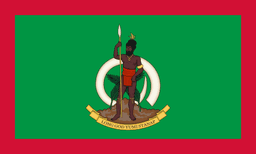
Fred Timakata
Politician · Modern
43.7Total
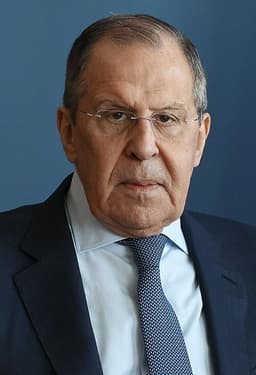
Sergei Lavrov
Politician · Modern
59.8Total
Basic Information
Born
1936
1950
Died
—
—
Era
Modern
Modern
Nationality
Vanuatu
Russia
Occupation
Politician
Politician
Civilization
Other
Western
Score Comparison
Military (10%)
43.3
50.0
Political (20%)
32.2
68.0
Influence (20%)
47.9
62.0
Legacy (20%)
37.5
52.0
Leadership (15%)
58.8
80.0
Strategy (15%)
44.1
41.3
TOTAL
43.7
59.8
Fred Timakata — Complete Timeline
1989 AD
Election as President of VanuatuPolitical Action◆ Major
Fred Timakata was elected as the President of Vanuatu, serving from 1989 to 1994. He was a Presbyterian pastor before entering politics, and his presidency focused on national unity and development.
PresidencyVanuatuPolitical Leadership
Impact: national
1994 AD
End of PresidencyPolitical Action
Timakata's term ended in 1994 after serving one term. He was succeeded by Jean-Marie Leye Lenelgau. His presidency was noted for its stability and pastoral approach.
PresidencyTransitionVanuatu
Impact: national
Sergei Lavrov — Complete Timeline
2004 AD
Appointed Russian Foreign MinisterPolitical Action◆ Major
Lavrov was appointed Minister of Foreign Affairs of the Russian Federation by President Vladimir Putin. He succeeded Igor Ivanov and became the longest-serving Russian foreign minister in the post-Soviet era.
Foreign PolicyPutin Era
Impact: global
2014 AD
Annexation of CrimeaPolitical Action◆ Major
Lavrov defended Russia's annexation of Crimea from Ukraine at the United Nations and in international forums. He argued that the move was legal under international law and protected ethnic Russians.
Ukraine CrisisTerritorial Dispute
Impact: global
2015 AD
Syrian Civil War InterventionWar◆ Major
Lavrov led diplomatic efforts to support the Assad government in Syria. He negotiated with the US and other powers, securing Russia's military intervention and shaping the political settlement process.
Syrian Civil WarDiplomacy
Impact: global
2022 AD
Full-Scale Invasion of UkraineWar◆ Major
Lavrov justified Russia's full-scale invasion of Ukraine to the international community. He faced widespread condemnation and sanctions, and Russia was isolated in many international organizations.
Ukraine WarSanctions
Impact: global
This comparison has not been analyzed yet.
One-time AI generation (~1 minute). Scores and timeline are already available below.
Rankings
🥇
Sergei LavrovLeader
Mil: 50.0Pol: 68.0Inf: 62.0
59.8
🥈
Fred Timakata
Mil: 43.3Pol: 32.2Inf: 47.9
43.7
+16.1 behind
How This Comparison Works
Algorithm
Each figure is scored on 6 dimensions (0—100 scale) based on structured historical data: Military (10%), Political (20%), Influence (20%), Legacy (20%), Leadership (15%), Strategy (15%). The weighted total produces the final ranking.
Data Sources
Scores are computed from structured sub-indicators in the database. Scale factors adjust for era (Ancient ×0.85, Modern ×1.0) and civilization size (Eastern ×1.05, Other ×0.80) to account for differences in population and military scale.
Maximum 3 Figures
Comparisons are limited to 2—3 figures to ensure readability and statistical meaningfulness.
Error Margins
±5 points per dimension — Sub-scores are derived from historical records with inherent uncertainty. Two figures within 5 points on a dimension should be considered roughly equivalent in that area.
Total Score Accuracy
±3 points overall — The weighted combination of 6 dimensions produces a total score with approximately ±3 points of uncertainty. Differences of less than 3 points are not statistically significant— the figures are effectively tied.
Known Limitations
- Historical records are incomplete and uneven across civilizations
- Figures from oral-tradition societies may be underrepresented
- Occupation labels can misclassify multi-role figures
- Scores measure capability and impact, not moral character
- Quantitative scoring is a comparison tool, not absolute truth
Capability Radar
Military (10%) — Battles & Warfare
Battles
21
30
Win Rate
25
32
Expansion
28
33
Political (20%) — Governance & Reform
Reform
20
40
Diplomacy
30
85
Economy
15
30
Influence (20%) — Cultural & Global Reach
Cultural
15
30
Global
10
70
Legacy (20%) — Historical Impact
Historical
15
60
Longevity
10
50
Leadership (15%) — Power & Stability
Tenure
30
85
Stability
25
50
Strategy (15%) — Tactics & Innovation
Strategy
28
35
Tactics
31
39
Reform
39
44
Similar Comparisons
Comments & Discussion
No comments yet. Be the first to share your thoughts!