Loading...
Fred Sinowatz vs Napoleon Bonaparte
Napoleon Bonaparte leads by 23.1 pts · 2 figures compared
…
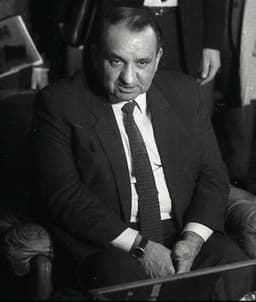
Fred Sinowatz
Politician · Modern
47.8Total

Napoleon Bonaparte
General · Modern
70.9Total
Basic Information
Born
1929
1769
Died
—
1821
Era
Modern
Modern
Nationality
Austria
France
Occupation
Politician
General
Civilization
Western
Western
Score Comparison
Military (10%)
50.0
94.0
Political (20%)
40.8
72.0
Influence (20%)
50.2
40.0
Legacy (20%)
40.0
80.0
Leadership (15%)
65.7
78.0
Strategy (15%)
42.7
90.0
TOTAL
47.8
70.9
Fred Sinowatz — Complete Timeline
1983 AD
Appointment as ChancellorPolitical Action◆ Major
Fred Sinowatz became Chancellor of Austria after the 1983 elections, leading a coalition government between the Social Democratic Party (SP
CoalitionSPÖFPÖ
Impact: national
1984 AD
Hainburg Power Plant ProtestsPolitical Action◆ Major
Sinowatz's government faced massive protests against the construction of a hydroelectric power plant in Hainburg. The protests, involving tens of thousands of environmental activists, led to the project's cancellation and marked a turning point in Austrian environmental politics.
EnvironmentProtestsHainburg
Impact: national
1986 AD
Chancellorship During the Waldheim AffairPolitical Action◆ Major
Fred Sinowatz served as Chancellor during the controversy surrounding Kurt Waldheim's election as President. Waldheim's past as a Wehrmacht officer in World War II was revealed, leading to international isolation of Austria. Sinowatz resigned in June 1986, citing the affair.
Waldheim AffairScandalResignation
Impact: nationaltragic
Resignation as ChancellorPolitical Action◆ Major
Sinowatz resigned as Chancellor on June 9, 1986, following the controversy over Kurt Waldheim's Nazi past. He was succeeded by Franz Vranitzky. His resignation was seen as an attempt to distance the SP
ResignationWaldheimSPÖ
Impact: nationaltragic
Napoleon Bonaparte — Complete Timeline
1799 AD
Coup of 18 BrumaireOther◆ Major
Napoleon Bonaparte, with support from his brother Lucien and key political figures, overthrew the Directory in a bloodless coup. He established the Consulate with himself as First Consul, effectively becoming the ruler of France. This event ended the French Revolution's most unstable period.
French RevolutionCoupRise to Power
Impact: regional
1804 AD
Promulgation of the Napoleonic CodeOther◆ Major
Napoleon enacted the Civil Code of the French, known as the Napoleonic Code, a comprehensive set of laws that replaced the fragmented feudal legal systems. The code established legal equality, protected property rights, and secularized law. It became the basis for legal systems in many European and world countries.
Legal ReformNapoleonic CodeCivil Law
Impact: globalconstructive
1805 AD
Battle of AusterlitzWar◆ Major
Napoleon's Grande Arm
Napoleonic WarsBattleDecisive Victory
Impact: global
1812 AD
Invasion of RussiaWar◆ Major
Napoleon led the Grande Arm
Napoleonic WarsInvasionDisaster
Impact: globaldestructive
1815 AD
Battle of WaterlooWar◆ Major
Napoleon's French army was defeated by the combined forces of the Duke of Wellington's Anglo-Allied army and Gebhard Leberecht von Bl
Napoleonic WarsBattleFinal Defeat
Impact: globaldestructive
Expert Analysis
fred-sinowatz-vs-napoleon-bonaparte
# The Emperor and the Chancellor: Two Paths Through History’s Storm
On a June morning in 1815, Napoleon Bonaparte stood on a muddy field near Waterloo, watching his Imperial Guard crumble under British fire. One hundred and seventy-one years later, almost to the day, Fred Sinowatz walked into Vienna’s Hofburg Palace and handed his resignation to Austria’s president. One man had conquered Europe; the other had managed a small Alpine republic for three years. Their names appear together in no history book, yet their stories, when placed side by side, reveal something profound about the nature of power, ambition, and the quiet tyranny of circumstance.
Origins
Napoleon was born in 1769 on Corsica, an island that had passed from Genoa to France only months before his birth. His family was minor nobility, poor enough to feel the sting of inferiority, proud enough to resent it. The French Revolution, which erupted when he was twenty, shattered the old order and opened paths that had been sealed for centuries. A young artillery officer with a Corsican accent could rise to command armies—if he had the talent and the ruthlessness.
Fred Sinowatz was born in 1929 in Neufeld an der Leitha, a small town in Burgenland, Austria. His father was a bricklayer, his mother a factory worker. The world into which he entered was collapsing: the Great Depression, then the Anschluss, then a devastating war that left Austria occupied and divided. Sinowatz grew up in a country that had been erased from the map and was struggling to find itself. Where Napoleon’s era exploded with possibility, Sinowatz’s world was defined by constraint. The difference in their starts was not merely one of class or geography—it was a difference in the very texture of history.
Rise to Power
Napoleon’s ascent was a series of explosions. At twenty-four, he drove the British out of Toulon. At twenty-six, he saved the revolutionary government from a royalist uprising with a “whiff of grapeshot.” At twenty-seven, he conquered Italy. By thirty, he had seized control of France as First Consul. His path was forged in gunpowder and audacity. Every step was a gamble, and every gamble paid off—until they didn’t.
Sinowatz’s rise was a slow accumulation of bureaucratic trust. He joined the Social Democratic Party in his twenties, worked his way through local government, became Minister of Education in 1971, and then Vice Chancellor in 1981. In 1983, after the SPÖ lost its absolute majority, he became Chancellor, leading a fragile coalition with the Freedom Party. His appointment was not a conquest but a compromise. The key event of that year reads simply: “Appointment as Chancellor.” No cannon fire. No dramatic speeches. Just a handshake in a marble hallway.
Leadership & Governance
Napoleon governed like he fought: with speed, centralization, and an iron will. He reformed France’s legal system with the Napoleonic Code, standardized education, built roads and canals, and negotiated the Concordat with the Pope. He was a whirlwind of activity, and his reforms outlasted his empire. But his military genius—rated 94.0 in strategy—consumed everything. He could not stop conquering, could not delegate, could not accept limits.
Sinowatz governed like a man who knew his limits. His political score of 61.8 reflects a chancellorship of modest ambitions. He managed Austria’s economy through a difficult period, but his leadership was defined by two crises he could not control. In 1984, massive protests erupted against the Hainburg power plant. Environmentalists, students, and ordinary citizens occupied the floodplain forest. Sinowatz’s government hesitated, then caved—the plant was halted. It was a victory for civil society, but a defeat for the Chancellor’s authority.
Then came the Waldheim affair. In 1986, Kurt Waldheim, a former UN Secretary-General, ran for Austria’s presidency. During the campaign, his wartime service in the German army came to light, including his involvement with a unit that committed atrocities. Sinowatz, who had supported Waldheim’s opponent, found himself trapped. Waldheim won. Austria’s international reputation collapsed. Sinowatz resigned in June 1986, his political career effectively over.
Triumph & Tragedy
Napoleon’s greatest triumph was Austerlitz, December 2, 1805, where he destroyed a combined Russian-Austrian army and ended the Holy Roman Empire. His greatest tragedy was the invasion of Russia in 1812—600,000 men marched east; fewer than 100,000 returned. The disaster broke his aura of invincibility and set the stage for his fall.
Sinowatz’s triumphs were small and quiet. He oversaw the expansion of Austria’s welfare state, kept the country stable during a volatile decade, and navigated the Hainburg crisis without violence. His tragedy was the Waldheim affair, a scandal he did not create but could not escape. He became a footnote in a story that was not his own.
Character & Destiny
Napoleon’s personality was a force of nature. He was brilliant, tireless, and utterly convinced of his own destiny. “Impossible is a word to be found only in the dictionary of fools,” he once said. That conviction drove him to the heights of power—and to the depths of exile on Saint Helena. He could not stop because he could not imagine stopping.
Sinowatz’s personality was a study in restraint. He was described by colleagues as cautious, pragmatic, and uncharismatic. He did not seek greatness; he sought stability. In a different era, he might have been a respected minister. In the 1980s, he was a chancellor caught between a rising environmental movement and a resurgent nationalism. His character did not shape his destiny; his destiny shaped his character.
Legacy
Napoleon’s legacy is written across Europe. The Napoleonic Code influences legal systems from France to Louisiana. His military campaigns are studied in war colleges. His name is synonymous with ambition, genius, and hubris. His scores—Military 94.0, Influence 82.0, Legacy 78.0—reflect a figure who changed the world, for better and for worse.
Sinowatz’s legacy is barely visible. He is remembered, if at all, as the chancellor who presided over the Waldheim affair. His legacy score of 54.7 suggests a figure who managed, rather than shaped, his time. He left no code, no empire, no legend. He left a small, stable country that quickly forgot him.
Conclusion
Napoleon Bonaparte and Fred Sinowatz represent two poles of historical possibility. One believed that a single man could bend the world to his will; the other believed that a good man could keep the world from breaking. One ended his life on a remote island, dictating memoirs; the other ended his life in a quiet Austrian town, reading newspapers. Their stories remind us that history is not a ladder of achievement but a web of circumstance. The same ambition that made Napoleon a conqueror made him a prisoner. The same caution that made Sinowatz a caretaker made him a casualty. In the end, the question is not whether a life is great or small, but whether it was lived with integrity. By that measure, perhaps both men deserve a second look.
Rankings
🥇
Napoleon BonaparteLeader
Mil: 94.0Pol: 72.0Inf: 40.0
70.9
🥈
Fred Sinowatz
Mil: 50.0Pol: 40.8Inf: 50.2
47.8
+23.1 behind
How This Comparison Works
Algorithm
Each figure is scored on 6 dimensions (0—100 scale) based on structured historical data: Military (10%), Political (20%), Influence (20%), Legacy (20%), Leadership (15%), Strategy (15%). The weighted total produces the final ranking.
Data Sources
Scores are computed from structured sub-indicators in the database. Scale factors adjust for era (Ancient ×0.85, Modern ×1.0) and civilization size (Eastern ×1.05, Other ×0.80) to account for differences in population and military scale.
Maximum 3 Figures
Comparisons are limited to 2—3 figures to ensure readability and statistical meaningfulness.
Error Margins
±5 points per dimension — Sub-scores are derived from historical records with inherent uncertainty. Two figures within 5 points on a dimension should be considered roughly equivalent in that area.
Total Score Accuracy
±3 points overall — The weighted combination of 6 dimensions produces a total score with approximately ±3 points of uncertainty. Differences of less than 3 points are not statistically significant— the figures are effectively tied.
Known Limitations
- Historical records are incomplete and uneven across civilizations
- Figures from oral-tradition societies may be underrepresented
- Occupation labels can misclassify multi-role figures
- Scores measure capability and impact, not moral character
- Quantitative scoring is a comparison tool, not absolute truth
Capability Radar
Military (10%) — Battles & Warfare
Battles
30
95
Win Rate
29
90
Expansion
35
95
Political (20%) — Governance & Reform
Reform
30
95
Diplomacy
35
80
Economy
30
85
Influence (20%) — Cultural & Global Reach
Cultural
20
85
Global
20
90
Legacy (20%) — Historical Impact
Historical
25
95
Longevity
15
90
Leadership (15%) — Power & Stability
Tenure
40
85
Stability
25
70
Strategy (15%) — Tactics & Innovation
Strategy
41
95
Tactics
38
98
Reform
44
92
Similar Comparisons
Comments & Discussion
No comments yet. Be the first to share your thoughts!