Loading...
This comparison has not been analyzed yet.
One-time AI generation (~1 minute). Scores and timeline are already available below.
Franjo Tuđman vs Nawab Salimullah of Dhaka
Nawab Salimullah of Dhaka leads by 1.9 pts · 2 figures compared
…
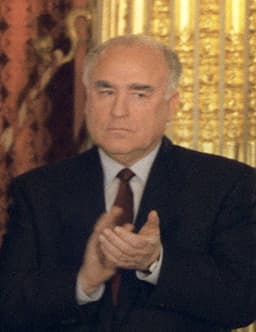
Franjo Tuđman
Politician · Modern
57.2Total

Nawab Salimullah of Dhaka
Politician · Modern
59.1Total
Basic Information
Born
1922
1871
Died
—
1915
Era
Modern
Modern
Nationality
Croatia
India
Occupation
Politician
Politician
Civilization
Western
Indian
Score Comparison
Military (10%)
41.6
50.5
Political (20%)
68.0
68.0
Influence (20%)
60.0
58.3
Legacy (20%)
49.2
58.0
Leadership (15%)
68.0
58.8
Strategy (15%)
53.8
60.0
TOTAL
57.2
59.1
Franjo Tuđman — Complete Timeline
1990 AD
Election as First President of Independent CroatiaPolitical Action◆ Major
Franjo Tuđman was elected president of the Socialist Republic of Croatia in the first multi-party elections on May 30, 1990. His Croatian Democratic Union (HDZ) won a majority, and he led Croatia toward independence from Yugoslavia, declaring sovereignty later that year.
IndependenceElectionCroatia
Impact: nationalconstructive
1991 AD
Declaration of Croatian IndependencePolitical Action◆ Major
Tuđman led Croatia in declaring independence from Yugoslavia on June 25, 1991, following a referendum. This triggered the Croatian War of Independence against the Yugoslav People's Army and Serb rebels, resulting in a four-year conflict that ended with Croatian victory.
IndependenceWarYugoslav Breakup
Impact: regionalconstructive
1995 AD
Operation StormWar◆ Major
Tuđman ordered the Croatian Army to launch Operation Storm in August 1995, a military offensive that recaptured the Serb-held Krajina region. The operation ended the Croatian War of Independence but resulted in the exodus of approximately 200,000 Serb civilians and accusations of war crimes.
Military OffensiveWar CrimesCroatian War
Impact: regionaldestructive
Signing of the Dayton AgreementPolitical Action◆ Major
Tuđman signed the Dayton Peace Agreement on December 14, 1995, ending the Bosnian War. The agreement established Bosnia and Herzegovina as a decentralized state with two entities, and Tuđman's role was criticized for supporting Croat separatism in Bosnia.
Peace TreatyBosnian WarDiplomacy
Impact: regional
1999 AD
Death and Legacy ControversyOther◆ Major
Tuđman died on December 10, 1999, after a long battle with cancer. His death marked the end of an era, and his legacy remains divisive: praised for achieving Croatian independence but criticized for authoritarian tendencies and nationalist policies that contributed to ethnic conflict.
DeathLegacyCroatia
Impact: national
Nawab Salimullah of Dhaka — Complete Timeline
1905 AD
Proposed the partition of Bengal in 1905Political Action◆ Major
Nawab Salimullah supported the partition of Bengal by the British, which created a Muslim-majority East Bengal. He argued that the partition would benefit the Muslim population of the region, though it was later reversed in 1911.
Partition of BengalMuslim MajorityBritish India
Impact: regional
1906 AD
Founded the All India Muslim LeaguePolitical Action
Nawab Salimullah of Dhaka convened the founding conference of the All India Muslim League in Dhaka. The organization was established to protect the political rights of Muslims in British India and later played a key role in the creation of Pakistan.
All India Muslim LeaguePolitical OrganizationMuslim Rights
Impact: nationalconstructive
1907 AD
Hosted the All India Muslim League's first annual meetingPolitical Action◆ Major
Nawab Salimullah hosted the first annual meeting of the All India Muslim League in Dhaka. The meeting solidified the League's structure and agenda, with Salimullah playing a leading role in its early years.
All India Muslim LeagueAnnual MeetingDhaka
Impact: nationalconstructive
1909 AD
Advocated for separate electorates for MuslimsPolitical Action◆ Major
Nawab Salimullah was a key advocate for separate electorates for Muslims in the Indian Councils Act of 1909 (Morley-Minto Reforms). This provision allowed Muslims to vote for their own representatives, a demand that shaped Indian politics.
Separate ElectoratesMorley-Minto ReformsMuslim Representation
Impact: national
This comparison has not been analyzed yet.
One-time AI generation (~1 minute). Scores and timeline are already available below.
Rankings
🥇
Nawab Salimullah of DhakaLeader
Mil: 50.5Pol: 68.0Inf: 58.3
59.1
🥈
Franjo Tuđman
Mil: 41.6Pol: 68.0Inf: 60.0
57.2
+1.9 behind
How This Comparison Works
Algorithm
Each figure is scored on 6 dimensions (0—100 scale) based on structured historical data: Military (10%), Political (20%), Influence (20%), Legacy (20%), Leadership (15%), Strategy (15%). The weighted total produces the final ranking.
Data Sources
Scores are computed from structured sub-indicators in the database. Scale factors adjust for era (Ancient ×0.85, Modern ×1.0) and civilization size (Eastern ×1.05, Other ×0.80) to account for differences in population and military scale.
Maximum 3 Figures
Comparisons are limited to 2—3 figures to ensure readability and statistical meaningfulness.
Error Margins
±5 points per dimension — Sub-scores are derived from historical records with inherent uncertainty. Two figures within 5 points on a dimension should be considered roughly equivalent in that area.
Total Score Accuracy
±3 points overall — The weighted combination of 6 dimensions produces a total score with approximately ±3 points of uncertainty. Differences of less than 3 points are not statistically significant— the figures are effectively tied.
Known Limitations
- Historical records are incomplete and uneven across civilizations
- Figures from oral-tradition societies may be underrepresented
- Occupation labels can misclassify multi-role figures
- Scores measure capability and impact, not moral character
- Quantitative scoring is a comparison tool, not absolute truth
Capability Radar
Military (10%) — Battles & Warfare
Battles
10
42
Win Rate
10
44
Expansion
10
51
Political (20%) — Governance & Reform
Reform
60
55
Diplomacy
55
60
Economy
50
20
Influence (20%) — Cultural & Global Reach
Cultural
55
40
Global
45
50
Legacy (20%) — Historical Impact
Historical
55
60
Longevity
40
55
Leadership (15%) — Power & Stability
Tenure
65
30
Stability
40
25
Strategy (15%) — Tactics & Innovation
Strategy
10
52
Tactics
10
55
Reform
15
59
Similar Comparisons
Comments & Discussion
No comments yet. Be the first to share your thoughts!