Loading...
Franjo Tuđman vs Napoleon Bonaparte
Napoleon Bonaparte leads by 13.7 pts · 2 figures compared
…
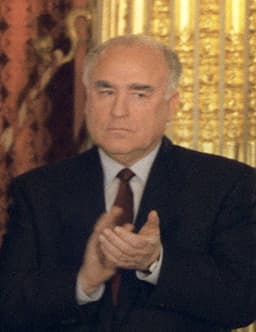
Franjo Tuđman
Politician · Modern
57.2Total

Napoleon Bonaparte
General · Modern
70.9Total
Basic Information
Born
1922
1769
Died
—
1821
Era
Modern
Modern
Nationality
Croatia
France
Occupation
Politician
General
Civilization
Western
Western
Score Comparison
Military (10%)
41.6
94.0
Political (20%)
68.0
72.0
Influence (20%)
60.0
40.0
Legacy (20%)
49.2
80.0
Leadership (15%)
68.0
78.0
Strategy (15%)
53.8
90.0
TOTAL
57.2
70.9
Franjo Tuđman — Complete Timeline
1990 AD
Election as First President of Independent CroatiaPolitical Action◆ Major
Franjo Tuđman was elected president of the Socialist Republic of Croatia in the first multi-party elections on May 30, 1990. His Croatian Democratic Union (HDZ) won a majority, and he led Croatia toward independence from Yugoslavia, declaring sovereignty later that year.
IndependenceElectionCroatia
Impact: nationalconstructive
1991 AD
Declaration of Croatian IndependencePolitical Action◆ Major
Tuđman led Croatia in declaring independence from Yugoslavia on June 25, 1991, following a referendum. This triggered the Croatian War of Independence against the Yugoslav People's Army and Serb rebels, resulting in a four-year conflict that ended with Croatian victory.
IndependenceWarYugoslav Breakup
Impact: regionalconstructive
1995 AD
Operation StormWar◆ Major
Tuđman ordered the Croatian Army to launch Operation Storm in August 1995, a military offensive that recaptured the Serb-held Krajina region. The operation ended the Croatian War of Independence but resulted in the exodus of approximately 200,000 Serb civilians and accusations of war crimes.
Military OffensiveWar CrimesCroatian War
Impact: regionaldestructive
Signing of the Dayton AgreementPolitical Action◆ Major
Tuđman signed the Dayton Peace Agreement on December 14, 1995, ending the Bosnian War. The agreement established Bosnia and Herzegovina as a decentralized state with two entities, and Tuđman's role was criticized for supporting Croat separatism in Bosnia.
Peace TreatyBosnian WarDiplomacy
Impact: regional
1999 AD
Death and Legacy ControversyOther◆ Major
Tuđman died on December 10, 1999, after a long battle with cancer. His death marked the end of an era, and his legacy remains divisive: praised for achieving Croatian independence but criticized for authoritarian tendencies and nationalist policies that contributed to ethnic conflict.
DeathLegacyCroatia
Impact: national
Napoleon Bonaparte — Complete Timeline
1799 AD
Coup of 18 BrumaireOther◆ Major
Napoleon Bonaparte, with support from his brother Lucien and key political figures, overthrew the Directory in a bloodless coup. He established the Consulate with himself as First Consul, effectively becoming the ruler of France. This event ended the French Revolution's most unstable period.
French RevolutionCoupRise to Power
Impact: regional
1804 AD
Promulgation of the Napoleonic CodeOther◆ Major
Napoleon enacted the Civil Code of the French, known as the Napoleonic Code, a comprehensive set of laws that replaced the fragmented feudal legal systems. The code established legal equality, protected property rights, and secularized law. It became the basis for legal systems in many European and world countries.
Legal ReformNapoleonic CodeCivil Law
Impact: globalconstructive
1805 AD
Battle of AusterlitzWar◆ Major
Napoleon's Grande Arm
Napoleonic WarsBattleDecisive Victory
Impact: global
1812 AD
Invasion of RussiaWar◆ Major
Napoleon led the Grande Arm
Napoleonic WarsInvasionDisaster
Impact: globaldestructive
1815 AD
Battle of WaterlooWar◆ Major
Napoleon's French army was defeated by the combined forces of the Duke of Wellington's Anglo-Allied army and Gebhard Leberecht von Bl
Napoleonic WarsBattleFinal Defeat
Impact: globaldestructive
Expert Analysis
franjo-tu-man-vs-napoleon-bonaparte
# The Eagle and the Ember: Napoleon Bonaparte and Franjo Tuđman
On a December morning in 1999, as the bells of Zagreb's cathedral tolled for a dying president, a ghost from two centuries past might have stirred in the collective memory of Europe. Franjo Tuđman lay in his hospital bed, his nation—Croatia—barely a decade old, scarred by war, and uncertain of its future. Across the continent, in the cold soil of Les Invalides, Napoleon Bonaparte's ashes rested beneath a golden dome, his name still echoing through every capital he had once conquered. What could possibly connect a Corsican artillery officer who redrew the map of Europe with a Croatian partisan who carved a nation from the ruins of Yugoslavia? The answer lies not in the scale of their empires, but in the fire of their ambition—and the shadows it cast.
Origins
Napoleon Bonaparte was born in 1769 on the island of Corsica, a land that had only become French the year before. His family was minor nobility, poor but proud, speaking Italian-accented French that marked him as an outsider. He grew up in a world of revolutionary upheaval, where a young man with talent could rise faster than his birth would ever allow. His education at military academies in Brienne and Paris drilled into him the mathematics of war, but it was the chaos of the French Revolution that gave him his stage.
Franjo Tuđman entered the world in 1922, in the village of Veliko Trgovišće, then part of the Kingdom of Serbs, Croats, and Slovenes. His father was a farmer and a politician, a member of the Croatian Peasant Party. The young Tuđman grew up in a land where national identity was a wound: Croatia had been ruled by Hungarians, Austrians, and now Serbs. He joined the Partisans during World War II, fighting for a communist Yugoslavia that promised equality for all nations—a promise that would prove hollow. Where Napoleon was forged in the fire of revolution, Tuđman was tempered in the furnace of ethnic conflict.
Rise to Power
Napoleon's ascent was a thunderbolt. In 1793, at the age of 24, he drove the British out of Toulon with a brilliant artillery plan. By 1796, he was commanding the Army of Italy, where his lightning campaigns humiliated the Austrians and made him a national hero. He seized power in the 1799 coup of 18 Brumaire, becoming First Consul of France. Five years later, he crowned himself Emperor. His rise was a masterclass in seizing opportunity: he understood that in revolutionary France, reputation was everything, and he fed his legend with every victory.
Tuđman's path was slower, more scholarly. After the war, he became a general in the Yugoslav People's Army, but he was also a historian, writing books that challenged the official narrative of Yugoslavia's founding. This cost him his career—he was expelled from the Communist Party in 1967, arrested in 1972, and imprisoned again in 1981. Yet when Yugoslavia began to unravel in the late 1980s, Tuđman emerged as a voice for Croatian nationalism. In 1990, he won the first multi-party elections, becoming president of the Socialist Republic of Croatia. His rise was not a coup but a referendum: the people chose him because he promised what they wanted most—a nation of their own.
Leadership & Governance
Napoleon ruled France with a blend of military genius and administrative brilliance. His 1804 Napoleonic Code reformed law across Europe, establishing principles of equality before the law and secular governance. He built roads, schools, and a centralized bureaucracy that outlasted his empire. Yet his governance was also a dictatorship: he suppressed dissent, censored the press, and crowned himself emperor. His military strategy was revolutionary—he used speed, massed artillery, and decisive battles to shatter his enemies. At Austerlitz in 1805, he destroyed a Russo-Austrian army with a feigned retreat that remains a textbook maneuver.
Tuđman governed a small, war-torn nation with a different calculus. His political score of 72.0 reflects his skill in navigating a world of great powers and ethnic hatreds. He declared Croatian independence on June 25, 1991, triggering a war that would last four years. His military score of 44.0 shows he was no battlefield commander—but he understood that war was a political tool. Operation Storm in August 1995 was his Austerlitz: a swift offensive that recaptured Serb-held territory, ending the war on Croatian terms. Yet his rule was authoritarian. He centralized power, controlled the media, and tolerated corruption. Where Napoleon built a code of laws, Tuđman built a cult of personality.
Triumph & Tragedy
Napoleon's greatest triumph was his empire at its height in 1810, stretching from Spain to Poland. He had remade Europe, abolishing feudalism and spreading revolutionary ideals. His tragedy was his overreach: the 1812 invasion of Russia destroyed his Grand Army, and his refusal to accept a negotiated peace led to his exile to Elba. He returned in 1815 for the Hundred Days, but Waterloo ended it all. He died in 1821 on Saint Helena, a prisoner of the British.
Tuđman's triumph was the Dayton Peace Agreement, signed on December 14, 1995, which ended the Bosnian War and secured Croatia's borders. His tragedy is more ambiguous. He died in 1999, his legacy already contested. He had led Croatia to independence, but his authoritarian tendencies and his role in the war's darkest chapters—including the ethnic cleansing of Serbs during Operation Storm—left a stain. His death at 77 was the end of an era, but it was also a release: Croatia could finally begin to reckon with its past.
Character & Destiny
Napoleon was driven by an insatiable ambition. He once said, "Impossible is a word to be found only in the dictionary of fools." His personality was a paradox: he was a reformer who became a tyrant, a genius who could not stop. His downfall came from his inability to limit his own hunger. Tuđman was more calculating, more patient. He said, "We are not fighting for a greater Croatia, but for a free Croatia." His ambition was national, not personal. Yet his authoritarian streak, his willingness to use war as a political instrument, mirrored Napoleon's darker side. Both men believed that the ends justified the means—and both left behind nations that would spend decades debating the cost.
Legacy
Napoleon's legacy is global. His military tactics are still studied, his legal code still shapes civil law across Europe and beyond. His influence score of 82.0 and legacy score of 78.0 reflect a man who changed the world, for better and worse. He is remembered as both a liberator and a tyrant, a figure of endless fascination.
Tuđman's legacy is smaller, more contested. His influence score of 72.5 and legacy score of 67.7 show a leader who mattered deeply to his nation but little beyond it. In Croatia, he is a founding father; to his critics, he is a nationalist who sowed division. His tomb in Zagreb's Mirogoj cemetery is a site of pilgrimage and protest. He did not conquer Europe—he built a country. But in doing so, he proved that even in the modern age, the fire of nationalism can forge nations and burn them at the same time.
Conclusion
Napoleon and Tuđman lived two centuries apart, but they were both children of revolution—one of 1789, the other of 1991. The Corsican conquered an empire and lost it; the Croat built a nation and left it scarred. Their stories remind us that leadership is never clean, that greatness and tragedy are woven from the same thread. As we look at the maps they redrew and the lives they touched, we must ask: what is the cost of a dream? For Napoleon, it was the bones of half a million soldiers. For Tuđman, it was the bitterness of ethnic war. Perhaps the answer is that every eagle casts a shadow, and every ember burns.
Rankings
🥇
Napoleon BonaparteLeader
Mil: 94.0Pol: 72.0Inf: 40.0
70.9
🥈
Franjo Tuđman
Mil: 41.6Pol: 68.0Inf: 60.0
57.2
+13.7 behind
How This Comparison Works
Algorithm
Each figure is scored on 6 dimensions (0—100 scale) based on structured historical data: Military (10%), Political (20%), Influence (20%), Legacy (20%), Leadership (15%), Strategy (15%). The weighted total produces the final ranking.
Data Sources
Scores are computed from structured sub-indicators in the database. Scale factors adjust for era (Ancient ×0.85, Modern ×1.0) and civilization size (Eastern ×1.05, Other ×0.80) to account for differences in population and military scale.
Maximum 3 Figures
Comparisons are limited to 2—3 figures to ensure readability and statistical meaningfulness.
Error Margins
±5 points per dimension — Sub-scores are derived from historical records with inherent uncertainty. Two figures within 5 points on a dimension should be considered roughly equivalent in that area.
Total Score Accuracy
±3 points overall — The weighted combination of 6 dimensions produces a total score with approximately ±3 points of uncertainty. Differences of less than 3 points are not statistically significant— the figures are effectively tied.
Known Limitations
- Historical records are incomplete and uneven across civilizations
- Figures from oral-tradition societies may be underrepresented
- Occupation labels can misclassify multi-role figures
- Scores measure capability and impact, not moral character
- Quantitative scoring is a comparison tool, not absolute truth
Capability Radar
Military (10%) — Battles & Warfare
Battles
10
95
Win Rate
10
90
Expansion
10
95
Political (20%) — Governance & Reform
Reform
60
95
Diplomacy
55
80
Economy
50
85
Influence (20%) — Cultural & Global Reach
Cultural
55
85
Global
45
90
Legacy (20%) — Historical Impact
Historical
55
95
Longevity
40
90
Leadership (15%) — Power & Stability
Tenure
65
85
Stability
40
70
Strategy (15%) — Tactics & Innovation
Strategy
10
95
Tactics
10
98
Reform
15
92
Similar Comparisons
Comments & Discussion
战史鹰眼6/17/2026
拿战粉别吹了,图季曼才是真硬核:他从游击队长出身,1991年克罗地亚独立时只有轻武器,却靠外交和战术拖住南斯拉夫军,最后用“风暴行动”收复克拉伊纳。拿破仑输在官僚主义——他1812年带60万大军败给俄国冬天,图季曼1995年只带20万人就赢了个漂亮。实际点,图季曼更懂小国生存术。
古典学者6/17/2026
别被数据骗了,拿破仑是欧洲的奥古斯都,图季曼顶多算个君士坦丁堡的小总督。拿破仑的统一法典和行政改革影响至今,图季曼的民族主义政策反而让克罗地亚陷入孤立。他1997年镇压抗议,跟拿破仑1804年称帝一样专权,但拿破仑有帝国遗产,图季曼只留下争议。修昔底德会说:大人物造历史,小人物添乱子。
Historian3226/17/2026
Funny how both burned their legacies: Napoleon exiled twice, died alone on St. Helena; Tuđman died in office with Croatia under EU sanctions for Bosnia meddling. Both were accused of authoritarian drift—Napoleon's 1802 Consulate for Life mirrors Tuđman's 1997 constitutional changes. But Napoleon's 1815 Waterloo was a decisive end; Tuđman's death left unresolved wounds. Neither found redemption, just a footnote in someone else's history book.
BronzeAgeBard6/17/2026
As a military historian, I'd say Tuđman was a skilled partisan leader, but Napoleon was a strategic genius who revolutionized warfare with the corps system and use of artillery. Tuđman's 1991-1995 campaigns were regional, while Napoleon's 1805 Ulm-Austerlitz campaign crushed a European coalition. The scale gap is like comparing a bonfire to a supernova—Napoleon commanded 600,000 men for Russia; Tuđman's whole army was maybe 100,000. No contest on impact.
PyramidPerspective6/17/2026
Data here: Napoleon's peak territory was 350 million people; Tuđman's Croatia never exceeded 5 million. Napoleon fought 60+ battles; Tuđman maybe 10 major ones. But Tuđman's achievement—carving a nation from a dying multi-ethnic state with no initial allies—is statistically more improbable. Napoleon inherited a revolutionary army; Tuđman built his from scratch. Raw numbers favor the Corsican, but per capita impact? Tuđman punches way above his weight.