Loading...
Francisco Madero vs Shamil Basayev
Francisco Madero leads by 1.4 pts · 2 figures compared
…
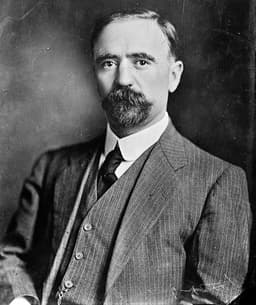
Francisco Madero
Revolutionary · Modern
44.5Total
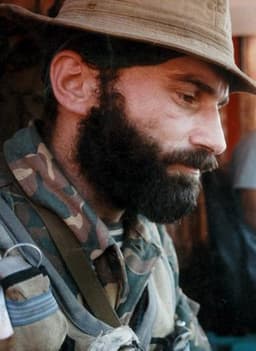
Shamil Basayev
Revolutionary · Modern
43.1Total
Basic Information
Born
1873
1965
Died
1913
—
Era
Modern
Modern
Nationality
Mexico
Chechnya
Occupation
Revolutionary
Revolutionary
Civilization
Western
Western
Score Comparison
Military (10%)
14.9
40.0
Political (20%)
48.0
35.0
Influence (20%)
49.4
45.5
Legacy (20%)
45.8
35.0
Leadership (15%)
43.8
57.1
Strategy (15%)
54.3
51.7
TOTAL
44.5
43.1
Francisco Madero — Complete Timeline
1908 AD
Published La Sucesión Presidencial en 1910Political Action◆ Major
Francisco Madero published a book criticizing the long dictatorship of Porfirio D
Mexican RevolutionDemocracyPolitical Writing
Impact: nationalconstructive
1910 AD
Issued the Plan of San Luis PotosíPolitical Action
After fleeing to the United States, Madero issued the Plan of San Luis Potos
Mexican RevolutionUprisingPlan
Impact: national
1911 AD
Elected President of MexicoPolitical Action◆ Major
Following the resignation of Porfirio D
Mexican RevolutionDemocracyPresidency
Impact: nationalconstructive
1913 AD
Assassinated During the Decena TrágicaPolitical Action
Francisco Madero was overthrown in a coup led by General Victoriano Huerta during the Ten Tragic Days in Mexico City. Madero was forced to resign and then executed along with Vice President Pino Su
AssassinationCoupMexican Revolution
Impact: nationaltragic
Shamil Basayev — Complete Timeline
1995 AD
Budyonnovsk Hospital Hostage CrisisWar◆ Major
Basayev led a raid on the Russian town of Budyonnovsk, taking over 1,000 hostages in a hospital. The crisis ended with a negotiated settlement that allowed him to return to Chechnya. This attack demonstrated Chechen reach into Russia.
Hostage CrisisTerrorismChechnya
Impact: nationaldestructive
1999 AD
Invasion of DagestanWar
Basayev led Chechen and Islamist fighters into Dagestan to support local rebels. This invasion triggered the Second Chechen War as Russia responded with a full-scale military campaign. The invasion failed to gain local support.
DagestanChechnyaInvasion
Impact: regionaldestructive
2002 AD
Moscow Theater Hostage CrisisWar◆ Major
Basayev orchestrated the Moscow theater hostage crisis, where Chechen militants took 850 people hostage. Russian forces ended the siege with gas, killing 130 hostages. The attack increased international condemnation of Chechen rebels.
Hostage CrisisTerrorismMoscow
Impact: nationaldestructive
2004 AD
Beslan School SiegeWar◆ Major
Basayev planned the Beslan school siege, where militants took over 1,100 people hostage. The siege ended in a bloody assault, resulting in 334 deaths, mostly children. This attack was widely condemned globally.
Hostage CrisisTerrorismBeslan
Impact: globaltragic
2006 AD
Killed by Russian ExplosivesWar◆ Major
Basayev was killed in Ingushetia when a truck loaded with explosives detonated. Russian intelligence claimed responsibility. His death removed the most prominent Chechen rebel commander.
AssassinationChechnyaRussia
Impact: regional
Expert Analysis
Shamil Basayev vs Francisco Madero
# The Revolutionary’s Trap
On a September morning in 2004, children in Beslan, Russia, arrived for their first day of school, clutching flowers and balloons. By the time the sun set, over 330 of them lay dead, victims of a siege that Shamil Basayev had masterminded from a mountain hideout. A continent away and nearly a century earlier, another revolutionary, Francisco Madero, had also dreamed of overturning an entrenched order—but his weapon was not bombs and hostages; it was a book. Madero’s *La Sucesión Presidencial en 1910* called for free elections in Mexico, and his followers called him the “Apostle of Democracy.” Basayev’s followers called him a lion of jihad. Both men died violently, but the paths they took—and the ruins they left behind—could not be more different. Why did one revolutionary build a brief democracy while the other built a graveyard?
Origins
Shamil Basayev was born in 1965 in the Chechen village of Vedeno, a place that had known Russian conquest for centuries. His father was a farmer; his family’s history was steeped in the 19th-century resistance of Imam Shamil, the legendary Chechen leader after whom he was named. The Soviet Union collapsed when Basayev was in his twenties, and the chaos that followed gave birth to Chechen nationalism. He was a product of war—first as a volunteer in the 1992–1993 Abkhaz conflict, then as a commander in the First Chechen War. His world was one of blood feuds, mountain ambushes, and the constant hum of Russian helicopters.
Francisco Madero, born in 1873, came from a vastly different world. His family was one of the wealthiest in Mexico, owners of vast cotton and wine estates in Coahuila. Educated in France and the United States, Madero was a spiritualist who believed in séances and democracy in equal measure. He was short, soft-spoken, and vegetarian—a man who seemed more suited to a university library than a revolutionary camp. Yet he saw the 35-year dictatorship of Porfirio Díaz as a moral affront, and he believed that elections, not bullets, were the cure.
Rise to Power
Basayev’s rise was forged in fire. In 1995, he led a raid on the Russian town of Budyonnovsk, seizing a hospital and taking over 1,000 hostages. The crisis ended with a negotiated withdrawal, but it made Basayev a hero to Chechens and a terrorist to Russians. He was now the face of Chechen resistance—ruthless, charismatic, and willing to die. The 1999 invasion of Dagestan, where he led Chechen and Islamist fighters into the neighboring Russian republic, triggered the Second Chechen War. That conflict would define the rest of his life.
Madero’s rise was more deliberate. In 1908, he published his book, and by 1910, he was running for president against Díaz. When Díaz rigged the election, Madero fled to Texas and issued the Plan of San Luis Potosí, calling for armed revolution. The uprising that followed was swift: Díaz resigned in 1911, and Madero was elected president in a landslide. He had won power with words and a whisper of force, not with a bloodbath.
Leadership & Governance
Madero’s presidency was a tragedy of good intentions. He believed in democracy so deeply that he refused to purge the old regime. He kept Díaz’s army and bureaucracy intact, assuming they would obey the law. They did not. Rebellions broke out on all sides—from Emiliano Zapata in the south, demanding land reform, from Pascual Orozco in the north, from conservative generals in the capital. Madero was paralyzed by his own principles. He would not use the iron fist that Díaz had wielded, and so his government crumbled.
Basayev never faced such dilemmas. He governed through terror and charisma, commanding fighters who pledged absolute loyalty. His military strategy was asymmetrical: hit the enemy where it hurt, then vanish into the mountains. The Moscow theater hostage crisis in 2002, where 850 people were taken, ended in a gas attack by Russian forces that killed 130 hostages. The Beslan school siege in 2004, with 1,100 hostages, ended in a firefight that killed 334. Basayev did not govern a country; he governed a guerrilla movement. His “politics” was the politics of maximum violence.
Triumph & Tragedy
Madero’s greatest moment was his election in 1911—a genuine democratic breakthrough in a land of caudillos. His greatest failure was his inability to survive it. In February 1913, during the Ten Tragic Days in Mexico City, General Victoriano Huerta overthrew him. Madero was arrested and, a few days later, shot “while trying to escape.” He died as he had lived: believing that decency could defeat bayonets.
Basayev’s greatest triumph was his survival. From 1995 to 2006, he evaded the full might of the Russian military. He planned attacks, moved through the Caucasus, and remained a symbol of Chechen defiance. His greatest failure was also his final one: in 2006, a truck loaded with explosives detonated in Ingushetia, killing him. Russian intelligence claimed credit. He died as he had lived: in an explosion.
Character & Destiny
Madero was a man of faith—not in God, but in the ballot box. He believed that if he simply did the right thing, history would reward him. It did not. His character—gentle, trusting, stubbornly idealistic—made him a poor revolutionary. He wanted to overthrow a dictatorship without becoming a dictator, but he did not understand that revolutions eat their children.
Basayev was a man of war. He had no faith in institutions, only in violence. He saw the world as a battlefield between Islam and Russia, and he chose to fight without rules. His character—cold, calculating, utterly committed—made him a perfect guerrilla leader and a perfect monster. He wanted to destroy the Russian state, but he did not understand that you cannot build a nation on the ashes of schoolchildren.
Legacy
Madero is remembered as the “Apostle of Democracy” in Mexico, a flawed but noble figure who lit the fuse of the Mexican Revolution. His name adorns streets and plazas. Historians give him a legacy score of 63.0, acknowledging that while he failed as a president, he succeeded as a symbol.
Basayev is remembered as a terrorist. His name is a curse in Russia and a rallying cry among some Chechen separatists. His legacy score of 47.7 reflects his status as a man who achieved nothing but death. He did not win independence for Chechnya. He did not build a state. He left only widows and orphans.
Conclusion
What drove these two men to such different fates? The answer lies not in their goals—both wanted to overthrow a powerful oppressor—but in their methods. Madero believed that the ends could be achieved through means that honored the humanity of his enemies. Basayev believed that the ends justified any means, including the massacre of children. One died with his ideals intact, betrayed by the world he trusted. The other died with his violence intact, consumed by the fire he had lit. The lesson is as old as history: the revolutionary who forgets his humanity becomes the tyrant he sought to overthrow. And the revolutionary who forgets his ruthlessness becomes the martyr he never wanted to be.
Rankings
🥇
Francisco MaderoLeader
Mil: 14.9Pol: 48.0Inf: 49.4
44.5
🥈
Shamil Basayev
Mil: 40.0Pol: 35.0Inf: 45.5
43.1
+1.4 behind
How This Comparison Works
Algorithm
Each figure is scored on 6 dimensions (0—100 scale) based on structured historical data: Military (10%), Political (20%), Influence (20%), Legacy (20%), Leadership (15%), Strategy (15%). The weighted total produces the final ranking.
Data Sources
Scores are computed from structured sub-indicators in the database. Scale factors adjust for era (Ancient ×0.85, Modern ×1.0) and civilization size (Eastern ×1.05, Other ×0.80) to account for differences in population and military scale.
Maximum 3 Figures
Comparisons are limited to 2—3 figures to ensure readability and statistical meaningfulness.
Error Margins
±5 points per dimension — Sub-scores are derived from historical records with inherent uncertainty. Two figures within 5 points on a dimension should be considered roughly equivalent in that area.
Total Score Accuracy
±3 points overall — The weighted combination of 6 dimensions produces a total score with approximately ±3 points of uncertainty. Differences of less than 3 points are not statistically significant— the figures are effectively tied.
Known Limitations
- Historical records are incomplete and uneven across civilizations
- Figures from oral-tradition societies may be underrepresented
- Occupation labels can misclassify multi-role figures
- Scores measure capability and impact, not moral character
- Quantitative scoring is a comparison tool, not absolute truth
Capability Radar
Military (10%) — Battles & Warfare
Battles
15
45
Win Rate
20
40
Expansion
5
15
Political (20%) — Governance & Reform
Reform
60
5
Diplomacy
40
10
Economy
20
5
Influence (20%) — Cultural & Global Reach
Cultural
35
20
Global
30
20
Legacy (20%) — Historical Impact
Historical
55
25
Longevity
40
15
Leadership (15%) — Power & Stability
Tenure
30
10
Stability
10
5
Strategy (15%) — Tactics & Innovation
Strategy
15
35
Tactics
10
55
Reform
5
20
Similar Comparisons
Comments & Discussion
Commander Chaos6/16/2026
Calling Madero a revolutionary is like calling a puddle deep. Sure, he wrote a book and got some votes, but his naive pacifism lit the fuse for a decade of slaughter. He freed political prisoners, then was shocked when they started shooting. Madero was a liberal reformer who stumbled into a revolution he never understood. Basayev was a cold-eyed butcher. Both failed, but only one knew exactly what he was doing—and he did it anyway. Give me the honest destroyer over the accidental executioner any
阴影中的历史6/16/2026
这项分析在本质上抹杀了暴力在革命中的结构性作用。马德罗的民主是精英妥协的产物,他从未真正动摇波费里奥·迪亚斯时代的土地寡头制。然而巴沙耶夫的恐怖主义是对俄罗斯帝国侵略的直接反馈,别斯兰惨案虽然无可辩驳,但忽视了他所代表的更大不对称冲突背景。将小学生被劫持与糟糕的政治书籍相提并论,是历史虚无主义的极致。事实是:一个革命家试图改革体制,另一个试图摧毁体制。它们不可同比。
古典学者6/16/2026
让我从另一个角度切入:马德罗和巴沙耶夫都遭受了“革命疲劳”,但路径完全不同。马德罗的悲剧在于他被卡在两个极端之间——保守派和激进派都讨厌他。他试图调停,结果被联合整治。而巴沙耶夫从未试图调停,他选择了绝对的毁灭。这让我想起修昔底德笔下后革命时代的科基拉,中立者被同类消灭。同理,马德罗的软弱的结局是被枪杀,而巴沙耶夫的选择性的灭绝则让他成为传说。哪一个更令人恐惧?
DeepScribe236/16/2026
The body count isn't even close. Basayev directly oversaw the deaths of over 330 schoolchildren, plus the thousands who died in the First and Second Chechen Wars. Madero's presidency saw maybe a few hundred killed in the initial uprising, and he was dead within a year. So why are we comparing them? One left a graveyard, the other left the Mexican Constitution of 1917. The math is simple: massacre trumps manifesto every time. Stop trying to draw false equivalencies between a monster and a martyr