Loading...
This comparison has not been analyzed yet.
One-time AI generation (~1 minute). Scores and timeline are already available below.
Francisco Largo Caballero vs Tunku Abdul Rahman
Tunku Abdul Rahman leads by 1.1 pts · 2 figures compared
…
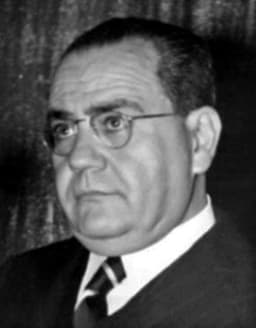
Francisco Largo Caballero
Politician · Modern
52.5Total
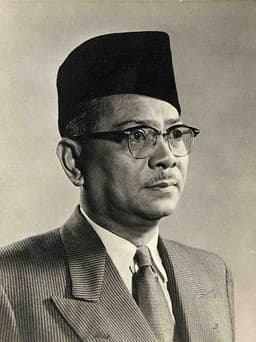
Tunku Abdul Rahman
Politician · Modern
53.6Total
Basic Information
Born
1869
1903
Died
1946
1990
Era
Modern
Modern
Nationality
Spain
Malaysia
Occupation
Politician
Politician
Civilization
Western
Eastern
Score Comparison
Military (10%)
39.9
12.5
Political (20%)
54.7
65.0
Influence (20%)
54.9
58.3
Legacy (20%)
45.0
56.0
Leadership (15%)
65.7
72.0
Strategy (15%)
54.3
31.9
TOTAL
52.5
53.6
Francisco Largo Caballero — Complete Timeline
1936 AD
Organized the Defense of MadridWar◆ Major
As prime minister, Largo Caballero directed the organization of the defense of Madrid against the Nationalist assault in November 1936. He mobilized militias and the International Brigades, leading to the successful resistance that prevented the city's fall.
Defense of MadridCivil WarMilitary Strategy
Impact: nationalconstructive
Became Prime Minister of the RepublicPolitical Action◆ Major
Largo Caballero was appointed prime minister of the Second Spanish Republic on September 4, 1936, during the Spanish Civil War. He formed a government that included socialists, communists, and republicans, and oversaw the defense of Madrid against Nationalist forces.
Prime MinisterCivil WarRepublican Government
Impact: national
1937 AD
Resigned as Prime MinisterPolitical Action◆ Major
Largo Caballero resigned as prime minister on May 17, 1937, following the May Days in Barcelona, where internal conflicts between anarchists and communists erupted. His resignation marked the end of his leadership and the rise of Juan Negrin's more communist-aligned government.
ResignationInternal ConflictCivil War
Impact: nationaltragic
1942 AD
Exiled and Imprisoned by the NazisPolitical Action◆ Major
After the Republican defeat, Largo Caballero went into exile in France. He was arrested by the Gestapo in 1942 and deported to the Sachsenhausen concentration camp. He survived the war but was released in 1945, having suffered severe hardship.
ExileConcentration CampWorld War II
Impact: nationaltragic
Tunku Abdul Rahman — Complete Timeline
1951 AD
Formation of the Alliance Party (1951)Political Action◆ Major
Tunku Abdul Rahman became the leader of the United Malays National Organisation (UMNO) and formed the Alliance Party with the Malayan Chinese Association (MCA) and Malayan Indian Congress (MIC). This multi-racial coalition became the foundation for Malayan independence.
Political CoalitionIndependence MovementMulti-Racial Politics
Impact: nationalconstructive
1956 AD
Negotiation of Merdeka (1956-1957)Political Action◆ Major
Tunku Abdul Rahman led a delegation to London to negotiate Malayan independence from Britain. The talks resulted in the Merdeka Agreement, setting August 31, 1957, as Independence Day. He became the first Prime Minister of independent Malaya.
IndependenceNegotiationMerdeka
Impact: nationalconstructive
1963 AD
Formation of Malaysia (1963)Political Action◆ Major
Tunku Abdul Rahman proposed and oversaw the formation of Malaysia, merging Malaya with Singapore, Sabah, and Sarawak. This expanded federation aimed to create a stronger, multi-ethnic nation, though it faced opposition from Indonesia and the Philippines.
FederationNation BuildingMalaysia Formation
Impact: regionalconstructive
1970 AD
Resignation as Prime Minister (1970)Political Action◆ Major
Following the May 13, 1969 racial riots in Kuala Lumpur, Tunku Abdul Rahman resigned as Prime Minister. He was succeeded by Abdul Razak Hussein. His resignation marked the end of an era and led to a shift in Malaysian political and economic policies.
ResignationPolitical TransitionPost-Riots
Impact: nationaltragic
This comparison has not been analyzed yet.
One-time AI generation (~1 minute). Scores and timeline are already available below.
Rankings
🥇
Tunku Abdul RahmanLeader
Mil: 12.5Pol: 65.0Inf: 58.3
53.6
🥈
Francisco Largo Caballero
Mil: 39.9Pol: 54.7Inf: 54.9
52.5
+1.1 behind
How This Comparison Works
Algorithm
Each figure is scored on 6 dimensions (0—100 scale) based on structured historical data: Military (10%), Political (20%), Influence (20%), Legacy (20%), Leadership (15%), Strategy (15%). The weighted total produces the final ranking.
Data Sources
Scores are computed from structured sub-indicators in the database. Scale factors adjust for era (Ancient ×0.85, Modern ×1.0) and civilization size (Eastern ×1.05, Other ×0.80) to account for differences in population and military scale.
Maximum 3 Figures
Comparisons are limited to 2—3 figures to ensure readability and statistical meaningfulness.
Error Margins
±5 points per dimension — Sub-scores are derived from historical records with inherent uncertainty. Two figures within 5 points on a dimension should be considered roughly equivalent in that area.
Total Score Accuracy
±3 points overall — The weighted combination of 6 dimensions produces a total score with approximately ±3 points of uncertainty. Differences of less than 3 points are not statistically significant— the figures are effectively tied.
Known Limitations
- Historical records are incomplete and uneven across civilizations
- Figures from oral-tradition societies may be underrepresented
- Occupation labels can misclassify multi-role figures
- Scores measure capability and impact, not moral character
- Quantitative scoring is a comparison tool, not absolute truth
Capability Radar
Military (10%) — Battles & Warfare
Battles
5
15
Win Rate
5
14
Expansion
5
23
Political (20%) — Governance & Reform
Reform
60
70
Diplomacy
30
75
Economy
20
60
Influence (20%) — Cultural & Global Reach
Cultural
30
55
Global
30
55
Legacy (20%) — Historical Impact
Historical
40
60
Longevity
20
50
Leadership (15%) — Power & Stability
Tenure
55
65
Stability
10
55
Strategy (15%) — Tactics & Innovation
Strategy
10
25
Tactics
5
27
Reform
15
27
Similar Comparisons
Comments & Discussion
No comments yet. Be the first to share your thoughts!