Loading...
Campos Sales vs Francisco Largo Caballero
Campos Sales leads by 1.4 pts · 2 figures compared
…

Campos Sales
Politician · Modern
53.9Total
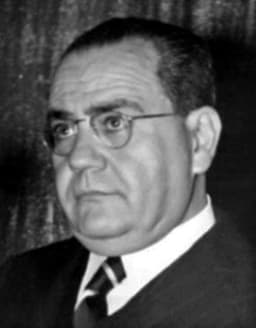
Francisco Largo Caballero
Politician · Modern
52.5Total
Basic Information
Born
1841
1869
Died
1913
1946
Era
Modern
Modern
Nationality
Brazil
Spain
Occupation
Politician
Politician
Civilization
Western
Western
Score Comparison
Military (10%)
50.0
39.9
Political (20%)
59.3
54.7
Influence (20%)
54.9
54.9
Legacy (20%)
48.3
45.0
Leadership (15%)
66.0
65.7
Strategy (15%)
43.5
54.3
TOTAL
53.9
52.5
Campos Sales — Complete Timeline
1898 AD
Election as President of BrazilPolitical Action◆ Major
Campos Sales was elected President of Brazil in 1898, taking office on November 15. He was the third president and the second civilian, representing the S
ElectionPresidency
Impact: national
Funding Loan Agreement with RothschildsPolitical Action◆ Major
Campos Sales negotiated a funding loan with the Rothschild banking family to stabilize Brazil's economy. The agreement provided a
Economic PolicyDebt
Impact: nationalconstructive
1900 AD
Implementation of the Governors' PolicyReform
Campos Sales established the 'Pol
Political ReformGovernance
Impact: nationalconstructive
1902 AD
End of Presidential TermPolitical Action◆ Major
Campos Sales completed his four-year term on November 15, 1902, peacefully handing power to Rodrigues Alves. His presidency was notable for fiscal stabilization and political consolidation.
PresidencyTransition
Impact: national
Francisco Largo Caballero — Complete Timeline
1936 AD
Organized the Defense of MadridWar◆ Major
As prime minister, Largo Caballero directed the organization of the defense of Madrid against the Nationalist assault in November 1936. He mobilized militias and the International Brigades, leading to the successful resistance that prevented the city's fall.
Defense of MadridCivil WarMilitary Strategy
Impact: nationalconstructive
Became Prime Minister of the RepublicPolitical Action◆ Major
Largo Caballero was appointed prime minister of the Second Spanish Republic on September 4, 1936, during the Spanish Civil War. He formed a government that included socialists, communists, and republicans, and oversaw the defense of Madrid against Nationalist forces.
Prime MinisterCivil WarRepublican Government
Impact: national
1937 AD
Resigned as Prime MinisterPolitical Action◆ Major
Largo Caballero resigned as prime minister on May 17, 1937, following the May Days in Barcelona, where internal conflicts between anarchists and communists erupted. His resignation marked the end of his leadership and the rise of Juan Negrin's more communist-aligned government.
ResignationInternal ConflictCivil War
Impact: nationaltragic
1942 AD
Exiled and Imprisoned by the NazisPolitical Action◆ Major
After the Republican defeat, Largo Caballero went into exile in France. He was arrested by the Gestapo in 1942 and deported to the Sachsenhausen concentration camp. He survived the war but was released in 1945, having suffered severe hardship.
ExileConcentration CampWorld War II
Impact: nationaltragic
Expert Analysis
Origins
Campos Sales (born 1841, Campinas, Brazil) came from a coffee-producing family. He studied law at the University of São Paulo, graduating in 1863, and became a lawyer and journalist. He entered politics as a provincial deputy for the Liberal Party in 1869, later switching to the Republican Party after the proclamation of the Republic in 1889. His early career was shaped by the abolitionist movement and the transition from empire to republic.
Francisco Largo Caballero (born 1869, Madrid, Spain) was the son of a carpenter. He left school at age seven to work as a plasterer. He joined the Socialist Party (PSOE) in 1894 and became a trade union leader. He was secretary-general of the General Union of Workers (UGT) from 1918 to 1938. His background was in labor activism, not academia.
Rise to Power
Campos Sales rose through state politics, serving as governor of São Paulo (1896-1897) after serving as minister of justice and interior under President Prudente de Morais. His key turning point was the implementation of the Governors' Policy (Política dos Governadores) in 1898, a pact between the federal government and state governors to exchange political support for autonomy. This system solidified the oligarchic control of the First Brazilian Republic. He was elected president in 1898, succeeding Prudente de Morais.
Largo Caballero rose as a labor leader. He was imprisoned multiple times for strike activities. He became minister of labor under the Second Spanish Republic in 1931, implementing social reforms. After the leftist Popular Front victory in 1936, he became the leading figure in the Socialist Party. Following the military uprising in July 1936, he was appointed prime minister on September 4, 1936, replacing José Giral. He formed a coalition government including anarchists, communists, and republicans.
Leadership & Governance
Campos Sales governed with a focus on fiscal stability. He negotiated a funding loan with the Rothschilds in 1898 for £10 million, stabilizing Brazil's currency. He also implemented deflationary policies, reducing the money supply and cutting public spending. His political score of 59.3 and leadership score of 66.0 reflect his ability to manage the oligarchic system. However, his strategy score is low (43.5), indicating limited long-term planning. He completed his term peacefully, handing power to Rodrigues Alves in 1902.
Largo Caballero's governance was dominated by the civil war. He organized the defense of Madrid in November 1936, mobilizing militias and coordinating the International Brigades. He also attempted to maintain Republican unity, but faced constant infighting. His leadership score of 65.7 is similar to Sales, but his political score (54.7) is lower. He was criticized for indecisiveness and for failing to prevent the communist takeover of key ministries. He resigned in May 1937 after the May Days in Barcelona, where anarchists and communists clashed.
Triumph & Tragedy
Campos Sales' greatest triumph was the successful negotiation of the Rothschild loan, which stabilized Brazil's economy and restored international credit. His Governors' Policy ensured political stability for the next three decades. His tragedy was the reinforcement of oligarchic rule, which marginalized the rural poor and delayed democratic development. His legacy score of 48.3 reflects mixed long-term impact.
Largo Caballero's triumph was the successful defense of Madrid, which prevented a quick Nationalist victory. He also implemented land reform and worker protections. His tragedy was the internal collapse of the Republican side. His influence score (54.9) matches Sales, but his legacy (45.0) is lower due to the Republican defeat. He died in exile in France in 1946.
Character & Destiny
Campos Sales was pragmatic and cautious, prioritizing economic stability over reform. He was a skilled negotiator, but his reliance on oligarchs limited his vision. His destiny was to be a transitional figure who consolidated the Republic but entrenched inequality.
Largo Caballero was idealistic and stubborn, earning the nickname 'Spanish Lenin.' He was a dedicated socialist but lacked military and strategic acumen. His destiny was to lead a doomed government, torn apart by internal divisions. His total score of 52.5 is slightly lower than Sales' 53.9.
Legacy
Campos Sales' Governors' Policy shaped Brazilian politics until the 1930 Revolution. His fiscal policies set a precedent for financial orthodoxy. He is remembered as a stabilizing force, but criticized for perpetuating elite control.
Largo Caballero's legacy is tied to the Spanish Civil War. He is remembered as a symbol of socialist resistance, but also as a leader who could not unite the left. His imprisonment by the Nazis added a tragic dimension.
Conclusion
Campos Sales had a greater impact on his nation's trajectory. His policies defined Brazilian politics for decades, while Largo Caballero's influence was cut short by defeat. Sales' total score of 53.9 exceeds Caballero's 52.5, reflecting his more enduring legacy. Caballero's leadership was valiant but ultimately ineffective.
Rankings
🥇
Campos SalesLeader
Mil: 50.0Pol: 59.3Inf: 54.9
53.9
🥈
Francisco Largo Caballero
Mil: 39.9Pol: 54.7Inf: 54.9
52.5
+1.4 behind
How This Comparison Works
Algorithm
Each figure is scored on 6 dimensions (0—100 scale) based on structured historical data: Military (10%), Political (20%), Influence (20%), Legacy (20%), Leadership (15%), Strategy (15%). The weighted total produces the final ranking.
Data Sources
Scores are computed from structured sub-indicators in the database. Scale factors adjust for era (Ancient ×0.85, Modern ×1.0) and civilization size (Eastern ×1.05, Other ×0.80) to account for differences in population and military scale.
Maximum 3 Figures
Comparisons are limited to 2—3 figures to ensure readability and statistical meaningfulness.
Error Margins
±5 points per dimension — Sub-scores are derived from historical records with inherent uncertainty. Two figures within 5 points on a dimension should be considered roughly equivalent in that area.
Total Score Accuracy
±3 points overall — The weighted combination of 6 dimensions produces a total score with approximately ±3 points of uncertainty. Differences of less than 3 points are not statistically significant— the figures are effectively tied.
Known Limitations
- Historical records are incomplete and uneven across civilizations
- Figures from oral-tradition societies may be underrepresented
- Occupation labels can misclassify multi-role figures
- Scores measure capability and impact, not moral character
- Quantitative scoring is a comparison tool, not absolute truth
Capability Radar
Military (10%) — Battles & Warfare
Battles
29
5
Win Rate
30
5
Expansion
36
5
Political (20%) — Governance & Reform
Reform
70
60
Diplomacy
65
30
Economy
60
20
Influence (20%) — Cultural & Global Reach
Cultural
30
30
Global
40
30
Legacy (20%) — Historical Impact
Historical
50
40
Longevity
40
20
Leadership (15%) — Power & Stability
Tenure
60
55
Stability
55
10
Strategy (15%) — Tactics & Innovation
Strategy
41
10
Tactics
39
5
Reform
46
15
Similar Comparisons
Comments & Discussion
No comments yet. Be the first to share your thoughts!