Loading...
Errol Barrow vs Francisco Largo Caballero
Errol Barrow leads by 1.9 pts · 2 figures compared
…
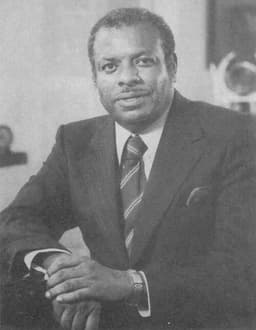
Errol Barrow
Politician · Modern
54.4Total
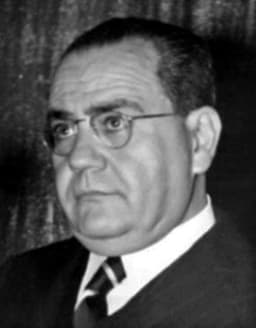
Francisco Largo Caballero
Politician · Modern
52.5Total
Basic Information
Born
1920
1869
Died
—
1946
Era
Modern
Modern
Nationality
Barbados
Spain
Occupation
Politician
Politician
Civilization
Western
Western
Score Comparison
Military (10%)
14.1
39.9
Political (20%)
65.7
54.7
Influence (20%)
58.3
54.9
Legacy (20%)
52.0
45.0
Leadership (15%)
78.0
65.7
Strategy (15%)
38.9
54.3
TOTAL
54.4
52.5
Errol Barrow — Complete Timeline
1960 AD
Introduced Free Education and Social ReformsReform◆ Major
Barrow's government introduced free secondary education and expanded social services, including healthcare and housing. These reforms aimed to reduce inequality and improve living standards.
EducationSocial Reform
Impact: nationalconstructive
1961 AD
Elected Premier of BarbadosPolitical Action◆ Major
Barrow became Premier of Barbados in 1961, leading the Democratic Labour Party to victory. He focused on economic diversification and social reform, moving Barbados towards self-government.
ElectionSelf-Government
Impact: nationalconstructive
1966 AD
Led Barbados to IndependencePolitical Action
Barrow led Barbados to independence from the United Kingdom on November 30, 1966, becoming the first Prime Minister. He is widely regarded as the 'Father of Independence' for his role in the negotiations.
IndependenceDecolonization
Impact: nationalconstructive
1986 AD
Returned to Power as Prime MinisterPolitical Action◆ Major
Barrow returned to power in 1986 after a decade in opposition, winning a landslide election. His second term focused on economic recovery and regional integration.
ElectionComeback
Impact: national
1987 AD
Died in OfficeOther◆ Major
Barrow died in office on June 1, 1987, from a heart attack. His death was a major loss for Barbados, and he was given a state funeral. He is remembered as a founding father of the nation.
DeathEnd of Era
Impact: nationaltragic
Francisco Largo Caballero — Complete Timeline
1936 AD
Organized the Defense of MadridWar◆ Major
As prime minister, Largo Caballero directed the organization of the defense of Madrid against the Nationalist assault in November 1936. He mobilized militias and the International Brigades, leading to the successful resistance that prevented the city's fall.
Defense of MadridCivil WarMilitary Strategy
Impact: nationalconstructive
Became Prime Minister of the RepublicPolitical Action◆ Major
Largo Caballero was appointed prime minister of the Second Spanish Republic on September 4, 1936, during the Spanish Civil War. He formed a government that included socialists, communists, and republicans, and oversaw the defense of Madrid against Nationalist forces.
Prime MinisterCivil WarRepublican Government
Impact: national
1937 AD
Resigned as Prime MinisterPolitical Action◆ Major
Largo Caballero resigned as prime minister on May 17, 1937, following the May Days in Barcelona, where internal conflicts between anarchists and communists erupted. His resignation marked the end of his leadership and the rise of Juan Negrin's more communist-aligned government.
ResignationInternal ConflictCivil War
Impact: nationaltragic
1942 AD
Exiled and Imprisoned by the NazisPolitical Action◆ Major
After the Republican defeat, Largo Caballero went into exile in France. He was arrested by the Gestapo in 1942 and deported to the Sachsenhausen concentration camp. He survived the war but was released in 1945, having suffered severe hardship.
ExileConcentration CampWorld War II
Impact: nationaltragic
Expert Analysis
Origins
Errol Barrow was born on January 21, 1920, in Saint Lucy, Barbados, into a politically active family. His father was a clergyman and his mother a teacher. Barrow studied at Combermere School and later at the University of London, earning a degree in economics. He also trained as a pilot in the Royal Air Force during World War II. Francisco Largo Caballero was born on October 15, 1869, in Madrid, Spain, into a working-class family. He left school at age seven to work as a plasterer. Largo Caballero became involved in socialist politics early, joining the Spanish Socialist Workers' Party (PSOE) in 1894. He was largely self-educated, rising through the labor union ranks.
Rise to Power
Barrow entered politics in the 1950s, co-founding the Democratic Labour Party (DLP) in 1955. He became Premier of Barbados in 1961 after the DLP won the general election. His leadership focused on negotiating independence from Britain, which was achieved on November 30, 1966, making him the first Prime Minister. Largo Caballero rose through the PSOE and the General Union of Workers (UGT), becoming its president in 1918. He served as Minister of Labour during the Second Spanish Republic (1931-1933), implementing reforms. With the outbreak of the Spanish Civil War in July 1936, he was appointed Prime Minister on September 4, 1936, leading a coalition government.
Leadership & Governance
Barrow's governance style was pragmatic and reformist. He introduced free secondary education and expanded healthcare and housing, scoring 78.0 in leadership. His government diversified the economy away from sugar, promoting tourism and light manufacturing. Barrow maintained democratic institutions and a stable political environment. Largo Caballero, with a leadership score of 65.7, was a socialist militant who sought to implement revolutionary policies. As Prime Minister, he faced the immense challenge of the civil war. He organized a coalition government including anarchists and communists, but struggled with internal divisions. His focus was on military defense, including the defense of Madrid, rather than long-term governance.
Triumph & Tragedy
Barrow's greatest triumph was leading Barbados to peaceful independence and establishing a stable democracy. His social reforms improved education and welfare. However, his economic diversification efforts had mixed results, and Barbados faced challenges in the 1970s. He died in office in 1987, a respected figure. Largo Caballero's triumph was mobilizing the defense of Madrid in November 1936, preventing an early Nationalist victory. His tragedy was the internal conflict within the Republican side, culminating in the May Days of 1937 in Barcelona. He resigned in May 1937, and after the war, he was exiled and imprisoned by the Nazis in Sachsenhausen, where he died in 1946.
Character & Destiny
Barrow was a charismatic and strategic leader, known for his eloquence and determination. His character shaped a peaceful transition and nation-building. Largo Caballero was a steadfast socialist, often called the 'Spanish Lenin'. His rigidity and revolutionary zeal led to conflicts with other Republican factions. His destiny was tied to the tragedy of the Spanish Civil War, which he could not overcome. He scored 54.3 in strategy compared to Barrow's 38.9, but his political circumstances were far more hostile.
Legacy
Barrow is remembered as the Father of Barbadian independence. His legacy includes stable democratic governance, free education, and a diversified economy. He scored 52.0 in legacy. Largo Caballero's legacy is more complex. He is remembered as a key figure in the Spanish socialist movement and the Republican cause, but his tenure was marked by failure to unify the left. He scored 45.0 in legacy. Barrow's impact is enduring in Barbados, while Largo Caballero's is overshadowed by the Nationalist victory.
Conclusion
Errol Barrow had a greater impact than Francisco Largo Caballero. Barrow's successful leadership in achieving independence and building a stable nation (total score 54.4) contrasts with Largo Caballero's failure to prevent the collapse of the Republic (total score 52.5). Barrow's legacy of peaceful democracy and social reform is a model for small states, while Largo Caballero's role in a lost war leaves a more ambiguous legacy. Barrow's higher scores in leadership (78.0 vs 65.7) and legacy (52.0 vs 45.0) support this conclusion.
Rankings
🥇
Errol BarrowLeader
Mil: 14.1Pol: 65.7Inf: 58.3
54.4
🥈
Francisco Largo Caballero
Mil: 39.9Pol: 54.7Inf: 54.9
52.5
+1.9 behind
How This Comparison Works
Algorithm
Each figure is scored on 6 dimensions (0—100 scale) based on structured historical data: Military (10%), Political (20%), Influence (20%), Legacy (20%), Leadership (15%), Strategy (15%). The weighted total produces the final ranking.
Data Sources
Scores are computed from structured sub-indicators in the database. Scale factors adjust for era (Ancient ×0.85, Modern ×1.0) and civilization size (Eastern ×1.05, Other ×0.80) to account for differences in population and military scale.
Maximum 3 Figures
Comparisons are limited to 2—3 figures to ensure readability and statistical meaningfulness.
Error Margins
±5 points per dimension — Sub-scores are derived from historical records with inherent uncertainty. Two figures within 5 points on a dimension should be considered roughly equivalent in that area.
Total Score Accuracy
±3 points overall — The weighted combination of 6 dimensions produces a total score with approximately ±3 points of uncertainty. Differences of less than 3 points are not statistically significant— the figures are effectively tied.
Known Limitations
- Historical records are incomplete and uneven across civilizations
- Figures from oral-tradition societies may be underrepresented
- Occupation labels can misclassify multi-role figures
- Scores measure capability and impact, not moral character
- Quantitative scoring is a comparison tool, not absolute truth
Capability Radar
Military (10%) — Battles & Warfare
Battles
20
5
Win Rate
25
5
Expansion
26
5
Political (20%) — Governance & Reform
Reform
75
60
Diplomacy
70
30
Economy
68
20
Influence (20%) — Cultural & Global Reach
Cultural
55
30
Global
55
30
Legacy (20%) — Historical Impact
Historical
60
40
Longevity
50
20
Leadership (15%) — Power & Stability
Tenure
65
55
Stability
72
10
Strategy (15%) — Tactics & Innovation
Strategy
29
10
Tactics
37
5
Reform
39
15
Similar Comparisons
Comments & Discussion
No comments yet. Be the first to share your thoughts!