Loading...
Francis I Stephen vs Julius Caesar
Julius Caesar leads by 32.4 pts · 2 figures compared
…
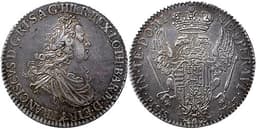
Francis I Stephen
Emperor · Modern
50.4Total

Julius Caesar
General · Ancient
82.8Total
Basic Information
Born
1708
-100
Died
1765
-44
Era
Modern
Ancient
Nationality
Holy Roman Empire
Roman Republic
Occupation
Emperor
General
Civilization
Western
Western
Score Comparison
Military (10%)
20.0
88.0
Political (20%)
53.8
78.0
Influence (20%)
53.3
85.0
Legacy (20%)
46.7
82.0
Leadership (15%)
66.0
80.0
Strategy (15%)
54.3
85.0
TOTAL
50.4
82.8
Francis I Stephen — Complete Timeline
1736 AD
Marriage to Maria TheresaPolitical Action
Francis Stephen married Maria Theresa of Austria, uniting the Houses of Habsburg and Lorraine. This marriage created the Habsburg-Lorraine dynasty and made Francis co-ruler of the Habsburg domains.
Dynastic MarriageHabsburg-Lorraine
Impact: regionalconstructive
1737 AD
Grand Duke of TuscanyPolitical Action◆ Major
Francis became Grand Duke of Tuscany as part of the settlement ending the War of the Polish Succession. He ceded the Duchy of Lorraine to France in exchange, establishing a new power base for his family.
Territorial ExchangeTuscany
Impact: regionalconstructive
1740 AD
Co-ruler of the Habsburg MonarchyPolitical Action
Upon Maria Theresa's accession, Francis became co-ruler of the Habsburg Monarchy. He focused on financial administration and economic reforms, including the establishment of the Habsburg state bank.
Habsburg MonarchyEconomic Reform
Impact: regionalconstructive
1745 AD
Elected Holy Roman EmperorPolitical Action◆ Major
Francis was elected Holy Roman Emperor as Francis I, succeeding Charles VII. His election was secured by Maria Theresa's diplomatic efforts and ended the Bavarian interlude, restoring the imperial title to the Habsburgs.
Imperial ElectionHabsburg Restoration
Impact: regionalconstructive
Julius Caesar — Complete Timeline
58 BC
Gallic WarsWar◆ Major
Caesar, as proconsul of Gaul, launched a series of campaigns that conquered all of Gaul (modern France, Belgium, and parts of Switzerland). He fought numerous battles, including against the Helvetii, the Belgae, and the Gallic chieftain Vercingetorix. The wars brought immense wealth and a loyal army to Caesar.
Gallic WarsConquestRoman Expansion
Impact: regional
49 BC
Crossing the RubiconPolitical Action◆ Major
Caesar led Legio XIII across the Rubicon River into Italy, defying the Roman Senate's order to disband his army. This act triggered a civil war against Pompey and the Optimates, ultimately leading to Caesar's dictatorship and the end of the Roman Republic.
Roman Civil WarEnd of RepublicPower Struggle
Impact: global
48 BC
Battle of PharsalusWar◆ Major
Caesar's outnumbered army defeated the larger forces of Pompey the Great at Pharsalus in Greece. Caesar's tactical use of a reserve line to counter Pompey's cavalry charge proved decisive. Pompey fled to Egypt, where he was assassinated, leaving Caesar as the undisputed master of the Roman world.
Roman Civil WarBattleDecisive Victory
Impact: regional
44 BC
Appointment as Dictator for LifePolitical Action◆ Major
The Roman Senate appointed Caesar dictator perpetuo (dictator for life), granting him unprecedented personal power. This move concentrated military, legislative, and judicial authority in one person, effectively ending the Roman Republic's traditional system of checks and balances and alarming many senators.
DictatorshipEnd of RepublicPower Consolidation
Impact: regionaldestructive
Assassination on the Ides of MarchPolitical Action◆ Major
A group of Roman senators, led by Marcus Junius Brutus and Gaius Cassius Longinus, stabbed Caesar to death at a meeting of the Senate in the Theatre of Pompey. The assassination was intended to restore the Republic, but instead triggered another civil war that led to the rise of the Roman Empire.
AssassinationRoman PoliticsEnd of Republic
Impact: globaldestructive
Expert Analysis
francis-i-stephen-vs-julius-caesar
# The Emperor and the General: Two Paths to Power in Western History
On a March morning in 44 BCE, Julius Caesar fell beneath twenty-three dagger blows in the Senate chamber of Rome, his blood pooling at the base of Pompey’s statue. Nearly eighteen centuries later, in 1765, Francis I Stephen died quietly in his carriage returning from the opera in Innsbruck, his heart failing as his wife Maria Theresa wept beside him. One death ended a revolution; the other closed a partnership. Both men had reshaped the political landscape of the West, yet their journeys could hardly have been more different. What made one a titan of history and the other a footnote, despite both holding supreme power?
Origins
Caesar was born into the patrician Julian clan, but his family had lost much of its political influence. His father died when he was sixteen, leaving him to navigate the treacherous waters of Roman politics with little more than his name and his wits. The late Republic was a world of civil wars, proscriptions, and crumbling traditions—a time when ambition could remake the world or end it on a sword.
Francis Stephen, by contrast, was born in 1708 into the ruling house of Lorraine, a small duchy caught between France and the Holy Roman Empire. His father, Duke Leopold, had already lost his throne once to Louis XIV. The young duke grew up in exile, learning diplomacy as a survival skill. Where Caesar learned to command legions, Francis learned to negotiate treaties.
Rise to Power
Caesar’s path was forged in blood. He rose through the Roman magistracies, borrowed enormous sums to fund his campaigns, and formed the First Triumvirate with Pompey and Crassus. His conquest of Gaul from 58 to 50 BCE was not merely a military achievement—it was a political engine that gave him a loyal army, immense wealth, and a reputation that terrified his enemies. When the Senate ordered him to disband his forces, Caesar answered by crossing the Rubicon River in 49 BCE, plunging the Republic into civil war. He defeated Pompey at Pharsalus, crushed the remnants of the old order, and made himself dictator for life.
Francis Stephen’s rise was quieter but no less strategic. In 1736, he married Maria Theresa of Austria, the heir to the Habsburg Empire. The marriage was a political masterpiece, uniting the Houses of Habsburg and Lorraine. In 1737, he became Grand Duke of Tuscany as part of the settlement ending the War of the Polish Succession—a prize he accepted by ceding his ancestral Lorraine to France. When Maria Theresa inherited the Habsburg throne in 1740, Francis became her co-ruler, and in 1745, he was elected Holy Roman Emperor. He had not conquered a single territory; he had married, bargained, and outwaited his rivals.
Leadership & Governance
Caesar governed as a revolutionary. He reformed the calendar, granted citizenship to provincials, initiated massive building projects, and centralized power in his own hands. His military genius—scored at 88—was matched by his political vision, though his political score of 78 reflects the instability of his methods. He understood that the Republic’s old structures could not survive, but his solution—personal dictatorship—was a gamble that cost him his life.
Francis Stephen governed as an administrator. His military score of 46 and strategy of 44 suggest he was no battlefield commander, but his political score of 73 and leadership of 83 tell a different story. He managed the Habsburg finances, reformed the imperial treasury, and supported his wife’s ambitious reforms. Where Caesar commanded legions, Francis chaired committees. His greatest victory was not a battle but the survival of his dynasty during the War of the Austrian Succession, when Maria Theresa’s enemies tried to dismember her empire.
Triumph & Tragedy
Caesar’s triumph was his Gallic Wars—a decade of conquest that extended Roman rule to the English Channel and the Rhine. His *Commentaries* remain a masterpiece of propaganda and military literature. His tragedy was the Ides of March. He had centralized power so completely that his enemies could see no alternative but assassination. He fell, as he himself had written, “not because I have done anything wrong, but because I have done too much right.”
Francis Stephen’s triumph was subtler: the founding of the Habsburg-Lorraine dynasty, which would rule Central Europe for nearly two centuries. His tragedy was living in his wife’s shadow. Maria Theresa was one of the great rulers of the age, and Francis, though Holy Roman Emperor, was always the consort. He died known primarily as her husband, his own achievements half-forgotten.
Character & Destiny
Caesar was audacity incarnate. He pardoned his enemies, seduced his rivals’ wives, and gambled everything on his own genius. His personality drove his decisions: the crossing of the Rubicon, the rejection of a crown, the refusal to disband his bodyguard. He believed in his own star, and that belief made him invincible—until it made him blind.
Francis Stephen was prudence itself. He knew his limits, deferred to his wife, and focused on what he could control: finances, administration, diplomacy. His personality was suited to survival, not glory. He built no monuments, wrote no memoirs, conquered no nations. But he kept his throne, his family, and his life.
Legacy
Caesar’s legacy is colossal. His assassination triggered the end of the Roman Republic and the birth of the Empire. His name became a title—*Kaiser*, *Tsar*—synonymous with supreme power. His reforms outlasted him, and his writings shaped Western literature. He is remembered, with a score of 82 for legacy and 85 for influence, as the man who broke the old world to build a new one.
Francis Stephen’s legacy is quieter. He founded a dynasty, stabilized an empire, and supported a great ruler. His total score of 65.9 reflects a life of competence rather than brilliance. He is remembered by historians, not by the public—a footnote in the story of Maria Theresa and the Habsburgs.
Conclusion
The difference between Caesar and Francis Stephen is not merely one of scale but of kind. Caesar reshaped history through violence and vision; Francis Stephen sustained it through patience and partnership. One was a storm that remade the landscape; the other was the steady rain that kept the crops alive. Both are necessary, but only one becomes legend. As Caesar himself might have said, had he lived to read the history books: “Men are willing to believe what they wish to believe.” And the West has always wished to believe in conquerors.
Rankings
🥇
Julius CaesarLeader
Mil: 88.0Pol: 78.0Inf: 85.0
82.8
🥈
Francis I Stephen
Mil: 20.0Pol: 53.8Inf: 53.3
50.4
+32.4 behind
How This Comparison Works
Algorithm
Each figure is scored on 6 dimensions (0—100 scale) based on structured historical data: Military (10%), Political (20%), Influence (20%), Legacy (20%), Leadership (15%), Strategy (15%). The weighted total produces the final ranking.
Data Sources
Scores are computed from structured sub-indicators in the database. Scale factors adjust for era (Ancient ×0.85, Modern ×1.0) and civilization size (Eastern ×1.05, Other ×0.80) to account for differences in population and military scale.
Maximum 3 Figures
Comparisons are limited to 2—3 figures to ensure readability and statistical meaningfulness.
Error Margins
±5 points per dimension — Sub-scores are derived from historical records with inherent uncertainty. Two figures within 5 points on a dimension should be considered roughly equivalent in that area.
Total Score Accuracy
±3 points overall — The weighted combination of 6 dimensions produces a total score with approximately ±3 points of uncertainty. Differences of less than 3 points are not statistically significant— the figures are effectively tied.
Known Limitations
- Historical records are incomplete and uneven across civilizations
- Figures from oral-tradition societies may be underrepresented
- Occupation labels can misclassify multi-role figures
- Scores measure capability and impact, not moral character
- Quantitative scoring is a comparison tool, not absolute truth
Capability Radar
Military (10%) — Battles & Warfare
Battles
5
95
Win Rate
5
92
Expansion
5
97
Political (20%) — Governance & Reform
Reform
40
90
Diplomacy
70
85
Economy
50
82
Influence (20%) — Cultural & Global Reach
Cultural
30
88
Global
30
94
Legacy (20%) — Historical Impact
Historical
40
95
Longevity
50
96
Leadership (15%) — Power & Stability
Tenure
60
75
Stability
55
60
Strategy (15%) — Tactics & Innovation
Strategy
5
94
Tactics
5
96
Reform
5
88
Similar Comparisons
Comments & Discussion
RomanRhetor6/17/2026
The comparison fails to capture how Caesar’s rise was fundamentally tied to military conquest, not just political maneuvering. Caesar spent eight years in Gaul, conquering 800 cities and 300 tribes, enslaving a million people—this is what made his power legitimate in Roman eyes. Francis I Stephen couldn’t even defend Silesia against Frederick the Great, losing it in the War of Austrian Succession. A man who loses territory is no Caesar, no matter how many treaties he signs. This comparison insul
天策书生6/17/2026
用弗朗茨一世跟凯撒比,简直是对罗马共和国的侮辱。凯撒亲手缔造了从高卢到埃及的帝国雏形,而弗朗茨连自己的洛林公国都保不住,靠老婆玛丽亚·特蕾莎上位当上神圣罗马皇帝。史料显示,弗朗茨在位期间哈布斯堡军队几乎零战绩,就是个政治花瓶。历史评价如此悬殊,不是没有道理的——征服者与附庸者的差距,岂是几纸条约能弥补的?
SkepticofStats6/17/2026
This comparison conveniently ignores the nature of their power. Caesar wielded absolute military command backed by loyal legions—he crossed the Rubicon with the 13th Legion, defying the Senate directly. Francis I Stephen gained the imperial title only through the Pragmatic Sanction of 1713, a legal document, and his wife’s relentless diplomacy. One was a dictator by the sword; the other, a constitutional figurehead. They’re not similar paths to power—they’re completely different species of rule.
经典考据狂6/17/2026
从史料细节看,凯撒遇刺时试图用托加袍遮住下身,这暴露了他对尊严的执念——一个真正的大丈夫临死还在操心形象。反观弗朗茨,史书记载他临终前还跟妻子谈论歌剧,从容如常。凯撒的悲剧在于他把自己塑造成了不可替代的神,结果被现实的刀捅穿;弗朗茨却懂得权力要与人共享,所以死得安详。政治智慧的高低,不在生前权柄大小,而在死后如何被记忆。
BreadandCircuses6/17/2026
You’re missing the real story—both men understood survival through generosity, just on different scales. Caesar gave the Roman plebs free grain and grand spectacles, buying their loyalty with bread and circuses. Francis I Stephen was the richest man in the Habsburg monarchy, bankrolling his wife’s reforms and even the Hungarian Diet’s goodwill. History remembers Caesar as the donor of land to veterans; Francis as the financier of the Theresian military academy. Both built power through patronage