Loading...
Fouad Mebazaa vs Napoleon Bonaparte
Napoleon Bonaparte leads by 32.6 pts · 2 figures compared
…
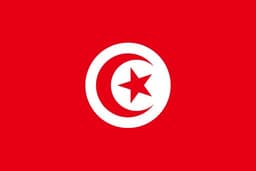
Fouad Mebazaa
Politician · Modern
38.3Total

Napoleon Bonaparte
General · Modern
70.9Total
Basic Information
Born
1933
1769
Died
—
1821
Era
Modern
Modern
Nationality
Tunisia
France
Occupation
Politician
General
Civilization
Middle Eastern
Western
Score Comparison
Military (10%)
47.1
94.0
Political (20%)
29.3
72.0
Influence (20%)
45.5
40.0
Legacy (20%)
35.8
80.0
Leadership (15%)
31.2
78.0
Strategy (15%)
41.5
90.0
TOTAL
38.3
70.9
Fouad Mebazaa — Complete Timeline
2011 AD
Appointment as Acting PresidentPolitical Action◆ Major
After President Zine El Abidine Ben Ali fled Tunisia on January 14, 2011, Fouad Mebazaa, as Speaker of the Chamber of Deputies, became acting president under Article 57 of the constitution. He served until a new constituent assembly was elected.
Arab SpringInterim government
Impact: national
Oversight of the Transitional PeriodPolitical Action◆ Major
As acting president, Mebazaa oversaw the formation of a national unity government and the organization of elections for a Constituent Assembly in October 2011. He stepped down after the assembly convened, handing power to Moncef Marzouki.
TransitionElections
Impact: nationalconstructive
Napoleon Bonaparte — Complete Timeline
1799 AD
Coup of 18 BrumaireOther◆ Major
Napoleon Bonaparte, with support from his brother Lucien and key political figures, overthrew the Directory in a bloodless coup. He established the Consulate with himself as First Consul, effectively becoming the ruler of France. This event ended the French Revolution's most unstable period.
French RevolutionCoupRise to Power
Impact: regional
1804 AD
Promulgation of the Napoleonic CodeOther◆ Major
Napoleon enacted the Civil Code of the French, known as the Napoleonic Code, a comprehensive set of laws that replaced the fragmented feudal legal systems. The code established legal equality, protected property rights, and secularized law. It became the basis for legal systems in many European and world countries.
Legal ReformNapoleonic CodeCivil Law
Impact: globalconstructive
1805 AD
Battle of AusterlitzWar◆ Major
Napoleon's Grande Arm
Napoleonic WarsBattleDecisive Victory
Impact: global
1812 AD
Invasion of RussiaWar◆ Major
Napoleon led the Grande Arm
Napoleonic WarsInvasionDisaster
Impact: globaldestructive
1815 AD
Battle of WaterlooWar◆ Major
Napoleon's French army was defeated by the combined forces of the Duke of Wellington's Anglo-Allied army and Gebhard Leberecht von Bl
Napoleonic WarsBattleFinal Defeat
Impact: globaldestructive
Expert Analysis
fouad-mebazaa-vs-napoleon-bonaparte
# The Emperor and the Caretaker: Two Faces of Power in a World on Fire
On a winter afternoon in January 2011, Fouad Mebazaa, a seventy-seven-year-old speaker of parliament in Tunis, found himself suddenly thrust into the presidency of a nation in flames. Half a world away and two centuries earlier, a thirty-year-old Corsican artillery officer was storming the bridges of Lodi, launching a career that would redraw the map of Europe. One man inherited an empire of ash; the other built one from cannon smoke and ambition. Their names are rarely spoken in the same breath, yet both faced the same fundamental question: what does power demand of a man when the old world collapses?
Origins
Napoleon Bonaparte was born in 1769 on the island of Corsica, a place that had only recently become French. His family was minor nobility, poor but proud, and young Napoleon grew up speaking Italian-accented French, an outsider among the elite of mainland France. He was small, intense, and driven by a hunger to prove himself. The French Revolution, which erupted when he was twenty, shattered the old order and opened doors that birth alone could never have unlocked. For a man of talent and ambition, it was the perfect storm.
Fouad Mebazaa was born in 1933 in Tunis, then a French protectorate. His family was part of the Tunisian elite, and he studied law in Paris, absorbing the republican ideals of the French Third Republic. He returned to a Tunisia that would soon win independence, and he spent decades as a loyal civil servant, rising through the ranks of the Neo Destour party. He was never a revolutionary; he was a manager, a man who kept the machinery of state running while others fought for the spotlight.
Rise to Power
Napoleon’s ascent was meteoric. In 1793, at the Siege of Toulon, he devised a plan that drove the British from the port, earning him promotion to brigadier general at age twenty-four. By 1796, he was commanding the Army of Italy, where his lightning campaigns defeated the Austrians and made him a national hero. In 1799, he staged a coup and became First Consul, effectively dictator of France. By 1804, he crowned himself Emperor. Each step was seized through a combination of military genius, ruthless ambition, and an uncanny ability to read the moment.
Mebazaa’s rise could not have been more different. For decades, he served as minister of youth, minister of culture, and speaker of parliament under presidents Habib Bourguiba and Zine El Abidine Ben Ali. He was a loyalist, not a challenger. When Ben Ali fled on January 14, 2011, after weeks of protests, Mebazaa was the constitutional successor. He did not seize power; it fell into his lap. His appointment as acting president was a stopgap measure, a way to prevent chaos while a new order was built.
Leadership & Governance
Napoleon governed with an iron will and a vision of a unified, modern France. He centralized the administration, created the Bank of France, and most famously, codified the Napoleonic Code, a legal system that enshrined equality before the law but also reinforced patriarchal authority. His military genius was unmatched: he won over sixty battles, from Austerlitz in 1805 to Wagram in 1809, using speed, deception, and devastating artillery. But his political wisdom was flawed. He could not stop conquering, and his Continental System, designed to strangle Britain, instead alienated allies and drained France.
Mebazaa governed in a state of emergency. His task was not to build an empire but to dismantle one. He oversaw the formation of a national unity government, lifted the state of emergency, and organized elections for a Constituent Assembly in October 2011. He was a caretaker, not a creator. His leadership was defined by restraint, not ambition. He did not try to hold onto power, and he did not use the army to crush dissent. In a region where transitions often ended in bloodshed, Mebazaa’s quiet stewardship was a small miracle.
Triumph & Tragedy
Napoleon’s greatest triumph was Austerlitz in 1805, where he crushed the combined armies of Russia and Austria in a single day. His most devastating failure was the invasion of Russia in 1812. He marched with 600,000 men; fewer than 100,000 returned. The Grande Armée was destroyed, and the myth of invincibility shattered. Exiled to Elba, he escaped in 1815, only to meet final defeat at Waterloo. He died in 1821 on Saint Helena, a prisoner, haunted by the ghosts of his ambition.
Mebazaa’s triumph was simply surviving the transition. Tunisia held free elections, drafted a new constitution, and avoided civil war. But the tragedy was that the hopes of the Jasmine Revolution were not fully realized. The economy stagnated, corruption persisted, and by 2021, President Kais Saied would suspend parliament and consolidate power. Mebazaa’s moment was brief, and his legacy is that of a bridge, not a destination.
Character & Destiny
Napoleon was driven by an insatiable will. “Impossible is a word to be found only in the dictionary of fools,” he once said. He believed he was a man of destiny, and his character shaped his decisions: the need for glory, the refusal to compromise, the belief that he could bend history to his will. That same character led him to overreach and fall.
Mebazaa was the opposite. He was cautious, unassuming, and aware of his limits. He did not seek glory; he sought stability. His character was shaped by decades of service in a one-party state, where the highest virtue was loyalty. When history called, he answered not as a hero but as a bureaucrat. He did not reshape the world; he handed it over to those who would.
Legacy
Napoleon’s legacy is vast and contested. He is remembered as a military genius, a reformer who spread the ideals of the French Revolution across Europe, and a tyrant who caused the deaths of millions. The Napoleonic Code influences legal systems from Brazil to Japan. His name is synonymous with ambition, genius, and hubris.
Mebazaa is barely remembered. He is a footnote in the history of the Arab Spring, a name that appears in timelines but not in textbooks. His legacy is the peaceful transition he enabled, but that transition was fragile and incomplete. He is a reminder that sometimes the most important leaders are those who know when to step aside.
Conclusion
Two men, two centuries, two worlds. Napoleon Bonaparte and Fouad Mebazaa both held supreme power, but they used it in opposite ways. One tried to conquer the world and lost everything; the other tried to keep his country from falling apart and succeeded, for a time. Their stories suggest that the measure of a leader is not the scale of their ambition but the wisdom of their restraint. Napoleon built an empire that collapsed under its own weight; Mebazaa built a bridge that carried a nation across a chasm. In the end, the bridge may matter more than the throne.
Rankings
🥇
Napoleon BonaparteLeader
Mil: 94.0Pol: 72.0Inf: 40.0
70.9
🥈
Fouad Mebazaa
Mil: 47.1Pol: 29.3Inf: 45.5
38.3
+32.6 behind
How This Comparison Works
Algorithm
Each figure is scored on 6 dimensions (0—100 scale) based on structured historical data: Military (10%), Political (20%), Influence (20%), Legacy (20%), Leadership (15%), Strategy (15%). The weighted total produces the final ranking.
Data Sources
Scores are computed from structured sub-indicators in the database. Scale factors adjust for era (Ancient ×0.85, Modern ×1.0) and civilization size (Eastern ×1.05, Other ×0.80) to account for differences in population and military scale.
Maximum 3 Figures
Comparisons are limited to 2—3 figures to ensure readability and statistical meaningfulness.
Error Margins
±5 points per dimension — Sub-scores are derived from historical records with inherent uncertainty. Two figures within 5 points on a dimension should be considered roughly equivalent in that area.
Total Score Accuracy
±3 points overall — The weighted combination of 6 dimensions produces a total score with approximately ±3 points of uncertainty. Differences of less than 3 points are not statistically significant— the figures are effectively tied.
Known Limitations
- Historical records are incomplete and uneven across civilizations
- Figures from oral-tradition societies may be underrepresented
- Occupation labels can misclassify multi-role figures
- Scores measure capability and impact, not moral character
- Quantitative scoring is a comparison tool, not absolute truth
Capability Radar
Military (10%) — Battles & Warfare
Battles
24
95
Win Rate
24
90
Expansion
27
95
Political (20%) — Governance & Reform
Reform
5
95
Diplomacy
15
80
Economy
5
85
Influence (20%) — Cultural & Global Reach
Cultural
5
85
Global
5
90
Legacy (20%) — Historical Impact
Historical
10
95
Longevity
5
90
Leadership (15%) — Power & Stability
Tenure
10
85
Stability
5
70
Strategy (15%) — Tactics & Innovation
Strategy
32
95
Tactics
32
98
Reform
38
92
Similar Comparisons
Comments & Discussion
Corsica's Cannon6/17/2026
Comparing a lame-duck placeholder with Napoleon is like comparing a firecracker to a supernova. Mebazaa held power for 51 days and his main achievement was not tripping over the constitution. Napoleon in 51 days had already won Toulon, been promoted to brigadier general, and started dreaming of Italy. One was a legal formality; the other was a force of nature.
革命军师6/17/2026
拿拿破仑跟梅巴扎比,简直侮辱了大炮和法典。拿破仑25岁平定土伦叛军,30岁横扫意大利,亲手编撰法典重塑欧洲法治骨架。梅巴扎呢?51天临时总统,最大动作是念了几份声明,然后乖乖交权。一个是创造历史,一个是被历史临时拉来填空。
Ink-Stained Marshal6/17/2026
Let's talk specifics: Napoleon at 30 had already authored the 1795 whiff of grapeshot, saving the Directory from a royalist mob. That put him in command of the Army of Italy. Mebazaa at 77 was handed power because everyone else was too toxic. The Corsican waged 60 battles; the Tunisian didn't even wage one press conference without notes. There's ambition, and then there's being a seat-warmer.
总参参谋6/17/2026
数据不会骗人:拿破仑执政15年,发动60场战役,改组整个欧洲的行政体系。梅巴扎执政51天,签署2道法令,解散政府然后走人。拿破仑的统治期是梅巴扎的106倍,而拿破仑的影响期已经是200年还在增长。这不是历史人物的比较,这是把陨石撞地球和蚂蚁搬家放一起讨论。
旧制度幽灵6/17/2026
我看这场比较根本跑偏了。梅巴扎不是"拿破仑的反面",他是"本阿里废墟上的临时补丁"。拿破仑打破旧制度,梅巴扎负责擦除独裁制度的烂摊子。拿破仑对欧洲宪法影响至今;梅巴扎对突尼斯民主转型的贡献——就是他及时退场。两个人都完成了历史交给的任务:一个建造帝国,一个默默拆台,然后消失。