Loading...
This comparison has not been analyzed yet.
One-time AI generation (~1 minute). Scores and timeline are already available below.
Folorunso Alakija vs Imran Khan
Imran Khan leads by 3.7 pts · 2 figures compared
…

Folorunso Alakija
Politician · Modern
51.1Total
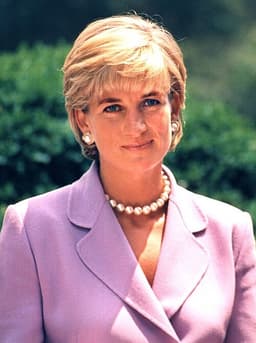
Imran Khan
Politician · Modern
54.8Total
Basic Information
Born
1951
1952
Died
—
—
Era
Modern
Modern
Nationality
Nigeria
Pakistan
Occupation
Politician
Politician
Civilization
Other
Indian
Score Comparison
Military (10%)
45.7
42.1
Political (20%)
60.1
54.7
Influence (20%)
50.2
61.0
Legacy (20%)
36.7
45.0
Leadership (15%)
78.0
65.7
Strategy (15%)
40.9
60.0
TOTAL
51.1
54.8
Folorunso Alakija — Complete Timeline
1991 AD
Founded Famfa Oil LimitedPolitical Action◆ Major
Folorunso Alakija founded Famfa Oil Limited, which later acquired an oil prospecting license (OPL 216) in Nigeria's deep offshore. The company became one of the largest indigenous oil producers in Nigeria.
Oil IndustryNigerian BusinessEntrepreneurship
Impact: nationalconstructive
2006 AD
Established the Rose of Sharon FoundationCultural
Alakija founded the Rose of Sharon Foundation, a philanthropic organization focused on empowering widows and orphans through education, skills training, and financial support. The foundation has impacted thousands in Nigeria.
PhilanthropyWomen EmpowermentNigeria
Impact: nationalconstructive
2014 AD
Rose to Billionaire StatusOther◆ Major
Alakija was listed by Forbes as one of the world's richest women, with a net worth estimated at $2.5 billion. Her wealth derived primarily from oil and fashion businesses, making her the richest woman in Nigeria at the time.
WealthForbes ListNigerian Billionaire
Impact: global
Imran Khan — Complete Timeline
1992 AD
Captained Pakistan to Cricket World Cup VictoryCultural◆ Major
Imran Khan captained the Pakistan national cricket team to victory in the 1992 Cricket World Cup, defeating England in the final. This was Pakistan's first World Cup win and a defining moment in its sporting history.
Cricket World CupSportsNational Pride
Impact: nationalconstructive
1996 AD
Founded the Pakistan Tehreek-e-Insaf (PTI) PartyPolitical Action◆ Major
Imran Khan founded the Pakistan Tehreek-e-Insaf (PTI) political party, advocating for justice, anti-corruption, and welfare state. The party initially struggled to gain traction but later became a major force.
PTIPolitical PartyAnti-Corruption
Impact: nationalconstructive
2018 AD
Elected Prime Minister of PakistanPolitical Action
Imran Khan led PTI to victory in the 2018 general election and became Prime Minister of Pakistan. His government focused on anti-corruption, economic reforms, and social welfare programs.
Prime MinisterElection VictoryAnti-Corruption
Impact: nationalconstructive
2022 AD
Ousted by No-Confidence VotePolitical Action◆ Major
Imran Khan was removed from office through a no-confidence vote in the National Assembly, losing his majority after defections. He became the first Pakistani prime minister to be ousted by such a vote.
No-Confidence VoteOusterPolitical Crisis
Impact: nationaldestructive
2023 AD
Arrested on Corruption ChargesPolitical Action◆ Major
Imran Khan was arrested on corruption charges, sparking nationwide protests by his supporters. His arrest deepened political polarization and raised questions about judicial independence.
ArrestCorruption ChargesProtests
Impact: nationaldestructive
This comparison has not been analyzed yet.
One-time AI generation (~1 minute). Scores and timeline are already available below.
Rankings
🥇
Imran KhanLeader
Mil: 42.1Pol: 54.7Inf: 61.0
54.8
🥈
Folorunso Alakija
Mil: 45.7Pol: 60.1Inf: 50.2
51.1
+3.7 behind
How This Comparison Works
Algorithm
Each figure is scored on 6 dimensions (0—100 scale) based on structured historical data: Military (10%), Political (20%), Influence (20%), Legacy (20%), Leadership (15%), Strategy (15%). The weighted total produces the final ranking.
Data Sources
Scores are computed from structured sub-indicators in the database. Scale factors adjust for era (Ancient ×0.85, Modern ×1.0) and civilization size (Eastern ×1.05, Other ×0.80) to account for differences in population and military scale.
Maximum 3 Figures
Comparisons are limited to 2—3 figures to ensure readability and statistical meaningfulness.
Error Margins
±5 points per dimension — Sub-scores are derived from historical records with inherent uncertainty. Two figures within 5 points on a dimension should be considered roughly equivalent in that area.
Total Score Accuracy
±3 points overall — The weighted combination of 6 dimensions produces a total score with approximately ±3 points of uncertainty. Differences of less than 3 points are not statistically significant— the figures are effectively tied.
Known Limitations
- Historical records are incomplete and uneven across civilizations
- Figures from oral-tradition societies may be underrepresented
- Occupation labels can misclassify multi-role figures
- Scores measure capability and impact, not moral character
- Quantitative scoring is a comparison tool, not absolute truth
Capability Radar
Military (10%) — Battles & Warfare
Battles
24
42
Win Rate
22
46
Expansion
28
51
Political (20%) — Governance & Reform
Reform
66
40
Diplomacy
71
50
Economy
73
35
Influence (20%) — Cultural & Global Reach
Cultural
10
55
Global
20
50
Legacy (20%) — Historical Impact
Historical
10
40
Longevity
10
30
Leadership (15%) — Power & Stability
Tenure
65
45
Stability
75
20
Strategy (15%) — Tactics & Innovation
Strategy
28
50
Tactics
31
58
Reform
36
56
Similar Comparisons
Comments & Discussion
No comments yet. Be the first to share your thoughts!