Loading...
This comparison has not been analyzed yet.
One-time AI generation (~1 minute). Scores and timeline are already available below.
Ferenc Gyurcsany vs Hassan Rouhani
Hassan Rouhani leads by 3.5 pts · 2 figures compared
…

Ferenc Gyurcsany
Politician · Modern
46.6Total
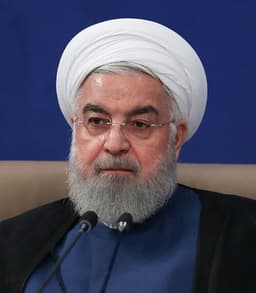
Hassan Rouhani
Politician · Modern
50.1Total
Basic Information
Born
1961
1948
Died
—
—
Era
Modern
Modern
Nationality
Hungary
Iran
Occupation
Politician
Politician
Civilization
Western
Middle Eastern
Score Comparison
Military (10%)
48.7
34.1
Political (20%)
40.8
45.0
Influence (20%)
50.2
60.0
Legacy (20%)
40.0
50.0
Leadership (15%)
58.8
53.2
Strategy (15%)
42.2
44.4
TOTAL
46.6
50.1
Ferenc Gyurcsany — Complete Timeline
2004 AD
Appointed Prime Minister of HungaryPolitical Action◆ Major
Ferenc Gyurcsany was appointed Prime Minister of Hungary by President Laszlo Solyom, succeeding Peter Medgyessy. He was a wealthy businessman and former member of the Hungarian Socialist Party. His appointment marked a continuation of socialist-led government.
Prime MinisterHungarian Socialist PartyGovernment Change
Impact: national
2006 AD
Implemented Austerity MeasuresReform◆ Major
Following the leaked speech, Gyurcsany's government implemented austerity measures including tax increases, spending cuts, and public sector reforms to reduce the budget deficit. The measures were unpopular and contributed to the political instability.
AusterityEconomic ReformBudget Deficit
Impact: nationaldestructive
Leaked Speech Caused RiotsPolitical Action◆ Major
A leaked recording of Gyurcsany's private speech to Socialist Party MPs revealed him admitting that the government had lied about the economy to win the 2006 election. The leak sparked massive protests and riots in Budapest, with demonstrators calling for his resignation.
LeakRiotsPolitical Crisis
Impact: nationaldestructive
2009 AD
Resigned as Prime MinisterPolitical Action◆ Major
Gyurcsany resigned as Prime Minister after losing a no-confidence vote in parliament. His resignation came amid the global financial crisis and ongoing political turmoil. He was succeeded by Gordon Bajnai.
ResignationNo-ConfidencePolitical Crisis
Impact: nationaltragic
Hassan Rouhani — Complete Timeline
2013 AD
Elected President of IranPolitical Action◆ Major
Rouhani won the presidential election with a landslide, promising to improve relations with the West and revive the economy. His victory was seen as a mandate for moderation and reform after the hardline presidency of Mahmoud Ahmadinejad.
ElectionReformIran
Impact: nationalconstructive
2015 AD
Joint Comprehensive Plan of Action (JCPOA)Political Action
Rouhani's government negotiated the JCPOA with the P5+1 (US, UK, France, Russia, China, Germany). The deal limited Iran's nuclear program in exchange for sanctions relief, marking a major diplomatic achievement.
Nuclear DealDiplomacySanctions
Impact: globalconstructive
2018 AD
US withdrawal from JCPOAPolitical Action◆ Major
President Trump withdrew the US from the JCPOA and reimposed sanctions. Rouhani's government struggled to maintain the deal with European partners, but the economic pressure led to protests and a currency crisis in Iran.
Nuclear DealSanctionsUS-Iran
Impact: globaldestructive
2019 AD
2019-2020 Iranian protestsPolitical Action◆ Major
Rouhani's government faced nationwide protests over fuel price hikes and economic mismanagement. The protests were violently suppressed, with hundreds killed according to human rights groups, damaging Rouhani's reformist image.
ProtestsSuppressionEconomy
Impact: nationaldestructive
This comparison has not been analyzed yet.
One-time AI generation (~1 minute). Scores and timeline are already available below.
Rankings
🥇
Hassan RouhaniLeader
Mil: 34.1Pol: 45.0Inf: 60.0
50.1
🥈
Ferenc Gyurcsany
Mil: 48.7Pol: 40.8Inf: 50.2
46.6
+3.5 behind
How This Comparison Works
Algorithm
Each figure is scored on 6 dimensions (0—100 scale) based on structured historical data: Military (10%), Political (20%), Influence (20%), Legacy (20%), Leadership (15%), Strategy (15%). The weighted total produces the final ranking.
Data Sources
Scores are computed from structured sub-indicators in the database. Scale factors adjust for era (Ancient ×0.85, Modern ×1.0) and civilization size (Eastern ×1.05, Other ×0.80) to account for differences in population and military scale.
Maximum 3 Figures
Comparisons are limited to 2—3 figures to ensure readability and statistical meaningfulness.
Error Margins
±5 points per dimension — Sub-scores are derived from historical records with inherent uncertainty. Two figures within 5 points on a dimension should be considered roughly equivalent in that area.
Total Score Accuracy
±3 points overall — The weighted combination of 6 dimensions produces a total score with approximately ±3 points of uncertainty. Differences of less than 3 points are not statistically significant— the figures are effectively tied.
Known Limitations
- Historical records are incomplete and uneven across civilizations
- Figures from oral-tradition societies may be underrepresented
- Occupation labels can misclassify multi-role figures
- Scores measure capability and impact, not moral character
- Quantitative scoring is a comparison tool, not absolute truth
Capability Radar
Military (10%) — Battles & Warfare
Battles
29
19
Win Rate
34
26
Expansion
35
26
Political (20%) — Governance & Reform
Reform
35
55
Diplomacy
30
75
Economy
30
50
Influence (20%) — Cultural & Global Reach
Cultural
20
30
Global
20
60
Legacy (20%) — Historical Impact
Historical
25
55
Longevity
15
40
Leadership (15%) — Power & Stability
Tenure
40
60
Stability
15
40
Strategy (15%) — Tactics & Innovation
Strategy
38
30
Tactics
40
32
Reform
44
37
Similar Comparisons
Comments & Discussion
No comments yet. Be the first to share your thoughts!