Loading...
Ferdinand I of Leon vs Yelu Abaoji
Yelu Abaoji leads by 3.5 pts · 2 figures compared
…
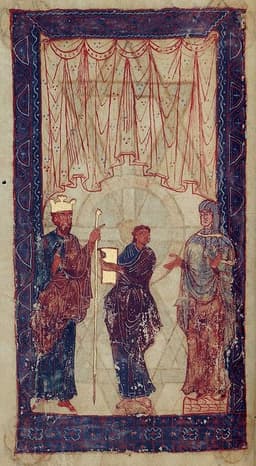
Ferdinand I of Leon
Emperor · Medieval
59.2Total
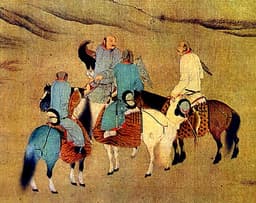
Yelu Abaoji
Emperor · Medieval
62.7Total
Basic Information
Born
1015
872
Died
1065
926
Era
Medieval
Medieval
Nationality
Leon
China
Occupation
Emperor
Emperor
Civilization
Western
Eastern
Score Comparison
Military (10%)
70.0
77.2
Political (20%)
68.0
59.6
Influence (20%)
56.4
68.0
Legacy (20%)
49.2
40.0
Leadership (15%)
66.0
80.3
Strategy (15%)
57.5
69.6
TOTAL
59.2
62.7
Ferdinand I of Leon — Complete Timeline
1029 AD
Inheritance of the County of CastilePolitical Action◆ Major
Ferdinand I inherited the County of Castile from his father Sancho III of Navarre. He later expanded his territory through conquest and marriage, laying the foundation for the Kingdom of Castile.
Impact: regionalconstructive
1037 AD
Conquest of LeónWar◆ Major
Ferdinand I defeated and killed King Bermudo III of Le
Impact: regional
1056 AD
First Emperor of SpainPolitical Action◆ Major
Ferdinand I was crowned 'Imperator totius Hispaniae' (Emperor of all Spain) in 1056, claiming suzerainty over all Christian and Muslim rulers in Iberia. This title reflected his military dominance and political ambition.
Impact: regional
1065 AD
Division of the kingdomPolitical Action◆ Major
Upon his death, Ferdinand I divided his kingdom among his sons: Sancho II received Castile, Alfonso VI received Le
Impact: regionaldestructive
Yelu Abaoji — Complete Timeline
907 AD
Unified Khitan tribesPolitical Action◆ Major
Yelu Abaoji was elected khagan of the Khitan tribes, unifying them under his leadership. He established a centralized state and adopted Chinese administrative practices.
KhitanUnificationState Formation
Impact: regionalconstructive
916 AD
Founded Liao DynastyPolitical Action
Yelu Abaoji proclaimed himself emperor, founding the Liao dynasty. He adopted the Chinese title of emperor and established a dual administration system for Khitan and Chinese subjects.
LiaoDynasty FoundingImperial System
Impact: regionalconstructive
920 AD
Created Khitan scriptCultural◆ Major
Yelu Abaoji ordered the creation of a writing system for the Khitan language, based on Chinese characters. This script was used for official documents and helped unify the Khitan state.
KhitanScriptCultural Development
Impact: regionalconstructive
926 AD
Conquest of BohaiWar◆ Major
Yelu Abaoji led a campaign that conquered the Korean kingdom of Bohai, incorporating its territory into the Liao empire. This expanded Liao's influence into Manchuria and Korea.
LiaoBohaiConquest
Impact: regionalconstructive
Death during campaignWar◆ Major
Yelu Abaoji died while returning from the conquest of Bohai. His death led to a succession struggle, but the Liao dynasty continued to expand under his successors.
LiaoDeathSuccession
Impact: regionaltragic
Expert Analysis
Yelu Abaoji vs Ferdinand I of Leon
### The Emperor and the King: Two Paths to Power in a Fractured World
In the year 926, as Yelu Abaoji lay dying on the return march from his conquest of Bohai, he could look back on a life that had transformed the steppes. Half a world away, in 1065, another monarch, Ferdinand I of Leon, breathed his last in a Christian kingdom carved from the Iberian frontier. One had built an empire that would menace China for centuries; the other had created a fleeting hegemony that shattered at his death. Both were crowned emperors, yet their stories could not have diverged more sharply. What drove these two men, born in the same medieval age but into vastly different worlds, to such different fates?
### Origins
Yelu Abaoji was born in 872 into the chaos of the Khitan tribes, a nomadic people roaming the grasslands north of China. His father was a chieftain, but the Khitan were a fractured society of eight clans, constantly warring among themselves and against Tang Chinese, Uighurs, and Koreans. Abaoji grew up in a world where power was won by the sword and held by the will of the tribe. He learned to ride before he could walk, and his mind was forged in the brutal calculus of steppe politics—alliance, betrayal, and the relentless pursuit of unity.
Ferdinand I, born in 1015, was the second son of Sancho III of Navarre, a Christian king in the mountainous north of Spain. His world was one of feudal inheritance, Roman Catholic ritual, and the slow, grinding *Reconquista* against the Muslim taifa kingdoms. Unlike Abaoji, Ferdinand inherited his first title—the County of Castile—from his father in 1029. He was a prince of the blood, raised in a court where legitimacy came from lineage, not from the acclamation of warriors.
### Rise to Power
Abaoji’s ascent was a masterpiece of political engineering. In 907, the Khitan tribes elected him their khagan—a title that, in nomadic tradition, was supposed to be temporary. But Abaoji had no intention of being a figurehead. He systematically eliminated rival chieftains, centralized the tribal structure, and in 916, he did what no Khitan leader had dared: he proclaimed himself emperor, adopting the Chinese title *huangdi*. He was not just a tribal warlord; he was a sovereign claiming the Mandate of Heaven.
Ferdinand’s path was more conventional, but no less ambitious. In 1037, he defeated and killed King Bermudo III of Leon at the Battle of Tamarón, seizing the crown of Leon through conquest. He then absorbed his wife’s inheritance of Castile, uniting the two kingdoms. His title of “Emperor of Spain,” claimed in 1056, was a symbolic assertion of Christian supremacy over all Iberia, but it was a claim that rested on military victories against the Moors, not on a transformed state.
### Leadership & Governance
As a ruler, Abaoji was a revolutionary. He did not simply conquer; he built institutions. He created a dual administration—a Khitan tribal system for the steppes and a Chinese-style bureaucracy for the conquered agricultural regions. In 920, he ordered the creation of a Khitan script, a written language that gave his people a cultural identity as permanent as their empire. He was a strategist who understood that to rule China, one must become Chinese in method, even while remaining Khitan in spirit.
Ferdinand was a capable warrior-king, but his governance was that of a feudal lord writ large. He expanded his territory through relentless campaigns against the Moorish taifas, extracting tribute and glory. But his political wisdom was limited to conquest. He did not create a unified legal code, a new script, or a lasting administrative system. His genius was in war, not in statecraft. His strategy score of 45.7, compared to Abaoji’s 80.1, reflects this: Ferdinand was a hammer, but Abaoji was a master builder.
### Triumph & Tragedy
Abaoji’s greatest triumph was the conquest of Bohai in 926, a sophisticated Korean kingdom that he absorbed into his empire with remarkable efficiency. His tragedy came immediately after: his death on the return journey plunged the Liao into a succession crisis. Yet the dynasty he founded endured for over two centuries.
Ferdinand’s triumph was being crowned *Imperator totius Hispaniae*—a moment of supreme Christian pride. But his tragedy was self-inflicted. Following the old Frankish custom, he divided his kingdom among his three sons upon his death in 1065. Within years, the brothers were at war. The empire of Spain collapsed into fratricidal chaos, a legacy of division that would haunt the peninsula for generations.
### Character & Destiny
Abaoji was a pragmatist with a visionary’s soul. He saw that the Khitan could not survive as a loose confederation in a world of empires. He forced unity, imposed a script, and created a state. His character was that of a builder, patient and ruthless. Ferdinand was a conqueror in the old mold—brave, pious, but ultimately a feudal lord who saw his kingdom as personal property to be divided. He lacked the foresight to understand that unity, once won, must be preserved.
### Legacy
Abaoji’s legacy is the Liao dynasty, a powerful state that dominated northern China for two centuries and forced the Song dynasty into a tributary relationship. He is remembered as the father of the Khitan people, a founder who lifted his tribe from obscurity to empire. Ferdinand’s legacy is more ambiguous. He is honored as a great *Reconquista* king, but his division of the kingdom ensured that Spain would not be unified until the Catholic Monarchs, four centuries later. His influence score of 74.9 is high, but it is the influence of a symbol, not a state-builder.
### Conclusion
Standing at the edge of their respective worlds, both men reached for the same crown. But Abaoji understood that an emperor must be more than a king; he must be the architect of a civilization. Ferdinand, for all his courage, remained a king who merely conquered. One built a house that stood for centuries; the other built a sandcastle that washed away with the tide. Their difference was not in ambition, but in vision. And in the end, vision is everything.
Rankings
🥇
Yelu AbaojiLeader
Mil: 77.2Pol: 59.6Inf: 68.0
62.7
🥈
Ferdinand I of Leon
Mil: 70.0Pol: 68.0Inf: 56.4
59.2
+3.5 behind
How This Comparison Works
Algorithm
Each figure is scored on 6 dimensions (0—100 scale) based on structured historical data: Military (10%), Political (20%), Influence (20%), Legacy (20%), Leadership (15%), Strategy (15%). The weighted total produces the final ranking.
Data Sources
Scores are computed from structured sub-indicators in the database. Scale factors adjust for era (Ancient ×0.85, Modern ×1.0) and civilization size (Eastern ×1.05, Other ×0.80) to account for differences in population and military scale.
Maximum 3 Figures
Comparisons are limited to 2—3 figures to ensure readability and statistical meaningfulness.
Error Margins
±5 points per dimension — Sub-scores are derived from historical records with inherent uncertainty. Two figures within 5 points on a dimension should be considered roughly equivalent in that area.
Total Score Accuracy
±3 points overall — The weighted combination of 6 dimensions produces a total score with approximately ±3 points of uncertainty. Differences of less than 3 points are not statistically significant— the figures are effectively tied.
Known Limitations
- Historical records are incomplete and uneven across civilizations
- Figures from oral-tradition societies may be underrepresented
- Occupation labels can misclassify multi-role figures
- Scores measure capability and impact, not moral character
- Quantitative scoring is a comparison tool, not absolute truth
Capability Radar
Military (10%) — Battles & Warfare
Battles
55
75
Win Rate
60
80
Expansion
60
82
Political (20%) — Governance & Reform
Reform
50
88
Diplomacy
55
75
Economy
45
70
Influence (20%) — Cultural & Global Reach
Cultural
40
60
Global
30
55
Legacy (20%) — Historical Impact
Historical
45
70
Longevity
40
65
Leadership (15%) — Power & Stability
Tenure
65
72
Stability
50
65
Strategy (15%) — Tactics & Innovation
Strategy
55
78
Tactics
50
70
Reform
40
85
Similar Comparisons
Comments & Discussion
SteppeStrategist6/16/2026
Abaoji understood something Ferdinand never did: empire requires breaking tribal structures, not just conquering them. The Khitan script? A stroke of genius that created a literate elite loyal to the ruler, not the clan. Ferdinand divided Leon among sons like a family business—and it collapsed. Abaoji united eight warring tribes into the Liao Dynasty that outlived him by two centuries. Medieval politics 101: never split your inheritance.
王座终结论者6/16/2026
比较两位皇帝就像比较鱼和鸟——都是脊椎动物但生存法则完全相反。费迪南一世的“帝国”本质上是一个封建拼盘,他死后儿子们瓜分国土,就像分一块面包。而阿保机建立了世袭皇权,打破了契丹原始的部落选举制度。费迪南是终结点,阿保机是起点。一个统治了短暂的胜利,另一个创造了延续的文明。
DataPragmatist6/16/2026
The numbers don't lie: the comparison is apples to oranges. Abaoji's Khitan people fielded cavalry armies numbering 100,000-200,000, controlling territory from the Korean peninsula to the Gobi Desert. Ferdinand's Leon was a minor Iberian kingdom with maybe 10,000 soldiers total. One commanded a Eurasian empire that extracted tribute from Song China; the other barely held his own against the taifa kingdoms. The only thing they share is the coronation title, and that's where the similarity ends.
龙骑书史者6/16/2026
别被“皇帝”这个头衔迷惑了。阿保机建立的是草原帝国,他的权力来自军事联盟和征服,而费迪南一世的皇冠更多是一种基督教政治象征,几乎没有人承认他真的是“皇帝”。更关键的是,阿保机征服了渤海国,那是唐朝模式的成熟农业文明,而费迪南只是分割了几个穆斯林小王国。阿保机面对的是一个帝国,费迪南面对的是碎片。世界不同,量级也不同。
BrokenCrownCritic6/16/2026
Ferdinand I is the medieval version of a rich uncle who dies intestate, leaving his assets to squabbling heirs. The Kingdom of Leon didn't just fracture—it became a punching bag for his sons' civil wars. Compare that to Abaoji, who installed his son Yelü Deguang as successor and ensured the Liao Dynasty's continuity. Ferdinand's "empire" lasted exactly one generation. Abaoji's legacy dominated East Asia for 200 years. Case closed.