Loading...
Ferdinand I of Aragon vs Vladimir the Great
Vladimir the Great leads by 7.5 pts · 2 figures compared
…
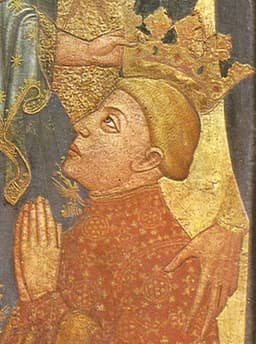
Ferdinand I of Aragon
Emperor · Medieval
54.8Total
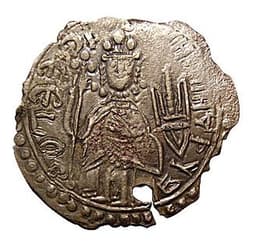
Vladimir the Great
Emperor · Medieval
62.3Total
Basic Information
Born
1380
958
Died
1416
1015
Era
Medieval
Medieval
Nationality
Aragon
Kievan Rus
Occupation
Emperor
Emperor
Civilization
Western
Western
Score Comparison
Military (10%)
40.0
61.7
Political (20%)
68.0
70.0
Influence (20%)
55.7
40.0
Legacy (20%)
45.0
75.0
Leadership (15%)
74.0
72.0
Strategy (15%)
43.3
60.7
TOTAL
54.8
62.3
Ferdinand I of Aragon — Complete Timeline
1412 AD
Compromise of CaspePolitical Action
Ferdinand I was elected King of Aragon by the Compromise of Caspe, a commission of nine representatives from Aragon, Catalonia, and Valencia. This resolved the succession crisis following the death of Martin I without a direct heir, bringing the Trastamara dynasty to the Aragonese throne.
Succession crisisTrastamara dynasty
Impact: regionalconstructive
1414 AD
Conquest of SardiniaWar◆ Major
Ferdinand I launched a military campaign to subdue the rebellious Sardinian nobles who had resisted Aragonese rule. The campaign successfully reasserted Aragonese control over the island, consolidating the Crown of Aragon's Mediterranean possessions.
Mediterranean expansionSardinia
Impact: regional
1415 AD
Reform of the Aragonese administrationReform
Ferdinand I implemented administrative reforms in the Crown of Aragon, including the reorganization of the royal council and the standardization of tax collection. These reforms strengthened royal authority and improved the efficiency of governance across the diverse territories of Aragon.
Administrative reformRoyal authority
Impact: nationalconstructive
Vladimir the Great — Complete Timeline
988 AD
Baptism of Vladimir the GreatCultural
Vladimir converted to Christianity and married Anna, sister of Byzantine Emperor Basil II, after capturing Chersonesus. He was baptized in Chersonesus, adopting the name Basil, and initiated the Christianization of Kievan Rus.
ConversionChristianizationByzantine Alliance
Impact: regionalprogressive
Mass Baptism of KievCultural
Vladimir ordered the mass baptism of the people of Kiev in the Dnieper River. Pagan idols were destroyed, and churches were built. This event established Christianity as the state religion of Kievan Rus.
ChristianizationMass BaptismState Religion
Impact: regionalprogressive
992 AD
Vladimir's Campaign Against the CroatsWar
Vladimir led a military campaign against the White Croats in the Carpathian region, expanding Kievan Rus' territory westward. This campaign secured control over important trade routes and tributary tribes.
Territorial ExpansionCarpathiansMilitary Campaign
Impact: regional
996 AD
Construction of the Church of the TithesCultural
Vladimir built the Church of the Tithes (Desyatynna Church) in Kiev, the first stone church in Kievan Rus. He dedicated a tenth of his income to its maintenance, symbolizing the institutionalization of Christianity.
Church BuildingArchitectureChristianity
Impact: nationalconstructive
Expert Analysis
Origins
Ferdinand I of Aragon was born in 1380 as Ferdinand of Trastámara, the son of John I of Castile and Eleanor of Aragon. He was raised in the Castilian court, receiving education in statecraft and military tactics. His early life was marked by the instability of the Castilian succession, which gave him firsthand experience in political maneuvering. In contrast, Vladimir the Great was born around 958 in Kiev, the son of Sviatoslav I of Kiev and his housekeeper Malusha. Vladimir's early life was spent in the pagan environment of Kievan Rus, and he was raised at his grandmother Olga's court after his father's death. His childhood was shaped by Viking traditions and Slavic paganism, setting the stage for his later conversion.
Rise to Power
Ferdinand I rose to power through the Compromise of Caspe in 1412, a commission of nine representatives from Aragon, Catalonia, and Valencia that elected him king after the death of Martin of Aragon without a direct heir. Ferdinand's candidacy was supported by his mother's Aragonese lineage and his political alliances. He scored 40.0 in military but 68.0 in political skill, reflecting his diplomatic ascent. Vladimir the Great's rise was more violent: after his father's death, Vladimir fled to Scandinavia, returned with a Varangian army, and in 980 murdered his brother Yaropolk to seize the Kiev throne. His military score of 61.7 underscores his reliance on force. Both men secured power through different means: Ferdinand through negotiation, Vladimir through fratricide.
Leadership & Governance
Ferdinand I's governance focused on administrative reform. He reorganized the royal council, standardized taxes, and reinforced the authority of the Crown of Aragon. His leadership score of 74.0 reflects his effective management of a composite monarchy. He also launched the conquest of Sardinia in 1420, subduing rebellious nobles and reasserting Aragonese control. In contrast, Vladimir the Great centralized power by converting Kievan Rus to Christianity. He ordered the mass baptism of Kiev in 988, destroyed pagan idols, and built the Church of the Tithes. Vladimir's leadership score of 72.0 is comparable, but his governance was more transformative, imposing a new religion that unified his realm. Ferdinand's reforms were incremental, while Vladimir's were revolutionary.
Triumph & Tragedy
Ferdinand I's greatest triumph was the Compromise of Caspe, which established a peaceful succession and avoided civil war. His conquest of Sardinia also succeeded, expanding Aragonese influence. However, his failure to fully integrate his realms left the Crown of Aragon as a loose confederation, and his military score of 40.0 indicates limited battlefield success. Vladimir the Great's triumph was the Christianization of Kievan Rus, which created a lasting cultural and religious identity. His campaigns against the White Croats expanded territory. Yet his tragedy was the brutal path to power: his murder of Yaropolk and the forced baptisms caused significant suffering. Vladimir's legacy score of 75.0 is high, but his methods were harsh.
Character & Destiny
Ferdinand I was a cautious, diplomatic ruler, preferring negotiation over war. His political score of 68.0 reflects his ability to build consensus. His character was shaped by the need to legitimize his contested claim to the throne. Vladimir the Great was more ruthless and decisive, with a political score of 70.0. His conversion to Christianity was partly strategic: marrying Anna, sister of the Byzantine Emperor, secured alliances. Historians assess Vladimir as a pragmatic leader who used religion to consolidate power. Ferdinand's destiny was to stabilize Aragon; Vladimir's was to transform an entire civilization.
Legacy
Ferdinand I's legacy includes the administrative reforms that strengthened the Crown of Aragon, but his impact was largely regional. He scored 45.0 in legacy, as his reign is often overshadowed by his son Alfonso V. Vladimir the Great's legacy is immense: he is credited with bringing Christianity to the East Slavs, influencing the development of Russia, Ukraine, and Belarus. The Church of the Tithes and the baptism of Kiev are foundational events. His legacy score of 75.0 reflects this enduring impact. However, Ferdinand's political methods influenced later Aragonese governance.
Conclusion
Vladimir the Great had a greater impact on history than Ferdinand I of Aragon. Vladimir's total score of 62.3 surpasses Ferdinand's 54.8 by 7.5 points. While Ferdinand was a capable administrator, his reforms were limited to a single kingdom. Vladimir's Christianization of Kievan Rus shaped the religious and cultural destiny of millions, creating a civilization that would become Russia. His decision to adopt Byzantine Christianity rather than Roman Catholicism determined the course of Eastern Europe. Ferdinand's achievements, though notable, are local by comparison. Therefore, Vladimir the Great is the more historically significant figure.
Rankings
🥇
Vladimir the GreatLeader
Mil: 61.7Pol: 70.0Inf: 40.0
62.3
🥈
Ferdinand I of Aragon
Mil: 40.0Pol: 68.0Inf: 55.7
54.8
+7.5 behind
How This Comparison Works
Algorithm
Each figure is scored on 6 dimensions (0—100 scale) based on structured historical data: Military (10%), Political (20%), Influence (20%), Legacy (20%), Leadership (15%), Strategy (15%). The weighted total produces the final ranking.
Data Sources
Scores are computed from structured sub-indicators in the database. Scale factors adjust for era (Ancient ×0.85, Modern ×1.0) and civilization size (Eastern ×1.05, Other ×0.80) to account for differences in population and military scale.
Maximum 3 Figures
Comparisons are limited to 2—3 figures to ensure readability and statistical meaningfulness.
Error Margins
±5 points per dimension — Sub-scores are derived from historical records with inherent uncertainty. Two figures within 5 points on a dimension should be considered roughly equivalent in that area.
Total Score Accuracy
±3 points overall — The weighted combination of 6 dimensions produces a total score with approximately ±3 points of uncertainty. Differences of less than 3 points are not statistically significant— the figures are effectively tied.
Known Limitations
- Historical records are incomplete and uneven across civilizations
- Figures from oral-tradition societies may be underrepresented
- Occupation labels can misclassify multi-role figures
- Scores measure capability and impact, not moral character
- Quantitative scoring is a comparison tool, not absolute truth
Capability Radar
Military (10%) — Battles & Warfare
Battles
40
65
Win Rate
45
70
Expansion
50
70
Political (20%) — Governance & Reform
Reform
45
80
Diplomacy
60
85
Economy
50
70
Influence (20%) — Cultural & Global Reach
Cultural
35
90
Global
30
85
Legacy (20%) — Historical Impact
Historical
40
90
Longevity
30
95
Leadership (15%) — Power & Stability
Tenure
55
75
Stability
50
65
Strategy (15%) — Tactics & Innovation
Strategy
40
65
Tactics
35
60
Reform
30
55
Similar Comparisons
Comments & Discussion
No comments yet. Be the first to share your thoughts!