Loading...
Feng Yi vs Hasdrubal Barca
Feng Yi leads by 4.5 pts · 2 figures compared
…

Feng Yi
General · Ancient
52.6Total
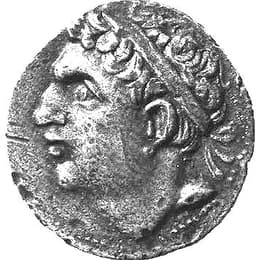
Hasdrubal Barca
General · Ancient
48.1Total
Basic Information
Born
-15
-245
Died
34
-207
Era
Ancient
Ancient
Nationality
China
Carthage
Occupation
General
General
Civilization
Eastern
Middle Eastern
Score Comparison
Military (10%)
67.3
74.0
Political (20%)
32.2
25.0
Influence (20%)
54.1
53.3
Legacy (20%)
46.7
45.8
Leadership (15%)
61.1
40.4
Strategy (15%)
66.3
61.3
TOTAL
52.6
48.1
Feng Yi — Complete Timeline
25 AD
Earned Nickname 'Big Tree General'Cultural
Feng Yi earned the nickname 'Big Tree General' for his modesty and discipline. After battles, while other generals discussed their achievements, Feng Yi would sit quietly under a tree, refusing to boast. This reputation for humility became legendary in Chinese military history.
ReputationModestyMilitary Culture
Impact: nationalconstructive
26 AD
Battle of ChiyangWar
Feng Yi defeated the rebel leader Yan Cen at the Battle of Chiyang. This victory helped secure the eastern regions for Liu Xiu and demonstrated Feng Yi's military skill. He was later entrusted with independent commands.
BattleRebellionEastern Han
Impact: regional
27 AD
Appointed General of the LeftPolitical Action
Feng Yi was appointed General of the Left, one of the highest military positions in the Eastern Han. This appointment reflected his trusted status under Emperor Guangwu and his contributions to the dynasty's founding.
AppointmentMilitary RankEastern Han
Impact: nationalconstructive
Hasdrubal Barca — Complete Timeline
218 BC
Commanded Carthaginian Forces in SpainWar◆ Major
Hasdrubal Barca was left in command of Carthaginian forces in Spain while Hannibal invaded Italy. He defended Carthaginian territories against Roman attacks, including a victory at the Battle of the Ebro River in 217 BC.
Second Punic WarSpainMilitary Command
Impact: regional
208 BC
Defeated at the Battle of BaeculaWar◆ Major
Hasdrubal Barca was defeated by Scipio Africanus at the Battle of Baecula in Spain. Despite the loss, he managed to escape with a significant portion of his army and decided to march to Italy to reinforce Hannibal.
Second Punic WarBattleSpain
Impact: regionaltragic
207 BC
Killed at the Battle of the MetaurusWar
Hasdrubal Barca was defeated and killed at the Battle of the Metaurus in Italy while attempting to join forces with Hannibal. His head was thrown into Hannibal's camp as a sign of defeat, ending the Carthaginian threat to Italy.
Second Punic WarBattleDeath
Impact: regionaltragic
Expert Analysis
Origins
Feng Yi (c. 1st century AD) was born into a modest family in Yingchuan (modern Henan) during the turbulent end of the Western Han dynasty. Little is known of his early life, but he rose from obscurity as a minor official. His formative experiences were shaped by the chaos following Wang Mang's usurpation, which led him to join the rebellion led by Liu Xiu, the future Emperor Guangwu of the Eastern Han. Feng Yi's early career was marked by loyalty and competence rather than aristocratic birth.
Hasdrubal Barca (c. 245–207 BC) was born into the prominent Barcid family of Carthage, son of Hamilcar Barca and younger brother of Hannibal. He grew up in the martial environment of Carthaginian Spain, where his father and brother campaigned. His education included military tactics and command experience from a young age. By his twenties, he was entrusted with governing Carthaginian territories in Spain while Hannibal prepared for the invasion of Italy.
Rise to Power
Feng Yi's rise was gradual and based on merit. He first served Liu Xiu as a military officer, distinguishing himself in the campaign against the Red Eyebrows rebellion. His key turning point came around AD 25 when, after a series of victories, he was appointed General of the Left, one of the highest military positions in the Eastern Han. This appointment reflected his trusted status under Liu Xiu, whom he served faithfully. Feng Yi's reputation for modesty—earning the nickname 'Big Tree General' for refusing to boast after battles—solidified his standing.
Hasdrubal Barca's rise was more rapid and dynastic. After Hamilcar's death in 228 BC, Hasdrubal the Fair (his brother-in-law) took command, but after his assassination in 221 BC, Hannibal assumed supreme command in Spain. Hasdrubal Barca was left in charge of Carthaginian forces in Spain while Hannibal invaded Italy in 218 BC. He successfully defended Carthaginian territories against Roman attacks, notably resisting Gnaeus and Publius Scipio. His role was crucial in maintaining the Carthaginian foothold in Spain.
Leadership & Governance
Feng Yi's leadership style was characterized by discipline, modesty, and loyalty. He enforced strict order among his troops, forbidding looting and maintaining morale through personal example. His governance approach was conservative: he focused on securing territories for Liu Xiu rather than personal aggrandizement. At the Battle of Chiyang (c. AD 26), Feng Yi defeated the rebel leader Yan Cen, demonstrating his tactical skill. His political score of 32.2 reflects his limited involvement in court intrigues, preferring military service.
Hasdrubal Barca's leadership was more aggressive and strategic. He commanded Carthaginian forces in Spain with a focus on preserving the empire's resources. His political score of 25.0 indicates a lack of diplomatic finesse. Hasdrubal's governance was marred by his eventual decision to leave Spain and march to Italy, which exposed Carthaginian holdings to Roman reconquest. His leadership score of 40.4 suggests he was less effective than Feng Yi in inspiring loyalty, as evidenced by his defeat at Baecula in 208 BC, where Scipio Africanus outmaneuvered him.
Triumph & Tragedy
Feng Yi's greatest success was his role in consolidating the Eastern Han dynasty. His victory at Chiyang secured the eastern regions, and his disciplined troops helped stabilize the realm. He scored 67.3 in military, reflecting consistent competence. His tragedy lies in his relative obscurity: unlike other Han generals, he never achieved major independent command or lasting fame. His legacy score of 46.7 indicates a moderate historical footprint.
Hasdrubal Barca's triumph was his defense of Spain for years against Roman pressure. He managed to escape Baecula with a significant portion of his army, showing tactical resilience. However, his tragedy was catastrophic: at the Battle of the Metaurus in 207 BC, he was killed while trying to join Hannibal; his head was thrown into Hannibal's camp, a symbol of Carthaginian defeat. His military score of 74.0 reflects his capabilities, but his leadership score of 40.4 and political score of 25.0 indicate fatal flaws in strategy and alliance-building.
Character & Destiny
Feng Yi's character was defined by modesty and discipline. The nickname 'Big Tree General' originated from his habit of standing under a large tree after battles, refusing to discuss his achievements while others boasted. This humility earned him Liu Xiu's trust but also limited his ambition. His destiny was to be a reliable subordinate rather than a dominant figure. Historical assessments view him as a competent but unremarkable general.
Hasdrubal Barca's character was more ambitious and aggressive. He shared the Barcid family's hatred of Rome and sought to support Hannibal at all costs. His decision to march to Italy in 207 BC, though bold, was strategically flawed: he left Spain vulnerable and failed to coordinate effectively with Hannibal. His death at Metaurus sealed Carthage's fate in the Second Punic War. Historians note his bravery but criticize his lack of strategic foresight.
Legacy
Feng Yi's legacy is modest. He is remembered in Chinese history as a symbol of military virtue—the 'Big Tree General' represents humility. His influence score of 54.1 suggests some cultural impact, but he did not shape military doctrine or political systems. The Eastern Han benefited from his service, but his name is not widely known outside specific historical circles.
Hasdrubal Barca's legacy is tied to Hannibal's story. His defeat at Metaurus is considered one of the decisive battles of the Second Punic War, allowing Rome to focus on Africa. His influence score of 53.3 is similar to Feng Yi's, but his legacy is more negative: a cautionary tale of failed reinforcement. He is remembered primarily as Hannibal's brother rather than a commander in his own right.
Conclusion
Feng Yi had a greater overall impact on his dynasty than Hasdrubal Barca had on Carthage. With a total score of 52.6 vs Hasdrubal's 48.1, Feng Yi's consistent military service (67.3 vs 74.0) and higher leadership (61.1 vs 40.4) made him a more effective instrument of state consolidation. Hasdrubal's higher military score is offset by his catastrophic strategic failure at Metaurus, which contributed directly to Carthage's defeat. While Feng Yi's modesty limited his fame, his reliability helped secure the Eastern Han. Hasdrubal's ambition led to his death and the loss of a vital army. Thus, Feng Yi's contribution to a stable dynasty outweighs Hasdrubal's role in a doomed war effort.
Rankings
🥇
Feng YiLeader
Mil: 67.3Pol: 32.2Inf: 54.1
52.6
🥈
Hasdrubal Barca
Mil: 74.0Pol: 25.0Inf: 53.3
48.1
+4.5 behind
How This Comparison Works
Algorithm
Each figure is scored on 6 dimensions (0—100 scale) based on structured historical data: Military (10%), Political (20%), Influence (20%), Legacy (20%), Leadership (15%), Strategy (15%). The weighted total produces the final ranking.
Data Sources
Scores are computed from structured sub-indicators in the database. Scale factors adjust for era (Ancient ×0.85, Modern ×1.0) and civilization size (Eastern ×1.05, Other ×0.80) to account for differences in population and military scale.
Maximum 3 Figures
Comparisons are limited to 2—3 figures to ensure readability and statistical meaningfulness.
Error Margins
±5 points per dimension — Sub-scores are derived from historical records with inherent uncertainty. Two figures within 5 points on a dimension should be considered roughly equivalent in that area.
Total Score Accuracy
±3 points overall — The weighted combination of 6 dimensions produces a total score with approximately ±3 points of uncertainty. Differences of less than 3 points are not statistically significant— the figures are effectively tied.
Known Limitations
- Historical records are incomplete and uneven across civilizations
- Figures from oral-tradition societies may be underrepresented
- Occupation labels can misclassify multi-role figures
- Scores measure capability and impact, not moral character
- Quantitative scoring is a comparison tool, not absolute truth
Capability Radar
Military (10%) — Battles & Warfare
Battles
60
70
Win Rate
65
65
Expansion
40
60
Political (20%) — Governance & Reform
Reform
30
20
Diplomacy
55
50
Economy
40
30
Influence (20%) — Cultural & Global Reach
Cultural
45
30
Global
30
30
Legacy (20%) — Historical Impact
Historical
50
45
Longevity
40
30
Leadership (15%) — Power & Stability
Tenure
50
40
Stability
55
35
Strategy (15%) — Tactics & Innovation
Strategy
60
70
Tactics
55
75
Reform
30
30
Similar Comparisons
Comments & Discussion
No comments yet. Be the first to share your thoughts!