Loading...
Crassus vs Feng Yi
Crassus leads by 2.9 pts · 2 figures compared
…
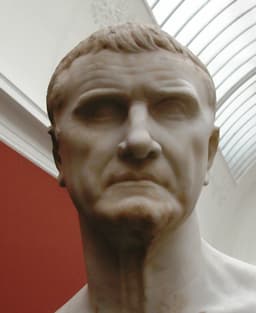
Crassus
General · Ancient
55.5Total

Feng Yi
General · Ancient
52.6Total
Basic Information
Born
-115
-15
Died
-53
34
Era
Ancient
Ancient
Nationality
Roman Republic
China
Occupation
General
General
Civilization
Western
Eastern
Score Comparison
Military (10%)
65.0
67.3
Political (20%)
46.6
32.2
Influence (20%)
57.2
54.1
Legacy (20%)
50.0
46.7
Leadership (15%)
61.1
61.1
Strategy (15%)
60.0
66.3
TOTAL
55.5
52.6
Crassus — Complete Timeline
71 BC
Suppression of Spartacus's RevoltWar◆ Major
Crassus raised and commanded six legions to crush the slave rebellion led by Spartacus. After cornering and defeating the rebels in Lucania, he crucified 6,000 survivors along the Appian Way, ending the Third Servile War.
Slave RevoltSpartacusCrucifixionThird Servile War
Impact: nationaldestructive
60 BC
Formation of the First TriumviratePolitical Action
Crassus allied with Julius Caesar and Pompey the Great to form an informal political coalition known as the First Triumvirate. This alliance dominated Roman politics, advancing each member's interests against the Senate.
Political AllianceCaesarPompeySenate
Impact: global
53 BC
Battle of CarrhaeWar◆ Major
Crassus invaded Parthia without proper support and was defeated at Carrhae. His army was annihilated by Parthian cavalry, and Crassus was killed during negotiations. This disaster marked a major Roman defeat and ended the Triumvirate.
Parthian WarDefeatDeath
Impact: regionaltragic
Feng Yi — Complete Timeline
25 AD
Earned Nickname 'Big Tree General'Cultural
Feng Yi earned the nickname 'Big Tree General' for his modesty and discipline. After battles, while other generals discussed their achievements, Feng Yi would sit quietly under a tree, refusing to boast. This reputation for humility became legendary in Chinese military history.
ReputationModestyMilitary Culture
Impact: nationalconstructive
26 AD
Battle of ChiyangWar
Feng Yi defeated the rebel leader Yan Cen at the Battle of Chiyang. This victory helped secure the eastern regions for Liu Xiu and demonstrated Feng Yi's military skill. He was later entrusted with independent commands.
BattleRebellionEastern Han
Impact: regional
27 AD
Appointed General of the LeftPolitical Action
Feng Yi was appointed General of the Left, one of the highest military positions in the Eastern Han. This appointment reflected his trusted status under Emperor Guangwu and his contributions to the dynasty's founding.
AppointmentMilitary RankEastern Han
Impact: nationalconstructive
Expert Analysis
Origins
Marcus Licinius Crassus (c. 115–53 BCE) was born into a wealthy patrician family in the Roman Republic. His father and brother were killed during the Marian purges, forcing Crassus into hiding. He rebuilt his fortune through property speculation and mining, becoming the richest man in Rome. Feng Yi (c. 1–34 CE) was born in Yingchuan, China, during the late Western Han dynasty. He served as a county official before joining Liu Xiu's forces during the civil wars that led to the Eastern Han dynasty. His early life was marked by administrative competence rather than military ambition.
Rise to Power
Crassus rose to prominence through his financial acumen and military command. After Sulla's victory in 82 BCE, Crassus profited from proscriptions, acquiring assets at low cost. His major breakthrough came in 71 BCE when he defeated Spartacus's slave revolt. Despite his success, Crassus craved military glory equal to his rivals. He formed the First Triumvirate with Julius Caesar and Pompey in 60 BCE, leveraging his wealth to secure political influence. Feng Yi rose by demonstrating loyalty and strategic skill. He joined Liu Xiu in 23 CE during the turmoil following Wang Mang's Xin dynasty. Feng Yi's consistent battlefield success and humble demeanor earned him the trust of Liu Xiu, who appointed him General of the Left in 30 CE. His nickname 'Big Tree General' stemmed from his habit of resting under a tree after battles, avoiding self-promotion.
Leadership & Governance
Crassus led through wealth and political maneuvering. As governor of Syria in 54 BCE, he sought to build a power base through military conquest, but his governance was marked by greed and poor judgment. He taxed temples and extorted funds from locals. In contrast, Feng Yi led by example and discipline. He maintained strict order among his troops, forbidding looting, and won the support of civilians. His administrative background influenced his governance style; he focused on restoring agriculture and stability in conquered territories. Crassus's leadership in the Triumvirate was transactional, while Feng Yi's was based on personal virtue and loyalty to Liu Xiu.
Triumph & Tragedy
Crassus's greatest triumph was the suppression of Spartacus's revolt in 71 BCE. He raised six legions and cornered Spartacus in Lucania, crucifying 6,000 survivors along the Appian Way. This victory earned him a military command but also fueled rivalry with Pompey. His greatest tragedy was the Battle of Carrhae (53 BCE). Crassus invaded Parthia with 40,000 men but was outmaneuvered by Parthian cavalry. His army was annihilated, and Crassus was killed after a failed negotiation. The disaster cost Rome its eastern legions. Feng Yi's triumph was the Battle of Chiyang in 26 CE, where he defeated rebel Yan Cen, securing the eastern regions for Liu Xiu. He also played a key role in pacifying the Red Eyebrows rebellion. His tragedy was dying of illness in 34 CE, shortly after being appointed to a high administrative post. His death cut short a promising career, but his legacy of humility endured.
Character & Destiny
Crassus was ambitious, greedy, and insecure. His wealth gave him power but also a desperate need for military glory to match Pompey and Caesar. This drove him to invade Parthia without proper preparation, ignoring warnings about terrain and logistics. His character led to his downfall. Feng Yi was modest, disciplined, and loyal. He never sought credit, which made him invaluable to Liu Xiu. His humility prevented jealousy from rivals and kept him in favor. His destiny was to be a trusted general, but his early death limited his impact. Historical assessments rate Crassus as a competent but flawed commander, while Feng Yi is praised as a model of Confucian virtue in military leadership.
Legacy
Crassus's legacy is mixed. His defeat at Carrhae became a symbol of Roman arrogance and the dangers of overreach. The loss of the legionary standards haunted Rome for decades. His wealth and political maneuvering set precedents for later power struggles, but his military legacy is overshadowed by his failure. Feng Yi's legacy is more positive. He is remembered as the 'Big Tree General', a symbol of modesty and discipline. His example influenced later Chinese military thought, emphasizing moral leadership over personal glory. In terms of scores, Crassus has a total of 55.5 against Feng Yi's 52.6, but this gap is narrow. Crassus scores higher in political (46.6 vs 32.2) and influence (57.2 vs 54.1), while Feng Yi leads in military (67.3 vs 65.0) and strategy (66.3 vs 60.0).
Conclusion
Crassus had a greater immediate impact on the Roman Republic through his wealth and role in the First Triumvirate, but his legacy is tarnished by catastrophic failure. Feng Yi, though lower in total score, had a more enduring positive legacy as a model of virtuous generalship. However, taking a clear position, Crassus's influence on the course of Roman history—both through his actions and his failures—was more significant. His defeat at Carrhae removed a key player from the Roman political scene, accelerating the rise of Caesar. Feng Yi, while exemplary, operated within a stable dynasty and did not alter China's historical trajectory as dramatically. Therefore, Crassus edges out Feng Yi in overall impact.
Rankings
🥇
CrassusLeader
Mil: 65.0Pol: 46.6Inf: 57.2
55.5
🥈
Feng Yi
Mil: 67.3Pol: 32.2Inf: 54.1
52.6
+2.9 behind
How This Comparison Works
Algorithm
Each figure is scored on 6 dimensions (0—100 scale) based on structured historical data: Military (10%), Political (20%), Influence (20%), Legacy (20%), Leadership (15%), Strategy (15%). The weighted total produces the final ranking.
Data Sources
Scores are computed from structured sub-indicators in the database. Scale factors adjust for era (Ancient ×0.85, Modern ×1.0) and civilization size (Eastern ×1.05, Other ×0.80) to account for differences in population and military scale.
Maximum 3 Figures
Comparisons are limited to 2—3 figures to ensure readability and statistical meaningfulness.
Error Margins
±5 points per dimension — Sub-scores are derived from historical records with inherent uncertainty. Two figures within 5 points on a dimension should be considered roughly equivalent in that area.
Total Score Accuracy
±3 points overall — The weighted combination of 6 dimensions produces a total score with approximately ±3 points of uncertainty. Differences of less than 3 points are not statistically significant— the figures are effectively tied.
Known Limitations
- Historical records are incomplete and uneven across civilizations
- Figures from oral-tradition societies may be underrepresented
- Occupation labels can misclassify multi-role figures
- Scores measure capability and impact, not moral character
- Quantitative scoring is a comparison tool, not absolute truth
Capability Radar
Military (10%) — Battles & Warfare
Battles
55
60
Win Rate
60
65
Expansion
30
40
Political (20%) — Governance & Reform
Reform
30
30
Diplomacy
60
55
Economy
85
40
Influence (20%) — Cultural & Global Reach
Cultural
40
45
Global
45
30
Legacy (20%) — Historical Impact
Historical
55
50
Longevity
50
40
Leadership (15%) — Power & Stability
Tenure
65
50
Stability
40
55
Strategy (15%) — Tactics & Innovation
Strategy
40
60
Tactics
45
55
Reform
10
30
Similar Comparisons
Comments & Discussion
No comments yet. Be the first to share your thoughts!