Loading...
Feng Fengshi vs Miltiades the Younger
Miltiades the Younger leads by 10.1 pts · 2 figures compared
…

Feng Fengshi
General · Ancient
41.4Total
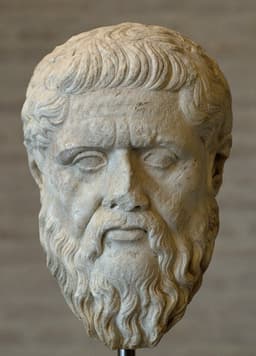
Miltiades the Younger
General · Ancient
51.5Total
Basic Information
Born
-100
-550
Died
-40
-489
Era
Ancient
Ancient
Nationality
China
Athens
Occupation
General
General
Civilization
Eastern
Western
Score Comparison
Military (10%)
47.5
65.0
Political (20%)
35.0
35.0
Influence (20%)
46.3
61.0
Legacy (20%)
37.5
58.0
Leadership (15%)
40.9
30.0
Strategy (15%)
43.3
55.0
TOTAL
41.4
51.5
Feng Fengshi — Complete Timeline
60 BC
Appointment as Protector General of the Western RegionsPolitical Action◆ Major
Feng Fengshi was appointed as the first Protector General of the Western Regions (Xiyu Duhu). This position was established to oversee Han interests in the Tarim Basin and maintain control over the city-states.
Western RegionsDiplomacyHan Empire
Impact: regionalconstructive
59 BC
Stabilization of the Western RegionsPolitical Action◆ Major
Feng Fengshi successfully negotiated with the city-states of the Western Regions, securing their allegiance to the Han Empire. He established a system of alliances and military garrisons that maintained peace and facilitated trade along the Silk Road.
Western RegionsDiplomacySilk Road
Impact: regionalconstructive
57 BC
Campaign Against the Xiongnu in the Western RegionsWar◆ Major
Feng Fengshi led Han forces against Xiongnu incursions into the Western Regions. He defeated the Xiongnu forces and expelled them from the region, securing Han dominance over the Silk Road trade routes.
Han-Xiongnu WarWestern RegionsMilitary Campaign
Impact: regional
Miltiades the Younger — Complete Timeline
500 BC
Conquest of LemnosWar
Miltiades led an Athenian force to conquer the island of Lemnos, which was held by Pelasgians. He successfully captured the island and established an Athenian colony. This action expanded Athenian influence in the northern Aegean and secured a strategic base.
ConquestColonyAthens
Impact: regionalconstructive
490 BC
Battle of MarathonWar
Miltiades commanded the Athenian army against a larger Persian invasion force at Marathon. Using a double-envelopment tactic, the Athenians defeated the Persians, killing about 6,400 Persians while losing only 192 Athenians. This victory ended the first Persian invasion of Greece.
Persian WarsBattleAthens
Impact: globalconstructive
489 BC
Expedition to ParosWar◆ Major
After Marathon, Miltiades led an Athenian fleet to attack the island of Paros, allegedly to settle a personal grudge. The siege failed, and Miltiades was wounded. Upon returning to Athens, he was prosecuted for deceiving the people and fined 50 talents.
ExpeditionFailureTrial
Impact: regionaldestructive
Trial and Death in PrisonPolitical Action◆ Major
Miltiades was tried in the Athenian Assembly for his failed Parian expedition. Convicted of deceiving the people, he was fined 50 talents. Unable to pay, he was imprisoned, where he died from his wound. His son Cimon later paid the fine.
TrialDeathAthens
Impact: nationaltragic
Expert Analysis
Origins
Feng Fengshi was born in the 1st century BCE during the Western Han dynasty, though his exact birth year is unknown. He rose from a military background, likely serving as a junior officer in the frontier campaigns against the Xiongnu. His early career was shaped by the Han Empire's expansionist policies under Emperor Xuan. In contrast, Miltiades the Younger was born around 550 BCE into the prominent Philaid clan of Athens. His family had ties to the Thracian Chersonese, where his uncle Miltiades the Elder had established a principality. Miltiades inherited this domain and served as a tyrant under Persian suzerainty, giving him firsthand experience of Persian military organization.
Rise to Power
Feng Fengshi's rise came through his appointment as Protector General of the Western Regions around 59 BCE, a position created to manage Han interests in the Tarim Basin. He secured the allegiance of multiple city-states through diplomacy and limited military force, establishing a system of resident representatives. Conversely, Miltiades rose to prominence after fleeing the Chersonese during the Scythian campaign of Darius I. He returned to Athens and was elected as one of the ten generals (strategoi) in 490 BCE. His decisive victory at the Battle of Marathon that same year elevated him to the highest echelons of Athenian society. The battle, where he commanded the Athenian army of roughly 10,000 hoplites against a Persian force of perhaps 25,000, used a double-envelopment tactic that became legendary.
Leadership & Governance
Feng Fengshi's leadership style emphasized stability and integration. He avoided major military confrontations, instead using tribute and alliances to maintain Han influence. His governance score of 35.0 reflects a cautious, administrative approach rather than transformative reforms. He established a system of protectorates that lasted for decades. Miltiades, by contrast, was a bold and risk-taking commander. His leadership score of 30.0 indicates a more aggressive style that sometimes overreached, as seen in his failed Parian expedition. Politically, both scored 35.0, but Miltiades' political maneuvering was more volatile, leading to his trial and imprisonment.
Triumph & Tragedy
Feng Fengshi's greatest success was stabilizing the Western Regions, securing Han control over the Silk Road trade routes. He successfully defeated Xiongnu incursions and expelled them from the region. However, his long-term influence was limited; after his tenure, the Protectorate faced challenges and was eventually abandoned. His military score of 47.5 is modest, reflecting his reliance on negotiation over large-scale battles. Miltiades' triumph was the Battle of Marathon, a stunning victory against overwhelming odds. This battle scored 65.0 in military, showcasing his tactical brilliance. His tragedy was the failed siege of Paros (489 BCE), where he suffered a leg injury and was later convicted of deceiving the Athenian people. He died in prison from gangrene, his reputation tarnished. His influence score of 61.0 and legacy of 58.0 are high due to Marathon's enduring symbolic power.
Character & Destiny
Feng Fengshi was a pragmatic and patient administrator, content to work within the Han bureaucratic system. His character led to steady but unspectacular achievements. He died in obscurity, likely in the 50s BCE. Miltiades was ambitious and impulsive, traits that brought both his greatest victory and his downfall. His decision to attack Paros without clear authorization reflected a hubris that the Athenian assembly punished. Historical assessments note that his military skill was not matched by political acumen. In total scores, Miltiades leads with 51.5 against Feng's 41.4, a gap of 10.1 points.
Legacy
Feng Fengshi's legacy is as the first Protector General of the Western Regions, a model for later Chinese expansion into Central Asia. His system of indirect rule influenced subsequent dynasties. However, his name is little known outside academic circles. Miltiades' legacy is monumental: the Battle of Marathon became a defining moment for Western civilization, symbolizing Greek resistance against Persia. It inspired later battles like Thermopylae and Salamis. Marathon also gave rise to the modern marathon race. Miltiades' legacy score of 58.0 far exceeds Feng's 37.5.
Conclusion
While Feng Fengshi effectively administered Han frontiers, Miltiades the Younger had greater impact due to the historical significance of Marathon. Miltiades' victory preserved Greek independence and shaped the course of Western history. His total score of 51.5 versus Feng's 41.4 supports this. Miltiades' influence and legacy scores (61.0 and 58.0) dwarf Feng's (46.3 and 37.5). Therefore, Miltiades is the more consequential figure.
Rankings
🥇
Miltiades the YoungerLeader
Mil: 65.0Pol: 35.0Inf: 61.0
51.5
🥈
Feng Fengshi
Mil: 47.5Pol: 35.0Inf: 46.3
41.4
+10.1 behind
How This Comparison Works
Algorithm
Each figure is scored on 6 dimensions (0—100 scale) based on structured historical data: Military (10%), Political (20%), Influence (20%), Legacy (20%), Leadership (15%), Strategy (15%). The weighted total produces the final ranking.
Data Sources
Scores are computed from structured sub-indicators in the database. Scale factors adjust for era (Ancient ×0.85, Modern ×1.0) and civilization size (Eastern ×1.05, Other ×0.80) to account for differences in population and military scale.
Maximum 3 Figures
Comparisons are limited to 2—3 figures to ensure readability and statistical meaningfulness.
Error Margins
±5 points per dimension — Sub-scores are derived from historical records with inherent uncertainty. Two figures within 5 points on a dimension should be considered roughly equivalent in that area.
Total Score Accuracy
±3 points overall — The weighted combination of 6 dimensions produces a total score with approximately ±3 points of uncertainty. Differences of less than 3 points are not statistically significant— the figures are effectively tied.
Known Limitations
- Historical records are incomplete and uneven across civilizations
- Figures from oral-tradition societies may be underrepresented
- Occupation labels can misclassify multi-role figures
- Scores measure capability and impact, not moral character
- Quantitative scoring is a comparison tool, not absolute truth
Capability Radar
Military (10%) — Battles & Warfare
Battles
35
55
Win Rate
40
60
Expansion
30
30
Political (20%) — Governance & Reform
Reform
10
10
Diplomacy
30
35
Economy
15
15
Influence (20%) — Cultural & Global Reach
Cultural
15
55
Global
10
60
Legacy (20%) — Historical Impact
Historical
20
70
Longevity
15
65
Leadership (15%) — Power & Stability
Tenure
25
40
Stability
25
20
Strategy (15%) — Tactics & Innovation
Strategy
35
65
Tactics
30
75
Reform
10
20
Similar Comparisons
Comments & Discussion
No comments yet. Be the first to share your thoughts!