Loading...
Epaminondas vs Miltiades the Younger
Epaminondas leads by 9.5 pts · 2 figures compared
…

Epaminondas
General · Ancient
61.0Total
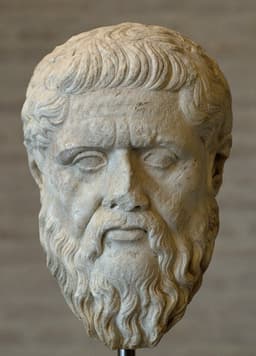
Miltiades the Younger
General · Ancient
51.5Total
Basic Information
Born
-418
-550
Died
-362
-489
Era
Ancient
Ancient
Nationality
Greece
Athens
Occupation
General
General
Civilization
Western
Western
Score Comparison
Military (10%)
65.0
65.0
Political (20%)
68.0
35.0
Influence (20%)
55.0
61.0
Legacy (20%)
55.0
58.0
Leadership (15%)
57.6
30.0
Strategy (15%)
81.9
55.0
TOTAL
61.0
51.5
Epaminondas — Complete Timeline
371 BC
Battle of LeuctraWar
Epaminondas led the Theban army to defeat the Spartans at Leuctra using innovative tactics, including an echelon formation with a deep left flank. The victory shattered Spartan military dominance and ended their hegemony over Greece.
Greek WarfareSpartan HegemonyMilitary Innovation
Impact: regional
370 BC
First Invasion of the PeloponneseWar◆ Major
Epaminondas led a Theban army into the Peloponnese, invading Spartan territory for the first time in centuries. He liberated Messenia from Spartan control and founded the city of Messene, permanently weakening Sparta's economy and military.
SpartaMesseniaGreek Politics
Impact: regional
368 BC
Foundation of MegalopolisPolitical Action◆ Major
Epaminondas founded the city of Megalopolis as the capital of the Arcadian League. The city served as a political counterweight to Sparta and a center for anti-Spartan forces in the Peloponnese.
Urban FoundationArcadian LeagueAnti-Spartan
Impact: regionalconstructive
362 BC
Battle of MantineaWar
Epaminondas led the Theban army against a coalition of Sparta, Athens, and other Greek states at Mantinea. The Thebans won the battle, but Epaminondas was killed. His death ended Theban hegemony and left Greece in a power vacuum.
BattleDeathGreek Hegemony
Impact: regionaltragic
Miltiades the Younger — Complete Timeline
500 BC
Conquest of LemnosWar
Miltiades led an Athenian force to conquer the island of Lemnos, which was held by Pelasgians. He successfully captured the island and established an Athenian colony. This action expanded Athenian influence in the northern Aegean and secured a strategic base.
ConquestColonyAthens
Impact: regionalconstructive
490 BC
Battle of MarathonWar
Miltiades commanded the Athenian army against a larger Persian invasion force at Marathon. Using a double-envelopment tactic, the Athenians defeated the Persians, killing about 6,400 Persians while losing only 192 Athenians. This victory ended the first Persian invasion of Greece.
Persian WarsBattleAthens
Impact: globalconstructive
489 BC
Expedition to ParosWar◆ Major
After Marathon, Miltiades led an Athenian fleet to attack the island of Paros, allegedly to settle a personal grudge. The siege failed, and Miltiades was wounded. Upon returning to Athens, he was prosecuted for deceiving the people and fined 50 talents.
ExpeditionFailureTrial
Impact: regionaldestructive
Trial and Death in PrisonPolitical Action◆ Major
Miltiades was tried in the Athenian Assembly for his failed Parian expedition. Convicted of deceiving the people, he was fined 50 talents. Unable to pay, he was imprisoned, where he died from his wound. His son Cimon later paid the fine.
TrialDeathAthens
Impact: nationaltragic
Expert Analysis
Origins
Epaminondas was born around 418 BC in Thebes, into a noble but impoverished family. His father, Polymnis, was a respected but not wealthy Theban. Epaminondas received a thorough education in philosophy, music, and physical training, studying under the Pythagorean philosopher Lysis of Tarentum. This intellectual foundation shaped his later strategic innovations. He grew up during the Spartan occupation of Thebes (382–379 BC), which instilled in him a deep resentment of Spartan hegemony.
Miltiades the Younger was born around 550 BC in Athens, into the powerful Philaid clan. His father, Cimon, was a prominent politician, and his uncle, Miltiades the Elder, had founded a colony in the Thracian Chersonese. Miltiades inherited control of this colony, which gave him experience in regional politics and warfare. He was a tyrant of the Chersonese under Persian suzerainty before returning to Athens in 493 BC. His background provided him with firsthand knowledge of Persian military practices.
Rise to Power
Epaminondas came to prominence after the Theban revolt against Sparta in 379 BC, led by Pelopidas and other exiles. Epaminondas played a supporting role, but his strategic acumen became evident during the subsequent conflicts. His rise was gradual, based on his reputation as a thinker and commander. The turning point came in 371 BC when he was elected Boeotarch (Theban general). At the peace conference of that year, he insisted on representing all Boeotia, not just Thebes, leading to the collapse of talks and the Spartan invasion that set the stage for Leuctra.
Miltiades rose to power through a combination of family connections and military success. He was already a ruler in the Chersonese when the Ionian Revolt (499–493 BC) broke out. After its failure, he fled to Athens, where his reputation as a Persian expert and his wealth gave him influence. He was elected one of the ten generals (strategoi) in 490 BC, just in time for the Persian invasion. His persuasive leadership at Marathon, where he convinced the other generals to engage the Persians, cemented his authority.
Leadership & Governance
Epaminondas led through intellectual authority and consensus-building. He was known for his modesty and lack of personal ambition. As a general, he introduced the echelon formation at Leuctra, concentrating his best troops on the left wing to overwhelm the Spartan right, where their king and elite warriors fought. This tactical innovation broke Spartan military dominance. Politically, he founded the city of Megalopolis (371–368 BC) as a democratic counterweight to Sparta and liberated Messenia, creating a free state that deprived Sparta of its helot workforce. His governance focused on weakening Sparta through strategic alliances and territorial reorganizations.
Miltiades was a decisive and charismatic leader but less skilled in politics. At Marathon, he implemented a double-envelopment tactic, thinning his center to surround the Persians. This victory was a model of tactical thinking. However, his political judgment was flawed. After Marathon, he used his prestige to secure a command for an expedition against Paros, allegedly to settle a private grievance. The failed siege discredited him, and he was prosecuted by his political enemies. His leadership style was aggressive and personal, leading to both triumph and disaster.
Triumph & Tragedy
Epaminondas's greatest triumph was the Battle of Leuctra (371 BC), where his 6,000 Thebans defeated 10,000 Spartans, killing King Cleombrotus and ending Spartan dominance. He followed this with invasions of the Peloponnese (370–369 BC), liberating Messenia and founding Megalopolis. His greatest failure was the Battle of Mantinea (362 BC). Although he won the battle, he was fatally wounded, and his death left Theban hegemony leaderless. The battle achieved no lasting strategic gain, as the Greek city-states quickly returned to fragmentation.
Miltiades's triumph was the Battle of Marathon (490 BC), where 10,000 Athenians and Plataeans defeated 25,000 Persians, saving Athens and preserving Greek independence. The victory was a watershed moment for Athenian democracy and military confidence. His tragedy was the Parian expedition (489 BC). His siege of Paros failed after 26 days, and he returned wounded and disgraced. He was convicted of deceiving the Athenians and fined 50 talents, dying in prison from gangrene. The failure erased much of his political capital.
Character & Destiny
Epaminondas was philosophical, selfless, and strategic. He prioritized Thebes's welfare over personal gain, refusing to accumulate wealth or power. His decision to fight at Mantinea despite bad omens shows a fatalistic courage. His death at the moment of victory symbolizes the fragility of his achievements. Historians like Diodorus Siculus praise his integrity and intellect. His scores reflect this: Leadership 57.6 and Strategy 81.9, indicating a tactical genius but limited organizational scope.
Miltiades was ambitious, persuasive, but vengeful. He used his influence to gain command at Marathon and later pursued a personal vendetta against Paros. Herodotus portrays him as a clever leader but one whose judgment was clouded by pride. His low Political score (35.0) and Leadership (30.0) reflect his inability to manage democratic politics. His fate—death in prison—shows how Athenian democracy punished failure.
Legacy
Epaminondas's legacy is profound but often overlooked. He shattered the myth of Spartan invincibility, enabling the rise of Thebes as a major power for a decade. His tactical innovations influenced later generals like Philip II of Macedon, who studied his echelon formation. The liberation of Messenia created a state that lasted until Roman times. However, his achievements were short-lived because he failed to institutionalize Theban hegemony. His Influence score of 55.0 reflects this limited long-term impact.
Miltiades's legacy is more symbolic. Marathon became a foundational myth of Athenian democracy and Western civilization. The battle demonstrated that Persians could be defeated, boosting Greek confidence. Miltiades's tactics influenced later double-envelopments, though his execution was less sophisticated. His Legacy score of 58.0 is slightly higher than Epaminondas's 55.0 because of Marathon's iconic status. However, his political failure curtailed his direct impact.
Conclusion
Epaminondas had a greater overall impact on Greek history than Miltiades. While Miltiades won a single decisive battle that saved Athens, Epaminondas fundamentally altered the balance of power in Greece by ending Spartan hegemony and liberating Messenia. His tactical innovations were more advanced and influential. Miltiades's victory at Marathon was crucial but reactive; Epaminondas's campaigns were proactive and transformative. The score gap of 9.5 points (Epaminondas 61.0 vs Miltiades 51.5) reflects this: Epaminondas excelled in political and strategic dimensions, while Miltiades's leadership and political scores dragged him down. Epaminondas's legacy, though less celebrated, reshaped the Greek world more durably.
Rankings
🥇
EpaminondasLeader
Mil: 65.0Pol: 68.0Inf: 55.0
61.0
🥈
Miltiades the Younger
Mil: 65.0Pol: 35.0Inf: 61.0
51.5
+9.5 behind
How This Comparison Works
Algorithm
Each figure is scored on 6 dimensions (0—100 scale) based on structured historical data: Military (10%), Political (20%), Influence (20%), Legacy (20%), Leadership (15%), Strategy (15%). The weighted total produces the final ranking.
Data Sources
Scores are computed from structured sub-indicators in the database. Scale factors adjust for era (Ancient ×0.85, Modern ×1.0) and civilization size (Eastern ×1.05, Other ×0.80) to account for differences in population and military scale.
Maximum 3 Figures
Comparisons are limited to 2—3 figures to ensure readability and statistical meaningfulness.
Error Margins
±5 points per dimension — Sub-scores are derived from historical records with inherent uncertainty. Two figures within 5 points on a dimension should be considered roughly equivalent in that area.
Total Score Accuracy
±3 points overall — The weighted combination of 6 dimensions produces a total score with approximately ±3 points of uncertainty. Differences of less than 3 points are not statistically significant— the figures are effectively tied.
Known Limitations
- Historical records are incomplete and uneven across civilizations
- Figures from oral-tradition societies may be underrepresented
- Occupation labels can misclassify multi-role figures
- Scores measure capability and impact, not moral character
- Quantitative scoring is a comparison tool, not absolute truth
Capability Radar
Military (10%) — Battles & Warfare
Battles
75
55
Win Rate
85
60
Expansion
60
30
Political (20%) — Governance & Reform
Reform
70
10
Diplomacy
75
35
Economy
50
15
Influence (20%) — Cultural & Global Reach
Cultural
65
55
Global
60
60
Legacy (20%) — Historical Impact
Historical
80
70
Longevity
70
65
Leadership (15%) — Power & Stability
Tenure
55
40
Stability
45
20
Strategy (15%) — Tactics & Innovation
Strategy
90
65
Tactics
95
75
Reform
85
20
Similar Comparisons
Comments & Discussion
No comments yet. Be the first to share your thoughts!