Loading...
This comparison has not been analyzed yet.
One-time AI generation (~1 minute). Scores and timeline are already available below.
Feleti Teo vs H. D. Deve Gowda
H. D. Deve Gowda leads by 11.4 pts · 2 figures compared
…

Feleti Teo
Politician · Modern
40.4Total
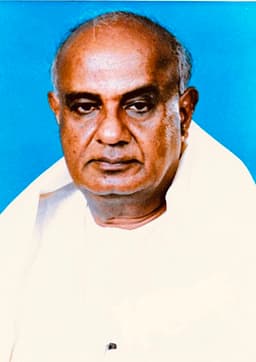
H. D. Deve Gowda
Politician · Modern
51.8Total
Basic Information
Born
1962
1933
Died
—
—
Era
Modern
Modern
Nationality
Tuvalu
India
Occupation
Politician
Politician
Civilization
Other
Indian
Score Comparison
Military (10%)
17.2
40.3
Political (20%)
36.5
68.0
Influence (20%)
47.9
52.5
Legacy (20%)
36.7
41.7
Leadership (15%)
51.9
53.2
Strategy (15%)
42.9
60.0
TOTAL
40.4
51.8
Feleti Teo — Complete Timeline
1990 AD
Appointment as Attorney General of TuvaluPolitical Action
Feleti Teo was appointed as the Attorney General of Tuvalu, a role in which he provided legal advice to the government. His background in fisheries law later became central to his political career.
Legal AppointmentGovernment
Impact: national
2000 AD
Leadership in Pacific Islands Forum Fisheries AgencyOther◆ Major
Feleti Teo served as the Director of the Pacific Islands Forum Fisheries Agency (FFA), where he worked on tuna fisheries management and sustainable fishing practices. This role enhanced his expertise in maritime law and regional cooperation.
FisheriesRegional Cooperation
Impact: regionalconstructive
2024 AD
Election as Prime Minister of TuvaluPolitical Action◆ Major
Feleti Teo was elected as the Prime Minister of Tuvalu, succeeding Kausea Natano. As a fisheries lawyer, his election signaled a focus on maritime issues and climate change, which are critical for the island nation's survival.
ElectionPrime Minister
Impact: national
H. D. Deve Gowda — Complete Timeline
1991 AD
Appointment as Chairman of the National Commission for Scheduled Castes and Scheduled TribesPolitical Action
H. D. Deve Gowda was appointed Chairman of the National Commission for Scheduled Castes and Scheduled Tribes. This role involved monitoring the implementation of constitutional safeguards for marginalized communities.
CommissionSC/STSocial Justice
Impact: nationalconstructive
1994 AD
Election as Chief Minister of KarnatakaPolitical Action◆ Major
H. D. Deve Gowda was elected Chief Minister of Karnataka, leading the Janata Dal to a landslide victory. His government focused on rural development and irrigation projects, including the Cauvery River dispute.
Chief MinisterKarnatakaJanata Dal
Impact: regionalconstructive
1996 AD
Appointment as Prime Minister of IndiaPolitical Action◆ Major
H. D. Deve Gowda became the 11th Prime Minister of India, leading the United Front coalition government. His tenure lasted 11 months, from June 1996 to April 1997, as a compromise candidate after the 1996 general election.
Prime MinisterUnited FrontCoalition
Impact: national
1997 AD
Resignation as Prime MinisterPolitical Action◆ Major
H. D. Deve Gowda resigned as Prime Minister after the Congress party withdrew its support from the United Front government. The withdrawal was triggered by differences over the handling of the DMK in Tamil Nadu.
ResignationCoalition CollapseCongress
Impact: national
1999 AD
Formation of the Janata Dal (Secular)Political Action◆ Major
H. D. Deve Gowda founded the Janata Dal (Secular) after a split in the Janata Dal. The party became a major political force in Karnataka, focusing on secularism and social justice.
Party FormationJanata Dal (Secular)Karnataka
Impact: regionalconstructive
This comparison has not been analyzed yet.
One-time AI generation (~1 minute). Scores and timeline are already available below.
Rankings
🥇
H. D. Deve GowdaLeader
Mil: 40.3Pol: 68.0Inf: 52.5
51.8
🥈
Feleti Teo
Mil: 17.2Pol: 36.5Inf: 47.9
40.4
+11.4 behind
How This Comparison Works
Algorithm
Each figure is scored on 6 dimensions (0—100 scale) based on structured historical data: Military (10%), Political (20%), Influence (20%), Legacy (20%), Leadership (15%), Strategy (15%). The weighted total produces the final ranking.
Data Sources
Scores are computed from structured sub-indicators in the database. Scale factors adjust for era (Ancient ×0.85, Modern ×1.0) and civilization size (Eastern ×1.05, Other ×0.80) to account for differences in population and military scale.
Maximum 3 Figures
Comparisons are limited to 2—3 figures to ensure readability and statistical meaningfulness.
Error Margins
±5 points per dimension — Sub-scores are derived from historical records with inherent uncertainty. Two figures within 5 points on a dimension should be considered roughly equivalent in that area.
Total Score Accuracy
±3 points overall — The weighted combination of 6 dimensions produces a total score with approximately ±3 points of uncertainty. Differences of less than 3 points are not statistically significant— the figures are effectively tied.
Known Limitations
- Historical records are incomplete and uneven across civilizations
- Figures from oral-tradition societies may be underrepresented
- Occupation labels can misclassify multi-role figures
- Scores measure capability and impact, not moral character
- Quantitative scoring is a comparison tool, not absolute truth
Capability Radar
Military (10%) — Battles & Warfare
Battles
19
44
Win Rate
22
49
Expansion
27
47
Political (20%) — Governance & Reform
Reform
20
40
Diplomacy
35
55
Economy
25
45
Influence (20%) — Cultural & Global Reach
Cultural
10
20
Global
15
25
Legacy (20%) — Historical Impact
Historical
10
30
Longevity
10
20
Leadership (15%) — Power & Stability
Tenure
15
60
Stability
30
40
Strategy (15%) — Tactics & Innovation
Strategy
33
55
Tactics
31
55
Reform
37
56
Similar Comparisons
Comments & Discussion
No comments yet. Be the first to share your thoughts!