Loading...
Faisal of Saudi Arabia vs Ferdinand I of Bohemia
Faisal of Saudi Arabia leads by 2.9 pts · 2 figures compared
…
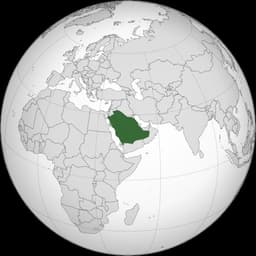
Faisal of Saudi Arabia
Emperor · Modern
58.0Total
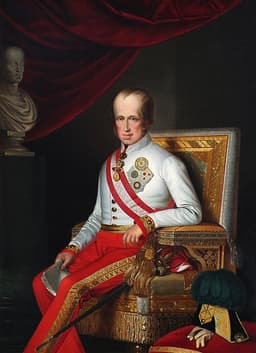
Ferdinand I of Bohemia
Emperor · Modern
55.1Total
Basic Information
Born
1906
1503
Died
1975
1564
Era
Modern
Modern
Nationality
Saudi Arabia
Bohemia
Occupation
Emperor
Emperor
Civilization
Middle Eastern
Western
Score Comparison
Military (10%)
21.2
47.5
Political (20%)
82.0
62.7
Influence (20%)
58.3
57.2
Legacy (20%)
52.0
49.2
Leadership (15%)
80.0
68.0
Strategy (15%)
39.6
41.7
TOTAL
58.0
55.1
Faisal of Saudi Arabia — Complete Timeline
1964 AD
Modernization ReformsReform◆ Major
Upon becoming king, Faisal launched a series of modernization reforms including the introduction of television, expansion of education for girls, abolition of slavery, and creation of a modern bureaucracy. These reforms faced opposition from conservative religious elements.
ModernizationEducationSocial Reform
Impact: nationalprogressive
1973 AD
1973 Oil EmbargoPolitical Action◆ Major
King Faisal led Saudi Arabia in implementing an oil embargo against nations supporting Israel during the Yom Kippur War. The embargo caused global oil prices to quadruple, reshaping international energy politics and increasing Saudi influence.
Oil PoliticsArab-Israeli ConflictEconomic Warfare
Impact: global
Establishment of OPEC Price ControlPolitical Action◆ Major
Faisal coordinated with other Arab oil-producing states to use oil as a political weapon, leading to the formation of OAPEC and the first use of oil price controls for political ends. This marked a shift in global economic power.
OPECOil PoliticsEconomic Strategy
Impact: global
1975 AD
Assassination of King FaisalPolitical Action
King Faisal was shot and killed by his nephew, Prince Faisal bin Musaid, during a royal audience at the Royal Palace in Riyadh. The assassination ended Faisal's reformist reign and led to the accession of King Khalid.
AssassinationRoyal FamilySuccession
Impact: nationaltragic
Ferdinand I of Bohemia — Complete Timeline
1526 AD
Establishment of the Habsburg MonarchyPolitical Action
Ferdinand I inherited the crowns of Bohemia and Hungary after the death of Louis II. He consolidated these territories under Habsburg rule, creating a powerful Central European monarchy that would last until 1918.
Dynastic UnionTerritorial ExpansionHabsburg
Impact: regional
1527 AD
Coronation as King of BohemiaPolitical Action
Ferdinand I was crowned King of Bohemia in Prague, establishing Habsburg rule over the kingdom. This coronation followed the death of Louis II at Moh
CoronationHabsburg DynastyBohemia
Impact: regional
1555 AD
Peace of AugsburgPolitical Action
Ferdinand I played a key role in negotiating the Peace of Augsburg, which ended religious conflicts in the Holy Roman Empire. The treaty established the principle of cuius regio, eius religio, allowing princes to choose the religion of their territories.
Religious PeaceTreatyHoly Roman Empire
Impact: globalconstructive
Expert Analysis
Origins
**Faisal of Saudi Arabia** was born in 1906 in Riyadh, into the House of Saud. His father, King Abdulaziz (Ibn Saud), founded modern Saudi Arabia. Faisal grew up in a desert environment, learning tribal politics and diplomacy from an early age. He accompanied his father on military campaigns and served as governor of Hejaz in 1926, gaining administrative experience. His education was traditional, focusing on Quranic studies and tribal law, but he later developed a keen interest in modern governance and international relations.
**Ferdinand I of Bohemia** was born in 1503 in Alcalá de Henares, Spain, as the grandson of Emperor Maximilian I. He was raised in the Spanish court, receiving a humanist education under the tutelage of scholars like Juan Luis Vives. His early life was marked by the death of his father, Philip the Handsome, in 1506, and he was largely overshadowed by his older brother, Charles V. Ferdinand's upbringing prepared him for a life of governance, but he lacked direct experience until he was sent to the Habsburg hereditary lands in the 1520s.
Rise to Power
Faisal's rise was gradual. He served as foreign minister from 1932, representing Saudi Arabia at the UN founding in 1945. He became crown prince in 1953 under King Saud, but tensions over Saud's mismanagement led to a power struggle. In 1964, the royal family and religious establishment forced Saud to abdicate, and Faisal became king. His ascent was driven by his reputation for fiscal responsibility and reform, as well as support from the ulama and key princes.
Ferdinand's rise was tied to dynastic accident. After the death of Louis II of Hungary and Bohemia at the Battle of Mohács in 1526, Ferdinand claimed the thrones through his marriage to Louis's sister, Anne. He was crowned King of Bohemia in 1527 and King of Hungary in 1528, but faced resistance from Hungarian nobles and the Ottoman Empire. His brother Charles V ceded the Austrian lands to him in 1521-1522, making him the de facto ruler of the Habsburg Danubian territories. His coronation in Prague in 1527 was a key turning point, establishing Habsburg rule in Central Europe.
Leadership & Governance
Faisal ruled as a reformist autocrat. He modernized Saudi Arabia by introducing television (1965), expanding girls' education (1964), and abolishing slavery (1962). He centralized power, reducing the influence of royal princes and creating modern ministries. His governance was pragmatic, using oil wealth to build infrastructure while maintaining conservative Islamic values. He scored 82.0 in political skill, reflecting his ability to navigate tribal, religious, and international pressures.
Ferdinand governed as a consolidator. He centralized administration in Bohemia and Hungary, imposing Habsburg bureaucratic structures. He promoted the Counter-Reformation, inviting Jesuits to establish schools, but also negotiated the Peace of Augsburg (1555), which allowed German princes to choose Lutheranism or Catholicism. His leadership score of 68.0 reflects his ability to hold together a multi-ethnic empire through compromise and dynastic marriage, though he faced constant Ottoman threats and noble rebellions.
Triumph & Tragedy
Faisal's greatest triumph was the 1973 oil embargo, which demonstrated Arab oil power and led to a quadrupling of oil prices. This transformed Saudi Arabia into a global economic player. His modernization reforms also dramatically improved literacy and infrastructure. However, his tragedy was his assassination in 1975 by his nephew, Faisal bin Musaid, stemming from personal and political grievances. The assassination cut short his reforms and led to a more cautious approach under King Khalid.
Ferdinand's triumph was the Peace of Augsburg, which ended decades of religious war in Germany and established the principle of cuius regio, eius religio. He also successfully integrated Bohemia and Hungary into the Habsburg monarchy, creating a lasting empire. His tragedy was the ongoing Ottoman threat: he failed to capture Buda (1541) and had to accept Ottoman suzerainty over much of Hungary. The 1529 Siege of Vienna (during his brother's reign) highlighted the vulnerability of his lands.
Character & Destiny
Faisal was reserved, pious, and pragmatic. He was known for his austerity and focus on governance, avoiding the extravagance of his brother Saud. His character shaped his destiny: his reforms won him support but also enemies, and his assassination was a result of family vendetta. Historians note his vision for Saudi Arabia as a modern state within Islamic framework.
Ferdinand was cautious, diplomatic, and tenacious. He lacked the charisma of Charles V but excelled at administration and negotiation. His character allowed him to survive multiple crises, including Ottoman invasions and noble revolts. He was determined to secure Habsburg inheritance, which he did through strategic marriages and treaties.
Legacy
Faisal's legacy is the transformation of Saudi Arabia into a modern state and the use of oil as a political weapon. The 1973 embargo reshaped global energy politics and elevated OPEC's importance. His reforms, especially in education, had lasting effects, though conservative backlash after his death slowed progress. He scored 52.0 in legacy, reflecting a mixed but enduring impact.
Ferdinand's legacy is the consolidation of Habsburg power in Central Europe. The Peace of Augsburg set a precedent for religious coexistence in the Holy Roman Empire. His administrative reforms laid the groundwork for the Austrian Empire. He scored 49.2 in legacy, with his influence lasting through the Habsburg monarchy until 1918.
Conclusion
While Ferdinand I successfully consolidated a multi-ethnic empire and contributed to religious peace, Faisal's impact was more transformative on a global scale. Faisal's political score of 82.0, combined with the 1973 oil embargo's immediate and lasting effects on the world economy, outweighs Ferdinand's achievements. Faisal's reforms also modernized a deeply conservative society, a feat that resonates today. Therefore, Faisal of Saudi Arabia had greater historical impact, despite his lower military and strategy scores (21.2 and 39.6 respectively).
Rankings
🥇
Faisal of Saudi ArabiaLeader
Mil: 21.2Pol: 82.0Inf: 58.3
58.0
🥈
Ferdinand I of Bohemia
Mil: 47.5Pol: 62.7Inf: 57.2
55.1
+2.9 behind
How This Comparison Works
Algorithm
Each figure is scored on 6 dimensions (0—100 scale) based on structured historical data: Military (10%), Political (20%), Influence (20%), Legacy (20%), Leadership (15%), Strategy (15%). The weighted total produces the final ranking.
Data Sources
Scores are computed from structured sub-indicators in the database. Scale factors adjust for era (Ancient ×0.85, Modern ×1.0) and civilization size (Eastern ×1.05, Other ×0.80) to account for differences in population and military scale.
Maximum 3 Figures
Comparisons are limited to 2—3 figures to ensure readability and statistical meaningfulness.
Error Margins
±5 points per dimension — Sub-scores are derived from historical records with inherent uncertainty. Two figures within 5 points on a dimension should be considered roughly equivalent in that area.
Total Score Accuracy
±3 points overall — The weighted combination of 6 dimensions produces a total score with approximately ±3 points of uncertainty. Differences of less than 3 points are not statistically significant— the figures are effectively tied.
Known Limitations
- Historical records are incomplete and uneven across civilizations
- Figures from oral-tradition societies may be underrepresented
- Occupation labels can misclassify multi-role figures
- Scores measure capability and impact, not moral character
- Quantitative scoring is a comparison tool, not absolute truth
Capability Radar
Military (10%) — Battles & Warfare
Battles
10
25
Win Rate
10
20
Expansion
10
35
Political (20%) — Governance & Reform
Reform
80
55
Diplomacy
80
65
Economy
75
50
Influence (20%) — Cultural & Global Reach
Cultural
60
40
Global
60
45
Legacy (20%) — Historical Impact
Historical
65
55
Longevity
55
50
Leadership (15%) — Power & Stability
Tenure
70
60
Stability
65
45
Strategy (15%) — Tactics & Innovation
Strategy
10
30
Tactics
10
20
Reform
20
40
Similar Comparisons
Comments & Discussion
No comments yet. Be the first to share your thoughts!