Loading...
Bhumibol Adulyadej vs Ferdinand I of Bohemia
Bhumibol Adulyadej leads by 17.0 pts · 2 figures compared
…

Bhumibol Adulyadej
Emperor · Modern
72.1Total
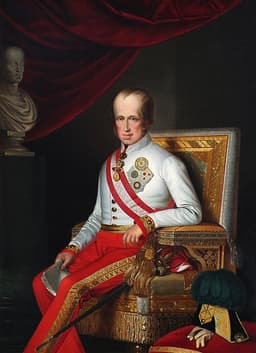
Ferdinand I of Bohemia
Emperor · Modern
55.1Total
Basic Information
Born
1927
1503
Died
—
1564
Era
Modern
Modern
Nationality
Thailand
Bohemia
Occupation
Emperor
Emperor
Civilization
Eastern
Western
Score Comparison
Military (10%)
61.8
47.5
Political (20%)
78.0
62.7
Influence (20%)
68.0
57.2
Legacy (20%)
70.0
49.2
Leadership (15%)
83.3
68.0
Strategy (15%)
71.9
41.7
TOTAL
72.1
55.1
Bhumibol Adulyadej — Complete Timeline
1946 AD
Accession as King Rama IXPolitical Action
Bhumibol Adulyadej became King of Thailand after the death of his brother King Ananda Mahidol. His accession began a 70-year reign, the longest in Thai history, during which he became a unifying figure.
SuccessionMonarchyThailand
Impact: national
1950 AD
Royal Development Projects initiationReform◆ Major
King Bhumibol initiated thousands of royal development projects focused on agriculture, water management, and rural development. These projects aimed to improve the livelihoods of poor farmers and promote sustainable development.
DevelopmentAgricultureThailand
Impact: nationalconstructive
1992 AD
Role in 1992 Black May crisisPolitical Action◆ Major
During the Black May protests against military rule, King Bhumibol summoned General Suchinda Kraprayoon and protest leader Chamlong Srimuang to a televised audience. His intervention led to Suchinda's resignation and a return to civilian government.
Political CrisisInterventionThailand
Impact: nationalconstructive
2006 AD
Celebration of 60th anniversary of accessionCultural◆ Major
Thailand celebrated the 60th anniversary of King Bhumibol's accession with grand ceremonies and international recognition. The event underscored his status as the world's longest-reigning monarch and a symbol of national unity.
CelebrationMonarchyThailand
Impact: nationalconstructive
Ferdinand I of Bohemia — Complete Timeline
1526 AD
Establishment of the Habsburg MonarchyPolitical Action
Ferdinand I inherited the crowns of Bohemia and Hungary after the death of Louis II. He consolidated these territories under Habsburg rule, creating a powerful Central European monarchy that would last until 1918.
Dynastic UnionTerritorial ExpansionHabsburg
Impact: regional
1527 AD
Coronation as King of BohemiaPolitical Action
Ferdinand I was crowned King of Bohemia in Prague, establishing Habsburg rule over the kingdom. This coronation followed the death of Louis II at Moh
CoronationHabsburg DynastyBohemia
Impact: regional
1555 AD
Peace of AugsburgPolitical Action
Ferdinand I played a key role in negotiating the Peace of Augsburg, which ended religious conflicts in the Holy Roman Empire. The treaty established the principle of cuius regio, eius religio, allowing princes to choose the religion of their territories.
Religious PeaceTreatyHoly Roman Empire
Impact: globalconstructive
Expert Analysis
Origins
Bhumibol Adulyadej was born on December 5, 1927, in Cambridge, Massachusetts, USA, while his father, Prince Mahidol Adulyadej, was studying at Harvard. He was the younger son of Prince Mahidol and Princess Srinagarindra. His early life was marked by frequent moves between Switzerland and Thailand. He studied science and literature at the University of Lausanne, but his education was interrupted when his elder brother, King Ananda Mahidol, died under mysterious circumstances in 1946, thrusting Bhumibol onto the throne at age 18.
Ferdinand I was born on March 10, 1503, in Alcalá de Henares, Castile, as the younger brother of Holy Roman Emperor Charles V. He was raised in Spain, receiving a humanist education. In 1521, he married Anna of Bohemia and Hungary, linking him to the Jagiellonian dynasty. His brother Charles V entrusted him with the administration of the Habsburg hereditary lands in Austria, preparing him for future rule.
Rise to Power
Bhumibol ascended the throne on June 9, 1946, after the death of his brother. However, he returned to Switzerland for further education, leaving a regency council to govern. He officially began his reign in 1950 after marrying Queen Sirikit and undergoing his coronation. His early years were overshadowed by military strongmen like Field Marshal Phibunsongkhram and later Sarit Thanarat. Bhumibol gradually built his influence by using his constitutional powers sparingly and focusing on royal development projects.
Ferdinand I was elected King of Bohemia in 1526 after the death of Louis II at the Battle of Mohács. His claim was based on his wife Anna, sister of Louis. He was crowned in Prague on February 24, 1527. He also claimed Hungary, but faced opposition from John Zápolya and the Ottoman Empire. Ferdinand consolidated his power through the Peace of Augsburg (1555), which ended religious wars in the Holy Roman Empire by allowing rulers to choose the religion of their territories.
Leadership & Governance
Bhumibol's leadership style was characterized by moral authority and indirect influence. He rarely intervened directly in politics but used his prestige to mediate crises. During the 1992 Black May crisis, he summoned General Suchinda Kraprayoon and protest leader Chamlong Srimuang to a televised audience, effectively ending the military crackdown. His governance focused on rural development: he launched over 4,000 royal projects, including the Chaipattana aerator for wastewater treatment and rain-making technology. His political score of 78.0 reflects his ability to stabilize Thailand through six decades of coups and governments.
Ferdinand I governed as a pragmatic administrator. He centralized Habsburg rule over Bohemia and Hungary, imposing German as the official language and promoting Catholicism. He founded the Habsburg Monarchy's administrative structure, including the establishment of the Hofkriegsrat (Court War Council). He was less successful in military matters, scoring 47.5, as he failed to prevent Ottoman advances and lost Buda in 1541. However, his political score of 62.7 shows his diplomatic skill in securing the Peace of Augsburg.
Triumph & Tragedy
Bhumibol's greatest triumph was his 70-year reign, the longest in Thai history, during which he became a symbol of national unity. His development projects improved the lives of millions in rural areas. He was widely revered, with his portrait displayed in homes and businesses. His tragedy was the political instability that plagued his reign, including multiple coups and the 2014 military takeover. He also faced health issues in his later years, limiting his ability to guide the nation.
Ferdinand I's triumph was establishing the Habsburg monarchy as a major European power. The Peace of Augsburg secured peace for decades and laid the foundation for religious coexistence. His tragedy was his inability to defend Hungary against the Ottomans, leading to the division of Hungary into three parts. He also failed to secure full control over Hungary, as the nobility resisted his centralizing policies.
Character & Destiny
Bhumibol was known for his humility, dedication, and photographic memory. He was a skilled musician and sailor, composing jazz pieces and designing boats. His character of patience and perseverance allowed him to navigate Thailand's turbulent politics without direct confrontation. Historians note that his moral authority stemmed from his selfless service, earning him the title "Father of the Nation."
Ferdinand I was cautious and methodical, often overshadowed by his more charismatic brother Charles V. He was a diligent administrator who prioritized stability over glory. His destiny was shaped by his role as a secondary Habsburg ruler, yet he successfully built a lasting legacy. His character of resilience helped him endure military defeats and political setbacks.
Legacy
Bhumibol's legacy is immense in Thailand. He transformed the monarchy into a modern institution focused on development. His sufficiency economy philosophy has been adopted by the United Nations. He is remembered as the most revered Thai monarch, with a legacy score of 70.0. His reign set a standard for constitutional monarchy, though his successor faces challenges in maintaining that reverence.
Ferdinand I's legacy is the creation of the Habsburg monarchy that lasted until 1918. He established the administrative and religious framework for Central Europe. The Peace of Augsburg influenced later treaties on religious tolerance. His legacy score of 49.2 is lower, as his reign is often seen as a stepping stone to his son Maximilian II's rule.
Conclusion
Bhumibol Adulyadej had a greater impact than Ferdinand I of Bohemia. With a total score of 72.1 against 55.1, Bhumibol's leadership (83.3 vs 68.0) and political acumen (78.0 vs 62.7) were superior. While Ferdinand established a dynasty, Bhumibol's influence on Thailand's development and stability for seven decades is more tangible and enduring. His ability to remain a unifying figure in a politically volatile country demonstrates a deeper impact on his nation's identity. Ferdinand's achievements, though significant for Central Europe, are less directly felt today. Therefore, Bhumibol Adulyadej stands as the more consequential figure.
Rankings
🥇
Bhumibol AdulyadejLeader
Mil: 61.8Pol: 78.0Inf: 68.0
72.1
🥈
Ferdinand I of Bohemia
Mil: 47.5Pol: 62.7Inf: 57.2
55.1
+17.0 behind
How This Comparison Works
Algorithm
Each figure is scored on 6 dimensions (0—100 scale) based on structured historical data: Military (10%), Political (20%), Influence (20%), Legacy (20%), Leadership (15%), Strategy (15%). The weighted total produces the final ranking.
Data Sources
Scores are computed from structured sub-indicators in the database. Scale factors adjust for era (Ancient ×0.85, Modern ×1.0) and civilization size (Eastern ×1.05, Other ×0.80) to account for differences in population and military scale.
Maximum 3 Figures
Comparisons are limited to 2—3 figures to ensure readability and statistical meaningfulness.
Error Margins
±5 points per dimension — Sub-scores are derived from historical records with inherent uncertainty. Two figures within 5 points on a dimension should be considered roughly equivalent in that area.
Total Score Accuracy
±3 points overall — The weighted combination of 6 dimensions produces a total score with approximately ±3 points of uncertainty. Differences of less than 3 points are not statistically significant— the figures are effectively tied.
Known Limitations
- Historical records are incomplete and uneven across civilizations
- Figures from oral-tradition societies may be underrepresented
- Occupation labels can misclassify multi-role figures
- Scores measure capability and impact, not moral character
- Quantitative scoring is a comparison tool, not absolute truth
Capability Radar
Military (10%) — Battles & Warfare
Battles
54
25
Win Rate
58
20
Expansion
60
35
Political (20%) — Governance & Reform
Reform
70
55
Diplomacy
85
65
Economy
75
50
Influence (20%) — Cultural & Global Reach
Cultural
85
40
Global
75
45
Legacy (20%) — Historical Impact
Historical
80
55
Longevity
90
50
Leadership (15%) — Power & Stability
Tenure
95
60
Stability
90
45
Strategy (15%) — Tactics & Innovation
Strategy
58
30
Tactics
61
20
Reform
66
40
Similar Comparisons
Comments & Discussion
No comments yet. Be the first to share your thoughts!