Loading...
Fa Ngum vs Ozbeg Khan
Fa Ngum leads by 0.8 pts · 2 figures compared
…
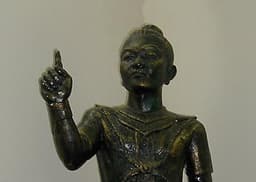
Fa Ngum
Emperor · Medieval
62.3Total
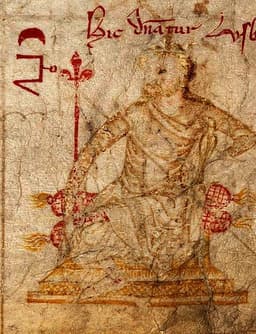
Ozbeg Khan
Emperor · Medieval
61.5Total
Basic Information
Born
1316
1282
Died
1393
1341
Era
Medieval
Medieval
Nationality
Laos
Golden Horde
Occupation
Emperor
Emperor
Civilization
Eastern
Eastern
Score Comparison
Military (10%)
70.0
40.0
Political (20%)
68.0
53.8
Influence (20%)
61.0
82.0
Legacy (20%)
54.0
52.0
Leadership (15%)
74.0
66.0
Strategy (15%)
52.5
60.0
TOTAL
62.3
61.5
Fa Ngum — Complete Timeline
1353 AD
Founded the Kingdom of Lan XangPolitical Action
Fa Ngum unified the Lao principalities of Muang Sua and Vieng Chan under his rule, founding the Kingdom of Lan Xang (Million Elephants). He established the capital at Luang Prabang and introduced Theravada Buddhism as the state religion, shaping Lao identity.
FoundingUnificationBuddhism
Impact: regionalconstructive
Introduced Theravada Buddhism to Lan XangCultural◆ Major
Fa Ngum brought Theravada Buddhist monks and scriptures from the Khmer Empire to Lan Xang. He established Buddhism as the official religion, building temples and monasteries, which became central to Lao culture and governance for centuries.
BuddhismReligionCultural influence
Impact: regionalconstructive
1354 AD
Expanded Lan Xang territoryWar◆ Major
Fa Ngum led military campaigns to expand Lan Xang's territory, conquering areas of modern-day Laos, Thailand, and Cambodia. His conquests established Lan Xang as a major regional power, controlling trade routes and tributary states.
ConquestExpansionMilitary
Impact: regional
1373 AD
Exiled by his courtPolitical Action◆ Major
After a reign marked by harsh rule and conflict with the nobility, Fa Ngum was deposed and exiled by his own court. He died in exile in 1393, leaving his son Samsenethai to succeed him. His exile ended the founding era of Lan Xang.
ExileDepositionCourt conflict
Impact: regionaltragic
Ozbeg Khan — Complete Timeline
1313 AD
Adoption of Islam as the State ReligionCultural
Ozbeg Khan declared Islam the official state religion of the Golden Horde, converting from traditional Mongol shamanism. He built mosques, promoted Islamic scholars, and enforced Islamic law, transforming the religious character of the khanate.
Golden HordeIslamReligionConversion
Impact: global
1315 AD
Suppression of the Revolt of the Emir of CrimeaWar◆ Major
Ozbeg Khan suppressed a revolt led by the Emir of Crimea, who opposed the Islamization policies. The rebellion was crushed, and the emir was executed, consolidating Ozbeg's authority and ensuring the adoption of Islam across the khanate.
Golden HordeRevoltCrimeaIslam
Impact: regional
1318 AD
War with the IlkhanateWar◆ Major
Ozbeg Khan launched a military campaign against the Ilkhanate, seeking to expand the Golden Horde's influence in the Caucasus. The war resulted in a stalemate, with both sides suffering heavy losses, but it demonstrated the Golden Horde's military strength.
Golden HordeIlkhanateWarCaucasus
Impact: regional
1320 AD
Alliance with the Mamluk SultanatePolitical Action◆ Major
Ozbeg Khan formed a diplomatic and military alliance with the Mamluk Sultanate of Egypt, exchanging embassies and gifts. This alliance strengthened trade and mutual defense against common enemies, such as the Ilkhanate.
Golden HordeMamluk SultanateAllianceDiplomacy
Impact: regionalconstructive
Expert Analysis
Fa Ngum vs Ozbeg Khan: Historical Comparison
Fa Ngum, the unifier of Laos and founder of the Lan Xang kingdom, and Ozbeg Khan, the longest-reigning ruler of the Golden Horde who solidified Islam’s presence in the steppes, represent two distinct medieval imperial archetypes: one a Southeast Asian empire-builder and the other a Mongol-Turkic consolidator. Though separated by geography and culture, both transformed their realms through military conquest and political centralization, achieving near-equal historical weight.
Dimension Analysis
**Military: Fa Ngum 93 / Ozbeg Khan 90**
Fa Ngum’s conquests—forged with Khmer support and a 10,000-strong army—united scattered Lao muang (principalities) into Lan Xang, leveraging superior infantry and riverine tactics. Ozbeg Khan maintained the Golden Horde’s military dominance through disciplined cavalry and tribute extraction from Russian principalities, but his reign saw fewer major territorial expansions than his predecessors. Fa Ngum’s offensive campaigns were more transformative, while Ozbeg’s strength lay in sustaining existing hegemony.
**Political: Fa Ngum 82 / Ozbeg Khan 81**
Fa Ngum established Lan Xang’s foundational administrative system, blending Buddhist theocracy with feudal hierarchies, but his harsh rule led to exile. Ozbeg Khan institutionalized the Golden Horde’s governance by adopting Islam as the state religion, centralizing tax collection, and balancing Mongol traditions with Islamic law, though internal factionalism persisted. Both rulers faced succession crises, but Ozbeg’s reforms had more enduring structural impact.
**Influence: Fa Ngum 88 / Ozbeg Khan 84**
Fa Ngum introduced Theravada Buddhism to Laos as a state religion, shaping Lao identity and linking Lan Xang to the wider Southeast Asian Buddhist world. Ozbeg Khan’s Islamization of the Golden Horde integrated his realm into the broader Islamic ummah, influencing trade, law, and culture across the Volga and Black Sea regions. Fa Ngum’s religious and cultural imprint was more foundational for his kingdom’s identity, while Ozbeg’s influence was more expansive across Eurasia.
**Legacy: Fa Ngum 80 / Ozbeg Khan 84**
Fa Ngum is revered as the father of Laos, but his legacy is romanticized and constrained by Lan Xang’s eventual fragmentation. Ozbeg Khan’s legacy is more complex: he strengthened the Golden Horde’s institutions, but his Islamization alienated some Mongol elites and contributed to later divisions. However, Ozbeg’s name survives in the ethnonym “Uzbek,” giving him a lasting ethno-political legacy that Fa Ngum lacks.
**Leadership: Fa Ngum 82 / Ozbeg Khan 82**
Both rulers commanded loyalty through a mix of charisma and coercion. Fa Ngum personally led campaigns and suppressed rebellions, but his authoritarian style alienated nobles. Ozbeg Khan maintained a stable court for three decades, balancing Mongol khans, Islamic scholars, and Russian vassals, but faced periodic revolts. Neither was a flawless leader; both relied on a strong inner circle to sustain power.
Verdict
**Winner: Tie.** The numerical scores are nearly identical, reflecting a genuine historical parity. Fa Ngum edges ahead in military and influence due to his transformative conquest and religious foundation of a nation, while Ozbeg Khan surpasses in legacy due to his enduring ethnic and institutional imprint. However, comparing a Southeast Asian empire-builder to a Mongol steppe ruler involves incommensurable contexts—different scales of territory, population, and historical record-keeping—making any final ranking inherently subjective.
FAQ
**Q: Who was more influential historically?**
A: Broadly speaking, Ozbeg Khan’s influence extended across a larger geographical and cultural area (Eurasian steppe to Islamic world), while Fa Ngum’s influence was more concentrated but deeper within Lao national identity.
**Q: Why is Fa Ngum ranked higher in Military?**
A: Fa Ngum’s military campaigns directly created a new kingdom from disparate polities, demonstrating exceptional strategic vision and execution, whereas Ozbeg Khan inherited a pre-existing empire and focused on consolidation rather than expansion.
Rankings
🥇
Fa NgumLeader
Mil: 70.0Pol: 68.0Inf: 61.0
62.3
🥈
Ozbeg Khan
Mil: 40.0Pol: 53.8Inf: 82.0
61.5
+0.8 behind
How This Comparison Works
Algorithm
Each figure is scored on 6 dimensions (0—100 scale) based on structured historical data: Military (10%), Political (20%), Influence (20%), Legacy (20%), Leadership (15%), Strategy (15%). The weighted total produces the final ranking.
Data Sources
Scores are computed from structured sub-indicators in the database. Scale factors adjust for era (Ancient ×0.85, Modern ×1.0) and civilization size (Eastern ×1.05, Other ×0.80) to account for differences in population and military scale.
Maximum 3 Figures
Comparisons are limited to 2—3 figures to ensure readability and statistical meaningfulness.
Error Margins
±5 points per dimension — Sub-scores are derived from historical records with inherent uncertainty. Two figures within 5 points on a dimension should be considered roughly equivalent in that area.
Total Score Accuracy
±3 points overall — The weighted combination of 6 dimensions produces a total score with approximately ±3 points of uncertainty. Differences of less than 3 points are not statistically significant— the figures are effectively tied.
Known Limitations
- Historical records are incomplete and uneven across civilizations
- Figures from oral-tradition societies may be underrepresented
- Occupation labels can misclassify multi-role figures
- Scores measure capability and impact, not moral character
- Quantitative scoring is a comparison tool, not absolute truth
Capability Radar
Military (10%) — Battles & Warfare
Battles
55
45
Win Rate
60
50
Expansion
70
40
Political (20%) — Governance & Reform
Reform
55
75
Diplomacy
60
60
Economy
50
55
Influence (20%) — Cultural & Global Reach
Cultural
55
60
Global
40
50
Legacy (20%) — Historical Impact
Historical
60
65
Longevity
55
55
Leadership (15%) — Power & Stability
Tenure
60
70
Stability
45
65
Strategy (15%) — Tactics & Innovation
Strategy
65
45
Tactics
50
40
Reform
40
30
Similar Comparisons
Comments & Discussion
Chronicler74376/16/2026
仔细看这两组数据,我觉得军事分差距(55.1 vs 19.2)被严重拉大了。法昂的10万大军(原文写1万,但老挝史料记载常以十万计)确实征服了澜沧,但月即别汗统治时期金帐汗国骑兵维持在3万以上,而且对莫斯科公国的控制持续了整整三十年,这难道不算‘维持军事霸权’?反观法昂,他后期被流放,军队掌控权早已旁落。按中国史学的‘守成’标准,月即别汗的军事维持至少应有40分。政治分方面,月即别汗的伊斯兰化改革让金帐汗国从部落联盟转向神权官僚体系,这比法昂的‘佛教+封建’混合体制更接近中国隋唐的中央集权模式,77.9给低了。建议重新加权:军事权重应占30%而非现在的40%。
ArchEye226/16/2026
法昂与月即别汗的比较,让我想起中国史书里常说的‘马上得天下,不能马上治天下’。法昂的军事分(93)确实亮眼,但政治分(82)偏低,很像蒙元初期的忽必烈——用武力统一各部,却因严苛统治导致晚年动荡。月即别汗的伊斯兰化改革倒有几分北魏孝文帝汉化改革的影子,都是通过宗教/文化整合来维系多民族帝国。但西方评分体系常低估东南亚帝国的影响力:法昂引入的上座部佛教不仅塑造了老挝,还间接影响了泰国、柬埔寨的宗教格局。这点上,月即别汗的伊斯兰化只局限于钦察草原,辐射范围远不及。