Loading...
Ezana of Axum vs Shilhak-Inshushinak
Ezana of Axum leads by 2.9 pts · 2 figures compared
…
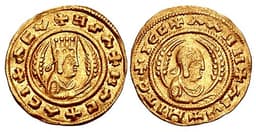
Ezana of Axum
Emperor · Ancient
57.0Total
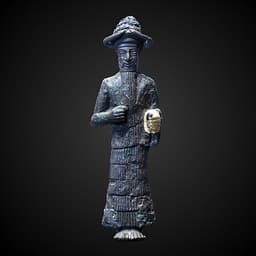
Shilhak-Inshushinak
Emperor · Ancient
54.1Total
Basic Information
Born
325
-1140
Died
356
-1120
Era
Ancient
Ancient
Nationality
Axum
Elam
Occupation
Emperor
Emperor
Civilization
Other
Middle Eastern
Score Comparison
Military (10%)
50.0
67.3
Political (20%)
68.0
48.0
Influence (20%)
61.0
52.5
Legacy (20%)
58.0
42.5
Leadership (15%)
40.0
65.0
Strategy (15%)
60.0
66.3
TOTAL
57.0
54.1
Ezana of Axum — Complete Timeline
330 AD
Conversion to ChristianityCultural
Ezana converted to Christianity under the influence of Frumentius, a Syrian Christian who became bishop of Axum. Ezana declared Christianity the state religion of Axum, making it one of the earliest Christian kingdoms.
ChristianizationState ReligionFrumentius
Impact: globalconstructive
Issuance of CoinageCultural◆ Major
Ezana introduced gold, silver, and bronze coins bearing Christian symbols, such as the cross. These coins facilitated trade across the Red Sea and Indian Ocean, and their inscriptions in Ge'ez and Greek reflect Axum's cultural connections.
CoinageTradeChristian Symbolism
Impact: regionalconstructive
Inscription at AxumCultural
Ezana erected a stone inscription in Ge'ez, Greek, and Sabaean at Axum, recording his military victories and his conversion to Christianity. The inscription invokes the Christian God instead of pagan deities, marking a religious shift.
InscriptionPropagandaReligious Shift
Impact: regional
340 AD
Campaign against the BejaWar
Ezana conducted a military campaign against the Beja people, who raided Axumite territory. He defeated them and imposed tribute, securing the northern borders of his kingdom and protecting trade routes to the Red Sea.
Military CampaignBejaBorder Security
Impact: regional
350 AD
Conquest of MeroëWar◆ Major
Ezana led a military campaign against the Kingdom of Kush, conquering its capital Mero
ConquestKushMeroë
Impact: regional
Shilhak-Inshushinak — Complete Timeline
1140 BC
Reign as Greatest Elamite Warrior KingPolitical Action◆ Major
Shilhak-Inshushinak ascended to the Elamite throne and began a reign marked by extensive military campaigns. He is considered the greatest Elamite warrior king, expanding the empire to its largest territorial extent.
Elamite EmpireWarrior KingExpansion
Impact: regional
1135 BC
Expansion into MesopotamiaWar◆ Major
Shilhak-Inshushinak launched a series of military campaigns into Mesopotamia, conquering territories as far as the Diyala River. He captured cities such as Der and Eshnunna, extending Elamite control deep into the region.
Elamite ExpansionMesopotamiaConquest
Impact: regionaldestructive
1132 BC
Campaign against the KassitesWar
Shilhak-Inshushinak fought against the Kassite remnants in the Zagros Mountains. He defeated their forces and secured the eastern borders of Elam, preventing any Kassite resurgence.
Kassite WarZagrosElamite Victory
Impact: regionaldestructive
1130 BC
Construction of the Temple of InshushinakCultural
Shilhak-Inshushinak ordered the construction of a grand temple dedicated to the god Inshushinak in Susa. The temple was decorated with inscriptions and reliefs celebrating his military victories and piety.
Temple ConstructionInshushinakSusa
constructive
Expert Analysis
Origins
**Ezana of Axum** (born c. 320 AD) was the son of King Ella Amida and succeeded his father as ruler of the Kingdom of Axum, a powerful trading state in the Horn of Africa. His early life was shaped by the influence of Frumentius, a Syrian Christian who had been captured and later rose to become a trusted advisor. Ezana was likely educated by Frumentius, which laid the groundwork for his later conversion.
**Shilhak-Inshushinak** (reigned c. 1150–1120 BC) was an Elamite king from the Shutrukid dynasty. He was the son of Shutruk-Nahhunte I and brother to Kutir-Nahhunte III. Elam, centered in southwestern Iran, had a long history of conflict with Mesopotamia. Shilhak-Inshushinak grew up in a militaristic court and was trained for war from an early age.
Rise to Power
Ezana ascended to the throne of Axum around 330 AD, likely as a child. His early rule was marked by regency, possibly under his mother or Frumentius. By 340 AD, he had consolidated power and embarked on campaigns against the Beja nomads and the Kingdom of Kush. His decisive victory over Meroë in c. 350 AD ended the Meroitic kingdom and extended Axumite control far south.
Shilhak-Inshushinak came to power after his brother's brief reign. He immediately launched military campaigns to expand Elamite territory. His major achievement was the conquest of Mesopotamian cities such as Eshnunna and Der, reaching the Diyala River. He also fought against the Kassites in the Zagros Mountains, securing Elam's eastern borders. His reign is considered the apex of Elamite military power.
Leadership & Governance
Ezana's leadership was transformative: he made Christianity the state religion of Axum, the first such adoption in sub-Saharan Africa. He issued coins with Christian symbols (the cross), which facilitated trade across the Red Sea and Indian Ocean. His inscriptions, written in Ge'ez, Greek, and Sabaean, show a ruler who valued multiculturalism and record-keeping. Politically, he centralized power and used religion to unify his diverse realm.
Shilhak-Inshushinak governed as a warrior-king, focused on military expansion and temple building. He constructed a grand temple to the god Inshushinak in Susa, adorned with inscriptions glorifying his deeds. His governance was less about institutional reform and more about personal prestige through conquest. He relied on tribute from conquered cities and maintained control through force.
Triumph & Tragedy
Ezana's greatest triumph was his conversion to Christianity, which created a lasting Christian tradition in Ethiopia that continues today. His conquest of Meroë eliminated a rival and opened trade routes. However, his military score of 50.0 reflects limited expansion beyond Kush; he did not conquer significant new territories in Arabia or elsewhere. His political score of 68.0 shows effective state-building, but his leadership score of 40.0 suggests he may have been overshadowed by his advisors.
Shilhak-Inshushinak's triumphs were military: he expanded Elam into Mesopotamia, scoring 67.3 in military and 66.3 in strategy. He captured key cities and defeated the Kassites. However, his political score of 48.0 indicates instability; his conquests did not lead to lasting Elamite control. After his death, Elam declined rapidly. His legacy score of 42.5 is low because his achievements were overshadowed by later Mesopotamian empires.
Character & Destiny
Ezana was a pragmatic ruler who embraced a new religion to unify his kingdom and connect with the Roman world. His decision to adopt Christianity was strategic, aligning Axum with the powerful Christian Roman Empire. His character was cautious but decisive when needed. His destiny was to create a Christian kingdom that would endure for centuries.
Shilhak-Inshushinak was a warrior through and through. His character was aggressive and expansionist, but he lacked the political acumen to secure his gains. His destiny was to be remembered as the greatest Elamite warrior king, but also as a ruler whose empire crumbled after his death. His total score of 54.1 reflects a one-dimensional greatness.
Legacy
Ezana's legacy is profound: he established Christianity in Ethiopia, which remains a major religion. His coinage and inscriptions provide key historical records. The Axumite kingdom continued for centuries after his death, influencing the region. His influence score of 61.0 and legacy score of 58.0 reflect this lasting impact.
Shilhak-Inshushinak's legacy is more limited. Elam was eventually absorbed by the Assyrian and Persian empires. His temple and inscriptions survive but are less known. His military achievements were impressive but temporary. His legacy score of 42.5 shows that his impact faded with his empire.
Conclusion
While Shilhak-Inshushinak was a formidable warrior with higher military and strategy scores (67.3 and 66.3 vs. 50.0 and 60.0), Ezana's overall impact was greater. His political score of 68.0 and influence of 61.0, combined with a legacy that endures to this day, give him a higher total score of 57.0 vs. 54.1. Ezana's conversion to Christianity created a lasting cultural and religious identity, whereas Shilhak-Inshushinak's conquests were ephemeral. Therefore, Ezana of Axum had a greater historical impact.
Rankings
🥇
Ezana of AxumLeader
Mil: 50.0Pol: 68.0Inf: 61.0
57.0
🥈
Shilhak-Inshushinak
Mil: 67.3Pol: 48.0Inf: 52.5
54.1
+2.9 behind
How This Comparison Works
Algorithm
Each figure is scored on 6 dimensions (0—100 scale) based on structured historical data: Military (10%), Political (20%), Influence (20%), Legacy (20%), Leadership (15%), Strategy (15%). The weighted total produces the final ranking.
Data Sources
Scores are computed from structured sub-indicators in the database. Scale factors adjust for era (Ancient ×0.85, Modern ×1.0) and civilization size (Eastern ×1.05, Other ×0.80) to account for differences in population and military scale.
Maximum 3 Figures
Comparisons are limited to 2—3 figures to ensure readability and statistical meaningfulness.
Error Margins
±5 points per dimension — Sub-scores are derived from historical records with inherent uncertainty. Two figures within 5 points on a dimension should be considered roughly equivalent in that area.
Total Score Accuracy
±3 points overall — The weighted combination of 6 dimensions produces a total score with approximately ±3 points of uncertainty. Differences of less than 3 points are not statistically significant— the figures are effectively tied.
Known Limitations
- Historical records are incomplete and uneven across civilizations
- Figures from oral-tradition societies may be underrepresented
- Occupation labels can misclassify multi-role figures
- Scores measure capability and impact, not moral character
- Quantitative scoring is a comparison tool, not absolute truth
Capability Radar
Military (10%) — Battles & Warfare
Battles
45
65
Win Rate
50
70
Expansion
55
70
Political (20%) — Governance & Reform
Reform
65
45
Diplomacy
55
50
Economy
50
40
Influence (20%) — Cultural & Global Reach
Cultural
70
40
Global
55
35
Legacy (20%) — Historical Impact
Historical
70
45
Longevity
65
30
Leadership (15%) — Power & Stability
Tenure
60
55
Stability
55
45
Strategy (15%) — Tactics & Innovation
Strategy
50
65
Tactics
40
60
Reform
30
50
Similar Comparisons
Comments & Discussion
No comments yet. Be the first to share your thoughts!