Loading...
Ezana of Axum vs Ptolemy IX Soter II
Ezana of Axum leads by 16.4 pts · 2 figures compared
…
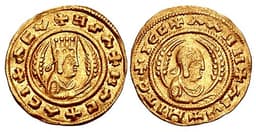
Ezana of Axum
Emperor · Ancient
57.0Total
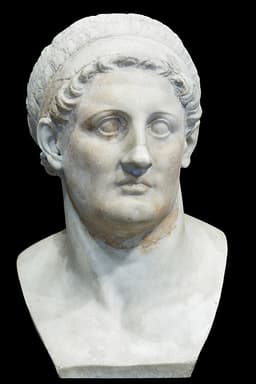
Ptolemy IX Soter II
Emperor · Ancient
40.6Total
Basic Information
Born
325
-142
Died
356
-80
Era
Ancient
Ancient
Nationality
Axum
Ptolemaic Kingdom
Occupation
Emperor
Emperor
Civilization
Other
Middle Eastern
Score Comparison
Military (10%)
50.0
45.0
Political (20%)
68.0
27.9
Influence (20%)
61.0
46.3
Legacy (20%)
58.0
39.2
Leadership (15%)
40.0
45.0
Strategy (15%)
60.0
38.3
TOTAL
57.0
40.6
Ezana of Axum — Complete Timeline
330 AD
Conversion to ChristianityCultural
Ezana converted to Christianity under the influence of Frumentius, a Syrian Christian who became bishop of Axum. Ezana declared Christianity the state religion of Axum, making it one of the earliest Christian kingdoms.
ChristianizationState ReligionFrumentius
Impact: globalconstructive
Issuance of CoinageCultural◆ Major
Ezana introduced gold, silver, and bronze coins bearing Christian symbols, such as the cross. These coins facilitated trade across the Red Sea and Indian Ocean, and their inscriptions in Ge'ez and Greek reflect Axum's cultural connections.
CoinageTradeChristian Symbolism
Impact: regionalconstructive
Inscription at AxumCultural
Ezana erected a stone inscription in Ge'ez, Greek, and Sabaean at Axum, recording his military victories and his conversion to Christianity. The inscription invokes the Christian God instead of pagan deities, marking a religious shift.
InscriptionPropagandaReligious Shift
Impact: regional
340 AD
Campaign against the BejaWar
Ezana conducted a military campaign against the Beja people, who raided Axumite territory. He defeated them and imposed tribute, securing the northern borders of his kingdom and protecting trade routes to the Red Sea.
Military CampaignBejaBorder Security
Impact: regional
350 AD
Conquest of MeroëWar◆ Major
Ezana led a military campaign against the Kingdom of Kush, conquering its capital Mero
ConquestKushMeroë
Impact: regional
Ptolemy IX Soter II — Complete Timeline
116 BC
First Reign as King of EgyptPolitical Action◆ Major
Ptolemy IX ascended to the throne after the death of Ptolemy VIII, ruling jointly with his mother Cleopatra III. His reign was marked by conflict with his mother, who favored his brother Ptolemy X.
AccessionCo-RulershipDynastic Conflict
Impact: national
107 BC
Expulsion by Cleopatra IIIPolitical Action◆ Major
Cleopatra III forced Ptolemy IX to flee Egypt, replacing him with his brother Ptolemy X. Ptolemy IX went to Cyprus, where he ruled as a client king, but continued to plot his return.
ExileDynastic IntrigueCyprus
Impact: nationaldestructive
88 BC
Second Reign as King of EgyptPolitical Action◆ Major
After Ptolemy X's death, Ptolemy IX returned to Egypt and reclaimed the throne. His second reign was short, lasting only until his death in 80 BC, but he managed to restore some stability.
RestorationSecond ReignStability
Impact: nationalconstructive
Expert Analysis
Origins
**Ezana of Axum** was born around 320 AD into the royal family of the Kingdom of Axum, located in present-day Ethiopia and Eritrea. His father was King Ella Amida, and his mother was likely a noblewoman. After his father's death, Ezana ascended the throne as a child, with his mother serving as regent. He was educated by Frumentius, a Syrian Christian who had been shipwrecked on the Red Sea coast and later became a trusted advisor. This early exposure to Christianity shaped Ezana's worldview.
**Ptolemy IX Soter II**, nicknamed Lathyros (meaning "chickpea"), was born around 143 BC into the Ptolemaic dynasty of Egypt, a Hellenistic kingdom founded by Ptolemy I, a general of Alexander the Great. His parents were Ptolemy VIII Physcon and Cleopatra III. He grew up in a court rife with intrigue, as his father had a tumultuous marriage with Cleopatra III, who wielded significant power. Ptolemy IX received a Greek education typical of the Ptolemaic elite, focusing on philosophy, rhetoric, and military training.
Rise to Power
**Ezana** became king of Axum around 320 AD after his father's death. As a minor, his mother ruled as regent until he came of age. His early reign focused on consolidating power and expanding Axum's territory. The key turning point was his conversion to Christianity around 330 AD, influenced by Frumentius, who later became the first Bishop of Axum. Ezana declared Christianity the state religion, aligning Axum with the Roman Empire and distinguishing it from neighboring pagan and Jewish kingdoms.
**Ptolemy IX** first became king of Egypt in 116 BC after the death of his father Ptolemy VIII. He ruled jointly with his mother Cleopatra III, but their relationship was fraught with conflict. Cleopatra III preferred his younger brother Ptolemy X and eventually forced Ptolemy IX to flee to Cyprus in 107 BC. He ruled Cyprus as a client king until the death of Ptolemy X in 88 BC, when he returned to Egypt and reclaimed the throne for a second reign that lasted until his death in 80 BC.
Leadership & Governance
**Ezana** adopted a centralized monarchy with strong religious backing. He used Christianity to unify his diverse kingdom, issuing coins with the cross symbol and commissioning inscriptions in Ge'ez, Greek, and Sabaean that proclaimed his victories and faith. He also introduced a standardized coinage system that facilitated trade across the Red Sea and Indian Ocean. His governance relied on a combination of military might and ideological conversion, as seen in his treatment of conquered peoples like the Beja, whom he defeated and then imposed tribute rather than annihilation.
**Ptolemy IX** faced constant internal strife due to the Ptolemaic tradition of sibling rivalry and co-rule. His first reign was marked by a power struggle with his mother, who controlled much of the administration. He was unable to stabilize the kingdom, leading to his expulsion. In his second reign, he attempted to restore order but died shortly after. His leadership was reactive, focusing on survival rather than long-term reform. The Ptolemaic bureaucracy remained corrupt and inefficient, with heavy taxation and reliance on mercenaries.
Triumph & Tragedy
**Ezana's** greatest triumph was the conquest of Meroë, capital of the Kingdom of Kush, around 330 AD. This campaign ended the Meroitic kingdom and extended Axumite control over the Nile Valley, securing trade routes and resources. His conversion to Christianity also ensured the survival of a Christian kingdom in Africa that would last centuries. However, his military campaigns were limited in scope compared to larger empires, and Axum's influence waned after his death due to economic decline and Islamic expansion.
**Ptolemy IX's** greatest success was surviving multiple political upheavals and reclaiming the throne after years in exile. He maintained Ptolemaic rule over Egypt and Cyprus, preserving the dynasty. However, his reign was plagued by civil war, economic instability, and loss of territories. His expulsion by his mother was a humiliating failure, and his second reign was too short to achieve lasting reforms. The Ptolemaic kingdom continued its decline, culminating in Roman annexation a few decades later.
Character & Destiny
**Ezana** was a decisive and visionary ruler. His conversion to Christianity was a strategic move that aligned Axum with the Roman world and provided a unifying ideology. He was also pragmatic, using inscriptions in multiple languages to project power. His campaigns were calculated, and he showed mercy to defeated enemies like the Beja, integrating them into his realm. His character combined religious fervor with political acumen, leading to a stable and prosperous reign.
**Ptolemy IX** was cautious and perhaps indecisive, often outmaneuvered by his mother Cleopatra III. He was known as Soter (Savior) but did little to earn the title. His exile to Cyprus showed resilience, but he lacked the ruthlessness to consolidate power. Ancient sources describe him as mild-mannered but weak, unable to control the court factions. His destiny was tied to the dysfunctional Ptolemaic system, which consumed him.
Legacy
**Ezana** is remembered as the king who made Axum a Christian state, a decision that shaped Ethiopian identity for centuries. His coinage and inscriptions provide valuable historical records. The Axumite kingdom became a major trading power, connecting Africa, Arabia, and India. His legacy scored 58.0 in Legacy, reflecting his enduring religious and cultural impact.
**Ptolemy IX** is a minor figure in Ptolemaic history, overshadowed by his more famous relatives like Cleopatra VII. His reign did little to halt the decline of the kingdom, and his legacy scored 39.2. He is remembered mainly for his nickname Lathyros and his turbulent family relationships.
Conclusion
Ezana of Axum had a greater impact than Ptolemy IX Soter II. With a total score of 57.0 compared to Ptolemy's 40.6, Ezana's conversion to Christianity and conquest of Meroë established a lasting Christian kingdom in Africa, influencing religion, trade, and politics for centuries. Ptolemy IX, while maintaining Ptolemaic rule, failed to achieve any transformative change and presided over a declining kingdom. Ezana's leadership was more visionary and effective, leaving a legacy that outlasted the Ptolemaic dynasty. The data supports Ezana as the more significant historical figure.
Rankings
🥇
Ezana of AxumLeader
Mil: 50.0Pol: 68.0Inf: 61.0
57.0
🥈
Ptolemy IX Soter II
Mil: 45.0Pol: 27.9Inf: 46.3
40.6
+16.4 behind
How This Comparison Works
Algorithm
Each figure is scored on 6 dimensions (0—100 scale) based on structured historical data: Military (10%), Political (20%), Influence (20%), Legacy (20%), Leadership (15%), Strategy (15%). The weighted total produces the final ranking.
Data Sources
Scores are computed from structured sub-indicators in the database. Scale factors adjust for era (Ancient ×0.85, Modern ×1.0) and civilization size (Eastern ×1.05, Other ×0.80) to account for differences in population and military scale.
Maximum 3 Figures
Comparisons are limited to 2—3 figures to ensure readability and statistical meaningfulness.
Error Margins
±5 points per dimension — Sub-scores are derived from historical records with inherent uncertainty. Two figures within 5 points on a dimension should be considered roughly equivalent in that area.
Total Score Accuracy
±3 points overall — The weighted combination of 6 dimensions produces a total score with approximately ±3 points of uncertainty. Differences of less than 3 points are not statistically significant— the figures are effectively tied.
Known Limitations
- Historical records are incomplete and uneven across civilizations
- Figures from oral-tradition societies may be underrepresented
- Occupation labels can misclassify multi-role figures
- Scores measure capability and impact, not moral character
- Quantitative scoring is a comparison tool, not absolute truth
Capability Radar
Military (10%) — Battles & Warfare
Battles
45
30
Win Rate
50
35
Expansion
55
10
Political (20%) — Governance & Reform
Reform
65
15
Diplomacy
55
30
Economy
50
20
Influence (20%) — Cultural & Global Reach
Cultural
70
20
Global
55
15
Legacy (20%) — Historical Impact
Historical
70
25
Longevity
65
20
Leadership (15%) — Power & Stability
Tenure
60
40
Stability
55
15
Strategy (15%) — Tactics & Innovation
Strategy
50
25
Tactics
40
30
Reform
30
10
Similar Comparisons
Comments & Discussion
No comments yet. Be the first to share your thoughts!