Loading...
Ezana of Axum vs King Huai of Chu
Ezana of Axum leads by 21.1 pts · 2 figures compared
…
Ezana of Axum
Emperor · Ancient
57.0Total

King Huai of Chu
Emperor · Ancient
35.9Total
Basic Information
Born
325
-355
Died
356
-296
Era
Ancient
Ancient
Nationality
Axum
China
Occupation
Emperor
Emperor
Civilization
Other
Eastern
Score Comparison
Military (10%)
50.0
21.2
Political (20%)
68.0
32.1
Influence (20%)
61.0
43.2
Legacy (20%)
58.0
35.8
Leadership (15%)
40.0
31.2
Strategy (15%)
60.0
45.0
TOTAL
57.0
35.9
Ezana of Axum — Complete Timeline
330 AD
Conversion to ChristianityCultural
Ezana converted to Christianity under the influence of Frumentius, a Syrian Christian who became bishop of Axum. Ezana declared Christianity the state religion of Axum, making it one of the earliest Christian kingdoms.
ChristianizationState ReligionFrumentius
Impact: globalconstructive
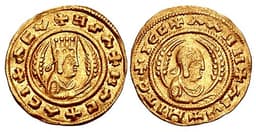
Issuance of CoinageCultural◆ Major
Ezana introduced gold, silver, and bronze coins bearing Christian symbols, such as the cross. These coins facilitated trade across the Red Sea and Indian Ocean, and their inscriptions in Ge'ez and Greek reflect Axum's cultural connections.
CoinageTradeChristian Symbolism
Impact: regionalconstructive
Inscription at AxumCultural
Ezana erected a stone inscription in Ge'ez, Greek, and Sabaean at Axum, recording his military victories and his conversion to Christianity. The inscription invokes the Christian God instead of pagan deities, marking a religious shift.
InscriptionPropagandaReligious Shift
Impact: regional
340 AD
Campaign against the BejaWar
Ezana conducted a military campaign against the Beja people, who raided Axumite territory. He defeated them and imposed tribute, securing the northern borders of his kingdom and protecting trade routes to the Red Sea.
Military CampaignBejaBorder Security
Impact: regional
350 AD
Conquest of MeroëWar◆ Major
Ezana led a military campaign against the Kingdom of Kush, conquering its capital Mero
ConquestKushMeroë
Impact: regional
King Huai of Chu — Complete Timeline
299 BC
Tricked and Captured by Qin at WuguanPolitical Action◆ Major
King Huai of Chu was lured to a meeting at Wuguan by King Zhaoxiang of Qin, who promised peace. Instead, Qin forces captured him and held him hostage, demanding territory from Chu.
CaptureChuQin
Impact: regionaltragic
296 BC
Died in Captivity in QinPolitical Action◆ Major
King Huai of Chu died while still a prisoner in Qin. His death led to the ascension of his son King Qingxiang of Chu and deepened the enmity between Chu and Qin.
DeathChuQin
Impact: regionaltragic
Expert Analysis
Origins
**Ezana of Axum** was born around 320 CE into the royal family of the Kingdom of Axum, a powerful trading state in the Horn of Africa. His father, King Ella Amida, died when Ezana was young, and his mother, Queen Sofya, served as regent. Ezana was educated by Frumentius, a Syrian Christian who had been shipwrecked in Axum and rose to become a trusted advisor. This early exposure to Christianity shaped Ezana's worldview and later policies.
**King Huai of Chu** (born around 330 BCE) was a ruler of the Chu state during the Warring States period in China. He ascended the throne around 328 BCE, inheriting a large but politically fragmented kingdom. Chu was one of the seven major states, known for its military strength and cultural distinctiveness. Little is known about his early life, but his reign was marked by the growing threat of Qin to the west.
Rise to Power
Ezana became king of Axum around 330 CE after his mother's regency ended. His early reign focused on consolidating power and expanding Axum's influence. The turning point came when he officially converted to Christianity around 340 CE, making it the state religion. This decision was influenced by Frumentius, who became the first bishop of Axum. Ezana's conversion aligned Axum with the Roman Empire and opened trade and diplomatic ties. He also began issuing coins with Christian symbols, such as the cross, which facilitated trade across the Red Sea and Indian Ocean.
King Huai of Chu rose to power as the ruler of a major state. His early reign saw Chu's continued rivalry with Qin. In 313 BCE, he was tricked by Qin diplomat Zhang Yi into breaking an alliance with Qi, weakening Chu's position. This miscalculation led to military defeats. Later, in 299 BCE, King Huai was lured to a meeting at Wuguan by King Zhaoxiang of Qin under the pretense of peace negotiations. Instead, he was captured and held hostage. This event marked his downfall and the end of his effective rule.
Leadership & Governance
Ezana's leadership was characterized by strategic state-building and cultural transformation. He centralized power in Axum and promoted Christianity as a unifying force. His governance included building churches, supporting the clergy, and using coinage to spread Christian iconography. He also maintained Axum's traditional role as a trading hub, controlling routes to the Red Sea and beyond. His military campaigns, such as the conquest of Meroë, extended Axumite control over the Kingdom of Kush. Ezana's political score of 68.0 reflects his ability to consolidate power and institute lasting reforms.
King Huai's leadership was marked by poor strategic decisions and a failure to counter Qin's expansion. He was indecisive and easily manipulated, as seen in his acceptance of Zhang Yi's false promises. His governance relied on traditional Chu nobility, but he lacked the ability to forge strong alliances or modernize his state. His leadership score of 31.2 indicates his ineffectiveness. He failed to anticipate Qin's treachery and was captured, leading to a decade of captivity until his death in 296 BCE.
Triumph & Tragedy
Ezana's greatest triumph was the conversion of Axum to Christianity, which established the kingdom as a Christian state in Africa and aligned it with the broader Christian world. He also conquered Meroë, ending the Kingdom of Kush and expanding Axum's territory. His issuance of coinage facilitated trade and spread Axumite influence. However, his conquests may have overstretched resources, and after his death, Axum gradually declined. There is no record of major failures during his reign, but the lack of a strong succession plan is a possible weakness.
King Huai's tragedy is defined by his capture and death in captivity. His greatest failure was being tricked by Qin, which not only ended his reign but also weakened Chu's position. His death led to the ascension of his son King Qingxiang, who continued the war with Qin. King Huai's legacy is one of naivety and strategic blunder. He had no major triumphs; his military score of 21.2 reflects his inability to defend his kingdom effectively. His capture is a cautionary tale in Chinese history about trusting enemies.
Character & Destiny
Ezana was a visionary ruler who embraced change and used religion to unify his realm. His decision to convert to Christianity shows strategic thinking and a willingness to adopt foreign ideas. He was also pragmatic, maintaining Axum's trade networks while introducing new cultural elements. His character shaped a destiny of expansion and cultural transformation. Historians view him as a pivotal figure in African history, with his reign marking Axum's golden age.
King Huai was trusting and indecisive, leading to his downfall. His character was ill-suited for the ruthless politics of the Warring States period. He failed to heed advice from ministers like Qu Yuan, who warned against trusting Qin. His destiny was sealed by his own naivety. Chinese historical assessments often portray him as a tragic figure, but also as a ruler whose weakness contributed to Chu's decline.
Legacy
Ezana's legacy is profound: he made Axum the first Christian state in Africa and established a tradition that lasted centuries. The Axumite Empire became a major power, and its Christian heritage influenced Ethiopia's later history. The coins he issued are archaeological evidence of his reign and the spread of Christianity. His influence score of 61.0 reflects this enduring impact. The Ethiopian Orthodox Church traces its origins to his conversion. Ezana is remembered as a saint in some traditions.
King Huai's legacy is largely negative. He is remembered as the king who was captured by Qin, symbolizing the dangers of political naivety. His story is told in Chinese historical texts like the Records of the Grand Historian. His failure contributed to Chu's eventual conquest by Qin in 223 BCE. His legacy score of 35.8 is modest. He is a cautionary figure rather than a model ruler.
Conclusion
Ezana of Axum had a far greater impact than King Huai of Chu. With a total score of 57.0 compared to Huai's 35.9, Ezana's achievements in state-building, religious conversion, and military expansion transformed a regional kingdom into a lasting empire. His decision to adopt Christianity shaped the course of African and Christian history. King Huai, in contrast, is remembered for a single catastrophic mistake: trusting an enemy. While both ruled during ancient times, Ezana's legacy is one of creation and influence, while Huai's is one of failure and decline. The data supports the conclusion that Ezana was the more effective and historically significant ruler.
Rankings
🥇
Ezana of AxumLeader
Mil: 50.0Pol: 68.0Inf: 61.0
57.0
🥈
King Huai of Chu
Mil: 21.2Pol: 32.1Inf: 43.2
35.9
+21.1 behind
How This Comparison Works
Algorithm
Each figure is scored on 6 dimensions (0—100 scale) based on structured historical data: Military (10%), Political (20%), Influence (20%), Legacy (20%), Leadership (15%), Strategy (15%). The weighted total produces the final ranking.
Data Sources
Scores are computed from structured sub-indicators in the database. Scale factors adjust for era (Ancient ×0.85, Modern ×1.0) and civilization size (Eastern ×1.05, Other ×0.80) to account for differences in population and military scale.
Maximum 3 Figures
Comparisons are limited to 2—3 figures to ensure readability and statistical meaningfulness.
Error Margins
±5 points per dimension — Sub-scores are derived from historical records with inherent uncertainty. Two figures within 5 points on a dimension should be considered roughly equivalent in that area.
Total Score Accuracy
±3 points overall — The weighted combination of 6 dimensions produces a total score with approximately ±3 points of uncertainty. Differences of less than 3 points are not statistically significant— the figures are effectively tied.
Known Limitations
- Historical records are incomplete and uneven across civilizations
- Figures from oral-tradition societies may be underrepresented
- Occupation labels can misclassify multi-role figures
- Scores measure capability and impact, not moral character
- Quantitative scoring is a comparison tool, not absolute truth
Capability Radar
Military (10%) — Battles & Warfare
Battles
45
10
Win Rate
50
5
Expansion
55
5
Political (20%) — Governance & Reform
Reform
65
10
Diplomacy
55
5
Economy
50
15
Influence (20%) — Cultural & Global Reach
Cultural
70
10
Global
55
5
Legacy (20%) — Historical Impact
Historical
70
20
Longevity
65
15
Leadership (15%) — Power & Stability
Tenure
60
30
Stability
55
5
Strategy (15%) — Tactics & Innovation
Strategy
50
5
Tactics
40
5
Reform
30
5
Similar Comparisons
Comments & Discussion
No comments yet. Be the first to share your thoughts!