Loading...
Etienne Tshisekedi vs Napoleon Bonaparte
Napoleon Bonaparte leads by 30.6 pts · 2 figures compared
…
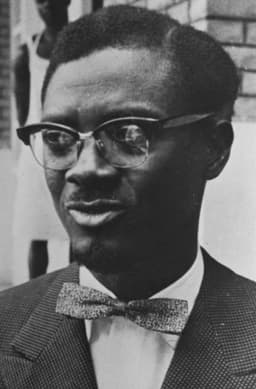
Etienne Tshisekedi
Politician · Modern
40.3Total

Napoleon Bonaparte
General · Modern
70.9Total
Basic Information
Born
1932
1769
Died
—
1821
Era
Modern
Modern
Nationality
DR Congo
France
Occupation
Politician
General
Civilization
Other
Western
Score Comparison
Military (10%)
11.5
94.0
Political (20%)
36.5
72.0
Influence (20%)
50.2
40.0
Legacy (20%)
41.7
80.0
Leadership (15%)
41.5
78.0
Strategy (15%)
44.5
90.0
TOTAL
40.3
70.9
Etienne Tshisekedi — Complete Timeline
1982 AD
Founded Union for Democracy and Social Progress (UDPS)Political Action◆ Major
Tshisekedi co-founded the UDPS, the main opposition party in DR Congo under Mobutu's dictatorship. The party advocated for democratic reforms and multi-party elections, facing severe repression from the regime.
Opposition PartyDemocracyMobutu
Impact: nationalprogressive
1991 AD
Appointed Prime Minister Multiple TimesPolitical Action◆ Major
Tshisekedi was appointed prime minister three times during the transition period (1991, 1992, 1997) but was each time dismissed or sidelined by Mobutu. His brief tenures were marked by political paralysis and conflict with the presidency.
Prime MinisterPolitical TransitionMobutu
Impact: national
1997 AD
Refused to Recognize Kabila GovernmentPolitical Action
After Laurent Kabila overthrew Mobutu, Tshisekedi refused to recognize the new government, calling for a national dialogue. He was placed under house arrest and later exiled, continuing his role as a persistent opposition figure.
OppositionKabilaPolitical Conflict
Impact: national
Napoleon Bonaparte — Complete Timeline
1799 AD
Coup of 18 BrumaireOther◆ Major
Napoleon Bonaparte, with support from his brother Lucien and key political figures, overthrew the Directory in a bloodless coup. He established the Consulate with himself as First Consul, effectively becoming the ruler of France. This event ended the French Revolution's most unstable period.
French RevolutionCoupRise to Power
Impact: regional
1804 AD
Promulgation of the Napoleonic CodeOther◆ Major
Napoleon enacted the Civil Code of the French, known as the Napoleonic Code, a comprehensive set of laws that replaced the fragmented feudal legal systems. The code established legal equality, protected property rights, and secularized law. It became the basis for legal systems in many European and world countries.
Legal ReformNapoleonic CodeCivil Law
Impact: globalconstructive
1805 AD
Battle of AusterlitzWar◆ Major
Napoleon's Grande Arm
Napoleonic WarsBattleDecisive Victory
Impact: global
1812 AD
Invasion of RussiaWar◆ Major
Napoleon led the Grande Arm
Napoleonic WarsInvasionDisaster
Impact: globaldestructive
1815 AD
Battle of WaterlooWar◆ Major
Napoleon's French army was defeated by the combined forces of the Duke of Wellington's Anglo-Allied army and Gebhard Leberecht von Bl
Napoleonic WarsBattleFinal Defeat
Impact: globaldestructive
Expert Analysis
etienne-tshisekedi-vs-napoleon-bonaparte
# The Emperor and the Dissident: Two Paths to Power, Two Visions of Destiny
On a frozen December morning in 1805, Napoleon Bonaparte stood on the heights of Austerlitz, watching his Grand Army crush the combined forces of Russia and Austria. The sun, which had broken through the mist just as the battle began, would forever be remembered as the "Sun of Austerlitz" — a symbol of his seemingly invincible genius. Nearly two centuries later, on the dusty streets of Kinshasa in 1991, Étienne Tshisekedi stood before a crowd of hundreds of thousands, his voice hoarse but unbroken, demanding an end to Mobutu Sese Seko's three-decade dictatorship. One man commanded armies that reshaped a continent; the other commanded only his convictions. Yet both believed they were fighting for a new order. What separates a conqueror from a crusader, and why do their paths diverge so dramatically?
Origins
Napoleon Bonaparte was born in 1769 on the Mediterranean island of Corsica, a land recently annexed by France. His family were minor nobles of Italian origin, struggling to find their place in a foreign system. Young Napoleon was sent to mainland France for military school, where he was mocked for his accent and small stature. This outsider status forged a fierce ambition. He devoured history and military strategy, dreaming of Alexander and Caesar. The French Revolution, which erupted when he was twenty, shattered the old hierarchies and opened a path for talent over birth. Napoleon was a child of revolution — and of chaos.
Étienne Tshisekedi was born in 1932 in the Belgian Congo, a colony built on rubber and brutality. His father was a clerk, a rare position for an African under colonial rule. Tshisekedi studied law in Belgium, where he encountered the ideas of democracy and self-determination that were sweeping the postwar world. When the Congo gained independence in 1960, he returned to a nation immediately plunged into crisis — a secession, a civil war, and the assassination of its first prime minister, Patrice Lumumba. Tshisekedi entered politics in the shadow of that tragedy, under the iron fist of Mobutu, who seized power in 1965 and renamed the country Zaire. Where Napoleon saw revolution as opportunity, Tshisekedi saw it as a betrayal.
Rise to Power
Napoleon's ascent was meteoric. In 1793, at age twenty-four, he drove British forces from the port of Toulon and was promoted to brigadier general. By 1796, he commanded the French army in Italy, where he won a series of stunning victories against the Austrians. His 1798 campaign in Egypt was a strategic failure but a propaganda triumph — he brought scientists and scholars, not just soldiers. When he returned to a France weary of corruption and war, he seized power in the 1799 coup of 18 Brumaire. In four years, he had gone from unknown Corsican to First Consul. In ten, he would be Emperor.
Tshisekedi's rise was a slow, grinding war of attrition. He served in Mobutu's government in the 1960s and 1970s, rising to become minister of the interior. But in 1982, he co-founded the Union for Democracy and Social Progress (UDPS), the first serious opposition party in Zaire. This was an act of extraordinary courage. Mobutu's regime was a police state; opponents were jailed, tortured, or killed. Tshisekedi was arrested repeatedly, placed under house arrest, and exiled. Yet he never wavered. In 1991, as Mobutu's power crumbled under economic collapse and international pressure, Tshisekedi was appointed prime minister — three times, and each time dismissed within months. He was a leader without an army, in a country where the state was a mafia.
Leadership & Governance
Napoleon governed with breathtaking energy. He centralized the French state, established the Bank of France, and most famously, codified French law in the Napoleonic Code — a system that enshrined equality before the law, property rights, and secular administration. It remains the foundation of civil law in much of Europe and the world. His military genius was unmatched: he revolutionized warfare with speed, massed artillery, and the corps system. At Austerlitz in 1805, he lured the Allies into attacking his deliberately weakened right flank, then crushed their center. His leadership score of 80 reflects a man who could inspire soldiers to die for a scrap of ribbon — but also a man who demanded absolute loyalty.
Tshisekedi governed through moral authority alone. As prime minister, he had no control over the army, the treasury, or the secret police. His power was the power of the street — the millions of Congolese who saw him as the only honest man in a corrupt system. His political score of 52.5 suggests a man who was more symbol than strategist. He refused to compromise with Mobutu, then refused to recognize Laurent Kabila's government in 1997, calling for a national dialogue. This purity was his strength and his weakness. He could not build institutions because he could not seize power; he could not seize power because he would not use force.
Triumph & Tragedy
Napoleon's greatest moment was Austerlitz, where he annihilated the Third Coalition. His empire stretched from Spain to Poland. But his tragedy was hubris. The 1812 invasion of Russia cost half a million men. He refused peace offers, fought on, and was exiled to Elba in 1814. He returned for the Hundred Days, but at Waterloo in 1815, his genius failed him. He died in 1821 on Saint Helena, a prisoner, at age fifty-one. His total score of 82.4 reflects a man who achieved the near-impossible, then threw it away.
Tshisekedi's greatest moment was the 1991 March of Hope, when millions of Congolese took to the streets demanding democracy. For a few weeks, Mobutu seemed finished. But the dictator clung on, and Tshisekedi's three short-lived prime ministerships became a tragicomedy of dashed hopes. His tragedy was that he outlived Mobutu but never ruled. When Joseph Kabila came to power after his father's assassination, Tshisekedi remained in opposition. He died in 2017, having never held real power, his son Félix Tshisekedi eventually becoming president in 2019 — a bittersweet legacy. His total score of 52.5 reflects a life of principled resistance that changed a nation's soul but not its structure.
Character & Destiny
Napoleon was a man of action, brilliant and ruthless. "Power is my mistress," he once said. He believed that history was made by great men, and he was determined to be the greatest. His personality — restless, ambitious, contemptuous of limits — drove him to conquer Europe and to destroy himself. He could not stop because he could not imagine a world that did not need him.
Tshisekedi was a man of patience, stubborn and dignified. "I am ready to die for my country," he said, and meant it. He believed that change must come through truth, not violence. His personality — steady, moralistic, unwilling to bend — made him a symbol but not a ruler. He could not seize power because he would not compromise his principles.
Legacy
Napoleon left a Europe transformed. He destroyed the Holy Roman Empire, spread nationalism, and planted the seeds of modern bureaucracy and law. He is remembered as a military genius and a tyrant, a liberator and a conqueror. His legacy score of 78 reflects a man whose shadow still falls across the continent.
Tshisekedi left a Congo that remembers his courage. He proved that a man could stand against a dictator without an army. His UDPS became the vehicle that eventually brought his son to power. He is remembered as the Grand Old Man of Congolese politics, a moral compass in a nation that has lost its way. His legacy score of 54.5 reflects a man who changed hearts more than borders.
Conclusion
Napoleon and Tshisekedi never met, never could have met. One commanded the most powerful army in Europe; the other commanded only a voice. Yet both faced the same question: What does it take to change history? Napoleon believed the answer was force, speed, and will. Tshisekedi believed it was patience, principle, and truth. In the end, Napoleon's empire crumbled into dust, while Tshisekedi's movement outlived him. Perhaps the real difference is not in what they achieved, but in what they were willing to sacrifice. Napoleon sacrificed everything for power. Tshisekedi sacrificed power for everything else.
Rankings
🥇
Napoleon BonaparteLeader
Mil: 94.0Pol: 72.0Inf: 40.0
70.9
🥈
Etienne Tshisekedi
Mil: 11.5Pol: 36.5Inf: 50.2
40.3
+30.6 behind
How This Comparison Works
Algorithm
Each figure is scored on 6 dimensions (0—100 scale) based on structured historical data: Military (10%), Political (20%), Influence (20%), Legacy (20%), Leadership (15%), Strategy (15%). The weighted total produces the final ranking.
Data Sources
Scores are computed from structured sub-indicators in the database. Scale factors adjust for era (Ancient ×0.85, Modern ×1.0) and civilization size (Eastern ×1.05, Other ×0.80) to account for differences in population and military scale.
Maximum 3 Figures
Comparisons are limited to 2—3 figures to ensure readability and statistical meaningfulness.
Error Margins
±5 points per dimension — Sub-scores are derived from historical records with inherent uncertainty. Two figures within 5 points on a dimension should be considered roughly equivalent in that area.
Total Score Accuracy
±3 points overall — The weighted combination of 6 dimensions produces a total score with approximately ±3 points of uncertainty. Differences of less than 3 points are not statistically significant— the figures are effectively tied.
Known Limitations
- Historical records are incomplete and uneven across civilizations
- Figures from oral-tradition societies may be underrepresented
- Occupation labels can misclassify multi-role figures
- Scores measure capability and impact, not moral character
- Quantitative scoring is a comparison tool, not absolute truth
Capability Radar
Military (10%) — Battles & Warfare
Battles
19
95
Win Rate
22
90
Expansion
25
95
Political (20%) — Governance & Reform
Reform
30
95
Diplomacy
40
80
Economy
10
85
Influence (20%) — Cultural & Global Reach
Cultural
20
85
Global
20
90
Legacy (20%) — Historical Impact
Historical
30
95
Longevity
20
90
Leadership (15%) — Power & Stability
Tenure
20
85
Stability
10
70
Strategy (15%) — Tactics & Innovation
Strategy
30
95
Tactics
31
98
Reform
38
92
Similar Comparisons
Comments & Discussion
NapoleonFanboy6/17/2026
Sure, Napoleon crushed armies on a field of glory, but Étienne Tshisekedi spent thirty years in a cage match against Mobutu's kleptocracy without firing a shot. The "Sun of Austerlitz" only shone for a decade before Elba and Waterloo—Tshisekedi's sun rose over Kinshasa in 1991 and never fully set, even during his exiles. One conquered Europe with cannons; the other conquered a dictatorship with sheer stubbornness. Brutal dictators fall to ballots, not bayonets, pal. Give me the dissident over th
数据侦探6/17/2026
拿掉那些史诗滤镜再看一眼:拿破仑在奥斯特里茨战役中损失约9000人,而齐塞克迪的1991年游行据国际特赦组织统计至少200人被杀。拿破仑的操作空间——占领国家、洗劫城市——建立在骑兵和火炮的基础上;齐塞克迪只有口才和纸。你拿“两千万人的死亡对比零军队的失败”说事,但数据从来不会撒谎。两个人都失败了:拿破仑流放圣赫勒拿,齐塞克迪从未真正掌权。别用史诗包装,结果摆在那里,一个是血泊中的暴君,一个是没赢的理想狗。谁更糟糕,你自己想。
ClassicsScholar6/17/2026
Napoleon saw himself as Caesar reborn—crowning himself emperor, imposing the Code Civil, even forcing a new Roman-style aristocracy. Tshisekedi? He was Diogenes in a suit, telling a despot to get out of his sun. The core irony: both men preached *translation imperii*, a transfer of order, but Napoleon's vision needed an army to sustain it while Tshisekedi's required only the people's voice. History remembers Austerlitz as a masterpiece; Kinshasa 1991 is a footnote. But who inspired more lasting
麻辣老饕6/17/2026
说实话,拿破仑就是个穿着军装的野心家,把整个欧洲当自助餐啃。镇压海地革命、恢复奴隶制、把德意志小国当棋子,这叫英雄?再看齐塞克迪——在蒙博托的狮子坑里讲道理,愣是用喉咙震出一次民主浪潮。虽然最后没坐稳总统位,但他死后刚果(金)的纪念雕像比拿破仑的还多?哥们儿,历史上从来不是杀人多的那个赢得长久的记忆。拿破仑的勋章掉漆了,齐塞克迪的信念还在咖啡馆里被年轻人传唱。
RevisionistShadow6/17/2026
Let’s be honest—Tshisekedi’s legacy is a mixed bag of genuine martyrdom and political theater. He led the UDPS for decades but never unified the opposition long enough to capitalize on Mobutu's collapse. Meanwhile, Napoleon