Loading...
This comparison has not been analyzed yet.
One-time AI generation (~1 minute). Scores and timeline are already available below.
Esen Taishi vs Gao Wei
Esen Taishi leads by 15.4 pts · 2 figures compared
…

Esen Taishi
Emperor · Medieval
56.0Total
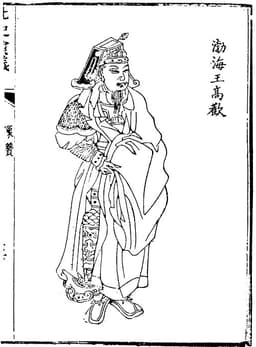
Gao Wei
Emperor · Medieval
40.6Total
Basic Information
Born
1410
557
Died
1455
577
Era
Medieval
Medieval
Nationality
Oirat
China
Occupation
Emperor
Emperor
Civilization
Eastern
Eastern
Score Comparison
Military (10%)
80.0
50.0
Political (20%)
43.7
26.4
Influence (20%)
57.2
45.5
Legacy (20%)
50.0
35.8
Leadership (15%)
51.9
49.9
Strategy (15%)
68.1
38.6
TOTAL
56.0
40.6
Esen Taishi — Complete Timeline
1449 AD
Capture of the Ming EmperorWar
Esen Taishi led the Oirat Mongols to victory at the Battle of Tumu Fortress, capturing the Ming emperor Zhengtong. This event shocked the Ming dynasty and demonstrated Oirat military power, though Esen failed to capitalize on the victory.
Battle of TumuMing DynastyOirat
Impact: regional
1453 AD
Proclamation as KhanPolitical Action◆ Major
Esen Taishi proclaimed himself khan of the Mongols, claiming the title of Great Khan. This move alienated many Mongol nobles and led to internal conflict, weakening his position.
ProclamationMongol UnityOirat
Impact: regional
1455 AD
AssassinationPolitical Action◆ Major
Esen Taishi was assassinated by former allies, ending his rule. His death led to the decline of Oirat power and the fragmentation of the Mongol confederation.
AssassinationOiratDecline
Impact: regionaltragic
Gao Wei — Complete Timeline
565 AD
Accession as Emperor of Northern QiPolitical Action◆ Major
Gao Wei ascended the throne as emperor of Northern Qi at age eight, with his mother Empress Dowager Hu and officials serving as regents. His reign was marked by incompetence, corruption, and neglect of state affairs, leading to the dynasty's decline.
Northern QiSuccessionDecline
Impact: national
577 AD
Defeat and capture by Northern ZhouWar
Northern Zhou forces under Emperor Wu conquered Northern Qi. Gao Wei was captured and later executed, ending the Northern Qi dynasty. His incompetence, including favoring eunuchs and neglecting defense, was a major cause of the defeat.
Northern QiConquestExecution
Impact: regionaltragic
This comparison has not been analyzed yet.
One-time AI generation (~1 minute). Scores and timeline are already available below.
Rankings
🥇
Esen TaishiLeader
Mil: 80.0Pol: 43.7Inf: 57.2
56.0
🥈
Gao Wei
Mil: 50.0Pol: 26.4Inf: 45.5
40.6
+15.4 behind
How This Comparison Works
Algorithm
Each figure is scored on 6 dimensions (0—100 scale) based on structured historical data: Military (10%), Political (20%), Influence (20%), Legacy (20%), Leadership (15%), Strategy (15%). The weighted total produces the final ranking.
Data Sources
Scores are computed from structured sub-indicators in the database. Scale factors adjust for era (Ancient ×0.85, Modern ×1.0) and civilization size (Eastern ×1.05, Other ×0.80) to account for differences in population and military scale.
Maximum 3 Figures
Comparisons are limited to 2—3 figures to ensure readability and statistical meaningfulness.
Error Margins
±5 points per dimension — Sub-scores are derived from historical records with inherent uncertainty. Two figures within 5 points on a dimension should be considered roughly equivalent in that area.
Total Score Accuracy
±3 points overall — The weighted combination of 6 dimensions produces a total score with approximately ±3 points of uncertainty. Differences of less than 3 points are not statistically significant— the figures are effectively tied.
Known Limitations
- Historical records are incomplete and uneven across civilizations
- Figures from oral-tradition societies may be underrepresented
- Occupation labels can misclassify multi-role figures
- Scores measure capability and impact, not moral character
- Quantitative scoring is a comparison tool, not absolute truth
Capability Radar
Military (10%) — Battles & Warfare
Battles
75
5
Win Rate
80
5
Expansion
75
0
Political (20%) — Governance & Reform
Reform
30
0
Diplomacy
55
5
Economy
35
5
Influence (20%) — Cultural & Global Reach
Cultural
40
5
Global
45
5
Legacy (20%) — Historical Impact
Historical
60
10
Longevity
40
5
Leadership (15%) — Power & Stability
Tenure
40
10
Stability
25
5
Strategy (15%) — Tactics & Innovation
Strategy
80
5
Tactics
85
5
Reform
60
0
Similar Comparisons
Comments & Discussion
No comments yet. Be the first to share your thoughts!