Loading...
Errol Barrow vs Napoleon Bonaparte
Napoleon Bonaparte leads by 16.5 pts · 2 figures compared
…
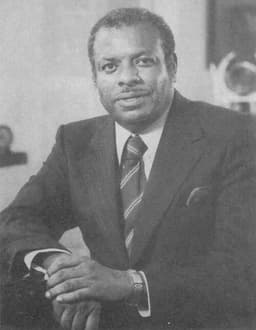
Errol Barrow
Politician · Modern
54.4Total

Napoleon Bonaparte
General · Modern
70.9Total
Basic Information
Born
1920
1769
Died
—
1821
Era
Modern
Modern
Nationality
Barbados
France
Occupation
Politician
General
Civilization
Western
Western
Score Comparison
Military (10%)
14.1
94.0
Political (20%)
65.7
72.0
Influence (20%)
58.3
40.0
Legacy (20%)
52.0
80.0
Leadership (15%)
78.0
78.0
Strategy (15%)
38.9
90.0
TOTAL
54.4
70.9
Errol Barrow — Complete Timeline
1960 AD
Introduced Free Education and Social ReformsReform◆ Major
Barrow's government introduced free secondary education and expanded social services, including healthcare and housing. These reforms aimed to reduce inequality and improve living standards.
EducationSocial Reform
Impact: nationalconstructive
1961 AD
Elected Premier of BarbadosPolitical Action◆ Major
Barrow became Premier of Barbados in 1961, leading the Democratic Labour Party to victory. He focused on economic diversification and social reform, moving Barbados towards self-government.
ElectionSelf-Government
Impact: nationalconstructive
1966 AD
Led Barbados to IndependencePolitical Action
Barrow led Barbados to independence from the United Kingdom on November 30, 1966, becoming the first Prime Minister. He is widely regarded as the 'Father of Independence' for his role in the negotiations.
IndependenceDecolonization
Impact: nationalconstructive
1986 AD
Returned to Power as Prime MinisterPolitical Action◆ Major
Barrow returned to power in 1986 after a decade in opposition, winning a landslide election. His second term focused on economic recovery and regional integration.
ElectionComeback
Impact: national
1987 AD
Died in OfficeOther◆ Major
Barrow died in office on June 1, 1987, from a heart attack. His death was a major loss for Barbados, and he was given a state funeral. He is remembered as a founding father of the nation.
DeathEnd of Era
Impact: nationaltragic
Napoleon Bonaparte — Complete Timeline
1799 AD
Coup of 18 BrumaireOther◆ Major
Napoleon Bonaparte, with support from his brother Lucien and key political figures, overthrew the Directory in a bloodless coup. He established the Consulate with himself as First Consul, effectively becoming the ruler of France. This event ended the French Revolution's most unstable period.
French RevolutionCoupRise to Power
Impact: regional
1804 AD
Promulgation of the Napoleonic CodeOther◆ Major
Napoleon enacted the Civil Code of the French, known as the Napoleonic Code, a comprehensive set of laws that replaced the fragmented feudal legal systems. The code established legal equality, protected property rights, and secularized law. It became the basis for legal systems in many European and world countries.
Legal ReformNapoleonic CodeCivil Law
Impact: globalconstructive
1805 AD
Battle of AusterlitzWar◆ Major
Napoleon's Grande Arm
Napoleonic WarsBattleDecisive Victory
Impact: global
1812 AD
Invasion of RussiaWar◆ Major
Napoleon led the Grande Arm
Napoleonic WarsInvasionDisaster
Impact: globaldestructive
1815 AD
Battle of WaterlooWar◆ Major
Napoleon's French army was defeated by the combined forces of the Duke of Wellington's Anglo-Allied army and Gebhard Leberecht von Bl
Napoleonic WarsBattleFinal Defeat
Impact: globaldestructive
Expert Analysis
errol-barrow-vs-napoleon-bonaparte
### The Corsican and the Caribbean: Two Paths to Power
On a windswept Atlantic island in 1815, a man who had once ruled half of Europe sat in exile, his dreams of glory reduced to bitter memories. Half a world away and a century later, on another island—sun-drenched Barbados—a young man named Errol Barrow was just four years old. Napoleon Bonaparte and Errol Barrow could hardly have been more different: one a conqueror who remade continents through war, the other a nation-builder who remade his country through peace. Yet both were products of their islands, their ambitions forged by the same fundamental question: how does a small place produce a leader who changes history?
### Origins
Napoleon was born in 1769 on Corsica, a Mediterranean island that had only become French the year before. His family were minor nobility, but their world was one of fierce independence and bitter resentment of French rule. This paradox—a Corsican who would become the embodiment of France—shaped everything. He grew up speaking Italian, not French, and his early heroes were resistance fighters, not kings. The French Revolution, when it came in 1789, offered him a ladder. A young artillery officer from nowhere could rise by talent alone.
Errol Barrow was born in 1920 on Barbados, a British colony that had been under English control since 1627. His father was a clergyman and his mother a teacher; the family was educated but not wealthy. Barrow grew up in a world of rigid racial hierarchy, where the color of your skin determined your place in society. The British Empire was still powerful, but the winds of change were beginning to stir. Like Napoleon, Barrow was an outsider in his own country—a black Barbadian in a system designed by and for white planters.
### Rise to Power
Napoleon’s rise was meteoric. In 1793, at just 24, he drove British forces from the port of Toulon, earning promotion to brigadier general. By 1796 he was commanding the Army of Italy, where his lightning campaigns against the Austrians made him a national hero. The Directory, France’s corrupt ruling council, saw him as both asset and threat. In 1799, sensing weakness, Napoleon staged a coup and made himself First Consul. Five years later, in 1804, he crowned himself Emperor.
Barrow’s rise was slower, more deliberate. He studied law and economics in London, served in the Royal Air Force during World War II, and returned to Barbados in 1950 to enter politics. He helped found the Democratic Labour Party in 1955, and in 1961 he became Premier. His path was not a coup but a ballot box. Where Napoleon seized power, Barrow earned it.
### Leadership & Governance
Napoleon governed like a general. He centralized authority, created a new aristocracy, and imposed French law across Europe. The Napoleonic Code, introduced in 1804, abolished feudalism, guaranteed religious freedom, and established uniform legal standards. It was a genuine reform—but it served his ambition. He wanted order, and order required obedience. His military genius was undeniable: at Austerlitz in 1805, he crushed the combined armies of Russia and Austria, a victory that remains a textbook example of strategic brilliance.
Barrow governed like a headmaster. He was pragmatic, principled, and deeply concerned with the practical needs of his people. In 1960, his government introduced free secondary education—a radical step for a poor colony. He expanded healthcare and housing, and he diversified Barbados’s economy away from sugar. His greatest achievement came in 1966, when he led Barbados to independence without a shot fired. He did not conquer; he negotiated. He did not rule; he served.
### Triumph & Tragedy
Napoleon’s greatest triumph was also the beginning of his end. In 1812, he invaded Russia with 600,000 men. He won every battle, but he lost the war. The Russian winter, the scorched-earth tactics, and the sheer vastness of the country destroyed his Grande Armée. Only 30,000 returned. He was exiled to Elba in 1814, escaped in 1815, and was finally defeated at Waterloo that June. His tragedy was hubris: he could not stop.
Barrow’s tragedy was quieter. He died in office on June 1, 1987, of a heart attack, at 67. His second term, begun in 1986 after a landslide victory, was cut short. He had returned to power to finish what he started—economic reform, regional unity, social justice—but time ran out. There was no exile, no epic defeat, just a sudden end on a small island that he had lifted into nationhood.
### Character & Destiny
Napoleon was driven by an insatiable need for glory. “Impossible is a word to be found only in the dictionary of fools,” he once said. He believed he was destiny’s instrument, and he acted accordingly. His character was brilliant, ruthless, and ultimately self-destructive. He could not share power because he could not imagine anyone else worthy of it.
Barrow was driven by a sense of duty. “I have no intention of being a puppet,” he said. He was stubborn, principled, and deeply committed to his people. He could have become a dictator—many Caribbean leaders did—but he chose democracy. He stepped down after losing the 1976 election, and returned only when the people called him back. His character was not about personal glory but national purpose.
### Legacy
Napoleon left an empire that crumbled within a decade, but his reforms outlasted him. The Napoleonic Code influences legal systems across Europe and the Americas. He reshaped the map of Europe, inspired nationalism, and set the stage for modern warfare. He is remembered as both hero and tyrant, a man of genius and ambition.
Barrow left a nation that still stands. Barbados remains a stable democracy, with high literacy rates, a strong education system, and a proud identity. He is remembered as the Father of Independence, a leader who built not an empire but a country. His legacy is quieter but perhaps more enduring: a people who govern themselves.
### Conclusion
Napoleon and Barrow represent two poles of leadership. One conquered to create; the other created without conquering. One died in exile, alone; the other died in office, surrounded by the people he served. Both were products of their time and place, but their choices defined them. Napoleon chose glory; Barrow chose service. In the end, the Corsican’s empire is memory, but the Barbadian’s nation is real.
Rankings
🥇
Napoleon BonaparteLeader
Mil: 94.0Pol: 72.0Inf: 40.0
70.9
🥈
Errol Barrow
Mil: 14.1Pol: 65.7Inf: 58.3
54.4
+16.5 behind
How This Comparison Works
Algorithm
Each figure is scored on 6 dimensions (0—100 scale) based on structured historical data: Military (10%), Political (20%), Influence (20%), Legacy (20%), Leadership (15%), Strategy (15%). The weighted total produces the final ranking.
Data Sources
Scores are computed from structured sub-indicators in the database. Scale factors adjust for era (Ancient ×0.85, Modern ×1.0) and civilization size (Eastern ×1.05, Other ×0.80) to account for differences in population and military scale.
Maximum 3 Figures
Comparisons are limited to 2—3 figures to ensure readability and statistical meaningfulness.
Error Margins
±5 points per dimension — Sub-scores are derived from historical records with inherent uncertainty. Two figures within 5 points on a dimension should be considered roughly equivalent in that area.
Total Score Accuracy
±3 points overall — The weighted combination of 6 dimensions produces a total score with approximately ±3 points of uncertainty. Differences of less than 3 points are not statistically significant— the figures are effectively tied.
Known Limitations
- Historical records are incomplete and uneven across civilizations
- Figures from oral-tradition societies may be underrepresented
- Occupation labels can misclassify multi-role figures
- Scores measure capability and impact, not moral character
- Quantitative scoring is a comparison tool, not absolute truth
Capability Radar
Military (10%) — Battles & Warfare
Battles
20
95
Win Rate
25
90
Expansion
26
95
Political (20%) — Governance & Reform
Reform
75
95
Diplomacy
70
80
Economy
68
85
Influence (20%) — Cultural & Global Reach
Cultural
55
85
Global
55
90
Legacy (20%) — Historical Impact
Historical
60
95
Longevity
50
90
Leadership (15%) — Power & Stability
Tenure
65
85
Stability
72
70
Strategy (15%) — Tactics & Innovation
Strategy
29
95
Tactics
37
98
Reform
39
92
Similar Comparisons
Comments & Discussion
The Calculus of Conquest6/17/2026
Comparing Napoleon's empire-building to Barrow's nation-building is like comparing wildfire to a garden trellis. Napoleon conquered 720,000 square miles in a decade; Barrow peacefully led 166 square miles to independence. The former used cannons, the latter used trade agreements and education reform. One changed maps, the other changed lives. And Barrow's legacy—a stable, prosperous democracy—has outlasted Napoleon's by a century.
Coriscan's Ghost6/17/2026
Napoleon took a sleeping France from revolution to empire to exile in 16 violent years. Barrow took a sleepy Barbados from colony to independent nation in 6 peaceful ones. Which takes more skill? To torch a continent or to build a school system? Barrow never needed a Grande Armée; he just needed a parliament and the island's trust. That's harder than any battle of Austerlitz.
数据督察6/17/2026
拿破仑的军事记录确实惊人,但把这两个人放一起比较就像拿榴弹炮对比手术刀。巴罗主导了巴巴多斯经济从甘蔗种植园向多元化的转型,1961到1976年间人均GDP翻了一番。而拿破仑呢?他的大陆封锁政策让法国工业倒退二十年。要我说,谁能养活自己的人民才是真本事,不然再多的滑铁卢也白搭。
古典学派6/17/2026
若论帝国规模,拿破仑的法国确实横跨欧洲,但论制度韧性,巴罗的巴巴多斯才是真奇迹。一个是靠武力维持的军政府模式,一个是靠议会民主和法治立国的宪政典范。拿破仑的民法典虽影响深远,但巴罗在高等教育和全民医疗上的投资,让一个166平方英里的岛国成为加勒比最稳定的民主国家。谁更长久?历史已经给出答案。
修正派批判6/17/2026
别再美化征服者了。拿破仑流放厄尔巴岛时还有55000人军队陪葬,巴罗领导独立时没有流一滴血。前者是个沉迷于大理石雕像和凯旋门的军事狂人,后者是个知道如何让渔村变成国际金融中心的实用主义者。看看今天:拿破仑的帝国灰飞烟灭,巴巴多斯的识字率却是98%。谁才是真正的胜利者,还需要多言吗?